

One summer afternoon on the patio can turn miserable fast when mosquitoes, ants, or spiders decide your yard is their buffet. The right outdoor treatment turns that around, whether you want a quick hose-end spray, a long-lasting barrier around the foundation, or a natural cedar option that keeps curious kids and pets safer. This roundup walks through eight products built for different yard sizes, pest pressure levels, and tolerance for chemicals, so you can match a solution to your actual situation instead of guessing at a jug at the store.
The Leading Options At A Glance

Hi-Yield 38 Plus Turf Termite and Insect, 32 oz
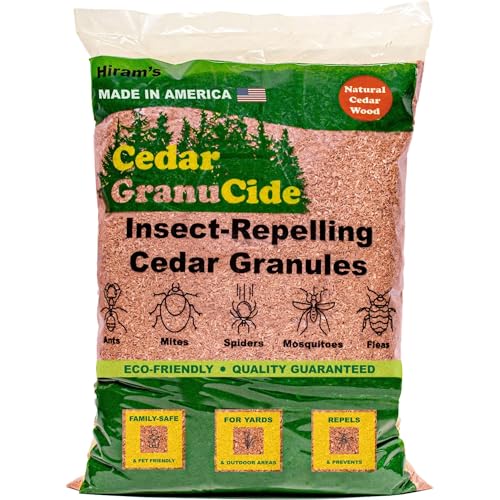
GranuCide Cedar Granules for Home and Garden, 8 lbs

Agrisel Bifenthrin Pro 7.9 Insecticide, 1 Gallon

Talstar One Insecticide 1 Gallon Bifenthrin Concentrate

Ortho Bug B Gon Insect Killer for Lawns, 20 lb

Syngenta 25001 Demon Max Insecticide

Amdro Quick Kill Insect Killer Ready-to-Spray, 32 oz

Ortho Lawn Insect Killer Granules, 10 lbs
Meet The Standout Selections
For homeowners staring down turf-destroying insects or a steady stream of ants crossing the patio, a strong permethrin concentrate (a synthetic insecticide modeled on natural pyrethrins) often does the heavy lifting. Hi-Yield 38 Plus arrives as a 32-ounce bottle that mixes readily with water and pours into a standard tank-style or power sprayer. The product covers mosquitoes, ants, beetles, cockroaches, spiders, and caterpillars on its main label, and the same bottle doubles as a perimeter barrier treatment around foundations, lawn edges, and ornamental beds.
Versatility is the real story here. You can blanket a wide turf area or aim a narrow stream at a single mound for a quick spot response. Most homeowners get through an entire season of ant and chinch bug pressure with one jug, depending on yard size and how often treatments are repeated. Outdoor-only use keeps the chemistry out of living spaces, which is helpful for households that prefer treating the lawn rather than the interior.
The Good Stuff
- 38% permethrin concentrate gives broad-spectrum outdoor control across multiple pest categories.
- Mixes cleanly with water for tank or power sprayer applications.
- Functions as both a wide-area turf spray and a focused perimeter barrier.
- Spot-application flexibility helps target nests or activity hotspots without treating the whole yard.
- Outdoor-only label keeps indoor air and surfaces free of treatment.
Things To Consider
- Outdoor-only restriction rules out indoor or enclosed-porch applications.
- Mixing and sprayer cleanup add setup time compared with ready-to-spray options.
- Synthetic permethrin may not suit households avoiding conventional insecticides around pets or pollinator-friendly beds.
Who It Suits Best
Homeowners with active turf insect problems or heavy perimeter ant trails who already own (or are willing to buy) a pump sprayer and want a concentrated formula at a reasonable cost.
Consider Something Else When
Households wanting a hose-and-go experience with no measuring should look at the Amdro Quick Kill Insect Killer Ready-to-Spray, 32 oz instead.
Not every yard calls for synthetic chemistry, and that’s exactly where cedar-based options step in. GranuCide Cedar Granules come in an 8-pound bag of untreated cedar chips that release the natural aroma cedars use to defend themselves. The scent confuses and repels ants, aphids, spiders, mosquitoes, and several garden pests without leaving residues on grass or paws. Spreading the granules around foundation edges, garden borders, and play areas takes only a few minutes with a handheld scoop.
For households with curious dogs or toddlers who treat the yard like a playground, the ingredient list is refreshingly short: cedar and nothing else. Owners commonly report a subtle, pleasant scent that doubles as a yard deodorizer during the warmest months. The granules do break down over time and need refreshing after heavy rain or several weeks, but routine top-offs keep the protective barrier steady through the season.
Benefits That Matter
- 100% untreated cedar means no synthetic actives around kids, pets, or pollinator-friendly beds.
- Cedar aroma simultaneously repels pests and freshens the outdoor space.
- Simple spread-by-hand application needs no sprayer or protective gear beyond gloves.
- Targets common garden pests like aphids alongside larger invaders such as ants and spiders.
Worth Noting
- Effectiveness fades after rain or several weeks, so plan on periodic reapplication.
- Repellent action is gentler than contact insecticides and may not fully resolve heavy infestations alone.
Who It Suits Best
Families prioritizing low-toxicity options and households that prefer a pleasant-smelling routine treatment over aggressive synthetic sprays.
A Better Fit Elsewhere
Yards dealing with severe termite or fire ant pressure will find stronger contact control in the Syngenta 25001 Demon Max Insecticide.
When one or two acres of lawn are involved and the pest list keeps growing, the 1-gallon Agrisel Bifenthrin Pro 7.9 earns its keep. The bifenthrin-based concentrate (a synthetic pyrethroid valued for long residual activity) handles spiders, ants, fleas, mole crickets, and stink bugs among a broader label list, and one gallon dilutes into enough spray solution to cover sprawling lawn areas, ornamental plantings, and light agricultural use cases. The formula is also labeled for pet-safe use once the treated surface has dried, which simplifies timing for households that share the yard with dogs.
The trade-off is preparation: this is a concentrate that demands a calibrated sprayer, accurate mixing, and a careful read of the label. For someone managing a small estate, a hobby farm, or multiple rental properties, the per-application cost drops quickly compared with several ready-to-spray bottles. Treat it as a working tool rather than a casual purchase, and it returns strong results across multiple environments.
What It Does Well
- 1-gallon format stretches across large lawns and multiple treatment zones.
- Bifenthrin-based formula carries broad label coverage across common yard and perimeter pests.
- Works across lawns, ornamental beds, and broader agricultural settings.
- Pet-safe after drying gives flexibility for households with dogs that use the yard daily.
Points To Keep In Mind
- Concentrate requires accurate mixing and a compatible sprayer.
- Bifenthrin is a synthetic active, so it may not align with pollinator-conscious or fully organic garden plans.
Right Fit For
Larger properties, hobby farms, and homeowners treating multiple zones who want a single gallon jug instead of several ready-to-spray replacements.
Look Elsewhere When
Small suburban yards that only need perimeter coverage may be overserved here, and Talstar One Insecticide 1 Gallon offers a similar gallon format with a slightly different label focus.
Talstar has earned a quiet reputation among pest professionals for a reason: the 1-gallon bifenthrin concentrate covers ants, spiders, roaches, fleas, ticks, mosquitoes, and dozens of other listed nuisance pests in a single bottle. The label is broad enough for indoor and outdoor use, which is unusual at this concentration level, and the perimeter-and-structure focus makes it a natural fit for spraying around foundations, door thresholds, window frames, and exterior siding. For most homes, one jug is enough spray material for the full season.
The honest read: Talstar costs more than many homeowner-grade concentrates, and the premium reflects both label depth and brand familiarity in the pest-control trade. Mixing accuracy still matters, and a clean pump sprayer extends the working life of every batch. Apply along the foundation two to three times per year and you’ll likely see the bulk of perimeter traffic fade by mid-season, depending on your region’s pest cycle.
Points In Its Favor
- Broad label covers over 75 listed pests, from spiders and roaches to fleas and ticks.
- Suitable for both indoor and outdoor applications with proper dilution.
- Long residual reduces how often repeat perimeter treatments are needed.
- Trusted by many pest professionals, which speaks to label consistency and performance expectations.
Honest Caveats
- Higher price per gallon than most homeowner-focused concentrates.
- Synthetic pyrethroid active may not suit fully organic lawn care routines.
- Requires sprayer equipment and careful label reading for indoor use.
Best Suited To
Homeowners running a structured perimeter program around the foundation who want a professional-grade concentrate and don’t mind the extra cost.
Swap It Out When
If your yard is smaller and the goal is simple ant-and-mosquito relief, the Amdro Quick Kill Insect Killer Ready-to-Spray, 32 oz skips the mixing step entirely.
Granular insecticides earn their place in the shed when you want coverage without the sprayer. Ortho Bug B Gon Insect Killer for Lawns comes in a 20-pound bag designed for broadcast spreader application, treating up to 20,000 square feet per the product label. The granules kill listed insects both above and below the surface, including ants, fleas, ticks, chinch bugs, spiders, cutworms, mole crickets, and sod webworms, and the residual lasts up to three months under normal conditions.
Application timing is the lever that determines results. A pre-season spread in early spring catches emerging chinch bugs and mole crickets before populations build, while a follow-up at first sign of activity handles late-season pressure. Compared with the Amdro Quick Kill ready-to-spray bottle reviewed earlier, this jug trades fast knockdown for longer residual and broader coverage, which suits homeowners maintaining large turf areas on a regular schedule.
Useful Touches
- Treats up to 20,000 square feet, fitting most suburban lots in a single bag.
- Kills above and below the surface, which targets grub-stage insects in the soil.
- Three-month residual reduces how often reapplication is needed.
- Compatible with listed edibles, ornamentals, and flower beds for broader yard use.
Trade Offs
- Requires a broadcast or drop spreader for even distribution across the lawn.
- Granules need watering-in or rainfall to activate the active ingredient fully.
Who Should Grab It
Suburban homeowners with mid-to-large lawns who already own a spreader and prefer a granular routine over mixing and spraying liquid concentrate.
Reach For A Different Pick When
Homeowners focused on foundation perimeter spraying rather than whole-lawn coverage should consider Talstar One Insecticide 1 Gallon instead.
When the pest problem steps beyond casual ants and into termite territory, the choice of active ingredient narrows quickly. Syngenta 25001 Demon Max Insecticide uses cypermethrin (a long-residual synthetic pyrethroid) and is labeled for total protection against both subterranean and Formosan termites, alongside an unusually long pest list that includes fire ants, scorpions, wasps, carpenter bees, mosquitoes, ticks, and many others. Low water solubility reduces leaching into groundwater, which matters near wells or sensitive landscape features.
The practical upside is durable residual: a single perimeter treatment can hold for months depending on rainfall and surface type. The honest downside is potency. This is a concentrate for confident applicators who read the full label and use proper personal protective equipment, not a casual weekend spray. Compared with Hi-Yield 38 Plus covered earlier, Demon Max trades quick knockdown for deeper residual and stronger wood-destroying insect coverage.
Positive Points
- Covers both subterranean and Formosan termites, a rare label claim for homeowner products.
- Low water solubility reduces movement into groundwater during rainfall.
- Long residual keeps perimeter protection active for months rather than weeks.
- Targets difficult species including scorpions, fire ants, and carpenter bees.
A Few Limitations
- Concentrate requires careful handling, accurate mixing, and protective gear during application.
- Smaller bottle size than the gallon jugs from Agrisel or Talstar, so frequent reapplications may run out faster.
Whose Shelf It Belongs On
Homeowners in termite-prone regions, properties with chronic fire ant mounds, or households that need scorpion and wasp defense at the foundation line.
Where A Sibling Pick Shines
For yards with no termite or scorpion pressure, the broader label and larger volume of Agrisel Bifenthrin Pro 7.9 may suit routine lawn coverage better.
Not everyone wants to measure concentrate or wrestle with a pump sprayer, and the ready-to-spray bottle format exists for exactly that reason. Amdro Quick Kill Insect Killer attaches to a standard garden hose and meters itself as you spray, covering listed pests including mosquitoes, ants, spiders, cockroaches, fleas, Japanese beetles, stink bugs, and chinch bugs without any pre-mixing. The 32-ounce bottle treats average-sized lawns quickly and stores neatly on a shelf until the next round.
The label claims up to three months of control on listed insects, which is reasonable for routine lawn pest pressure but shorter than the residual from heavier concentrate products like Talstar One Insecticide covered earlier. Think of this as the low-fuss option for first-time users, busy homeowners, or anyone who wants results without a learning curve. The hose-end format also helps cover odd-shaped lawn edges and narrow side yards that a wheeled spreader can miss.
Everyday Perks
- Hose-end ready-to-spray format skips measuring, mixing, and separate sprayer cleanup.
- Targets a wide pest list including mosquitoes, ants, fleas, and Japanese beetles.
- Up to three months of listed insect control under typical lawn conditions.
- Compact bottle stores easily between treatment rounds.
Softer Spots
- Per-application cost runs higher than concentrate products when treating large areas.
- Residual life is shorter than gallon-jug concentrates, so expect more frequent treatments in peak summer.
Made For
First-time users, casual homeowners, and anyone who values a no-mix, hose-and-go approach over the precision of concentrate spraying.
Skip It When
Homeowners managing multi-acre properties will run through these bottles quickly and should consider Talstar One Insecticide 1 Gallon for better long-term cost.
Granular products split the difference between spreader simplicity and broad pest coverage, and Ortho Lawn Insect Killer Granules fits that middle ground. The 10-pound bag treats up to 10,000 square feet and kills by contact across a labeled list of more than 100 insects, including ants, fleas, ticks, spiders, and grubs. Spreading it across lawns, vegetable gardens, flower beds, and around the home perimeter is straightforward with a broadcast spreader, and watering-in after application activates the active.
The smaller bag size compared with the 20-pound Ortho Bug B Gon covered earlier makes this a better fit for typical suburban lots where a full bag is more than enough for a single treatment. Apply pre-emptively at the start of the season or at first sign of insect activity, and most homeowners see results within days. Pollinator-friendly gardeners should still avoid spreading granules over blooming plants, since contact insecticides affect any insect they touch.
Well-Handled Touches
- Treats up to 10,000 square feet, matching average suburban lot size in a single bag.
- Kills 100+ listed insects across ants, fleas, ticks, spiders, and grubs.
- Approved for use on vegetable and flower gardens plus the home perimeter.
- Contact-kill action produces visible results faster than repellent-only products.
Some Limits To Know
- Bag covers about half the area of the 20-pound Bug B Gon option, so very large lawns need more than one.
- Contact-kill chemistry can affect pollinators if applied directly over blooming plants.
Perfect Match For
Suburban homeowners with a single average-sized lot who want one bag per treatment without leftover storage and prefer granules over liquid mixing.
Not Your Match When
Properties with multiple acres of turf will find the 20-pound Ortho Bug B Gon Insect Killer for Lawns a more efficient option per square foot.
What Matters Most Before Choosing Pest Controls For Yard
Spray, Granule, or Natural Repellent
Format drives the entire experience. Liquid concentrates like Hi-Yield 38 Plus and Talstar One Insecticide mix with water and apply through a pump or power sprayer, giving precise perimeter control but requiring cleanup and protective gear. Granular products such as Ortho Bug B Gon Insect Killer for Lawns and Ortho Lawn Insect Killer Granules spread with a broadcast spreader and need watering-in or rainfall to activate, which trades precision for speed. Natural cedar-based options like GranuCide Cedar Granules offer a chemical-free routine at the cost of gentler, shorter-lived repellent action.
Coverage Area and Residuals
Match the product to your lot size. A 32-ounce ready-to-spray bottle like Amdro Quick Kill Insect Killer fits a small suburban lawn, while 1-gallon concentrates from Agrisel Bifenthrin Pro 7.9 and Talstar stretch across larger properties and multiple treatment rounds. Residual life varies too: contact-kill granules work fast and fade in weeks, while concentrate sprays around the foundation often hold for two to three months under normal weather conditions.
Pest List and Tolerance for Synthetics
Read the label pest list before choosing. Some yards deal with a narrow set of invaders like ants and mosquitoes, while others face termites, fire ants, or scorpions that narrow the field to tougher chemistries. Households avoiding synthetic actives should default to cedar granules, while properties near pollinator gardens need careful timing to avoid blooming plants and bee foraging windows.
Key Considerations Across These Picks
Common Shopping Slip Ups
The biggest mistake in this category is buying a concentrate without a sprayer, or choosing a granular product and forgetting that rainfall or watering activates the active ingredient. Read the label pest list before purchasing, because “broad spectrum” claims vary widely between products and the label is the legal definition of what a jug actually controls. For pollinator-friendly yards, also avoid spreading granules over blooming flowers or applying sprays during peak bee foraging hours.
Where The Extra Money Goes
Premium pricing in this category typically reflects a deeper label pest list, longer-lasting residual, and higher active-ingredient concentration. A gallon of Talstar One Insecticide costs more than a 32-ounce ready-to-spray bottle because the concentrate dilutes into enough spray solution for a full season of perimeter treatments across a typical home. The upgrade pays off for households running a structured program around the foundation, while smaller yards rarely need that volume.
Frequently Asked Questions
How often should yard pest treatments be applied?
Most perimeter sprays last two to three months under normal conditions, while granular products often need reapplication every one to three months depending on rainfall and pest pressure.
Are these products safe for pets and children?
Many outdoor insecticides are safe once the treated surface dries fully, but always check the specific label and keep kids and pets away during application and the drying window.
Can I use indoor insecticides outside the home?
No, indoor-only products are not formulated for outdoor exposure to sunlight and rain, so an outdoor-labeled product is the correct choice for yard use.
What’s the difference between granules and sprays?
Granules spread with a broadcast spreader and activate with water, while sprays mix with water in a sprayer and coat surfaces directly for faster contact kill.
Do natural cedar granules actually repel pests?
Cedar aroma repels many common insects, but results vary by pest species and weather, and severe infestations typically require stronger contact insecticides alongside cedar routines.
Wrap Up
The right yard pest control comes down to matching format, coverage, and pest list to your actual situation rather than grabbing the largest jug on the shelf. Granules handle broad lawn coverage with a spreader, concentrates deliver precise perimeter control, and natural cedar routines offer a low-toxicity option for households that prefer to avoid synthetics. Pick the one that fits your routine, and your outdoor space stays far more comfortable through the warmest months.
