

Carpenter bees chew round holes into fascia boards, deck rails, and shed trim, then mine tunnels you can’t see until stains start spotting the wood beneath. Shooing them off the porch rarely solves the problem; you need something that reaches inside the galleries where larvae develop. The right pesticide for carpenter bees depends on how aggressive the infestation looks, whether you want a dust, foam, or bait, and how comfortable you are working around active tunnels in spring. This roundup covers eight options built for wood-boring bee control, from shallow homeowner touch-ups to deeper structural treatments.
Your Options, Compared
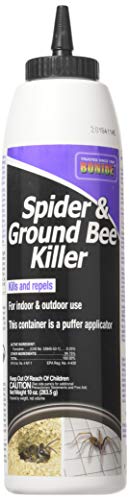
Bonide 363 Spider and Ground Bee Killer, 2 Pack

Best Bee Brothers Carpenter Bee Bait, 10 mL Squeeze Tube
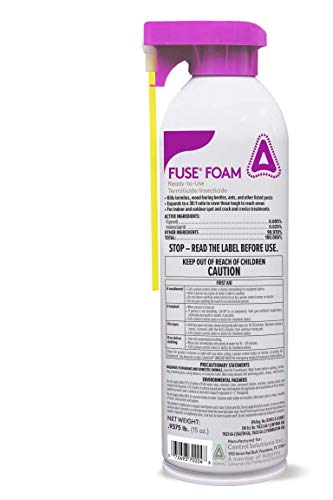
Control Solutions Fuse Foam Ready-to-Use Termiticide
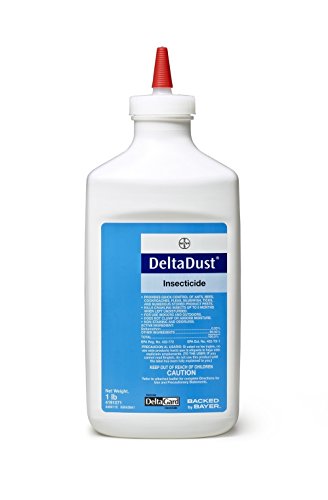
Delta Dust Pest Insecticide w/Puffer Bellow Hand Duster

Revenge Spider & Ground Bee Killer, 10 oz Dust

Atticus Tirade 1% Dust Insecticide (1.25 lb)

Ortho Home Defense Termite & Destructive Bug Killer

Spectracide Carpenter Bee Foaming Aerosol (Pack of 3)
A Closer Look At Each Pick
Bonide 363 arrives as a pair of 10 oz dust canisters, which means you’ve got backup the moment you crack open the first one. The integrated snorkel tube applicator is the real story here: it slides into the round 3/8-inch entrance holes carpenter bees favor, dropping a fine permethrin cloud into the gallery rather than bouncing dust off the surface. Compared with the Best Bee Brothers bait covered later, this is the direct-action option: you target a hole, you dust it, you walk away.
For homeowners dealing with a handful of fresh holes along a porch beam, the dual-pack format is convenient. Each canister gives you room to work at a steady pace without rushing. Permethrin is a synthetic pyrethroid, the same broad family used in many professional pest products, and it’s effective against labeled crawling and flying insects. Labeled for indoor and outdoor use, so a garage eave or shed overhang counts as fair game.
A Few Strong Suits
- Snorkel applicator reaches into galleries instead of just coating the surface
- Two-pack format means one canister stays sealed and fresh for later touch-ups
- Labeled for both indoor and outdoor sites, useful for garage ceilings or storage sheds
- Broad-spectrum permethrin dust handles spiders and ground bees from the same canister
Things To Consider
- Dust format means you’ll want calm weather so wind doesn’t blow product back at you
- Always read the label carefully before treating eaves near windows or doorways
- Permethrin is toxic to bees broadly, so avoid applying where pollinators actively forage
Who It Suits Best
Homeowners with a ladder, a small cluster of fresh bee holes, and a preference for dust over foam.
Where Another Pick Suits Better
For a non-chemical lure approach, the Best Bee Brothers Carpenter Bee Bait works better for shoppers who prefer trap-based capture.
This 10 mL squeeze tube sits in a different lane than the dusts and foams in this roundup. It’s a lure, not a kill agent on its own. The Bee-Licious formula is built to mimic the biosignatures carpenter bees respond to, drawing them into a compatible trap where they’re contained. You apply a small dime-size amount to the designated bait area inside your trap, then let the trap do the work over several weeks.
That makes this the right pick for people who’d rather not climb a ladder with a pesticide at all. It’s also a smart supplementary tool alongside the Bonide 363 or Atticus Tirade dusts: drop a treated trap nearby to catch returning scouts while your residual product handles the active galleries. A little goes a long way, so the 10 mL tube covers multiple refills across a spring season.
Real Benefits
- Trap-based approach avoids direct pesticide exposure around eaves and trim
- Concentrated formula means one tube covers many refills over a season
- Works as a complement to a residual spray or dust treatment nearby
- Squeeze tube design keeps application tidy and controlled
Worth Noting
- Performance depends on using a compatible trap, so factor that into the budget
- Slower than direct dusts since it relies on bees finding and entering the trap
Made For
Shoppers who want passive, low-contact control and prefer lures over sprays for routine maintenance.
Skip It When
For active tunnels with bees already inside, the Spectracide Carpenter Bee Foaming Aerosol delivers faster knockdown.
Fuse Foam is the heavy hitter of this list. It uses two non-repellent active ingredients, fipronil and imidacloprid, in a ready-to-use foam that expands once it’s inside a void. Where dust can settle loosely, foam fills the gallery before it sets, coating the surfaces bees and larvae contact. The “non-repellent” detail matters: bees don’t recognize the active ingredient as a threat, so they keep moving through treated zones instead of avoiding them.
This is also the pick with the most geographic friction. It’s not for sale in AK, CA, CT, or PR, so confirm your state allows it before ordering. Once in hand, treat it like a pro-grade product: targeted injection into galleries and structural voids rather than broadcast spraying. For deep infestations in rafters, rim joists, or log siding, the combination of fipronil and imidacloprid brings more reach than a single-active-ingredient dust.
The Helpful Details
- Expanding foam fills galleries rather than just dusting the surface
- Dual active ingredients extend effectiveness across multiple insect types
- Non-repellent formulation means bees don’t avoid the treated area
- Designed for direct injection into structural voids and galleries
Trade Offs
- Restricted in AK, CA, CT, and PR, so check your state before ordering
- Pro-grade active ingredients call for stricter PPE and label discipline
- Overkill for a single hole in a deck railing
Right Fit For
Homeowners with deeper infestations in rafters, log siding, or rim joists who want a foam that fills the gallery.
Look Elsewhere When
For a small handful of porch holes, the Bonide 363 dust is a friendlier starting point.
Feature Snapshot
Delta Dust earns its place through longevity. The active ingredient is deltamethrin, and the manufacturer rates the residual at up to eight months when the treated zone stays undisturbed. That durability matters because carpenter bee treatments are often part of a broader pest-control plan, and dust that’s still active later in the season saves a repeat visit. The included puffer bellow makes targeted application cleaner than pouring or shaking from the canister.
The 1 lb size and bellow duster combo shift this from a quick touch-up into a multi-pest workhorse. Same dust handles bedbugs, wasps, and other labeled insects around the property, so a single can cover an attic, a crawlspace, and a deck railing over time. One caution widely reported with dusts of this type: fill the bellow only halfway to two-thirds so the airflow stays even, and avoid clumpy application that loses reach.
What Stands Out
- Long residual window reduces the number of repeat treatments per season
- Bellow duster included, no extra applicator purchase needed
- Multi-pest label covers bees, wasps, and several crawling insects
- Odorless, non-staining formulation is easier on finished trim
Minor Gripes
- 1 lb size is more than a single-hole repair, so weigh whether you’ll use the rest
- Residual performance drops if dust gets wet or disturbed after application
Best Suited To
Homeowners managing multiple pest issues across the property who want one dust that lasts.
A Better Fit Elsewhere
If you only need a single small tube of lure, the Best Bee Brothers Carpenter Bee Bait is the lighter alternative.
Quick Facts
Revenge is the sibling of the Bonide 363 covered earlier, but it ships as a single 10 oz canister rather than a 2-pack. The applicator cap reaches into cracks and crevices, so for a short list of holes around a porch or shed it’s perfectly capable. Treat it as the one-job, one-canister option: dust the holes, plug them with dowels or wood filler, and you’re done for the season.
Versus the Bonide 363, you trade the second canister for a smaller upfront footprint. If your infestation is genuinely limited to a handful of holes, that’s a reasonable swap. The product label also covers ants, roaches, crickets, mites, silverfish, and other listed insects, so a single canister can multitask around a garage or outbuilding.
What It Does Well
- Single-canister format suits a small, well-defined repair
- Applicator cap reaches the same tight spots as the snorkel-style competitors
- Labeled for indoor and outdoor sites, including around stored items
- Broad pest list means leftovers stay useful for other problems
Small Caveats
- Single canister means no backup if you run out mid-treatment
- Dust works best in calm, dry weather
Who Should Grab It
Shoppers with a small cluster of holes who don’t want to commit to a 2-pack format.
Consider Something Else When
For a longer residual window, the Delta Dust with its 1 lb volume and bellow duster is the upgrade.
Atticus Tirade uses cyfluthrin, the same active ingredient as a leading brand-name dust, in a 1.25 lb canister built for broader coverage. The active ingredient is a fast-acting pyrethroid effective against flying, crawling, and wood-infesting pests, so it handles carpenter bees, and stays useful for wasps and other labeled insects around the eaves. The dust is ready to use straight from the container, no mixing or measuring required.
What sets Tirade apart is volume. The 1.25 lb format is the right size when you’re treating more than a few holes. Think a long stretch of fascia, multiple outbuildings, or an attic space where multiple galleries have appeared. Compared with the smaller Bonide or Revenge canisters, you pay for capacity you may not need for a one-spot repair, but for whole-structure coverage the math works in your favor.
What Makes Sense
- 1.25 lb canister handles whole-structure coverage without refilling mid-job
- Ready-to-use format skips the measuring and mixing step
- Cyfluthrin targets wood-infesting pests alongside flying insects
- Useful for wasps and other labeled insects in the same application pass
Points To Note
- Oversized for a single-hole repair, so plan to use the volume across the season
- Pyrethroid dusts lose effectiveness on surfaces exposed to rain or sun
Perfect Match For
Homeowners with multiple galleries across a long fascia, deck, or outbuilding who want one dust to finish the job.
Reach For A Different Pick When
For a single tube of attractant, the Best Bee Brothers Carpenter Bee Bait is a smaller, complementary tool.
Feature Card
Ortho Home Defense stands out as the only liquid concentrate in this roundup. The 16 oz bottle dilutes into a spray you can apply around the home’s perimeter and across wooden surfaces, creating a broader treated zone than a single hole can match. The label lists termites and other wood-destroying insects alongside the carpenter bee category, so the same jug handles multiple jobs during a treatment weekend.
The trade-off is application method. Concentrates require a pump sprayer, mixing at the labeled ratio, and a willingness to cover larger surface areas. Compared with the targeted Bonide 363 dust or the Spectracide foaming aerosol, this is a wider-net treatment. Not available in MA, NY, or RI, so confirm shipping eligibility before adding it to your cart.
Where It Helps
- Liquid concentrate covers larger surface areas than hole-by-hole dusts
- Useful for perimeter spraying around porches, decks, and foundations
- Label includes multiple wood-destroying insects beyond carpenter bees
- Concentrate format lets you mix only what you need for each session
A Few Limitations
- Requires a pump sprayer and label-correct mixing before use
- Not available in MA, NY, or RI
- Surface spray won’t reach deep galleries the way foam or dust does
The Right Fit
Shoppers who want a perimeter-and-surface spray alongside targeted gallery treatments elsewhere on the property.
Another Choice May Suit
For hole-by-hole treatment, the Spectracide Carpenter Bee Foaming Aerosol delivers the targeted reach this format lacks.
Spec Overview
Spectracide’s foaming aerosol is the most direct knockdown tool in this roundup. The foam expands inside the gallery after you spray it through the extension tube, reaching places dust can struggle to coat evenly. Kills on contact, so once the foam reaches active bees, results come quickly. The 3-pack format also keeps spare cans on hand for the next round of holes that appear later in the season.
You treat active tunnels where carpenter bee activity has been observed, which means watching for a few days to confirm bees are still using the entrance. Treating sealed or abandoned galleries wastes product and doesn’t help. The same cans also handle ground-nesting yellowjackets, so if your property has both problems, this is a useful dual-purpose option for a single treatment weekend.
Useful Strengths
- Expanding foam fills galleries more completely than loose dust
- 3-pack format keeps backup cans ready for follow-up treatments
- Extension tube reaches deep into tunnels without disassembly
- Dual-purpose label covers ground-nesting yellowjackets too
Practical Considerations
- Spraying active galleries means timing your application to bee activity
- Aerosol cans lose pressure in extreme cold, so store them above freezing
Whose Shelf It Belongs On
DIYers handling a weekend treatment who want fast knockdown and don’t want to mix concentrates.
Swap It Out When
For a longer residual window between treatments, the Delta Dust Insecticide is the better follow-up choice.
What Matters Most Before Choosing Pesticides For Carpenter Bees
Start with the format that matches your situation. Dusts (Bonide 363, Delta Dust, Atticus Tirade, Revenge) work well for direct gallery entry with a snorkel or bellow applicator. Foams (Control Solutions Fuse Foam, Spectracide Foaming Aerosol) expand inside the void and coat surfaces dust alone might miss. Baits (Best Bee Brothers) lure bees into compatible traps without direct application. Liquids (Ortho Home Defense) suit perimeter spraying rather than hole-by-hole work. For most DIYers, a dust for the active holes plus a trap nearby covers the bases.
Match the active ingredient to your tolerance and infestation depth. Pyrethroids like permethrin, deltamethrin, and cyfluthrin are widely used, fast-acting, and labeled for outdoor application around homes. Non-repellent chemistries like fipronil and imidacloprid (Control Solutions Fuse Foam) work when bees would otherwise avoid a treated zone, but they require stricter handling. Always check the label for state restrictions before you order; some products aren’t shipped to certain states for regulatory reasons.
Consider volume and applicator hardware. A 10 oz canister is enough for a handful of holes. A 1 lb or 1.25 lb canister makes sense when you’re treating a long fascia, multiple outbuildings, or an attic space. An included bellow duster (Delta Dust) saves a separate purchase. A snorkel or extension tube applicator is the difference between reaching the back of a gallery and coating only the surface.
Where Shoppers Go Wrong With Carpenter Bee Pesticides
Treating sealed or abandoned galleries. Bees rotate galleries across seasons, so a hole with no activity may already be empty. Watching the entrance for a day or two confirms whether treatment will actually reach a live bee. Spraying into a sealed hole wastes product and won’t prevent reinfestation at a different entrance.
Skipping the plug-and-paint step. Killing the active bee doesn’t stop a new bee from finding the same empty gallery next spring. The honest read is that pesticide alone is half the job. After treatment, plug the hole with dowels or wood filler, then seal with exterior paint. The closed gallery becomes uninviting, and a treated nearby surface keeps returning scouts from settling.
Forgetting state restrictions. Several products in this category aren’t sold in AK, CA, CT, PR, MA, NY, or RI. Confirming your state before ordering avoids the frustration of a cancelled order. If your state excludes the professional-grade option, the broader-spectrum dusts and concentrates still cover most homeowner needs.
Frequently Asked Questions
When is the best time to treat for carpenter bees?
Spring, when bees first establish galleries and activity is visible at the entrance. Treating at the right moment reaches active adults before larvae develop deeper in the tunnels.
Should I treat at night or during the day?
Dusting and foaming work whenever bees are inside the gallery. Late evening or early morning is often quieter, so returning bees don’t arrive while you’re working with the applicator.
Can I use these products on painted wood?
Yes, but test a small area first. Most dusts and foams are non-staining, yet any residue on finished trim can be wiped clean with a dry cloth before it sets.
Do I need to seal holes after treatment?
Yes, for long-term control. Plugging and painting the entrance prevents a new bee from claiming the same gallery next season.
Are these products safe around pets and kids?
Read the label for reentry intervals and drying times. Keep people and pets away from treated surfaces until the product has settled, and store containers out of reach between uses.
Closing Remarks
The right pesticide depends on whether you want fast knockdown, long residual, or passive capture. Dusts and foams handle active holes, bait fits maintenance, and a perimeter spray covers broader surfaces around the property. Whichever route fits your infestation, sealing the gallery after treatment is what actually keeps carpenter bees from coming back.
