

A swarm of grasshoppers can strip a backyard vegetable patch bare in a long afternoon, and once they settle in, they tend to stay. Picking the right pesticide matters more than picking any pesticide, since the active ingredient, the application method, and the treatment window all change how the yard responds. Below, eight field-ready formulas are matched to common scenarios, from organic vegetable beds to wide-acre pasture edges, so you can stop guessing and start treating.
A Fast Comparison Of The Options

Southern Ag Thuricide HPC Caterpillar Control, 8 oz
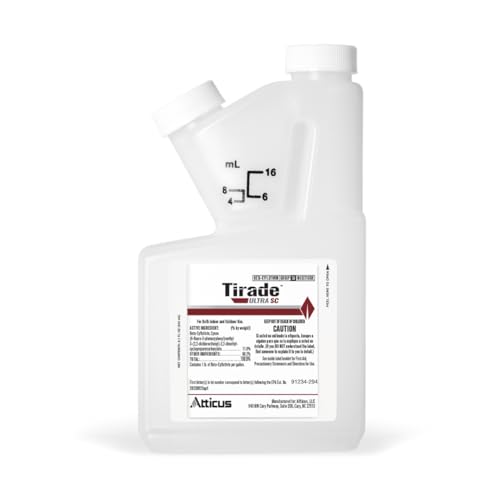
Atticus Tirade Ultra SC Insecticide, 240ml

Neudorff Garden Insecticide Contact Spray, 32 oz

Eco-Bran Broad Spectrum Grasshopper Bait, 2 lbs

Eco Bran Grasshopper Bait, 2 lb

Bonide Diatomaceous Earth Crawling Insect Killer, 5 lbs

Eco-Bran Broad Spectrum Grasshopper Bait, 7.5 lbs

Atticus Talak 7.9% Bifenthrin Concentrate, 32 oz
What Each Pick Brings To The Table
Thuricide HPC is a liquid concentrate built around Bacillus thuringiensis, a naturally occurring soil bacterium that targets caterpillars once they ingest treated foliage. For grasshoppers, that biology is the catch: Btk works on leaf-chewing larvae, not adult jumpers, so this bottle earns its keep in mixed infestations rather than pure hopper swarms.
Vegetable gardeners and orchard owners tend to reach for this when caterpillars and grasshoppers hit the same bed. The label covers vegetables, citrus, nuts, shrubs, trees, ornamentals, and flowering plants, and the application rate is light: 2 to 4 teaspoons per gallon. For most home food gardens, that mix ratio keeps a single 8 oz bottle covering a season of spot treatments.
A Few Strong Suits
- Approved for use on edible crops right up to harvest, which removes the worry of treating near tomatoes or leafy greens.
- Low toxicity to humans, pets, and beneficial insects once dry, a real plus for pollinator-friendly yards.
- Small 8 oz bottle concentrates well, stretching storage space and letting casual gardeners treat without committing to a jug.
- Works against listed caterpillars and worms at the same time, so one spray covers two pest classes in a vegetable bed.
Points To Keep In Mind
- Limited direct effect on adult grasshoppers, since the bacteria need to be eaten by caterpillars or worm-stage pests to work.
- Needs a sprayer you can clean thoroughly afterward; residue in tanks can degrade later applications.
Feature Snapshot
Made For
Organic-leaning vegetable gardeners dealing with caterpillars and grasshoppers in the same bed.
A Better Fit Elsewhere
For pure grasshopper swarms in a wide yard, the Eco-Bran Broad Spectrum Grasshopper Bait at #4 is a more direct hit.
Tirade Ultra SC is a suspension concentrate built around beta-cyfluthrin, a synthetic pyrethroid that’s been in commercial rotation for decades. It runs at 11.8% active ingredient and is designed for broad-spectrum knockdown across more than 100 nuisance pests, including grasshoppers when they enter the spray zone.
Property owners with a half-acre-plus yard, an equipment shed, or a perimeter that borders open ground tend to use this where a milder organic spray would feel underpowered. The 240 ml bottle dilutes into a hand-pump or backpack sprayer, and the suspension formulation holds in mix longer than some emulsions, which helps when coverage takes a while.
A Favorable Mix
- Broad-spectrum control covers grasshoppers, ants, roaches, spiders, ticks, and beetles in one formula.
- Same active ingredient used in established commercial products, which gives a familiar performance profile.
- Water-based suspension concentrate mixes cleanly into a pump sprayer without aggressive solvents.
- Works indoors and outdoors, so the same bottle handles a garage wall and a fence line.
Trade-Offs To Consider
- Synthetic pyrethroid chemistry means bees and other pollinators need to be shielded or absent during application.
- 240 ml is a concentrate, so you’ll need a dedicated sprayer and PPE on hand before mixing.
- Re-entry intervals and posting requirements can apply on treated surfaces; check the current label.
Right Fit For
Homeowners managing wide yards or outbuildings where grasshoppers share space with other perimeter pests.
Consider Something Else When
If your priority is edible garden safety rather than perimeter knockdown, the Neudorff Garden Insecticide Spray at #3 stays closer to food-crop use.
Neudorff’s bottle combines pyrethrins, a flower-derived knockdown agent, with canola oil as the carrier, and it works on contact against grasshoppers, beetles, mites, aphids, and a long list of soft and hard-bodied insects. It is labeled for organic gardening, which is why edible-bed growers tend to keep it on the shelf.
The ready-to-use 32 oz format means no measuring and no guessing, just point and spray. For home gardeners running tomatoes, potatoes, cucumbers, roses, and shrubs in the same yard, the broad label cuts down on the number of bottles in the cabinet.
Bright Spots
- Listed for use right up to and including the day of harvest on many food crops.
- Works as both an insecticide and a miticide, handling two pest classes in one spray pass.
- Kills accessible eggs, larvae, and adults, which shortens the lifecycle gap that often causes reinfestation.
- Covers roses, ornamentals, shrubs, trees, and houseplants under one label.
Soft Spots
- Ant exclusions on the label (fire, harvester, carpenter, pharaoh) mean it isn’t a complete ant solution.
- Contact action means thorough coverage of the pest matters; missed undersides of leaves stay protected.
- Ready-to-use sprayers can clog at the nozzle if stored with product still inside, so flushing between seasons helps.
Quick Facts
Whose Shelf It Belongs On
Organic gardeners and edible-bed growers who want a single multi-pest spray that doesn’t drift into food-safety concerns.
Not Your Match When
You need a long-residual barrier along a fence line; the Atticus Talak at #8 holds a perimeter much longer.
This 2 lb pail is a scatter-bait approach: 2% carbaryl carried on wheat bran, formulated to lure grasshoppers, crickets, cutworm, locust, mole and Mormon crickets, sow bugs, ants, and beetles into feeding. The application method is the headline feature: sprinkle or spread it as a perimeter band or into hot spots, no sprayer required.
First-time users like the bait format because there’s no calibration step. The proprietary carrier holds up against rain and sun better than generic bran baits, which matters when an outbreak runs across several weeks and the weather won’t cooperate.
Points In Its Favor
- Scientifically backed formulation that attracts target pests into feeding and eliminates them through digestion.
- Sprinkle or spread without specialized equipment, which lowers the barrier to first-time use.
- Works as both perimeter treatment and hot-spot bait, giving flexibility based on where grasshoppers concentrate.
- Weather-resistant carrier means fewer reapplications after rain or irrigation.
Honest Caveats
- Carbaryl is a carbamate, not an organic-chemistry option, so it’s not a fit for strictly organic programs.
- Bait must stay dry to remain attractive; soggy bran pellets lose their draw.
Spec Overview
Best Suited To
First-time grasshopper fighters who want a low-fuss perimeter bait without mixing or sprayer maintenance.
Skip It When
You manage a larger property or pasture; the Eco-Bran 7.5 lb pail at #7 covers more ground per refill.
Eco Bran Grasshopper Bait is built around wheat bran infused with carbaryl, designed specifically for the hundreds of grasshopper species found across North America, including the clear-winged, migratory, two-striped, Packard, differential, and red-legged varieties. The formula also extends to locust and Mormon cricket control, which makes it useful in range and pasture scenarios.
Ranchers and acreage owners tend to keep a pail of this on hand because the carrier is attractive to grasshoppers across life stages. Apply it along field margins and the bait draws hoppers in from the surrounding cover, reducing the migration into vegetable rows or pasture centers.
Reasons It Performs
- Wheat bran carrier is highly attractive to grasshopper species common in North American fields.
- Targets both grasshoppers and Mormon crickets under one label, useful for western acreage owners.
- Spreads evenly from a hand scoop or small spreader without specialized equipment.
- Reduces hopper migration pressure when applied at field margins before the season peaks.
Some Limits To Know
- More grasshopper-specific than broad-spectrum, so other yard pests may need a separate treatment.
- Carbaryl chemistry is not suitable for organic certification programs.
- Wet weather quickly degrades bait palatability; reapplication after storms is common.
Who Should Grab It
Acreage owners and small ranchers managing grasshopper pressure on field edges and pastures.
Swap It Out When
You want a multi-pest bait that also covers ants and beetles; the Eco-Bran Broad Spectrum 2 lb at #4 widens the species list.
Bonide’s 5 lb jug is food-grade diatomaceous earth, a fine powder made from fossilized algae. The mode of action is mechanical rather than chemical: the dust scratches the waxy cuticle of crawling insects and absorbs their protective oils, leading to dehydration within about 48 hours.
Barn owners, coop keepers, and home gardeners who avoid synthetic chemistry tend to favor this product. It can be dusted directly along crawl spaces, garden borders, and stored-grain areas, or mixed into a slurry for spraying. Crops and livestock areas are part of the label, though directions need close attention.
Noteworthy Benefits
- Mechanical action means insects cannot build resistance over time, useful in long-term pest programs.
- Works indoors and outdoors across homes, barns, stables, vegetable plots, and flower gardens.
- Can be applied around crops, stored grain, and livestock areas when label directions are followed.
- Broad pest list covers grasshoppers along with ants, roaches, earwigs, silverfish, beetles, slugs, fleas, and bedbugs.
What To Weigh
- Dust formulation needs reapplication after rain or irrigation, since water washes it away.
- Dry dust can irritate lungs during application; a dust mask is the practical accessory most users reach for.
- Slower contact kill (around 48 hours) compared to synthetic sprays, so patience is part of the program.
Built With In Mind
Barn and coop owners who want a chemistry-free dust that handles multiple crawling pests in one bag.
Look Elsewhere When
Speed of knockdown matters most; the Atticus Tirade Ultra SC at #2 brings faster results.
The 7.5 lb version of the Eco-Bran broad-spectrum bait is the same wheat bran and 2% carbaryl formula as the 2 lb pail, scaled up for multi-acre coverage. The carrier formulation is built for rain-fastness and weatherability, which extends the working life of each application across a long grasshopper season.
Property owners managing pastures, rangeland, and wide garden perimeters lean toward the larger pail because one fill covers more ground. Application still requires nothing more than a hand scoop or broadcast spreader, with no sprayer calibration needed.
Standout Benefits
- Bulk 7.5 lb size reduces the number of refill trips during peak grasshopper months.
- Proprietary formulation improves resistance to rain, UV, and weather versus generic bran baits.
- Targets grasshoppers, crickets, locust, mole and Mormon crickets, cutworm, sow bugs, ants, and beetles.
- Works as both hot-spot bait and perimeter band treatment, depending on infestation pattern.
Where It May Fall Short
- Larger pail takes up more storage space, which can be awkward in small garden sheds.
- Carbaryl content rules it out for organic-certification programs, so certifiers won’t accept the application record.
- Bait palatability still drops in prolonged wet weather, requiring follow-up applications after storms.
Perfect Match For
Acreage owners and pasture managers running seasonal grasshopper control across several acres.
Reach For A Different Pick When
You only need to treat a small urban yard; the 2 lb pail at #4 covers a typical suburban lot without the bulk.
Talak is a water-based suspension concentrate carrying 7.9% bifenthrin, a synthetic pyrethroid with a long track record in both commercial pest control and home perimeter sprays. Bifenthrin has been in rotation for more than three decades, which gives the formula a familiar residual profile for anyone who has used perimeter barrier products before.
Homeowners and pros managing long fence lines, foundation perimeters, and outbuilding exteriors use Talak when they need a residual barrier that holds up across multiple weeks. The water-based carrier mixes more cleanly than solvent-heavy pyrethroids and is labeled for both indoor and outdoor sites.
Key Advantages
- Same active ingredient used in established commercial products, with a multi-decade performance history.
- Long residual activity along perimeter sprays reduces the frequency of reapplication.
- Water-based formula mixes cleanly without aggressive solvents, which extends sprayer life.
- Works indoors and outdoors, covering foundation walls, fence lines, lawns, and ornamental beds.
Factors To Consider
- Bifenthrin is highly toxic to bees and aquatic life, so pollinator-friendly gardens need careful timing.
- 32 oz concentrate requires accurate dilution and PPE during mixing, which raises the skill floor.
- Re-entry intervals and posting requirements may apply on treated outdoor surfaces; check current label.
Feature Card
Who Will Love This
Experienced homeowners and pros running residual perimeter sprays around foundations and fence lines.
Where Another Pick Suits Better
Edible gardens and pollinator-heavy landscapes; the Neudorff Garden Insecticide Spray at #3 keeps food crops and bees closer to the safe side of the label.
Picking The Right Formula For Your Yard
Match The Active Ingredient To The Scenario
Bacillus thuringiensis products like Thuricide HPC work through ingestion and target caterpillars more than adult grasshoppers, making them a fit for mixed vegetable beds rather than pure hopper swarms. Synthetic pyrethroids such as beta-cyfluthrin (Tirade Ultra SC) and bifenthrin (Talak) act on contact and leave a residual film along treated surfaces, which suits perimeter barriers and outbuildings. Botanical contact sprays like Neudorff’s pyrethrin and canola oil blend sit in the middle: fast knockdown with food-crop flexibility. Each category has a clear job, and the wrong match usually shows up as either poor results or unnecessary collateral damage to beneficial insects.
Decide Between Bait And Spray
Bait products like the Eco-Bran line draw grasshoppers in through feeding, which reduces spray drift and protects nearby pollinators. Sprays like Tirade Ultra SC and Talak cover larger vertical surfaces and act faster on contact. For most home yards, baits handle perimeter grass while sprays handle fence lines and foundation walls, and combining both is common when infestations build.
Read The Label Before You Mix
Two cautions matter more than any feature callout: check the pre-harvest interval on edible crops and confirm the re-entry interval on treated lawns. Skipping either step is the most commonly reported issue with these products, and the label is the only source that counts. For organic programs, only OMRI-listed or organic-gardening products like Neudorff and Thuricide HPC apply.
Size Your Coverage Honestly
A 2 lb bait pail covers a typical suburban lot’s perimeter band, while a 7.5 lb pail fits multi-acre pasture edges. Concentrates like Talak and Tirade Ultra SC stretch further per ounce but require a sprayer and accurate dilution. Match the package size to the area you’ll actually treat, and keep a small refill on hand for follow-up applications after rain.
Key Considerations Across These Picks
Pitfalls Shoppers Hit
Treating the wrong life stage is the most common miss: many botanical and biological products target nymphs and larvae, not fully grown adults, so timing matters as much as product choice. Skipping the perimeter in favor of spraying only the visible damage leaves a migration highway open, since grasshoppers move in from untreated edges. Reading the label for the active site’s restrictions, especially near ponds, pets, and pollinator gardens, prevents the kind of collateral damage that turns a treatment into a do-over.
Where The Extra Money Goes
Higher-priced concentrates like Talak and Tirade Ultra SC carry residual pyrethroids that hold their effectiveness between applications, which means fewer repeat treatments across a long season. Organic-gardening bottles like Neudorff’s spray cost more per ounce because botanical pyrethrins break down faster and concentrate less aggressively, but they earn that premium by staying compatible with food crops and pollinator-heavy beds. The upgrade pays off when your scenario matches the product’s strength: residual perimeter control for pyrethroids, edible-bed flexibility for botanicals.
Frequently Asked Questions
What Is The Best Time Of Day To Spray For Grasshoppers?
Early morning or late evening works best, since grasshoppers are less active in cool air and beneficial insects are typically back in their shelters. Treating during these windows reduces the chance of hitting pollinators directly while the spray is still wet.
Are These Products Safe Around Vegetable Gardens?
Botanical and biological options like Thuricide HPC and Neudorff’s spray are labeled for use on many edible crops up to harvest. Synthetic pyrethroids work on vegetable edges but require strict adherence to pre-harvest intervals and should never be applied directly to blooming crops where bees are active.
How Long Does A Typical Treatment Last?
Contact botanical sprays break down within a few days under sun and rain, so repeat applications are common. Residual pyrethroids like Talak and Tirade Ultra SC hold their effectiveness on treated surfaces for several weeks. Baits last until consumed or weathered, which usually means a week or two per application.
Can Grasshoppers Develop Resistance To These Pesticides?
Mechanical-action products like diatomaceous earth carry no resistance risk because the mode of action is physical rather than chemical. Synthetic pyrethroids and carbamates can see reduced effectiveness over many seasons of repeated use, which is why rotating active ingredients and combining baits with sprays is a common long-term strategy.
Should I Use A Bait Or A Spray For A New Infestation?
A broadcast bait gives the cleanest start because it draws hoppers in without requiring spray coverage of every leaf. Once the perimeter pressure drops, a targeted spray along fence lines and foundations locks in the result. Combining both tends to outperform either approach on its own.
Closing Remarks
Grasshoppers rarely respond to a single tactic, so the right pesticide is the one that fits your yard’s scale, your crop mix, and your tolerance for synthetic chemistry. Match the active ingredient to the scenario, choose bait or spray based on the migration pattern you see, and read the label before you mix anything near food crops or pollinator gardens. The eight picks above cover most home and acreage scenarios, so start with the closest match and adjust as the season unfolds.
