

Few things frustrate a gardener faster than curling leaves, sticky residue, or tiny green specks marching up a prized rose. You want the problem gone without sacrificing the pollinators, pets, or produce you’ve worked hard to grow. This roundup sorts through eight spray options for indoor and outdoor plants, ranging from gentle botanical oils to a heavy-duty classic. Each pick below earns its spot for a specific reason, whether you tend a windowsill herb garden, manage a backyard vegetable plot, or simply need one bottle that handles most common soft-bodied invaders.
An Overview Of The Picks

Earth’s Ally 3-in-1 Plant Spray 32 Oz

BioAdvanced 3-in-1 Insect, Disease, and Plant Mite Control 24 fl oz

Bonide Captain Jack’s Rose Rx 4-in-1 Neem Oil 32 oz

ARBER Organic Insecticide Spray 16 oz

NatroZing Garden Insect Killer 11 oz
Bonide Captain Jack’s Neem Oil 32 oz RTU

Garden Safe Insecticidal Soap 32 oz

Sevin Insect Killer Spray 1 Gallon
Meet The Standout Selections
Aphids on a fiddle leaf fig, powdery mildew creeping across a zucchini leaf, scale insects clinging to a citrus stem. The Earth’s Ally 3-in-1 Plant Spray is the bottle most beginners reach for first, and for good reason. It mixes a botanical oil blend (plant-derived essential oils rather than synthetic pyrethrins) into a ready-to-use 32-ounce sprayer, so you skip measuring, mixing, or guessing at dilution ratios.
The spray works on contact against soft-bodied insects, meaning the pests must actually get wet for it to do its job. That makes thorough coverage essential, especially on the undersides of leaves where aphids and whiteflies tend to hide. For most indoor houseplants and small patio containers, one bottle covers several rounds of treatment before needing a replacement.
Strong Points
- Plant-based formula makes it approachable for households wary of synthetic pesticide residues near food or pets.
- Combines insect, mite, and disease control in one bottle, so you carry less inventory around the garden.
- The 32-ounce ready-to-use format means zero mixing mistakes, which matters for anyone new to plant care.
- Suitable for both indoor houseplants and outdoor ornamentals, removing the need for separate products.
Things To Consider
- Direct contact is required, so missed insects on the leaf undersides may survive a single pass.
- The botanical scent fades within hours, but you may notice a mild herbal aroma during application in enclosed rooms.
- Heavier infestations sometimes need a second bottle to fully break the pest life cycle.
Feature Snapshot
Whose Shelf It Belongs On
Apartment plant owners with a mixed indoor collection who want one dependable bottle for routine pest patrol.
Consider Something Else When
BioAdvanced 3-in-1 Insect, Disease, and Plant Mite Control is a better fit for outdoor flowering shrubs where Japanese beetles are the main concern.
Shrubs showing stippled leaves from mite feeding, roses dotted with black spot, and a sudden arrival of Japanese beetles on a crepe myrtle. The BioAdvanced 3-in-1 takes a different route from the botanical oils by combining insect, disease, and plant mite control into a single chemical-based formula designed for tougher outdoor conditions.
Compared to Earth’s Ally, this option trades gentleness for reach. You get broader coverage against chewing beetles and sap-sucking aphids, plus control of common fungal issues like powdery mildew and rust on labeled plants. The 24-fluid-ounce bottle attaches to a standard hose-end sprayer or can be applied with a pump sprayer, depending on your preferred routine.
Points In Its Favor
- Targets a longer pest list, including adult Japanese beetles that often shrug off milder botanical sprays.
- Doubles as a fungicide for black spot and powdery mildew, cutting down on the bottles cluttering your shed.
- Works on flowering plants, trees, and shrubs without separate products for each plant type.
- Hose-end attachment option speeds up coverage on larger yard areas versus hand-pumping.
Worth Noting
- This is not an organic formula, so pollinator-friendly timing (early morning or late evening) matters more than with botanical oils.
- Always check the label before use on edible crops, as some plants have a waiting period before harvest.
Right Fit For
Suburban gardeners with established flowering shrubs and small ornamental trees dealing with multiple pest pressures at once.
Skip It When
ARBER Organic Insecticide is a better fit for indoor plant collections where a gentler, food-safe approach matters more than brute force.
Roses demand a different kind of attention than a windowsill pothos. Black spot arrives with humidity, aphids cluster on tender buds, and powdery mildew dusts the leaves in late summer. Bonide Captain Jack’s Rose Rx leans on cold-pressed neem oil to handle all of those at once, functioning as a fungicide, insecticide, miticide, and nematicide in a single 32-ounce ready-to-use bottle.
Unlike the broader BioAdvanced formula, this pick keeps its scope focused on rose-care scenarios, which makes label-reading simpler. Neem oil works by disrupting pest feeding and life cycles, so it tends to perform best as a preventative rather than a knockdown for already-overrun bushes. Most rose growers pair it with a weekly spray schedule during the growing season.
Notable Upsides
- Cold-pressed neem oil is suitable for organic gardening practices, which matters to edible-flower growers.
- Four-in-one label coverage means fewer bottles cluttering your rose-care shelf.
- Ready-to-use format removes the need to measure or mix a concentrate, a real time-saver on a busy weekend.
Trade Offs
- Neem has a distinctive sulfur-like aroma that lingers briefly after spraying, which indoor rose growers should consider.
- Slower-acting than synthetic contact killers, so patience matters during heavy infestations.
- Can harm beneficial insects if sprayed directly on blooms during peak pollinator hours.
Best Suited To
Dedicated rose gardeners who want a single organic bottle that handles insects and the fungal diseases roses attract.
A Better Fit Elsewhere
Garden Safe Insecticidal Soap Insect Killer is a better fit for vegetable plots where you want faster contact action without neem’s slower approach.
Small apartment, modest herb garden on the kitchen counter, a few shelves of pothos and philodendrons. The ARBER Organic Insecticide Spray fits where larger bottles feel excessive. The 16-ounce size is a true liquid concentrate with biological ingredients, formulated for fungus gnats, aphids, whiteflies, mealybugs, and spider mites on contact.
Compared to Earth’s Ally, ARBER leans harder into a biologicals approach rather than a botanical oil base, which can change how it smells and how it feels on the leaves. The concentrate format means you mix what you need, then store the rest, helpful if your pest problems arrive in occasional waves rather than constant pressure.
What Makes Sense
- Compact 16-ounce bottle stores easily in a small closet or under the kitchen sink.
- Biological formulation appeals to organic gardening households growing herbs and leafy greens indoors.
- Targets the indoor pest most people complain about first: fungus gnats around overwatered pots.
- Reasonable value when you only need a few ounces of mixed spray per treatment.
Points To Keep In Mind
- Concentrate mixing takes an extra minute compared to ready-to-use bottles like Earth’s Ally or Bonide Rose Rx.
- Smaller bottle means more frequent repurchasing for those treating a larger plant collection.
Feature Snapshot
Made For
Small-space indoor gardeners with a handful of houseplants and a recurring fungus gnat problem around overwatered pots.
Look Elsewhere When
Earth’s Ally 3-in-1 Plant Spray is a better fit for someone who would rather skip measuring and grab a ready-to-use bottle.
Crawling toddlers, curious cats, dogs that chew anything green. The NatroZing Garden Insect Killer addresses the question that often stalls a treatment plan: is it safe once dry? The 11-ounce can uses a plant-extract formula designed for use around children and pets, and it claims to handle aphids, mealybugs, spider mites, fungus gnats, and other soft-bodied pests at multiple life stages.
The 11-ounce size is the smallest in this roundup, which makes it easy to store on a high shelf out of reach. The compact aerosol format suits spot treatments on individual leaves and small clusters rather than whole-garden coverage, so it pairs well with a larger bottle for bigger projects.
What Stands Out
- Plant-extract formula designed with children and pets in mind, easing concerns in family homes.
- Targets insects across multiple life stages, including eggs, which extends a single bottle’s usefulness.
- Small aerosol can is portable enough to keep on a patio or balcony gardening kit.
Honest Caveats
- The 11-ounce size fills only a few targeted treatments before running out.
- Mostly suited for spot work, so large infestations require pairing with a bigger container.
Feature Snapshot
Who Should Grab It
Parents and pet owners who want a small, plant-based bottle for spot-treating the occasional aphid cluster on a kitchen herb or a windowsill fern.
Reach For A Different Pick When
Bonide Captain Jack’s Neem Oil 32 oz Ready-to-Use Spray is a better fit for households that need larger coverage and broader plant compatibility.
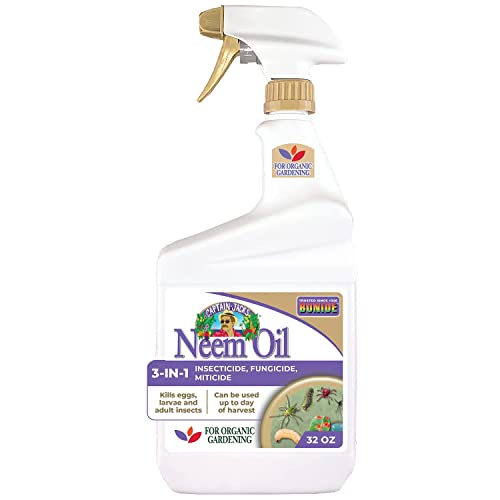
Tomato seedlings on the porch, basil on the windowsill, roses by the front walk, an ailing maple out back. The Bonide Captain Jack’s Neem Oil Ready-to-Use handles all of those from a single 32-ounce bottle. Cold-pressed neem oil gives the formula three jobs in one: fungicide, miticide, and insecticide, with claims of killing eggs, larvae, and adult insects.
The key difference from the Rose Rx version is versatility. Where Rose Rx targets ornamental rose care specifically, this bottle broadens its plant list to include vegetables, herbs, houseplants, trees, turf, and shrubs. For households with mixed plantings, that flexibility outweighs the rose-specific tuning of its sibling.
Reasons It Performs
- Suitable for organic gardening across an unusually broad plant list, including edibles up to harvest day.
- Tackles all three insect life stages, which helps break persistent infestations over several treatments.
- Ready-to-use spray nozzle removes dilution guesswork for newer gardeners.
- Trusted neem-based formula in wide circulation among organic growers.
Small Caveats
- Acts more slowly than synthetic contact killers, so patience matters.
- Distinct sulfur-like neem aroma lingers briefly on treated leaves, more noticeable in enclosed spaces.
Who It Suits Best
Edible-garden growers and mixed-ornamental households who want one organic bottle they can carry from the vegetable bed to the rose border.
Swap It Out When
Garden Safe Insecticidal Soap Insect Killer is a better fit when you want faster contact action without the slower, life-cycle-disrupting approach of neem.
Insecticidal soap is the simplest category in plant care: potassium salts of fatty acids that disrupt soft-bodied insect cell membranes on contact. The Garden Safe Insecticidal Soap Insect Killer delivers that straightforward mechanism in a 32-ounce ready-to-use bottle, targeting aphids, mealybugs, mites, leafhoppers, scale insects, thrips, and whiteflies.
Compared to neem options earlier in the list, this formula trades life-cycle disruption for fast contact knockdown. You spray, the wet pests die, and you move on. The trade-off shows up in the need for repeat treatments, since eggs and hidden pests typically survive a single pass.
The Upside
- Simple, time-tested soap formula that’s easy to explain to a first-time grower.
- Compatible with vegetables, fruit trees, ornamentals, shrubs, flowers, and greenhouse use.
- Ready-to-use bottle requires no mixing or measuring for beginners.
- Knocks down visible pests quickly, which helps build confidence for new plant owners.
A Few Limitations
- Contact-only mode means eggs and hidden insects survive, requiring repeat sprays.
- Can spot delicate leaves if applied in direct midday sun, so timing matters.
- Doesn’t address fungal diseases the way neem-based formulas do.
Feature Snapshot
Perfect Match For
First-time growers who want a forgiving, no-mix bottle to knock down aphids and mites on a mixed vegetable-and-flower garden.
Not Your Match When
Bonide Captain Jack’s Rose Rx 4-in-1 is a better fit for rose gardeners who want fungal disease coverage alongside insect control.
Half an acre of vegetable garden, a long row of fruit trees, a fence line covered in clematis that’s suddenly crawling with beetles. The Sevin Insect Killer Spray Ready-to-Use 2, 1 Gallon arrives in a one-gallon container built for big outdoor jobs. This is the heavy hitter of the roundup, designed for serious pest pressure across large plantings.
The “Ready-to-Use 2” label refers to the dual-format packaging, a refill jug paired with a sprayer. Compared to the botanical picks earlier, Sevin uses a synthetic active ingredient that’s broader in scope but harsher around pollinators. The 1-gallon size means fewer refill trips, which matters when you’re trying to finish a treatment before rain arrives.
Standout Benefits
- One-gallon container covers large vegetable plots and long hedgerows without mid-treatment refilling.
- Tackles a wide range of chewing and sucking insects that softer organic formulas sometimes miss.
- Trusted classic formula in widespread use among home growers for heavy infestations.
Practical Considerations
- Synthetic formula requires careful timing around pollinators, so evening or early morning application matters.
- One-gallon container adds weight and storage considerations versus smaller bottles.
- Always read the label for plant compatibility and harvest intervals on edible crops.
The Right Fit
Backyard growers with substantial vegetable beds, fruit trees, or large flower borders facing heavy, recurring pest pressure.
Where A Sibling Pick Shines
BioAdvanced 3-in-1 Insect, Disease, and Plant Mite Control is a better fit for smaller yards where you want insect plus disease coverage in one bottle without the bulk.
Picking The Right Bottle For Your Garden
Choosing a plant bug killer comes down to matching the formula, the bottle size, and the plant list to your actual growing setup. Indoor collections and outdoor plots have different demands, and so do households with pets, pollinators, or edible crops nearby.
Match The Formula To Your Plant List
Botanical oils and insecticidal soaps treat most soft-bodied pests on contact and tend to suit indoor houseplants, herbs, and small edible gardens. Synthetic formulas cover a broader pest range but require stricter timing to protect pollinators and beneficial insects. For mixed plantings, a neem-based product like Bonide Captain Jack’s Neem Oil straddles both worlds reasonably well, working on vegetables, ornamentals, and houseplants from one bottle.
Size The Bottle To Your Routine
A 32-ounce ready-to-use bottle lasts through several rounds of treatment on a modest indoor collection, while a one-gallon jug makes sense only when you’re covering a backyard vegetable plot or a long hedgerow. Smaller 11- to 16-ounce containers fit on a kitchen shelf and serve occasional spot treatments on a few problem plants. Buy bigger only when you actually treat often enough to use the volume before the season ends.
Read The Plant Label Before You Buy
Every bottle in this roundup carries a labeled plant list, and ignoring it is the fastest path to burned foliage. Roses, succulents, and certain herbs react differently to oil-based sprays, especially in direct sun. Always check the label for plant compatibility, harvest intervals on edibles, and any protective equipment recommendations before the first spray.
Think About Who Else Uses The Space
Homes with curious pets, small children, or beekeeping neighbors should weigh the formula carefully. Plant-extract and insecticidal soap options keep dry-time concerns to a minimum, while synthetic formulas need clear drying time before pets or kids return to the treated area. Evening application remains the standard recommendation for any product that might affect pollinators on outdoor flowering plants.
Key Considerations Across These Picks
A few practical reminders tend to save gardeners from the most common frustrations with plant sprays. Knowing what to avoid upfront makes every bottle in this roundup work better once you bring it home.
Where Shoppers Go Wrong
The classic mistake is reaching for the biggest, toughest formula when a gentler product would do the job. Sevin Insect Killer Spray clears a serious beetle infestation faster than a botanical oil, but applying it to a windowsill pothos is overkill, and the leftover residue matters more around an indoor plant. Match the formula to the pressure, not the other way around. Skipping the undersides of leaves is the second most common slip: aphids, whiteflies, and spider mites cluster there, and a top-only spray misses them entirely.
Where The Extra Money Goes
Premium picks like BioAdvanced 3-in-1 and Bonide Captain Jack’s Rose Rx cost a bit more because they bundle multiple jobs into one bottle. Paying up front can replace three or four single-purpose products in the shed, which simplifies storage and treatment routines. The upgrade pays off most for gardeners managing mixed plantings who want one reliable bottle for insects, mites, and fungal diseases rather than a shelf full of specialized options.
Frequently Asked Questions
How often should I spray plant bug killers on indoor houseplants?
Most ready-to-use sprays work on a 7-to-14-day repeat schedule, with a second application usually recommended to catch any eggs or pests that survived the first pass. Always follow the label directions for the specific bottle you choose.
Can I use plant bug killers on edible herbs and vegetables?
Several picks in this roundup, including Bonide Captain Jack’s Neem Oil and Garden Safe Insecticidal Soap, are labeled for use on edibles up to harvest day. Still, rinsing produce before eating and checking the bottle’s harvest interval remains the smart move.
Will these sprays harm bees and butterflies?
Botanical oils and insecticidal soaps pose less risk to pollinators than synthetic formulas, but spraying open blooms during the day can still cause harm. Apply any outdoor treatment in early morning or late evening when pollinators are less active.
How long does a bottle typically last once opened?
Most ready-to-use sprays stay effective for one to two growing seasons when stored in a cool, dry place away from direct sunlight. Concentrates like ARBER Organic Insecticide can last longer since you mix only what you need each time.
Do plant bug killers work on fungus gnats?
Fungus gnats respond to foliar sprays, but addressing the larval stage in the soil matters just as much. Letting the top inch of soil dry between waterings, paired with a contact spray, breaks the life cycle more reliably than spraying alone.
The Takeaway
Plant bug killers come in enough varieties that the right choice depends on your plants, your space, and your tolerance for synthetic ingredients. Indoor houseplant owners usually do best with gentle botanical or insecticidal soap options like Earth’s Ally or Garden Safe, while outdoor gardeners with heavier pressure may lean toward BioAdvanced or Sevin. Pick the bottle that matches your real situation rather than the toughest formula on the shelf, and you’ll spend less time treating and more time enjoying healthier plants.
