

Walking out the front door on a hot July morning and spotting a crisp row of drooping tomato plants is the kind of small heartbreak that ruins a coffee. The right automatic watering setup ends that daily worry, and it does not have to be a complicated plumbing project. Whether you tend a few pots on a balcony or run a full backyard with raised beds, a well-chosen irrigation system saves time, water, and the slow guilt of forgotten greenery. This roundup covers eight solid options, from simple wicking cords to app-controlled solar rigs, so you can match the kit to your space and your tolerance for tinkering.
A Fast Comparison Of The Options

Vego Garden Irrigation Kit for Raised Garden Beds (Large)

ORIMERC 50 Feet 1/4 Inch Self Watering Wick Cord

HEKIWAY 120FT Drip Irrigation System with Smart Water Timer

HEKIWAY 60FT Drip Irrigation System with Smart Water Timer

RAINPOINT WiFi Automatic Plant Waterer Indoor, Smart APP Control Drip Irrigation System

HEKIWAY Dual Outlet Water Timer with 2 Brass Connectors
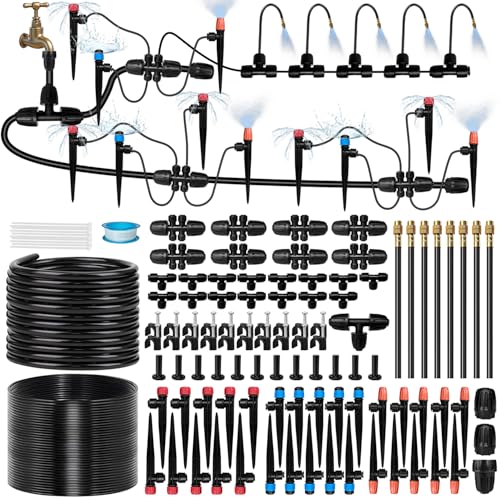
GGAQHLK 250FT Drip Irrigation System with 38 Copper Nozzles

RainPoint WiFi Solar Drip Irrigation System for Balcony and Backyard
More Details On Our Top Picks
You have built (or bought) a tidy raised bed, planted a few rows of greens, and now the daily watering routine is starting to wear thin. The Vego Garden Irrigation Kit is built around that exact situation, with a layout designed to thread water lines through the corners and across the surface of a raised planter rather than across a wide lawn.
Because the system targets the root zone directly, less water ends up on walkways or evaporating off foliage. For most backyard veggie growers, the DIY-friendly install is the real draw, since you can usually have it running within an afternoon.
Notable Upsides
- Targeted root-zone delivery cuts down on wasted water between rows.
- Raised-bed-specific layout means fewer cuts and fittings to wrestle with.
- Suits vegetables, flowers, and herbs in the same bed without major reconfiguration.
- DIY install avoids the cost of hiring a professional irrigation crew.
Things To Consider
- Less useful for in-ground beds or sprawling lawn areas.
- Setup can still demand patience if your bed is unusually shaped or extra long.
Key Specs
Who It Suits Best
Backyard growers with one or two raised beds who want a tidy, hands-off watering routine for vegetables and flowers.
A Better Fit Elsewhere
For someone tending a large, mixed yard with lawn plus beds, the HEKIWAY 120FT Drip Irrigation System with Smart Water Timer offers more reach and a built-in timer.
Sometimes you just need a way to keep a few houseplants or greenhouse pots from drying out while you are away, and a full drip system feels like overkill. The ORIMERC wicking cord is the older, simpler approach: a length of absorbent rope that pulls water from a reservoir up into the soil by capillary action (the same physics that makes a paper towel drag water across a counter).
You cut the cord to length, soak it, drop one end in a bucket or jar of water, and bury the other end in the pot. The result is a quiet, no-electricity setup that works best for smaller batches of plants that hate going bone dry.
Everyday Perks
- No power, timers, or WiFi needed.
- Cheap way to keep a handful of pots alive on vacation.
- Trims to any length for unusual container setups.
- Silent operation with no moving parts to break.
Points To Note
- Flow rate depends on cord length, so results can be inconsistent.
- Reservoir jars need refilling on longer trips.
- Less practical for an entire backyard or large raised bed.
Made For
Travelers and casual indoor plant owners who want a simple, low-cost way to keep a few pots watered without any electronics.
Skip It When
You want a set-and-forget setup for a whole yard. The HEKIWAY 60FT Drip Irrigation System with Smart Water Timer is a more capable choice for outdoor coverage.
Long tubing plus a programmable timer is the combination that turns irrigation from a chore into background infrastructure, and the HEKIWAY 120-foot kit leans hard into that idea. A smart water timer (the device that turns your spigot on and off according to a schedule) sits at the hose end, while 120 feet of drip line is enough to snake through a mid-size backyard or a row of raised beds.
For busy households or anyone who travels often, the scheduled watering removes the daily “did I water?” mental load. Owners commonly appreciate being able to set once and walk away for weeks at a time.
Strong Points
- 120 feet of reach covers most suburban backyards and multiple beds.
- Smart timer automates start time, frequency, and duration.
- Rain delay mode helps skip cycles when weather already does the work.
- Child lock on the timer prevents accidental schedule changes.
Trade Offs
- Timer batteries are not included, so plan ahead.
- Setup takes more time than a simple hose-end sprinkler.
Feature Snapshot
Best Suited To
Homeowners with a medium backyard, multiple beds, or a busy schedule who want a hands-off, schedule-driven setup.
Look Elsewhere When
You mostly need indoor watering or a smaller patio footprint. The RAINPOINT WiFi Automatic Plant Waterer Indoor is a more focused indoor pick.
Not everyone needs 120 feet of line snaking around the yard. For porches, balconies, and small urban plots, the HEKIWAY 60-foot kit delivers the same scheduling brain in a more compact package. The shorter run is easier to hide along a railing or under a narrow bed.
Where this kit really earns its keep is in tight spaces where a longer system would just leave coiled-up slack tubing. Pair it with a few patio containers and you have a tidy little automatic setup that does not dominate the space.
Advantages To Know
- Right-sized 60-foot length fits patios, balconies, and small beds.
- Same smart timer features as the larger HEKIWAY kit.
- Rain delay and child lock help avoid wasted water and accidental setting changes.
- Less leftover tubing to coil and store when not in use.
Some Limits To Know
- Limited reach for larger properties or multiple separated beds.
- Timer batteries are not included, so factor that into your setup.
Whose Shelf It Belongs On
City dwellers, renters, and small-yard homeowners who want smart scheduling without the bulk of a long-run system.
Another Choice May Suit
For larger lots needing more line, the HEKIWAY 120FT Drip Irrigation System with Smart Water Timer extends the same approach across more ground.
Outdoor drip kits do not translate well to a windowsill full of pothos and a fiddle leaf fig in the corner. The RAINPOINT WiFi Automatic Plant Waterer is built for that exact indoor problem, with a rechargeable pump that pushes water through thin tubing to up to 15 pots from a single reservoir.
Because the controls live in a smartphone app, you can tweak schedules from an airport lounge, which is the real appeal for frequent travelers. The anti-siphon design (a check valve, meaning a small internal flap that prevents water from flowing backward into the pump when the unit is off) keeps the pump from siphoning water back out of the pots when the cycle ends.
The Helpful Details
- WiFi app control fits a 2.4 GHz home network.
- 2400 mAh rechargeable battery supports long stretches between charges.
- Anti-siphon feature helps avoid messy backflow into the reservoir.
- Quiet enough for living rooms and home offices.
Honest Caveats
- Limited to 2.4 GHz WiFi networks, so older routers may not pair.
- Reservoir refills are still a manual task every so often.
Perfect Match For
Indoor plant collectors and frequent travelers who want app-based control over a medium-sized houseplant setup.
Reach For A Different Pick When
Your plants live outside on a balcony without a tap. The RainPoint WiFi Solar Drip Irrigation System for Balcony and Backyard is designed for that exact environment.
Sometimes one hose tap and one schedule is not enough. Maybe the lawn needs a soak every third day, while the greenhouse misters need a light daily run. The HEKIWAY Dual Outlet Water Timer handles both with two independent zones from a single brass manifold.
The brass connectors feel reassuringly solid on the hose bib, and the programmable schedule supports separate run times per zone. Rain delay and child lock round out the feature set, so unexpected weather or curious kids do not throw the whole routine off.
The Upside
- Two outlets support different watering zones on independent schedules.
- Brass connectors hold up well to repeated hose hookups.
- Rain delay and child lock protect the schedule from weather and mishaps.
- Works with standard garden hose threading for easy retrofit.
Soft Spots
- Timer batteries are not included, so you need to source those separately.
- Does not include tubing, so pair with a drip kit if you want more than sprinklers.
Quick Facts
Right Fit For
Property owners running both a lawn zone and a greenhouse or bed zone that need different watering rhythms from one tap.
Swap It Out When
You would rather have a complete drip line included. The HEKIWAY 120FT Drip Irrigation System with Smart Water Timer bundles the timer with tubing.
Big yards, multiple greenhouses, and ambitious vegetable patches all push irrigation kits to their limits. The GGAQHLK 250-foot system answers that with a 1/2-inch main line that handles higher water pressure, plus 38 adjustable copper nozzles that let you dial the flow at each plant.
The included 1/2-inch tee connector splits the run into two independent zones, which is unusual for a kit at this level. Copper emitters tend to resist the mineral buildup that clogs cheaper plastic heads over time, so for heavy users the trade-off in cost tends to pay back in fewer replacements.
The Practical Payoff
- 250 feet of line covers large properties and multiple beds.
- 1/2-inch main tubing supports higher flow with less pressure drop.
- Copper nozzles resist mineral clogging longer than plastic.
- Tee connector enables two independent watering zones from one source.
Where It May Fall Short
- Bulk tubing takes real storage space in the off-season.
- Setup time grows with every extra foot of line and emitter.
Who Should Grab It
Serious gardeners and small-scale growers running a large yard, a greenhouse, or several raised beds who need a heavy-duty drip backbone.
Where Another Pick Suits Better
For a smaller patio, the HEKIWAY 60FT Drip Irrigation System with Smart Water Timer is far less tubing to wrestle with.
Many apartment balconies and rental patios do not have a hose bib, which rules out most drip kits on the market. The RainPoint WiFi Solar Drip Irrigation System sidesteps that problem entirely: it pulls water from a bucket or reservoir and runs on solar power with a USB-C backup.
It is sized for around 10 to 15 plants, which lines up nicely with a small herb wall or a cluster of container tomatoes. App control ties into the same ecosystem as the indoor RAINPOINT pick, so households already using that brand can keep one app for both spaces.
Everyday Wins
- Tap-free design works where no hose spigot is available.
- Solar power with USB-C backup extends runtime in low-light stretches.
- App control for remote schedule adjustments while away.
- Sized right for a balcony herb garden or container cluster.
Factors To Consider
- Reservoir refills are manual, so plan around the water source you have.
- Solar performance depends on placement getting decent direct light.
Built With In Mind
Renters, apartment dwellers, and balcony gardeners who want app-controlled watering without drilling into a wall for a tap.
Consider Something Else When
You need wide yard coverage. The GGAQHLK 250FT Drip Irrigation System with 38 Copper Nozzles is built for that scale instead.
Matching The Right System To Your Space
Choosing a plant watering setup is less about brand loyalty and more about matching plumbing reality to your garden reality. Start with the water source: do you have a hose bib, or will you be filling a reservoir by hand? From there, look at the layout, the size of the planting area, and how often you actually want to think about watering in mid-July.
Drip systems use a network of narrow tubing and small emitters to deliver water slowly right at the base of each plant, which is why they tend to outperform spray setups for beds and containers. Smart timers add a programmable controller so the schedule runs without you, and rain delay modes keep things from drowning after a storm. For container-heavy spaces, look for kits that include a pump or a reservoir option, since gravity alone rarely keeps a long drip run consistent.
If you travel, app-based controls and anti-siphon check valves (small one-way valves that stop water from draining back out of the lines when the pump shuts off) become more than nice extras. They are the difference between a thriving plant shelf and a swampy mess on the rug.
Key Considerations Across These Picks
Where Shoppers Go Wrong
A common trap is buying the longest line available and hoping it covers the yard. In practice, leftover coiled tubing kinks, catches feet, and restricts flow. Measure your beds first, then add a small buffer for turns. Another slip is assuming every timer works with every spigot. Battery compartments, thread sizes, and WiFi band support (most smart timers need 2.4 GHz, not 5 GHz) all vary, and a mismatch turns a slick kit into a return trip.
Where The Extra Money Goes
Higher-tier models tend to spend their premium on three things: sturdier connectors (brass instead of plastic), emitters that resist mineral clogging, and smarter scheduling features. For a small patio, that upgrade rarely matters. For a multi-zone yard or a greenhouse that runs daily, the smoother long-term experience usually justifies the step up.
Frequently Asked Questions
How long does it take to install a typical drip irrigation kit?
Most DIY drip kits install within an afternoon, especially if you already have a hose spigot in the right spot. Larger 200-plus-foot systems with multiple zones take longer because of extra fittings and emitter placement.
Can I use a smart water timer with any hose setup?
Smart timers generally work with standard outdoor hose threading, which covers most residential setups. Always check that the timer’s WiFi band matches your router, since many only support 2.4 GHz networks.
Are wicking cords a real substitute for drip irrigation?
Wicking cords are a practical substitute for small, indoor, or short-trip situations where you only need to keep a few pots from drying out. For full beds and outdoor coverage, a drip system delivers water far more evenly.
Do solar-powered watering systems work in cloudy climates?
Solar systems still function in cloudy weather thanks to their rechargeable backup batteries, though they may need more frequent top-ups in deeply shaded balconies. Placement in the brightest available spot helps a lot.
How often should I replace emitters and tubing?
Plastic emitters usually last a few seasons before mineral buildup affects flow, while copper emitters tend to last longer. Tubing can last many years if you drain and store it before winter freezes hit.
Wrap Up
The right plant watering system is the one you barely have to think about after setup. Match the water source to your space, give yourself a little extra tubing for future beds, and let a timer handle the routine. Your plants will stay happier, and so will your mornings.
