

Aloe vera has earned its reputation as one of the most forgiving houseplants, but that hardiness disappears the moment its roots sit in waterlogged soil. The right pot keeps the root zone dry, gives the crown room to expand, and complements whatever shelf or windowsill you put it on. This lineup covers ceramic showpieces, drainage-first designs, and self-watering plastic sets that suit anything from a small kitchen corner to a patio cluster.
A Closer Look At The Lineup

Funny Succulent Plant Pots, Small Ceramic Aloe Cactus

Metahom 5.8 Inch Ceramic Plant Pots, Set of 4

QRRICA Self Watering Pots, Set of 6 (White)
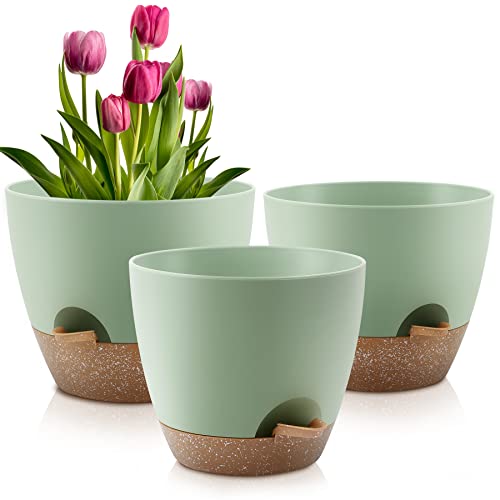
QRRICA Self Watering Pots, Set of 3 (Green)

LE TAUCI Succulent Pots, 6.5+8 Inch, Matte White

QRRICA 12/10/9 Inch Self Watering Pots

What up Succa Funny Ceramic Planter, 3.5 Inch

Funny Succulent Plant Pots, Small Aloe Vera Pots

Funny Toilet Plant Pot Self Watering Face Planter
Inside Each Recommended Option
This little ceramic from Cgvovgr turns a small aloe pup into a desktop character. At roughly 3.5 inches across and 3 inches tall, it slots between a keyboard and a coffee mug without crowding either. The printed quote on the side gives it a giftable personality that no plain terracotta pot can match, so it works well as a coworker present or a quirky addition to a kitchen shelf.
Because aloe roots spread wide rather than deep, the squat dimensions actually suit the plant’s natural growth habit. Owners commonly report that a single small rosette fills the opening within a season, at which point dividing or moving up to the larger Metahom set becomes the natural next step.
Strengths Worth Knowing
- Compact 3.5-inch footprint fits crowded desks and narrow windowsills where bigger planters would feel intrusive.
- Ceramic walls add visual weight that helps anchor a lightweight aloe rosette.
- Printed humor gives the pot built-in gift appeal for office swaps and casual housewarmings.
- Glazed finish wipes clean with a damp cloth, so stray soil at the rim comes off without scrubbing.
Things To Consider
- Small diameter means fast-growing aloe offsets will need repotting within a single growing season.
- Printed graphics can scratch if stacked carelessly during storage, so wrapping between uses helps preserve the finish.
Key Specs
Who It Suits Best
Office workers, gift-givers, and anyone starting a single small aloe on a shelf with limited square footage.
Where Another Pick Suits Better
Households with several established aloes get more value from the multi-piece QRRICA 12/10/9-Inch Self Watering Pots, which handle bigger root balls and busier watering routines.
The Metahom quartet earns its place by solving the most common aloe problem: a single pot never looks intentional, but four matching planters lined up on a shelf read as a designed vignette. At roughly 5.8 inches wide and 5.2 inches tall with the saucer attached, each pot gives an aloe enough room to settle in for at least a full growing season.
The embossed botanical rim and geometric body texture break up light differently than plain cylinders, so the plants feel decorative rather than utilitarian. Assorted colors let you sort by mood: warm tones for a living room, cool tones for an office corner.
Useful Highlights
- Four coordinated pots anchor a small indoor garden without forcing a single-monoculture display.
- 5.8-inch diameter accommodates a mature aloe’s wider root spread, extending time between repottings.
- Embossed rim and textured body add tactile interest that reads as pottery, not plastic.
- Matched saucers catch runoff, protecting wood shelves and windowsill paint from mineral staining.
Worth Noting
- Ceramic is heavier than plastic, so rearranging the quartet across a room takes a deliberate lift rather than a casual slide.
- Surface embossing can trap dust in the grooves, so an occasional soft brush helps maintain the texture.
Feature Snapshot
Made For
Home decorators who want aloe plants to read as part of a styled interior rather than scattered accidents.
Skip It When
You’d rather set up one statement piece for a large floor aloe, in which case the LE TAUCI Shallow Succulent Planters deliver more visual weight per pot.
QRRICA’s six-piece white set solves the propagation problem most aloe owners hit by year two: pups keep appearing and every flat surface fills up. The graduated sizes, running from 5 to 8 inches, line up neatly along a windowsill or a propagation shelf and give every generation its own appropriately sized home.
A self-watering reservoir with a cotton wick pulls moisture up from the saucer, which helps when you forget a watering or hand the plant off to a less attentive sitter. Drainage holes keep the wick from drowning the root zone, so the plant still gets the dry-out cycle aloe prefers.
Notable Upsides
- Six graduated diameters (5 to 8 inches) support an aloe’s full life cycle from pup to mature plant.
- Self-watering wick reduces the risk of bone-dry soil during busy weeks or short trips.
- Mesh drainage holes protect roots from rot while still letting excess water escape.
- Lightweight plastic moves easily between indoor and outdoor spots as seasons shift.
Trade Offs
- Plastic walls hold less thermal mass than ceramic, so swings in room temperature reach the roots faster.
- White plastic shows mineral spots from hard water, requiring periodic saucer cleaning.
Right Fit For
Multi-plant households and propagators who keep cycling new aloe offsets through different pot sizes.
Consider Something Else When
You want a single decorative centerpiece, since the LE TAUCI Ceramic Indoor Plant Pot offers more visual presence for one showcase plant.
The green QRRICA trio steps up to 8, 9, and 10 inches, which is exactly where mature aloe vera lives comfortably for several years. The added diameter matters because an aloe’s root system mirrors the leaf span above ground, and cramming a wide rosette into a narrow pot restricts its natural posture.
The same wick-and-reservoir design from the smaller QRRICA set carries over, so watering becomes a fill-the-saucer task rather than a guess-the-soil task. Mesh drainage keeps the lower roots from sitting in standing water, which is the most common cause of aloe decline indoors.
Real Benefits
- 10-inch diameter handles a fully grown aloe without forcing early root pruning.
- Reservoir system extends intervals between manual waterings, helpful during travel weeks.
- Recyclable plastic construction keeps the pots light enough to move for seasonal sun tracking.
- Green finish blends with foliage rather than competing with it, useful on patio groupings.
Points To Note
- Larger saucers collect more runoff, so emptying them before trips prevents overflow mess.
- Plastic walls can fade in direct outdoor sun, so a partially shaded patio extends the color life.
Best Suited To
Households with one or more mature aloe plants that have outgrown starter pots and need stable roomy quarters.
A Better Fit Elsewhere
Collectors running many small propagation projects get more flexibility from the six-piece QRRICA White set.
LE TAUCI’s shallow, wide-mouth format addresses something most cylindrical pots ignore: aloe roots want horizontal room more than vertical depth. The 8-inch and 6.5-inch pair arrives ready for a cluster arrangement, with enough surface area to plant a mother rosette alongside two or three pups in a single decorative scene.
Raised feet lift the base slightly off the table, which keeps airflow moving under the pot and prevents the saucer from sealing against wet surfaces. Matte white glaze reads as a neutral backdrop, so the green aloe becomes the visual focal point rather than competing with a busy pot color.
The Practical Payoff
- Shallow profile mirrors aloe’s natural horizontal root spread, reducing the risk of rot at the base.
- Wide mouth accommodates clusters of pups in a single pot instead of forcing separate containers.
- Raised feet improve airflow beneath the pot, which speeds drying between waterings.
- Built-in drainage hole stops the guesswork that often leads to overwatered aloes.
Honest Caveats
- Shallow depth means tall, top-heavy aloe specimens can tip if knocked, so placing it away from pet paths helps.
Who Will Love This
Design-minded plant owners building curated succulent displays where multiple small aloes share a single low planter.
Not Your Match When
You want a single tall statement planter for a mature floor aloe, since the QRRICA 12-Inch Self Watering Pot handles that scale more confidently.
The largest QRRICA set jumps to 9, 10, and 12 inches, which puts it in floor-plant territory. A 12-inch diameter comfortably holds a mature multi-year aloe with several offsets, giving the root system the spread it actually wants rather than forcing it into repeated annual root pruning.
The wick-fed reservoir matters most at this scale, because a 12-inch pot holds enough soil to dry out unevenly without it. Pulling water from below keeps the lower root zone consistently moist without soaking the crown, which is where rot usually starts on neglected large aloes.
What Pays Off
- 12-inch diameter supports a multi-year aloe without annual repotting pressure.
- Substantial reservoir reduces watering frequency, helpful for owners who travel regularly.
- Suitably sized for patio use, where larger planters handle wind and weather better than small ones.
- Stable base prevents tipping, even with a heavy, top-heavy mature rosette.
Points To Keep In Mind
- Larger pots stay wet longer after watering, so checking soil moisture before refilling the reservoir prevents overwatering.
- Bigger footprint demands floor space or a sturdy bench, so small apartments may need to plan placement carefully.
Perfect Match For
Plant parents with one large established aloe that has graduated past smaller ceramic pots.
Reach For A Different Pick When
You’re building a shelf of small decorative aloes, since the LE TAUCI Shallow Pair reads more elegantly at that scale.
The “What up Succa” planter leans into humor as a feature, which makes it a strong pick for coworker gifts and Secret Santa swaps. The 3.5-inch ceramic body holds a small aloe or a single cactus comfortably without crowding either, and the printed joke gives it built-in personality that no plain pot can match.
A drainage hole at the base keeps moisture moving through the soil, which is the part most novelty planters skip. For a gift recipient who has never grown succulents, that single feature can be the difference between a thriving plant and a waterlogged one.
Everyday Advantages
- Drainage hole protects beginners from the most common succulent-killing mistake.
- Compact 3.5-inch size fits any office cubicle or shared desk space.
- Humor-forward graphics remove the need for gift wrapping or extra presentation.
Small Caveats
- Small volume means fast-growing aloes need repotting within months, so it suits short-term gifting rather than long-term housing.
- Printed graphics may fade in direct sun, so a bright indirect light spot keeps the joke legible longer.
Who Should Grab It
Anyone shopping for a coworker, teacher, or friend who enjoys plants but appreciates a laugh with their greenery.
Swap It Out When
You want aloe decor that matches a serious interior design scheme, in which case the Metahom Ceramic Set of 4 fits more refined spaces.
This Cgvovgr entry shares the 3.5-inch ceramic format of the lineup’s other novelty pots, with a quote printed directly on the side. For someone buying their first aloe, the small footprint keeps the commitment low: one small plant, one small pot, one windowsill.
Ceramic walls retain moisture more evenly than thin plastic, which buffers the plant against the irregular watering schedules most beginners bring to their first succulent. Once the aloe outgrows the pot, the QRRICA graduated set becomes the natural upgrade path.
Positive Takeaways
- Ceramic body moderates soil moisture swings for owners still learning aloe watering rhythms.
- Cheerful printed quote turns the pot into a low-effort decor upgrade.
- Small dimensions make it easy to move while figuring out the best light conditions in a new home.
A Few Limitations
- No included drainage detail means owners should verify whether the base includes a hole before watering heavily.
- Small diameter constrains the plant’s lifespan in this pot, so expect to upgrade within a year.
Built With In Mind
First-time plant owners testing the waters with one aloe and a small, friendly-looking pot.
Where A Sibling Pick Shines
YouTube-ready shelf decorators will prefer the Metahom four-piece ceramic set for its cohesive look.
Toparad’s toilet-shaped planter commits fully to novelty, which makes it a strong pick for gag gifts and quirky shelf moments rather than serious indoor gardening. The built-in self-watering rope pulls moisture up from a hidden reservoir, which keeps the humor functional rather than purely decorative.
Because the form factor is unusual, it works best as a single statement piece on a desk or windowsill rather than as part of a coordinated aloe collection. For practical multi-plant setups, the LE TAUCI or QRRICA pots handle the heavy lifting.
Useful Touches
- Self-watering rope reduces the maintenance load on what is otherwise a purely decorative pot.
- Distinctive silhouette doubles as a conversation starter in casual workspaces.
- Compact body fits the same small-desk footprint as standard ceramic starters.
Practical Considerations
- Unusual shape limits how many plants fit comfortably, so it works as a single-piece statement rather than a collection starter.
- Novelty form may not suit households preferring understated decor, so matching it to the recipient’s taste matters.
Whose Shelf It Belongs On
Anyone shopping for a gag gift, a quirky coworker present, or a fun decorative piece for a casual workspace.
Look Elsewhere When
You want aloe-friendly functionality first and decoration second, in which case the QRRICA Self Watering Set covers the practical side more reliably.
What To Weigh Before Choosing Pots For Aloe Vera
Drainage Comes First
Aloe vera’s roots rot quickly when they sit in standing water, so any pot you consider must have a drainage hole or a built-in mechanism that prevents water from pooling at the base. Self-watering designs work because the wick system meters moisture rather than flooding the root zone. Pots without drainage require carefully measured pour volumes and a fast-draining soil mix to keep the plant safe. If your favorite pot has no hole, drilling one yourself with a diamond bit is often possible with unglazed ceramic.
Match Diameter To Root Spread
Aloe roots spread outward more than downward, so a wide, shallow pot usually suits the plant better than a tall, narrow one. As a rule, the pot diameter should be roughly equal to the plant’s leaf-span, with another inch of clearance around the root ball. Picking a pot that’s slightly snug encourages flowering in mature plants, while oversized pots hold excess moisture and slow root establishment.
Material Affects Watering Rhythm
Ceramic walls breathe through their porous structure, which helps soil dry evenly between waterings, and they retain thermal stability during temperature swings. Plastic stays lighter, costs less, and moves easily between indoor and outdoor spots, but it holds moisture longer and can fade in direct sun. Glazed ceramic combines decorative appeal with moisture retention somewhere between the two. For most indoor aloe setups, unglazed or matte ceramic gives the most forgiving watering rhythm.
Plan For Growth Over Time
Most aloe owners repot every two to three years as the plant produces offsets and the root system expands. Buying a graduated set (such as the QRRICA bundles) gives you somewhere to graduate the plant as it grows, rather than scrambling for a new pot at the last minute. If you propagate pups regularly, smaller pots in the 5 to 6-inch range keep the propagation shelf organized and visually tidy.
Smart Choices Across This Lineup
Pitfalls Shoppers Hit
The most common mistake is choosing a pot without drainage and then watering on the same schedule as a typical houseplant. Aloe prefers soil that dries fully between waterings, so a pot that traps moisture at the bottom will rot the roots within weeks. Another slip is picking a pot that’s far too large for the plant, which keeps the surrounding soil wet long after the roots have absorbed what they need. Buying strictly on appearance, rather than drainage and size, leads to plants that survive a season but decline by year two.
Where The Extra Money Goes
Higher-tier ceramic pots cost more because of denser clay bodies, hand-finished glazing, and built-in features like raised feet or matched saucers. Those extras translate to better moisture regulation, more stable footing for top-heavy rosettes, and decorative finishes that hold up over years of use. The upgrade is worth it for showcase plants and group displays where the pot itself is part of the decor. For propagation shelves and back-of-house growing, mid-tier plastic sets deliver the same plant health at a fraction of the cost.
Frequently Asked Questions
Do aloe vera pots need drainage holes?
Yes, drainage holes are strongly recommended because aloe roots rot quickly in standing water. If a pot lacks a hole, water volume must be controlled carefully or a drainage layer added at the base.
How big should a pot be for aloe vera?
Pick a pot roughly the same diameter as the plant’s leaf span, plus about an inch of clearance. Aloe roots spread horizontally, so width matters more than depth in most cases.
Can aloe vera grow in plastic pots?
Plastic pots work well, especially self-watering designs that meter moisture through a wick. The trade-off is that plastic retains moisture longer than ceramic, so watering frequency should drop accordingly.
How often should aloe vera be repotted?
Most aloe plants need repotting every two to three years, or whenever offsets crowd the container. Signs include roots circling the drainage hole or pups pushing against the pot walls.
Are shallow pots better than deep pots for aloe?
Shallow, wide pots often suit aloe better than deep, narrow ones because the root system spreads horizontally. Deep pots can hold excess moisture near the bottom, which increases rot risk if watering is generous.
Closing Remarks
The right pot for your aloe comes down to matching drainage, diameter, and material to your watering style and decor. Ceramic stands out for steady moisture control and visual weight, while plastic self-watering sets handle busy schedules and propagation shelves. Start with your plant’s current size, plan a step up for the next repotting, and pick the material that fits how reliably you water.
