

A fruit tree in a container lives and dies by its soil. Backyard growers, patio gardeners, and small-space orchardists all run into the same wall: bagged “potting soil” usually targets ornamentals, not the deeper, hungrier root systems of citrus, fig, dwarf apple, or olive trees. The right mix holds moisture without suffocating roots, drains fast enough to prevent rot, and carries the organic matter that young trees need to push out new wood.
Below is a curated list of ten soil products and amendments that genuinely fit fruit-tree container culture. Some are complete blends ready to pour into a pot, others are components you mix in to fix a specific problem. Each one solves a real issue fruit-tree growers hit in the first or second season. The picks lean toward proven organic inputs, because fruit trees in containers burn through nutrients fast and respond poorly to salt-heavy synthetics.
An Overview Of The Picks

Earth Science Earthworm Castings – 3 lb

FoxFarm Ocean Forest Potting Soil 1.5 cu ft

Mosser Lee ML0810 Horticultural Charcoal 2.25 dry qt

Gardenera Premium Olive Tree Potting Mix 1 Quart

Worm Bliss Organic Worm Castings 1 Qt

GARDENWISE Organic Olive Tree Potting Mix 3 Quarts
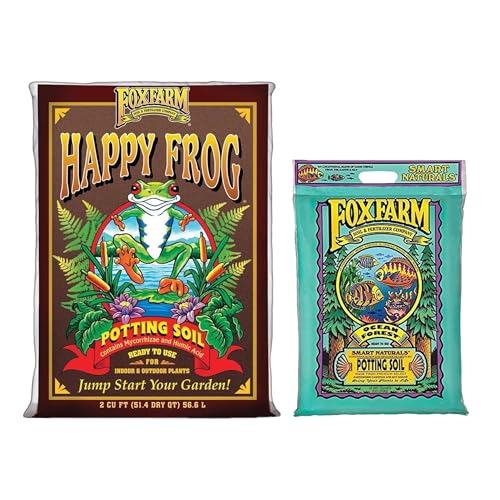
FoxFarm Happy Frog 2 Cu.ft + Ocean Forest 12qt Bundle

Back to the Roots Organic Coir 51 Quart Expanding

Gardenera Liquid Olive Tree Fertilizer 3-1-2 8oz

Gardenera Olive Tree Spray Fertilizer Mist 8oz
What Each Pick Brings To The Table
Earthworm castings are the quiet workhorse of organic fruit-tree growing. This 3-pound bag from Earth Science functions as a soil conditioner rather than a standalone potting medium, meaning you blend it into a base mix to feed microbial life and improve water-holding capacity. For container fruit trees, that matters because peat-based soils dry out fast in summer heat, and roots need a buffer.
The castings are screened fine, so they mix evenly without clumping. Most growers sprinkle a quarter-inch layer over the soil surface or work a handful into the top few inches during repotting. Either approach feeds the soil food web, which in turn makes existing nutrients more available to roots.
Reasons It Performs
- Improves moisture retention in fast-draining container mixes
- Feeds beneficial microbes that unlock existing nutrients
- Won’t burn roots, even with direct contact
- Fine texture blends smoothly into any base soil
- Reasonable quantity for a single tree’s seasonal needs
Things To Consider
- Not a complete potting soil on its own
- 3 lb runs out quickly for growers with multiple trees
Feature Snapshot
Built With In Mind
Growers with an existing soil mix who want to enrich it organically without switching products.
Skip It When
FoxFarm Ocean Forest Potting Soil 1.5 cu ft is the better match for someone starting from scratch with no base blend on hand.
FoxFarm’s Ocean Forest has earned its reputation among container gardeners for a reason. The blend arrives ready to use, with a light, airy texture that encourages roots to push outward rather than circle the pot. For young fruit trees, that early root development shapes the entire life of the plant.
The 1.5 cubic foot bag suits a single mid-size container or several smaller pots. Unlike many bargain mixes, it holds structure through repeated waterings, so it doesn’t compact into a soggy brick by midsummer. The earthworm castings, fish meal, and crab meal content feed young trees steadily through the first growing season without forcing a spike of leafy growth that sunburns easily.
Everyday Perks
- Light texture promotes strong root branching
- Pre-charged with organic nutrients for early growth
- Holds structure across a full growing season
- Ready to pour straight into containers
Points To Note
- Some growers find it holds moisture too long in deep pots without extra perlite
- The 1.5 cu ft size runs short for orchard-style multi-tree setups
Who It Suits Best
First-time fruit-tree container growers who want a forgiving, ready-to-use blend without blending components themselves.
Where Another Pick Suits Better
Back to the Roots Organic Coir 51 Quart Expanding is the right call for someone who values storage efficiency over pre-blended convenience.
Horticultural charcoal sounds like an oddity until you grow a fruit tree in a sealed ceramic pot. Mosser Lee’s version is made from hardwood (the source notes a fruit-tree origin, a small but interesting nod to the category), and it pulls double duty: it absorbs excess water and it buffers the soil against the bacterial buildup that causes root rot in closed containers.
The 2.25 dry quart bag is enough to amend several medium pots or build a base layer in a terrarium-style planter. For fruit trees, charcoal shines in cachepot setups where the inner pot lacks direct drainage. It also sweetens the soil over time, which matters for species that sulk in acidic conditions.
The Practical Payoff
- Absorbs and holds excess water without waterlogging roots
- Reduces odor and bacterial growth in closed containers
- Light, clean, and easy to blend into any mix
- Particularly useful for cachepot and terrarium-style planters
Honest Caveats
- It’s a component, not a standalone medium
- The fine dust at the bottom of the bag requires sifting before use
- Limited capacity for large-scale repotting
Perfect Match For
Growers with decorative pots lacking drainage holes, or anyone building a custom mix for moisture-sensitive citrus.
Not Your Match When
FoxFarm Happy Frog 2 Cu.ft + Ocean Forest 12qt Bundle is the smarter buy for someone who needs a complete, ready-to-use volume of soil rather than a single amendment.
Olive trees have specific soil preferences: gritty, fast-draining, slightly alkaline, and lean rather than rich. Gardenera’s premium olive mix leans into that profile with peat moss, perlite, worm castings, and lime to balance the pH. The 1-quart size is small, but it’s the right scale for a single patio olive in a starter pot.
The perlite content creates the airy structure olive roots need to avoid rot. Lime is the often-overlooked ingredient here, since most bagged soils skew slightly acidic. For an indoor olive on a sunny windowsill, that pH correction prevents the slow yellowing that frustrates first-time olive growers.
Positive Points
- pH-balanced for olive tree preferences
- Excellent drainage from perlite content
- Clean, consistent texture in the bag
- Pre-mixed for species-specific needs
Worth Noting
- 1 quart is only enough for small repotting jobs
- Won’t suit general fruit trees like citrus or fig
Feature Snapshot
Made For
Indoor olive growers with one or two small trees who want a mix that matches the species without any guesswork.
Look Elsewhere When
GARDENWISE Organic Olive Tree Potting Mix 3 Quarts is the right answer for outdoor olive plantings or growers who want three times the volume at once.
Worm Bliss is OMRI-listed, which matters for organic-focused growers who want documentation that the castings passed a third-party review. The 1-quart size is small but concentrated: a little goes further than most beginners expect, since castings are typically a 10-20% addition to a base mix rather than a standalone soil.
Compared to the Earth Science castings earlier in the list, Worm Bliss is positioned as a premium, food-grade input. The texture is consistent and the moisture level is low, meaning it stores without clumping. For indoor fruit trees in small containers, the smaller quantity keeps things fresh across a few applications.
The Case For It
- OMRI-listed for verified organic standards
- Low moisture content extends shelf life
- Manure-free and vegan-friendly
- Won’t burn even heavy-feeding fruit trees
Soft Spots
- 1 quart is a small working quantity for multiple trees
- Premium pricing per ounce compared to bulk options
Best Suited To
Organic-focused growers who value certification and want a small, fresh quantity rather than a bulk bin.
Reach For A Different Pick When
Earth Science Earthworm Castings 3 lb is the better value for someone feeding several trees and not concerned with OMRI documentation.
GARDENWISE’s olive mix takes the same species-specific approach as Gardenera’s smaller offering but scales it up. The 3-quart bag covers a single medium outdoor olive or a couple of indoor trees, and the fast-draining formula is built to mimic the dry, rocky Mediterranean soils olives evolved in.
Worm castings, compost, and limestone do the fertility work, with the limestone again correcting the pH drift that happens in peat-dominant mixes. For growers who want organic inputs specifically and don’t want to mix their own, this bag removes the need to source perlite, lime, and compost separately.
Everyday Advantages
- Three times the volume of the Gardenera 1-quart option
- Fast-draining profile prevents summer root rot
- Organic inputs align with natural olive care
- Long-lasting nutrient release over the season
Minor Gripes
- Still too specialized for general fruit trees
- 3 quarts won’t cover large raised bed olive plantings
Feature Snapshot
Right Fit For
Outdoor olive growers in warm-summer climates who want a single bag that handles a full repotting without supplemental amendments.
Where A Sibling Pick Shines
Gardenera Premium Olive Tree Potting Mix 1 Quart is the better entry point for someone starting with a small seedling olive and not ready to commit to a full 3-quart bag.
This FoxFarm bundle pairs a 2 cubic foot bag of Happy Frog with a 12-quart bag of Ocean Forest, giving a grower two distinct soil philosophies in one shipment. Happy Frog is slightly leaner and amended with soil microbes and bat guano, while Ocean Forest is richer and more moisture-retentive. For fruit trees, that combination lets you match soil to species: figs and citrus in Ocean Forest, olives and stone fruit in the grittier Happy Frog.
The bundle format makes sense for anyone planting more than one tree or planning successive repottings through the year. The shipping weight is heavy, so this isn’t the right pick for apartment dwellers carrying bags up several flights, but for a backyard or garage setup, the volume is genuinely useful.
Strengths Worth Knowing
- Two complementary blends for diverse fruit tree needs
- Total volume covers multiple mid-size containers
- FoxFarm quality across both products
- Single shipment simplifies ordering
Some Limits To Know
- Heavy combined weight for urban delivery
- More soil than a single-tree grower needs
Who Should Grab It
Multi-tree growers and small home orchards who want to stage different species in different soil profiles without separate orders.
Swap It Out When
Back to the Roots Organic Coir 51 Quart Expanding is the better fit for someone with limited storage who needs a compact, lightweight alternative.
Coir, the fibrous material from coconut husks, has become the peat alternative of choice for growers who want a renewable base. Back to the Roots ships it as a compressed brick that expands to 51 quarts when hydrated. For apartment growers with no garage space, that’s a meaningful advantage: one brick stores where a 2 cubic foot bag can’t.
Once expanded, the coir holds moisture well while still draining freely, which suits fruit trees that need consistent moisture without saturation. It has minimal nutrients on its own, so you’ll want to pair it with worm castings or a complete amendment. For seed-starting fruit trees before transplanting up to larger containers, this also works as a clean, sterile medium.
Features That Help
- Compressed brick stores in minimal space
- Expands to 51 quarts when hydrated
- Renewable alternative to peat moss
- Clean, weed-free medium for starting trees
Trade Offs
- Hydration step takes planning and a large bucket
- Nutrient-poor on its own; needs amendment for established trees
Whose Shelf It Belongs On
Apartment and small-space growers who want a peat alternative they can store in a closet until needed.
Consider Something Else When
FoxFarm Ocean Forest Potting Soil 1.5 cu ft is the smarter pick for someone who wants a pre-charged soil that needs no extra amendments.
Liquid fertilizer isn’t soil, but for container fruit trees, the two are inseparable: soil delivers nutrients but the tree still needs supplemental feeding through the growing season. Gardenera’s 3-1-2 concentrate leans toward the nitrogen-rich profile that olive trees respond to, especially when they’re pushing new growth in spring.
The 8-ounce bottle concentrates down with water, so a single bottle covers many feedings. For indoor olives, where soil volume is small and nutrients deplete quickly, a weekly diluted feed during active growth keeps foliage green and prevents the slow yellowing that signals nitrogen deficiency.
What Helps Most
- 3-1-2 ratio suits olive tree needs
- Concentrate format extends bottle life
- Quick uptake for visible green-up
- Compatible with any well-draining olive soil
A Few Limitations
- Requires consistent application schedule
- Won’t compensate for poor soil structure alone
Made For
Indoor olive growers who need a steady supplemental feed to keep their tree vigorous through the growing months.
Another Choice May Suit
Gardenera Professional Olive Tree Spray Fertilizer Mist 8oz is the better fit for growers who want a foliar option rather than a root drench.
Foliar feeding is the underused companion to root-zone feeding. Gardenera’s spray mist uses the same 3-1-2 ratio as the liquid concentrate, but delivers it through the leaves, which absorb nutrients faster than roots. For a stressed or slow-growing olive, that can jump-start recovery.
The 8-ounce spray bottle is sized for indoor use, where misting a tabletop tree takes only a few pumps. The fine mist settles on the silvery leaf undersides where stomata (the tiny pores plants use for gas exchange) do most of their absorption work. Pair it with a complete soil like Gardenera Premium Olive Tree Potting Mix 1 Quart and you cover both absorption pathways.
A Favorable Mix
- Faster nutrient uptake than root feeding alone
- Fine mist reaches leaf undersides where absorption is highest
- Handy spray format for indoor trees
- Gentle ratio won’t burn sensitive foliage
Points To Keep In Mind
- Foliar feeding supplements, not replaces, soil nutrition
- Spray bottle is small for outdoor tree use
Who Will Love This
Indoor olive owners with one or two small trees who want a quick-response option for mid-season nutrient support.
Not Your Match When
Gardenera Liquid Olive Tree Fertilizer 3-1-2 8oz suits someone who prefers a root-drench routine and is willing to mix and water.
Picking The Right Soil Setup For Your Fruit Trees
A few factors matter more than the brand name on the bag. Drainage comes first: most fruit trees in containers die from soggy roots faster than from any nutrient shortage. A mix that holds structure and lets water pass through freely is non-negotiable. Second is pH: citrus prefers slightly acidic soil, while olives lean alkaline. Generic potting mixes skew acidic, so a lime amendment can save an olive or a fig. Third is organic matter: fruit trees in containers burn through nutrients within a single season, so a base mix with compost, worm castings, or aged bark supports a steadier feed than a sterile peat-and-perlite blend.
Container size also shapes the soil choice. Smaller pots dry out faster and need more moisture-retentive components, while larger planters (10 gallons and up) tolerate grittier mixes without daily watering. For growers juggling multiple trees, the FoxFarm bundle earlier in the list gives you two blends to match different species in different pot sizes.
Drainage Beats Richness Every Time
It feels counterintuitive to add perlite or charcoal to a soil you’re about to feed with worm castings, but drainage and fertility are separate problems. A rich soil that holds water too long suffocates roots; a lean soil that drains well still feeds the tree as long as you supplement. Start gritty, then add organic inputs on top.
Match Soil To Species, Not Just To Container
Olive, citrus, fig, and stone fruit all want slightly different profiles. Specialty olive mixes like the GARDENWISE 3-quart bag exist because the species is fussy about pH and drainage. A general-purpose mix works for most fruit trees, but if your tree is a known prima donna, a species-specific blend saves troubleshooting later.
Plan For Nutrient Depletion In Containers
In-ground fruit trees send roots outward to find new nutrients. Container trees can’t, so the soil’s fertility gets used up within months. That’s why every pick on this list either starts with organic inputs built in or pairs well with a liquid or foliar feed like the Gardenera options. Choose a soil strategy that includes a feeding plan for the second half of the season.
Key Considerations Across These Picks
Mistakes Worth Dodging
A common slip is grabbing a moisture-control potting mix (the kind engineered for ferns) and planting a fig or olive in it. Those mixes hold too much water for Mediterranean species and lead to root rot within weeks. Another trap is using a “garden soil” bag instead of a “potting soil” bag. Garden soil compacts in containers and drains poorly, even if it looks richer in the bag. Container fruit trees need the airy, peat- or coir-based blends on this list, never the dense native-soil products sold for in-ground use.
What The Higher Tier Buys
Premium blends like FoxFarm Ocean Forest earn their cost through better sourcing: screened ingredients, balanced organic amendments, and tested pH out of the bag. A bargain mix often uses coarser peat, fewer amendments, and unbuffered pH that drifts acidic over time. For a single tree you’re repotting once a year, the premium tier pays back in faster growth and fewer deficiencies. For a backyard orchard with ten pots, the math shifts toward bulk bundles like the FoxFarm Happy Frog + Ocean Forest combo, which still delivers premium quality at a lower cost per cubic foot. The upgrade is worth it whenever you’re committed to the tree for more than one season.
Frequently Asked Questions
Can I use regular potting soil for fruit trees in containers?
Standard potting soil works for many fruit trees, but it often needs amendments like perlite for drainage or lime for pH balance. Olive and citrus in particular do better with blends tailored to their needs.
How often should I repot a container fruit tree?
Most young fruit trees need repotting every 1-2 years as roots fill the container. Refresh the soil at each repotting rather than just topping it off, since the old mix loses structure and fertility.
Do fruit trees need special fertilizer in containers?
Yes. Container soil volume is limited, so nutrients deplete faster than in-ground plantings. A balanced organic fertilizer, worm castings, or a liquid feed like the Gardenera options keeps growth steady through the season.
Is peat-free coir a good base for fruit tree soil?
Coir works well as a peat alternative, holding moisture while draining freely. Since it’s low in nutrients, pair it with worm castings or compost to support fruiting trees through the season.
What’s the best soil for an indoor olive tree?
Olives want fast drainage, slightly alkaline pH, and a lean profile. Specialty olive mixes like the Gardenera or GARDENWISE options deliver all three without needing separate amendments.
The Takeaway
The right soil for a container fruit tree balances drainage, pH, and organic matter in a way that matches the species. Pick a complete blend like FoxFarm Ocean Forest if you want a ready-to-pour option, or build your own from a coir base and worm castings if you prefer to mix. Specialty olive growers should look at the GARDENWISE or Gardenera olive-specific options rather than a general-purpose bag. Whichever path you take, plan for supplemental feeding through the growing season; container trees deplete their soil faster than their in-ground cousins, and a steady feed keeps the harvest on track.
