

Backyard chicken keepers know the small battles that add up: algae turning the basin green overnight, thirsty hens tipping over flimsy containers, frozen troughs in February. The right waterer changes that routine entirely, cutting down on scrubbing and keeping the flock hydrated through every season. This list gathers dependable options across styles, from simple replacement parts to fully automatic systems, so you can match the right setup to your coop’s footprint and your flock’s size.
A Side-By-Side Look

Gulfmew Poultry Fountain Replacement Caps and O-Rings
JTJEI Plastic Poultry Waterer Replacement Parts Kit

Miller Little Giant PPF302 Replacement Base

Omlet No Waste Chicken Feeder

Omlet Insulated Chicken Waterer 3 Gallon (Sage)

Omlet Insulated Chicken Waterer 3 Gallon (Eglu Green)
TGEYD 4.2 Gallon Waterer and Feeder Set

TGEYD 21LB Automatic Chicken Feeder with Legs

TGEYD 4.2 Gallon Automatic Chicken Waterer

TGEYD Hanging Feeder and Waterer Wall Mount Set
More On The Choices That Made The List
Most flock keepers eventually face a slow-leak problem where the basin drips overnight, soaking the coop bedding. This Gulfmew kit sidesteps the whole replacement cycle by refreshing the seals and threaded closures on the waterers you already own. It targets Miller PPF3, PPF5, and PPF7 models as well as Little Giant founts, so a multi-fount setup can be standardized with one box of parts.
For anyone whose fount base has survived years of use but whose lids and gaskets have cracked, this is a sensible alternative to buying an entirely new unit. You may find the bright red caps useful for color-coding across coops or runs.
What Works In Its Favor
- Ten caps and four O-rings in one kit, enough to service multiple waterers over time
- Direct fit for Miller PPF3, PPF5, and PPF7 plus Little Giant founts, reducing guesswork when ordering
- Extends the working life of an existing waterer rather than replacing the whole vessel
- Compact parts stash in a drawer for fast swap-outs during routine cleaning
Things To Consider
- Only useful if your existing fount matches the listed model numbers
- The O-rings tend to wear with age, so plan a quick visual inspection each cleaning cycle
Made For
Keepers running Miller or Little Giant founts who want a low-cost way to refresh aging lids and seals.
Consider Something Else When
You’d rather replace the entire waterer setup, in which case the Omlet Insulated Chicken Waterer is the cleaner long-term path.
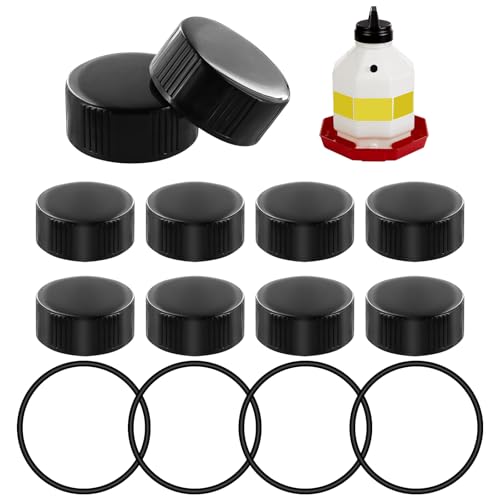
If you’ve ever lost a single cap to a wayward hen or a frost heave and then watched your spare drawer come up short, this JTJEI kit solves that slow leak in the supply chain. It bundles ten black caps and four matching O-rings built for the same Miller PPF3, PPF5, and PPF7 founts, plus the Little Giant line of waterers.
The all-black color scheme keeps the kit visually unobtrusive, which matters if your coop aesthetic leans toward tidy rather than colorful. For multi-fount households, having ten caps on hand means a year or two of replacements without reordering.
A Few Highlights
- Ten replacement caps cover long-term wear across several founts
- Matches the same Miller and Little Giant compatibility list as the Gulfmew kit
- Plastic construction tolerates outdoor UV exposure without immediate brittleness
Points To Keep In Mind
- Black caps absorb heat in direct sun, so shaded storage prolongs their lifespan
- You’ll still need an intact base, since this kit only refreshes closures and seals
Who It Suits Best
Keepers juggling multiple founts who want a generous spare-part inventory on the shelf.
Look Elsewhere When
Your waterer base is cracked or warped, in which case the Miller Little Giant PPF302 base is the smarter replacement.
Sometimes the body of a fount survives seasons of use while the base finally gives up, cracking from a winter freeze or a tip-over. This Miller base fits the PPF3, PPF5, and PPF7 gallon sizes, so the rest of your setup stays intact while only the worn component gets swapped. It’s a small, focused fix that avoids throwing away a perfectly serviceable jug.
The honest read is that this is purely a structural part, with no cups, lids, or fittings included. For keepers who already use the matching cap-and-O-ring kits, this base slots in cleanly.
Positive Takeaways
- Direct OEM-style replacement for the three most common Little Giant fount sizes
- Saves the cost of replacing the entire waterer when only the base has failed
Things To Consider
- Base only, no lid, gasket, or carrying handle included
- Confirm your fount’s gallon rating before ordering, since fit is model-specific
Right Fit For
Keepers whose existing fount base has cracked but whose jug and lid still work fine.
Skip It When
You want a fully integrated system out of the box, which points you toward the TGEYD 4.2 Gallon Automatic Waterer instead.
The Omlet feeder tackles one of the most stubborn frustrations in a backyard run: feed scratched and billed onto the ground. Five enclosed feeding ports keep hens working through the feed rather than scattering it, which means less wasted grain and fewer rats visiting overnight. It’s a feed-only solution, so it pairs naturally with a separate waterer from elsewhere on this list.
You can hang it from a coop rail or set it freestanding on the run floor, and a 12-pound capacity covers roughly six hens for a full week. Weatherproof construction helps in rainy climates, though heavy downpours still benefit from a sheltered placement.
Where It Helps
- Enclosed ports limit the bill-out behavior that drives most feed waste
- Weekly fill cadence suits people who travel or work long days
- Flexible mounting adapts to coop layout changes over time
Honest Caveats
- Feed-only design means you still need a separate waterer nearby
- Port count works for small flocks but crowds quickly past eight or ten hens
Feature Snapshot
Best Suited To
Small-flock keepers who want to cut feed waste without committing to a full system.
Reach For A Different Pick When
You’d rather consolidate feeding and watering into one purchase, which is what the TGEYD Hanging Feeder and Waterer Set delivers.
Algae is the silent headache of every open-basin waterer, and the Omlet Sage model is built to fight it on two fronts. The opaque, insulated body blocks most light, so the slimy green film that plagues clear containers simply doesn’t get a foothold. The included cups and nipples (small drinking valves that release water when pecked) let you pick the drinking style your flock prefers.
Insulation keeps water cooler in summer and slows freezing in winter, though you’ll still want a heater in deep cold. The sage finish blends into planted yards, which matters when the coop sits near a kitchen window.
A Favorable Mix
- Light-blocking body reduces algae growth between cleanings
- Insulation moderates water temperature across seasons
- BPA-free plastic keeps drinking water free of concerning leachates
- Anti-roost lid discourages hens from perching on top
- Cups and nipples ship in the box for flock-preference flexibility
Trade Offs
- Three-gallon capacity fills the daily needs of small flocks but limits larger ones
- Insulation helps but won’t replace a dedicated heater in sub-freezing climates
Who Will Love This
Backyard keepers in moderate climates with small flocks who want clearer water with less scrubbing.
A Better Fit Elsewhere
Owners of larger flocks get more mileage out of the four-gallon TGEYD Automatic Chicken Waterer with auto-refill.
Where the Sage version leans subtle, this Eglu Green variant leans playful with its signature domed lid. That dome isn’t just styling: it actively blocks roosting, which keeps droppings out of the basin. The same insulated, light-blocking body from the Sage model carries over, so water clarity stays consistent.
For keepers already running Omlet’s Eglu coops, the color match keeps the run looking intentional rather than pieced together. If you’ve been eyeing the Sage version but want something sturdier-feeling in the hand, the domed lid gives this one a slightly more substantial presence.
Good Reasons To Consider
- Domed lid doubles as a roost deterrent
- Color-matched finish for Eglu coop owners
- Cups and nipples included for drinker-style choice
- Same UV-stable, BPA-free build as the Sage version
Things To Consider
- Identical capacity to the Sage, so flock-size limits apply the same way
- Color coordination only matters if you’ve committed to the Omlet look
Quick Facts
Perfect Match For
Omlet coop owners who want a color-matched waterer with the same insulation perks.
Swap It Out When
You need automatic refilling or a larger reservoir, which makes the TGEYD 4.2 Gallon Automatic the more practical upgrade.
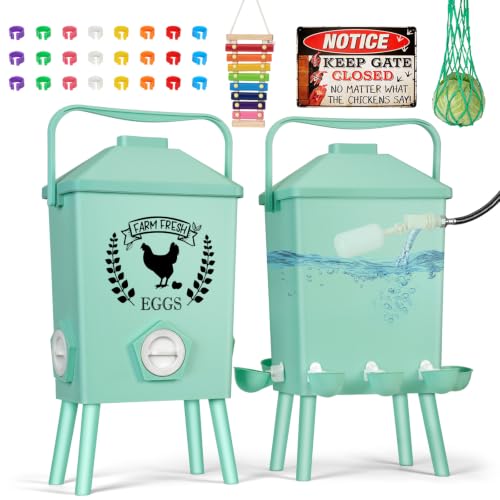
Setting up a coop from scratch usually means buying the waterer and the feeder separately, often from different sellers with different shipping times. The TGEYD paired set sidesteps that juggling act. The feeder leans on gravity-fed ports to reduce waste, while the waterer hooks up to a standard 3/4-inch garden hose and refills itself through a float valve.
You can hang the pieces on wire fencing or mount them to a wall, which keeps the run floor clear for scratching. For most backyard flocks, that means less shavings kicked into the basins and a tidier overall setup.
Useful Strengths
- Single purchase covers both feeding and watering needs
- Float valve cuts down on manual refills for working keepers
- Hanging and wall-mount options adapt to coop layouts
Softer Spots
- Auto-refill feature depends on a steady hose connection to a spigot
- Float valve parts can clog in hard-water areas without an inline filter
Right Fit For
New coop owners setting up feeding and watering in one shipment who can run a hose to the run.
Skip It When
You only need a replacement waterer base, in which case the Miller Little Giant PPF302 base is more economical.
Refilling a small feeder every other day gets old fast when your flock numbers climb past a dozen. The TGEYD 21-pound feeder stretches the refill cycle out to a week or more for moderate flocks, and the anti-perching peak roof keeps hens from roosting on top and fouling the lid. Gravity-fed ports manage the bill-out problem that plagues basic trough feeders.
For keepers with limited shed space, the S-hook hanging option or rear-slot wall mounting gives flexibility in placement, depending on whether the coop is portable or fixed.
Everyday Advantages
- 21-pound capacity suits mid-sized flocks and busy schedules
- Peak roof design actively discourages roosting on top
- S-hooks and rear slots give both hanging and wall-mount options
Points To Note
- Large footprint when filled, so plan shed floor space in advance
- Feed-only design means a separate waterer is still required
Made For
Mid-sized flock owners who want fewer refill trips each week without switching to a fully automatic system.
Consider Something Else When
You’d rather combine feeding and watering in one wall-mounted package, in which case the TGEYD Hanging Feeder and Waterer Set covers both.
Where the Omlet waterers focus on insulation and clarity, this TGEYD model focuses on convenience. A gravity-fed reservoir connects to a standard water inlet, so the basin tops itself up as hens drink. Raised legs keep dirt and bedding out of the basin, and a rainproof lid prevents the splash-and-soak cycle of open-top containers.
The four-plus-gallon capacity covers small-to-moderate flocks for two or three days, depending on weather. Anti-roost cone stops birds from claiming the lid as a perch, which is the usual path for droppings into the water.
Real Benefits
- Auto-refill design removes the daily top-up chore
- Raised legs reduce debris contamination from bedding
- Rainproof lid keeps storms from diluting or flooding the basin
Trade Offs
- Requires a hose hookup within reach of the run
- Float valve parts need occasional inspection in hard-water regions
At A Glance
Best Suited To
Backyard keepers with hose access who want a low-effort water station for a moderate flock.
Another Choice May Suit
You prioritize insulation and water clarity over auto-refill, which is exactly what the Omlet Insulated Waterer in Sage delivers.
Small coops and tractor-style runs don’t always have floor space for separate feeders and waterers. This TGEYD set solves that with a hanging and wall-mount design that lifts both vessels off the bedding. The heavy-duty handle hooks over wire mesh, while wall screws let you fix the units in place if your coop has solid walls.
Holding 4.2 gallons of water and 21 pounds of feed, the set covers a small-to-moderate flock comfortably between refills. Wall placement also helps prevent the tipping that happens when a heavier hen bumps a freestanding container.
Points In Its Favor
- Dual hanging and wall-mount options suit both portable and fixed coops
- Lifts vessels off the floor to reduce tipping and bedding contamination
- Combined capacity handles moderate flocks with infrequent refills
Things To Consider
- Requires sturdy wall studs or reinforced mesh for safe hanging
- Refilling means lifting feed and water up to mounting height
Whose Shelf It Belongs On
Small-coop and chicken-tractor owners who need to keep floor space clear for the flock.
Not Your Match When
You want automatic refilling or insulated water, where the TGEYD 4.2 Gallon Automatic Waterer is the stronger option.
Matching Your Flock To The Right Waterer
Picking a poultry waterer starts with counting birds and checking your climate. A small flock of four to six hens drinks through roughly a gallon of water per day in moderate weather, doubling in summer heat. Three-gallon vessels last a couple of days between refills; four-plus-gallon models stretch to three or four. For flocks past eight hens, larger capacity or auto-refill saves daily hauling.
Mounting location matters more than most shoppers expect. Hanging or wall-mounted units stay cleaner because hens scratch bedding around floor-level basins, fouling the water within hours. If your coop has wire mesh walls, hanging handles make installation tool-free, while solid walls benefit from screw-mounted brackets for stability.
Material choice shapes long-term upkeep. Opaque plastic blocks sunlight, which slows algae growth, while clear containers look attractive but green up quickly. Insulated bodies moderate temperature swings, which is most valuable in regions that swing from summer heat to winter freeze. UV-stable, BPA-free plastics hold up to years of sun exposure without cracking or leaching.
Key Considerations Across These Picks
Mistakes Worth Dodging
The most common slip-up is choosing by capacity alone and ignoring the cleaning reality. Wide-mouth basins scrub easily; narrow-lid designs force you through a small opening every time. Another frequent miss is underestimating winter: an uninsulated waterer freezes solid in regions that drop below freezing overnight, which means hauling water daily in January.
Where The Extra Money Goes
Premium models tend to invest in insulation, light-blocking bodies, and auto-refill plumbing. Those features pay off for keepers in extreme climates or anyone with a busy schedule. For mild regions with small flocks, a basic fount paired with a Gulfmew or JTJEI replacement kit covers the essentials without stretching the budget.
Frequently Asked Questions
How Often Should I Clean A Poultry Waterer?
Aim for a full scrub at least once a week, with quick rinses every two to three days in warm weather. Algae and biofilm (a slimy layer of bacteria that builds up on wet surfaces) develop fast in sunlight and warm temperatures, so light-blocking opaque containers stretch the interval.
Can Multiple Waterers Be Linked Together?
Yes, most gravity-fed and automatic models can be connected via standard hose fittings, though setup varies by brand. Linking lets one water source feed multiple stations across a long run.
What’s The Best Waterer For Winter Use?
Insulated waterers slow freezing but rarely prevent it entirely in sub-freezing climates. A submersible heater or heated base is usually required alongside an insulated body for reliable winter performance.
How Many Hens Can One Waterer Support?
A three-gallon unit suits roughly four to six hens for two days, while a four-gallon version supports six to ten hens for a similar window. Auto-refill systems extend coverage further since they replenish as the flock drinks.
Do Replacement Cap Kits Fit All Founts?
No, cap and O-ring kits are model-specific. The Gulfmew and JTJEI kits target Miller PPF3, PPF5, PPF7, and Little Giant founts, so confirm your model number before ordering.
The Takeaway
The right waterer quietly removes one of the most repetitive chores on a chicken keeper’s list, whether that’s hauling a hose, scrubbing algae, or chiseling ice. Match the vessel to your flock size, climate, and tolerance for maintenance, and the rest of the routine tends to fall into place. Any of the picks here will serve you well if it aligns with how your coop is actually set up.
