

Healthy turf and clean job sites both start with the right rake, and the wrong one wastes an entire Saturday. Whether you’re clearing weeds from a shoreline, prepping a seedbed, or pulling dead thatch out of a suburban lawn, the category covers everything from handheld aluminum pulls to walk-behind electric scarifiers and skid-steer soil conditioners. The picks below span those worlds, so you can match a tool to the scale of your project instead of overbuying or underbuying. Each one earns its place for a specific kind of work, and the buying guide that follows will help you figure out which scale fits yours.
A Quick View Of The Lineup

wolfequip 84″ 6-Way Bulldozer Dozer Blade

ShoreTech Ultralite Aluminum Beach and Lake Rake

wolfequip 72″ Root Grapple Bucket

wolfequip 72″ Power Rake Harley Rake

Sun Joe AJ805E 15-Inch Electric Dethatcher
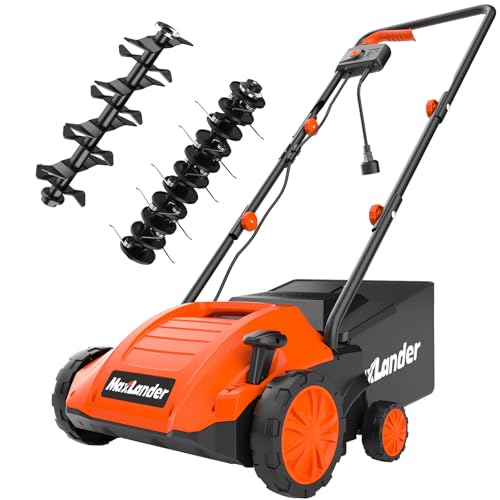
MAXLANDER 13-Inch 12 Amp Electric Dethatcher

Steelite 13-Inch 12-Amp Dethatcher and Scarifier

VEVOR 13-Inch 13 Amp 2-in-1 Dethatcher

Baotree 1050W Corded Power Rake Tool
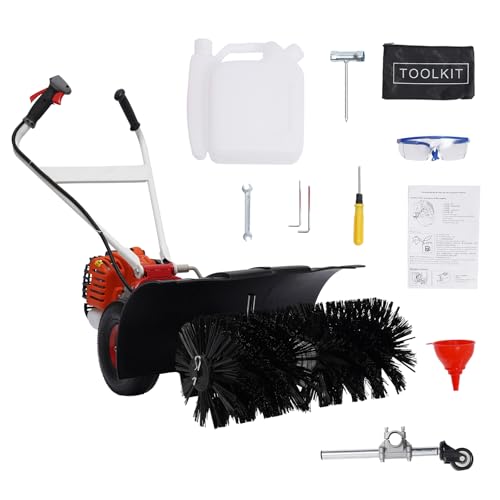
Cbhfmljd 2.5HP Gas Power Handheld Sweeper
More Details On Our Top Picks
Grading and backfilling on a real jobsite rarely gives you a flat, square target. The wolfequip 84″ dozer blade mounts to most skid-steer loaders and pivots six ways so the operator can shape, slope, and ditch without backing off to re-angle the machine. That kind of articulation shows up fast on long driveways, building pads, and pond edges where you would otherwise chew up extra fuel repositioning every few feet.
The 84-inch cut width means a single pass covers the wheel tracks of a midsize skid steer, leaving a smoother finish between passes. It skews toward contractors and serious landowners who already own the host machine, since the blade bolts onto existing quick-attach plates rather than arriving as a standalone tool.
A Few Highlights
- Six-way pivot lets you angle, tilt, and offset from the cab.
- Wide 84-inch blade covers full tire tracks in one pass.
- Bolt-on edge is replaceable when it wears down.
- Universal skid-steer mounting fits most common host machines.
Things To Consider
- At roughly 960 lbs, you need a skid steer rated for the load.
- Not useful for fine lawn work; built for soil and gravel, not turf.
Who Should Grab It
Contractors and landowners with a skid steer who want one attachment for grading driveways, pads, and drainage work.
Look Elsewhere When
Homeowners tending a small lawn will get far more use from the Sun Joe AJ805E dethatcher in this lineup.
Pulling weeds out of a shallow lake or sandy shoreline punishes heavy tools fast, since you are dragging through water resistance on every stroke. The ShoreTech Ultralite keeps the whole assembly between four and seven pounds depending on length, so a long afternoon of raking doesn’t end with sore shoulders. The aluminum head pairs with a 36-inch working width and 4-inch tines angled at 15 degrees for grip.
That bend on the tines matters more than it sounds: it lets the head “bite” aquatic vegetation and hold it instead of letting strands slide off and resettle. Owners with longer reaches appreciate the quick-release handle, which breaks down without tools for transport in a trunk or kayak.
Useful Strengths
- Aluminum build keeps total weight between 4 and 7 lbs.
- 15-degree tine bend improves grip on weeds and lake debris.
- Quick-release handle breaks down without tools.
- Removable extensions let you shorten the rake for tight spots.
Trade Offs
- Light aluminum is fine for weeds but bends on hidden rocks.
- Best for light to medium jobs, not heavy shoreline cleanup.
Made For
Lake homeowners and pond-front property owners clearing weeds and light debris from a sandy or mucky bottom.
Reach For A Different Pick When
The wolfequip 72″ Root Grapple Bucket serves better when you need to clear heavy woody debris rather than soft aquatic growth.
When the mess is bigger than a rake can handle, a grapple bucket steps in and the wolfequip 72″ model is a tidy fit for owners who already run a quick-attach skid steer. Two hydraulic cylinders open and close the jaw across a wide opening, so you can clamp a stack of logs, scoop construction debris, or carry loose stone without it spilling between cycles. The width also doubles as a rough grading blade for soil work between grabs.
The 72-inch footprint handles oversize brush piles in fewer cycles than smaller buckets, which adds up across a long workday. Compared with the ShoreTech Ultralite above, this is the right tool when the debris is heavy, woody, or jagged rather than soft aquatic growth.
Everyday Wins
- Double hydraulic cylinders give a strong, even clamping force.
- Wide jaw opening handles logs and bulky debris in fewer cycles.
- Works as a rough grader when the jaw is closed.
- Quick-attach plate matches common skid-steer loaders.
Points To Note
- Needs a skid steer with sufficient auxiliary hydraulic flow.
- Cutting width makes it overkill on small residential driveways.
Best Suited To
Landowners clearing brush, logs, and storm debris on acreage where a compact tractor or skid steer is already on site.
Consider Something Else When
The wolfequip 84″ 6-Way Bulldozer Dozer Blade suits finer grading tasks where you need precise slope control.
Before seed or sod goes down, the soil has to be smooth, loose, and free of debris, and a Harley-style power rake is the tool that gets a seedbed ready in a single pass. The wolfequip 72″ model uses a rotating drum to break clods, sift rocks, and leave a tilth that hand raking never matches. Adjustability comes in via roughly ±25° of side angle so you can work beds, slopes, and ditch lines without constantly repositioning.
At about 1,220 lbs, this is firmly in the heavy-duty category, meaning your skid steer needs the lift capacity and hydraulic flow to drive the drum. Landscapers prepping lawn installs and farmers reconditioning small fields get the most out of it.
What Helps Most
- 72-inch raking width covers a full skid-steer pass.
- Adjustable angle works around slopes and ditch profiles.
- Drum-style action conditions soil while you drive.
- Compatible with common skid-steer brands like Bobcat, John Deere, Kubota.
Honest Caveats
- 1,220-lb weight demands a capable host machine.
- Hydraulic flow must meet manufacturer recommendations.
Right Fit For
Professional landscapers and large-property owners prepping seedbeds at scale ahead of sod or seed installation.
Not Your Match When
The Sun Joe AJ805E dethatcher is the smarter buy for homeowners reviving an existing lawn rather than installing one.
Suburban lawns usually need dethatching more than they need any other lawn treatment, and the Sun Joe AJ805E makes the job approachable for homeowners without gas-engine maintenance. The 15-inch working width is wider than most electric dethatchers in this category, so a typical quarter-acre lot finishes faster. A scarifying reel reaches past the thatch layer into the soil for better air and water movement.
The unit runs on a standard extension cord, which means no fuel mixing and no exhaust, but it also means you stay close to an outlet. Most owners find the trade-off worthwhile for spring and fall touch-ups.
Useful Touches
- 15-inch path covers more ground per pass than 12- or 13-inch rivals.
- Scarifier reel cuts deeper than a basic thatch rake.
- Removable collection bag simplifies cleanup at the end of the run.
- Electric motor starts instantly with no fuel mixing.
Points To Keep In Mind
- Corded operation requires a long outdoor-rated extension cord.
- Less effective on lawns thicker than typical cool-season turf.
Who Will Love This
Homeowners with small to mid-size lawns wanting a low-maintenance electric tool for seasonal dethatching.
A Better Fit Elsewhere
The MAXLANDER 13-Inch 12 Amp Dethatcher suits folks who want adjustable depth on compacted soil.
Thatch is a layer of dead roots and stems that builds up between grass and soil, and a dethatcher’s job is to lift it out without ripping up the living turf. The MAXLANDER 13-Inch dethatcher swaps between dethatching and scarifying modes, and four depth positions let you dial in how aggressive the cut gets. That’s helpful when the same lawn has thin patches in one zone and thick, matted thatch in another.
A 30-liter removable bag keeps clippings and debris contained as you work. The 12-amp copper motor turns at up to 3,000 RPM, which is enough torque for compacted cool-season lawns that fight back. Compared with the Sun Joe AJ805E, this model trades width for depth control.
Strong Points
- Four-position depth adjustment handles varied thatch thickness.
- 2-in-1 design switches from dethatching to scarifying.
- 30-liter collection bag reduces the cleanup pass.
- Airboost technology targets soil airflow for healthier regrowth.
Worth Bearing In Mind
- 13-inch path is narrower than the Sun Joe AJ805E’s 15 inches.
- Corded design ties you to an outdoor outlet.
- Bag fills quickly on heavy thatch and needs frequent emptying.
The Right Fit
Homeowners with cool-season grass and compacted soil who want depth flexibility instead of the widest possible cut.
Swap It Out When
The VEVOR 13-Inch 13 Amp dethatcher offers five depth settings if finer tuning matters more to you than bag capacity.
Many lawns only need dethatching once a year, so owning two machines feels wasteful. The Steelite 13-Inch combines both functions in a single unit, switching between a dethatching reel that lifts dead material and a scarifier that scores the soil surface. The 12-amp motor delivers enough torque for typical residential thatch loads without bogging down.
This is a sensible pick for someone who wants one tool for the whole year’s lawn routine rather than seasonal rentals. The 13-inch path is comparable to most electric dethatchers, which keeps passes short on quarter-acre lots.
Where It Excels
- 2-in-1 design covers both thatch removal and soil scarifying.
- 12-amp motor handles typical residential thatch without stalling.
- Compact walk-behind size stores easily in a shed or garage.
Practical Considerations
- Fewer depth positions than the MAXLANDER and VEVOR rivals.
Whose Shelf It Belongs On
Shed-conscious homeowners who want one tool for spring dethatching and fall scarifying rather than dedicated units.
Where A Sibling Pick Shines
The VEVOR 13-Inch 13 Amp dethatcher is the better pick if you want five depth settings and a 13-gallon bag.
Five depth settings is more than most electric dethatchers offer, and the VEVOR 13-Inch 13 Amp uses that range to handle everything from a light spring cleanup to a deeper fall renovation. A 13-amp motor drives the reel at roughly 3,600 RPM, with a 9-blade scarifier and 20-tine dethatcher covering the dual-mode setup. Switching blades uses a knob design rather than tools, which keeps mid-job changes fast.
The 13-gallon collection bag reduces the number of stops you make to empty, especially useful on lawns that haven’t been dethatched in a few seasons. Walk-behind ergonomics are straightforward, with a corded design that stays simple at the cost of mobility.
The Upside
- Five depth positions offer finer tuning than 2- or 4-step rivals.
- Tool-free blade swap speeds up mode changes.
- 13-gallon collection bag holds more debris per pass.
- 13-amp motor outputs up to 3,600 RPM for tougher thatch.
Factors To Consider
- Cord limits reach to whatever extension you can supply.
- Heavier motor adds weight over smaller amp models.
Perfect Match For
Homeowners managing variable lawn thickness who want finer depth control than a typical 4-position dethatcher offers.
Skip It When
The Steelite 13-Inch 12-Amp Dethatcher and Scarifier is enough for lighter annual maintenance without the extra settings.
Compact lawns and small yards don’t always justify a heavy walk-behind dethatcher. The Baotree 1050W corded power rake tool is a lightweight option that handles light thatch and surface debris in tight spaces. The 120V electric motor starts with the push of a button, sidestepping the cold-start hassles of small gas engines.
The 1050W rating puts it firmly in the light-duty category, so heavier mats of thatch will feel like work. For shaded lawns with thin buildup or for spot touch-ups, it covers the basics without taking up much storage room.
Key Advantages
- Lightweight corded design stores easily in a small shed.
- Push-button start avoids gas-engine maintenance.
- Compact footprint navigates narrow strips and patches.
Trade-Offs To Consider
- 1050W motor struggles on thick, neglected thatch.
- Corded operation limits range and tangles on uneven yards.
Built With In Mind
Small-yard owners who want a no-fuss electric tool for light seasonal thatch touch-ups rather than deep renovation.
Another Choice May Suit
The Cbhfmljd Gas Power Handheld Sweeper handles driveway and turf debris better when you want brush rotation instead of thatch cutting.
A traditional push broom works fine on a smooth patio, but rough driveways, artificial turf, and accumulated debris wear out your back long before the job ends. The Cbhfmljd 2.5HP gas power sweeper rotates a brush head powered by a 52CC engine, cutting your effort to simply guiding the unit along. Double handles help with control on uneven surfaces.
The 2.5HP engine gives cord-free reach anywhere you can wheel the unit, useful for long driveways, gravel paths, and winter sweeping where an extension cord would be impractical. Owners of artificial turf report it lifts embedded debris the broom can’t reach.
Where It Delivers
- 52CC gas engine provides cord-free reach.
- Double-handle design improves control on rough surfaces.
- Brush rotation handles driveways, turf, and light snow.
Where It Is Less Suited
- Gas engine requires fuel mixing and routine maintenance.
- Louder and heavier than electric alternatives.
The Right Fit
Driveway owners and artificial turf households who want motor-driven brushing without dragging a cord around the yard.
Consider Something Else When
The Baotree 1050W Corded Power Rake Tool is a quieter, lighter pick for small-lawn thatch maintenance.
What Matters Most Before Choosing Power Rakes
Power rake is a broad label that covers tools from handheld shoreline weeders to skid-steer soil conditioners. Matching the right category to the right job is the difference between a satisfying purchase and a tool that sits in the shed after one use.
Scale Of The Job
A 36-inch lake rake for weeds and a 72-inch Harley rake for seedbed prep are not competing products; they exist for completely different scales. Handheld and walk-behind electric models fit residential lawns under a half acre. Skid-steer attachments come into play when you are clearing land, conditioning fields, or moving serious debris.
Power Source And Mobility
Corded electric dethatchers offer quiet operation and zero fuel mixing but limit reach to your extension cord length. Battery and gas tools trade convenience for mobility and runtime. For shoreline or driveway work far from an outlet, gas or battery often makes more sense than dragging 100 feet of extension cable through water or gravel.
Depth And Angle Adjustability
Dethatching a thin lawn calls for shallow cuts, while a thick, matted lawn benefits from deeper scarifying. More depth positions (four or five versus two) gives finer control, especially on lawns with uneven thatch buildup. Skid-steer tools add angle adjustment for shaping slopes and ditch profiles.
Maintenance And Storage
Walk-behind electric dethatchers need blade cleaning and bag emptying after each use. Skid-steer attachments need grease points and edge inspection. Aluminum handheld rakes need only a freshwater rinse if used in a lake or pond. Picking a tool whose upkeep matches your willingness to perform it makes the difference between regular use and garage clutter.
Key Considerations Across These Picks
Pitfalls Shoppers Hit
The most common mistake is buying a walk-behind electric dethatcher to clear thick brush or grade a driveway, then wondering why the motor bogs down. Conversely, picking a skid-steer attachment without owning a skid steer leaves you with a heavy anchor and no way to use it. Measure your real job scale first, then match the tool to it.
Where The Extra Money Goes
Higher-tier dethatchers in this category tend to add more depth positions, larger collection bags, and more powerful motors that resist bogging on thick thatch. Premium skid-steer attachments bring heavier steel, hydraulic cylinders, and wider working widths. For most homeowners, a mid-tier electric dethatcher covers annual maintenance; for landowners with real acreage, the heavier steel and hydraulics pay back in durability.
Frequently Asked Questions
What is the difference between a power rake and a dethatcher?
A dethatcher uses spring tines to lift thatch off the soil surface without cutting into it, while a power rake (in the skid-steer sense) uses a rotating drum to actively condition soil and remove debris. The walk-behind electric tools in this list combine both jobs by switching between tine and blade reels.
How often should I dethatch my lawn?
Most cool-season lawns benefit from dethatching once a year in early fall or spring, while warm-season grasses typically need it every other year. The honest read is that visible thatch thicker than half an inch is the practical trigger, not a calendar date.
Can a power rake damage my lawn?
Yes, especially if you set the depth too aggressive on thin or stressed turf. Start at a shallow setting and only go deeper if thatch resists removal. Hot, dry weather also raises the risk of damage, so time dethatching for cooler, growing conditions.
Do I need a skid steer to use a power rake attachment?
Skid-steer attachments in this list require a host machine with the appropriate quick-attach plate and hydraulic capacity. Without that host machine, the attachment is unusable, so walk-behind electric tools are the better fit for homeowners.
Is a gas sweeper worth it over a push broom?
For long driveways, rough surfaces, or artificial turf, a gas sweeper reduces effort significantly and clears embedded debris a push broom leaves behind. For short, smooth patios, a push broom remains the simpler choice.
Bottom Line
Power rakes range from handheld aluminum weed pullers to multi-thousand-pound skid-steer soil conditioners, and the right pick depends entirely on the job in front of you. Match the tool to the scale, and you’ll use it for years; mismatch it, and it’ll gather dust in the shed. Start with the work, not the spec sheet.
