Annual bluegrass (Poa annua) is the pale, clumpy intruder that ruins spring lawn photos, and the only reliable fight happens before germination. Pre-emergent herbicides (chemicals that stop weed seeds from sprouting rather than killing established plants) form a barrier at the soil surface, and timing matters more than brand. The lineup below covers granular spreaders for big yards, liquid concentrate for precision work, and blends that feed the lawn while blocking weeds.
The Lineup, Simplified
PickWhy We Picked ItBest ForAction
Editor’s Choice
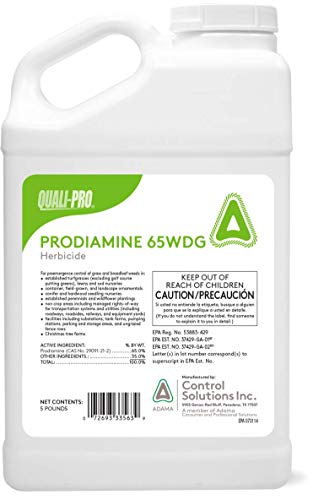
Quali-Pro Prodiamine Pre-Emergent Herbicide (5 lbs)
Pure prodiamine core formula
Standard lawn rotations

Value Pick
Prodiamine 65 WDG Pre-Emergent (Generic Barricade, 5 lbs)
Budget-friendly bare prodiamine
Cost-focused homeowners

Heavy Duty Pick
Dimension Granular Pre-Emergent Herbicide (50 lb)
Large-yard dithiopyr volume
Multi-acre properties

Garden Choice
Yard Mastery 0-0-7 Dimension Pre-Emergent (18 lb)
Potassium-boosted dithiopyr blend
Root-focused turf programs

Premium Pick
Specticle FLO Pre-Emergent Herbicide (18 oz)
Liquid concentrate with long residual
Professional-grade coverage

Feature Rich
Liquid Harvest Mesotrione Concentrate Bundle (8 oz)
Pre- and post-emergent versatility
Renovation and rescue work

Two-In-One Pick
The Andersons 18-0-4 Barricade Fertilizer (18 lbs)
Fertilizer-plus-barricade combo
Spring feeding and blocking

Beginner Friendly
Scotts Turf Builder Halts Crabgrass Preventer
Easy-to-find bagged option
First-time applicators

Professional Pick
The Andersons Barricade Granular Pre-Emergent (18 lb)
Concentrated prodiamine with DG tech
Contractor-level results

Bed Specialist
Image Casoron Weed & Grass Preventer Granules (8 lb)
Ornamental-bed pre-emergent control
Dichlobenil for tree and shrub rings
What Each Pick Brings To The Table
For homeowners who want prodiamine (a long-residual pre-emergent active ingredient trusted by turf managers) without added fertilizer, the Quali-Pro 65 WDG in a 5 lb jug is the cleanest entry point. Yellow granules dissolve into a sprayable slurry that spreads easily through a backpack or pump sprayer, and the same chemistry used by golf course supers shows up here in homeowner-friendly packaging.
It works on Poa annua plus crabgrass, goosegrass, and a long list of broadleaf weeds, so one application covers the usual spring villains. Both fall and spring timing windows fit this product, giving flexible scheduling around unpredictable weather.
The Upside
- ✓Pure prodiamine at 65% WDG (water-dispersible granule) concentration for flexible mixing
- ✓Long residual window, so one spring pass can cover the full germination season
- ✓Tank-mix compatible with most liquid fertilizers and other pre-emergents
- ✓Works in both spring and fall application windows depending on your target weed
Things To Consider
- •Requires accurate sprayer calibration; under-applying leaves gaps where Poa slips through
- •No fertilizer component, so a separate feeding pass is needed for spring green-up
- •Granules must be fully dissolved before spraying to avoid nozzle clogs
Who It Suits Best
Homeowners on a standard cool-season lawn rotation who already feed separately and want the straight prodiamine foundation used by pros.
Where Another Pick Suits Better
The Andersons 18-0-4 Barricade Fertilizer (Item 7) makes more sense for shoppers who want weed blocking and spring feeding in a single granular pass.
Check on Amazon
Functionally identical to the Quali-Pro jug above, this generic prodiamine 65 WDG ships in a 5 lb bottle at a noticeably lighter price point. The active ingredient and concentration match, so the application rates stay the same, and crabgrass plus broadleaf weed control comes standard in the formula.
Shoppers comfortable using off-brand chemistry that performs identically to a familiar name will appreciate the savings. It mixes the same way into a sprayer and works in either spring or fall windows.
What Helps Most
- ✓Same 65% prodiamine concentration as the brand-name jug at a lower cost
- ✓Covers crabgrass plus broadleaf weeds in a single spring application
- ✓Works for both spring and fall pre-emergent timing windows
Points To Note
- •Generic labeling means slightly less retailer support if questions arise during application
- •Still requires spray equipment and calibration know-how to apply correctly
- •No fertilizer in the mix, so a separate spring feeding is necessary
Made For
Cost-focused homeowners who already own a sprayer and want prodiamine results without paying for the brand-name label.
Consider Something Else When
Quali-Pro Prodiamine (Item 1) is the better fit for shoppers who prefer brand-name packaging and slightly more polished retailer support.
View Latest Price
Where the smaller prodiamine jugs target a typical suburban yard, the Dimension DG Pro 50 lb bag treats up to 14,000 sq ft from a single container. Dithiopyr (the active ingredient in Dimension) sets up a slightly different barrier than prodiamine and, on the label, adds early-post control of young crabgrass, which is forgiving when timing slips by a week.
Granular spreader application makes this a clean fit for homeowners with a broadcast or drop spreader already in the shed. The bag covers 40-plus grass and broadleaf species including Poa annua, so it doubles as a broad-spectrum spring pass.
Everyday Wins
- ✓50 lb bag covers up to 14,000 sq ft, ideal for large or multi-zone properties
- ✓Dithiopyr adds early-post crabgrass control, more forgiving if spring weather shifts
- ✓Granular format works with any standard lawn spreader, no sprayer needed
- ✓Targets over 40 grass and broadleaf weed species in one pass
Honest Caveats
- •50 lb bag is awkward to handle and store, plan on a garage corner
- •Granular pre-emergents need rainfall or irrigation within a few days to activate
Best Suited To
Homeowners with multi-acre properties or neighborhood lawn routes who already run a broadcast spreader and want one bag to last the full season.
Skip It When
Yard Mastery 0-0-7 Dimension (Item 4) suits smaller lawns better since an 18 lb bag covers up to 6,000 sq ft without the bulk.
View on Amazon
Yard Mastery blends dithiopyr into a 0-0-7 carrier, meaning the bag feeds potassium (the third number on fertilizer labels, supporting root strength and stress tolerance) without pushing top growth. For early spring when soil temps are still cool and you don’t want to surge blade growth, that potassium focus is genuinely useful.
Coverage tops out around 6,000 sq ft, placing this squarely in the small-to-medium yard category. Crabgrass and broadleaf weeds are the main targets, and the granular format goes through any rotary or drop spreader.
Useful Highlights
- ✓0-0-7 N-P-K ratio (nitrogen-phosphorus-potassium) feeds roots without forcing blade growth
- ✓Dithiopyr base gives pre-emergent plus early-post crabgrass flexibility
- ✓18 lb bag handles up to 6,000 sq ft, right-sized for typical suburban lots
- ✓Works in both spring and fall pre-emergent windows
Minor Gripes
- •No nitrogen means a separate feeding is needed for green-up color
- •Smaller coverage than the 50 lb Dimension bag, so larger yards need multiple bags
Right Fit For
Turf-focused homeowners building a spring root-strengthening program who want weed control plus potassium without an extra nitrogen push.
Look Elsewhere When
The Andersons 18-0-4 Barricade Fertilizer (Item 7) makes more sense for shoppers who want nitrogen-driven green-up bundled with pre-emergent.
View Latest Price
Specticle FLO sits in a different tier from the prodiamine and dithiopyr products on this list, since its active ingredient (indaziflam) delivers an unusually long residual barrier. Poa annua, crabgrass, goosegrass, and 60-plus broadleaf weeds are all on the label, making it a broad-spectrum option for warm-season turf where Poa is most aggressive.
The liquid concentrate format gives precise application control through a backpack sprayer. Lower use rates than older chemistry mean a single 18 oz bottle treats meaningful acreage, though you do pay for the longer residual window.
What Makes Sense
- ✓Indaziflam chemistry delivers one of the longest residual windows in the category
- ✓Targets Poa annua, crabgrass, goosegrass, and 60+ broadleaf species
- ✓Lower application rates than prodiamine mean less product per acre
- ✓Liquid format allows precise spot and edge treatment around beds
Worth Noting
- •Premium chemistry carries a noticeably higher price per treated square foot
- •Restricted-use considerations vary by state and turf type, so local label review matters
- •Liquid application requires sprayer calibration and proper PPE (personal protective equipment, gloves, eye protection, long sleeves)
Who Should Grab It
Homeowners and lawn-care pros managing warm-season turf or golf-course-style accounts who want a single spring pass with extended residual control.
Another Choice May Suit
Quali-Pro Prodiamine (Item 1) suits most cool-season homeowners better, since prodiamine is broadly labeled and easier to source without specialist checks.
Check on Amazon
Mesotrione works differently from the rest of the lineup, since it suppresses weeds both before and after germination, plus it bleaches actively growing weeds without harming most established turfgrasses. The Liquid Harvest bundle pairs the 8 oz concentrate with a spray-pattern indicator dye so you can see exactly where product lands, which is genuinely handy for a transparent liquid.
The bundle format is built for homeowners renovating a lawn or chasing stubborn Poa patches that already escaped a previous pre-emergent pass. You may find the dual-action profile earns its keep during transition windows.
A Few Strong Suits
- ✓Dual pre- and post-emergent action covers a wider window than single-mode products
- ✓Safe on most cool-season turfgrasses when applied at labeled rates
- ✓Includes spray-pattern indicator dye for visible coverage during application
- ✓Targets 46 broadleaf and grass species including crabgrass and Poa annua
Small Caveats
- •Needs activation by rainfall or irrigation within 10 days for full effect
- •Full weed death can take 2-3 weeks, so results are slower than contact herbicides
- •Smaller 8 oz bottle covers less area than the granular options above
Perfect Match For
Homeowners renovating cool-season lawns or chasing escape weeds who want one product that handles both pre-emergent and post-emergent work.
Reach For A Different Pick When
Quali-Pro Prodiamine (Item 1) makes more sense for a straightforward pre-emergent-only strategy on a clean lawn with no active weed pressure.
Check Latest Price
This bag handles two spring jobs in one pass: a 18-0-4 starter fertilizer plus prodiamine at 0.426% concentration, applied through DG (dispersible granule) technology that pushes particles down into the turf canopy instead of bouncing into the driveway. The 5,000 sq ft coverage suits an average suburban lawn.
The label claims prevention of 30 grassy and broadleaf weeds, and Poa annua is on the list alongside crabgrass, goosegrass, and henbit. For homeowners who want fewer spring passes, the combination formula saves a real round trip across the yard.
What Earns Its Place
- ✓Two-in-one fertilizer plus prodiamine saves a separate spring pass
- ✓DG technology reduces granule bounce-off for more even coverage
- ✓18-0-4 N-P-K ratio supports green-up at the same time as weed prevention
- ✓Label covers 30 grassy and broadleaf weeds including Poa annua
Areas To Watch
- •Will not eliminate existing weeds, only prevents new germination
- •Higher nitrogen means this is a spring or early-fall product, not a summer option
Who Will Love This
Homeowners who want spring feeding and Poa prevention handled in one spreader pass without buying two separate bags.
Where A Sibling Pick Shines
Yard Mastery 0-0-7 Dimension (Item 4) suits shoppers focused on root development who specifically want to skip nitrogen in early spring.
Check on Amazon
Scotts Turf Builder Halts is the bag most first-time applicators reach for, since Scotts branding shows up on retail shelves everywhere and the instructions read like a beginner’s checklist. The 2-13.35 lb bag covers a typical small lawn, and the included fertilizer component feeds early spring green-up alongside the weed barrier.
The active ingredient targets crabgrass plus listed grassy and broadleaf weeds, including Poa annua, chickweed, and oxalis. For homeowners who haven’t opened a pre-emergent bag before, the familiarity factor is real.
Features That Help
- ✓Widely available at retail and online, easy to source in spring
- ✓Includes starter fertilizer for fast green-up after winter
- ✓Targets crabgrass, Poa annua, chickweed, foxtail, and other listed weeds
- ✓Beginner-friendly instructions and clear bag labeling
Trade Offs
- •Smaller coverage than the prodiamine jugs and 50 lb Dimension bag
- •Higher cost per square foot than bare prodiamine options
Built With In Mind
First-time applicators and homeowners who value brand familiarity over maximum coverage per dollar.
Swap It Out When
Prodiamine 65 WDG Generic Barricade (Item 2) makes more sense for cost-focused shoppers comfortable using a generic jug and a pump sprayer.
Check on Amazon
The Andersons Barricade stands apart from the fertilizer-blended options because it’s pure prodiamine at 0.48% concentration, plus the same DG dispersible granule tech that pushes particles into the turf. The 18 lb bag covers up to 5,800 sq ft, placing it right between the small homeowner sizes and the 50 lb commercial jug.
Use it for early spring and fall windows on crabgrass, Poa annua, goosegrass, and henbit. The concentrated prodiamine load supports slightly longer residual than lighter homeowner blends.
Noteworthy Benefits
- ✓0.48% prodiamine is a heavier homeowner-grade concentration than typical bagged options
- ✓DG dispersible granule tech improves coverage and reduces颗粒 bounce-off
- ✓Covers up to 5,800 sq ft from a single 18 lb bag
- ✓Suitable for both spring and fall pre-emergent application windows
Worth Bearing In Mind
- •Will not eliminate existing weeds, only prevents new germination
- •Granular format needs irrigation or rainfall within a few days to activate
The Right Fit
Homeowners chasing a contractor-style granular application without moving up to the 50 lb commercial bag.
Not Your Match When
Dimension Granular Pre-Emergent (Item 3) suits properties over 10,000 sq ft where the bigger bag cuts down on container handling.
Check on Amazon
Casoron (active ingredient dichlobenil) handles a different corner of the lawn-care picture. Rather than turfgrass pre-emergents, it’s labeled for use around established ornamentals, including roses, listed trees and shrubs, fruit and nut trees, and berries. Garden beds with persistent winter annuals are where this 8 lb jug earns its place.
Poa annua shows up in landscape beds as readily as in turf, and Casoron gives a season-long barrier around plantings where you can’t safely spray prodiamine. Use it with care near lawn edges since it can damage turfgrass if misapplied.
Real-World Strengths
- ✓Labeled for use around roses, shrubs, fruit trees, and berries
- ✓Targets annual grasses and certain perennial weeds in landscape beds
- ✓Season-long residual prevents repeat germination cycles in established beds
- ✓Granular format works for hand-broadcast application in tight areas
Less Ideal Details
- •Not labeled for use on turfgrass, so keep it clear of lawn areas
- •Dichlobenil requires careful rate selection around sensitive ornamentals
Whose Shelf It Belongs On
Homeowners managing shrub and tree rings, berry patches, or rose beds where Poa and winter annuals keep returning each spring.
Look Elsewhere When
Scotts Turf Builder Halts (Item 8) suits homeowners who need pre-emergent protection strictly on turfgrass lawns.
Check Latest Price
Factors To Weigh Before Picking A Pre-Emergent
Active ingredient matters more than brand label. Prodiamine, dithiopyr, indaziflam, and mesotrione each behave differently in soil, and matching the active to your target weed plus grass type avoids wasted applications. Always read the label for turf compatibility before buying.
Timing determines everything. Poa annua germinates in late summer to early fall across most regions, so a fall application often beats a spring pass. Crabgrass shifts the calendar forward, and your local soil temperature drives the actual decision.
Coverage math keeps you from running short. Measure your lawn in square feet, then divide by the bag’s stated coverage. Most homeowner bags cover 5,000 to 6,000 sq ft, so anything larger typically needs a 50 lb jug or multiple smaller bags.
Application format shapes your equipment list. Granular pre-emergents go through any rotary or drop spreader and need irrigation to activate. Liquid concentrates require a sprayer, calibration, and a bit more setup, but allow precise edge work around beds.
Pitfalls Shoppers Hit And How To Sidestep Them
Mistaking Spring Timing For Fall Timing
Poa annua is a winter annual, which means it germinates in fall, overwinters as a small plant, and drops seed in spring. Many homeowners apply pre-emergent in spring expecting it to block Poa, but by then the weed has already germinated and the barrier misses its window. For Poa, fall timing (typically when soil temps drop into the 70s) is the right call in most regions.
Skipping Calibration On Granular Spreaders
Granular pre-emergents fail quietly when spreaders aren’t calibrated. Skip the calibration pass and you may apply half the labeled rate, leaving gaps where Poa and crabgrass slip through. A simple catch-pan calibration on your driveway takes 15 minutes and saves a season of disappointment.
Where The Extra Money Goes In Premium Pre-Emergents
Premium options like Specticle FLO cost more because indaziflam extends the residual window, meaning a single application can outlast two passes of older chemistry. For warm-season turf or commercial accounts, that longer barrier offsets the higher price through fewer repeat trips. For typical cool-season homeowners, the upgrade rarely pays for itself unless you’re managing a large property where labor is the bigger cost.
Frequently Asked Questions
QWhen Is The Best Time To Apply Pre-Emergent For Poa Annua?
Late summer to early fall is ideal in most regions, since Poa annua germinates when soil temps settle into the 70s F. Spring applications target crabgrass more reliably than Poa.
QCan Pre-Emergent Be Applied With Fertilizer?
Many granular products combine both, like The Andersons 18-0-4 Barricade (Item 7). Liquid pre-emergents like prodiamine can also be tank-mixed with compatible fertilizers, but always check the label for tank-mix partners.
QHow Long Does Pre-Emergent Last?
Most homeowner pre-emergents hold for 8 to 12 weeks, while premium options with indaziflam or higher-concentration prodiamine can stretch to 16 weeks. Heavy rainfall shortens the residual window.
QWill Pre-Emergent Harm Desired Grass Seed?
Pre-emergent blocks desirable grass seed just like weed seed, so plan seeding at least 8 to 12 weeks after application. New lawns need pre-emergent held off until the seed has germinated and been mowed a few times.
QIs Liquid Or Granular Pre-Emergent Better?
Granular products offer easier spreader application for large areas, while liquid concentrates give more precise coverage along edges and beds. Equipment availability and lawn size usually drive the choice.
Wrap Up
The right pre-emergent depends on your grass type, target weed, and lawn size. For most cool-season homeowners chasing Poa, a fall application of prodiamine or dithiopyr handles the job. Warm-season turf with stubborn Poa benefits from longer-residual options. Match the active ingredient and timing to your region, and the spring flush loses most of its teeth.


