

A bare fence or a nosy neighbor’s window can hijack a backyard faster than anything. The right privacy evergreen trees turn a patio into a retreat, a front yard into a quiet buffer, and a narrow side yard into a usable corridor. Most folks want year-round green without the pruning ladder, the needle cleanup, or the watering schedule of a live hedge. Artificial topiaries and a few well-chosen live shrubs cover that need, and the eight picks below span compact balconies, full yard perimeters, and fragrant entryways.
An Overview Of The Picks

23.5″ Artificial Cypress Trees Set of 4

4-Pack Artificial Lavender Topiary Balls

Artificial Boxwood Topiary Ball Trees 2pcs

Artificial Boxwood Topiary Ball Trees 4pcs

2 Pack 4ft Artificial Cedar Trees for Outdoors

Mavis’s Diary 6ft Artificial Cedar Topiary Tree
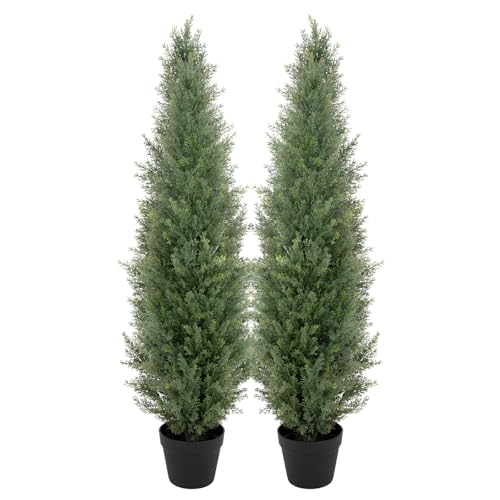
Bellacat 4ft UV Resistant Artificial Topiary Trees 2-Pack

Perfect Plants Tea Olive Live Plant 1 Gallon
The Strengths Of Each Pick
Short cedar-style topiaries earn their keep in tight spots where a six-foot tree would feel like overkill. The set ships four matching 23.5-inch stems, which makes lining a stair rail, a windowsill, or a narrow porch railing painless. A UV-resistant coating aims to keep the green honest through direct afternoon sun, and the anti-fall weighted base helps when a guest brushes past.
Compared with the lavender balls in pick 2, this set trades flower color for traditional evergreen shape. Renters and apartment dwellers who can’t anchor real plants into the ground get a near-zero-maintenance alternative. Group them in graduated heights for a fuller look, or split them across two zones.
Where It Delivers
- UV-resistant finish targets the kind of sun exposure that fades cheaper faux foliage
- Four-piece count spreads across multiple planters for layered curb appeal
- Weighted base reduces the chance of tip-overs on breezy stoops
- Compact 23.5-inch height fits where taller cedar trees overpower the space
Things To Consider
- Lacks a true conifer shape, so it reads as soft bush rather than tree silhouette
- Smaller scale means limited visual screening from upper-story windows
Quick Facts
Who It Suits Best
Anyone outfitting a small front porch, a balcony, or a patio table cluster with low-maintenance greenery.
Consider Something Else When
You want a dramatic entrance with six-foot visual weight, in which case the Mavis’s Diary 6ft Artificial Cedar Topiary Tree is the stronger fit.
Lavender topiary balls sit in a different lane than the cypress set above. They bring purple blooms into the privacy conversation, which is helpful if you want greenery that doubles as a color anchor. The four-pack ships with ground spikes, so you can plant them directly into garden soil without hunting for planters.
PE plastic with a UV-resistant coating holds color in the kind of full-sun bed that would bleach a cheaper set within a season. The ball shape works as a low border along a walkway, and the lavender hue reads well against cedar-tone decks. Use them as a low boundary rather than a tall screen.
Strong Points
- Purple color adds visual interest where green-only evergreens disappear into the background
- Included ground spikes cut out a separate planter purchase
- PE plastic resists brittleness through hot summers and cold snaps
- Set of four supports long border runs beside a path or pool fence
Trade Offs
- Ball height won’t block a standing neighbor’s line of sight on its own
- The faux-lavender scent is visual only, so fragrance seekers will want to pair with live blooms
Feature Snapshot
Made For
Garden owners who want low borders that read as floral rather than strictly green and don’t want to commit to live lavender care.
Look Elsewhere When
You need waist-high or taller screening, where the Mavis’s Diary 6ft Artificial Cedar Topiary Tree or the Bellacat 4ft set will serve you better.
Boxwood balls are the polite, traditional answer to entryway greenery, and this two-pack lands at 23 inches. The matte green foliage keeps the look grown-up rather than plasticky, which matters next to a wood door or a stone facade. UV-resistant PE plastic is built to handle the full-day sun a south-facing porch delivers.
Versus the lavender set in pick 2, this duo stays neutral and reads from a distance as classic shrubbery. The two-count is the right size for flanking a single door, without the extra inventory of a four-pack. If you like the look and want to extend the run later, the four-pack sibling in pick 4 covers that.
Benefits That Matter
- Matte green finish reads as a real boxwood rather than a shiny fake
- Two-pack scales perfectly to single-door entries without unused extras
- PE plastic holds shape in heat that warps lower-grade materials
- 23-inch height keeps sightlines open across the porch
Worth Noting
- Two pieces are limiting if your entry needs a longer run or a U-shaped layout
- No fragrance, so it skips the sensory layer live plants offer
Best Suited To
Homeowners with a single front door or a small patio who want a tidy, traditional pair of topiaries without leftovers.
Reach For A Different Pick When
You need more than two for a long porch, where the Artificial Boxwood Topiary Ball Trees 4pcs gives you a matching expansion.
Same plant, same 23-inch boxwood sphere, but in a four-pack. The upgrade is the count, and that count matters when you want symmetry across a wider porch, a long patio edge, or a poolside lineup. The matte green foliage and weather-resistant PE plastic carry over from the two-pack in pick 3, so the visual quality stays consistent.
This is the natural choice when one pair feels sparse. The bonus is flexibility: you can place two in front, two around a corner, or hold two in reserve for the back deck. The honest trade-off is that storing the extras takes a closet shelf until you find their spot.
Useful Highlights
- Four pieces enable matching runs along a porch or pool fence
- Matte green reads naturally from a distance and up close
- UV-resistant treatment protects against the bleaching south-side sun delivers
- Identical look to the two-pack, so mixing counts across entries stays consistent
Room For Improvement
- Overkill for a small stoop where two would already look complete
- Storing the unused pair requires a dry spot out of direct sun
Feature Card
Who Will Love This
Anyone styling a long porch, a wide patio, or a pool deck with a matched set of four boxwood spheres.
Skip It When
You only have room for two, in which case the two-pack sibling is the more efficient fit and saves the storage headache.
This is the point in the lineup where faux trees start to feel less like decoration and more like architecture. Each tree stands 48 inches tall, with layered Real-Touch TPE foliage engineered to mimic the texture of a live cedar. The pots are weighted (roughly 29 pounds for the pair), which is the kind of heft that survives a real windstorm instead of just a polite breeze.
The trade-off versus the boxwood spheres in picks 3 and 4 is footprint. At four feet, these trees need taller planters and a clearer zone around them, and the TPE material asks for occasional dusting with a soft cloth to keep the leaves looking fresh. In return, you get a true tree silhouette that hides more than a topiary ball ever could.
Good Reasons To Consider
- Four-foot height creates a real visual block for first-floor windows
- Weighted pots anchor the trees against wind without extra sandbags
- TPE foliage looks more lifelike than flat plastic leaves at close range
- UV protection targets the full-day sun porch plants often face
Points To Note
- Heavier to move once placed, so plan the spot before unboxing
- Tall enough to require larger decorative planters, which adds to the budget
Quick Technical Notes
Perfect Match For
Homeowners outfitting a statement entryway or a covered patio who want the visual mass of a real shrub without the upkeep.
A Better Fit Elsewhere
You want even taller screening, where the Mavis’s Diary 6ft Artificial Cedar Topiary Tree at six feet does the heavier lifting.
At six feet, this is the tallest pick in the roundup and the one that starts behaving like a hedge. Sold as a single tree, it slots into corners where a pair would be excessive, or lines up with the 4ft Mavis’s Diary set from pick 5 if you want a graduated row. The TPE foliage keeps the texture believable even when guests walk past it indoors.
What you’re really paying for is height. Six feet is the difference between a planter decoration and a privacy wall, especially along a fence line that sits low. Pet- and baby-friendly construction (no sharp wires in the foliage) earns a nod for households where curious hands and paws tend to grab at things.
Features That Help
- Six-foot height blocks sightlines across most standard fences
- TPE material keeps the surface soft, which helps in pet- and kid-heavy homes
- Single-tree format fits awkwardly sized corners where a pair won’t fit
- Transitions between indoor and outdoor spaces without a separate set
Some Limits To Know
- Single count means a full privacy run needs multiple units, raising the total spend
- Six feet is tall enough to require stable flooring indoors and a wide base outdoors
Technical Highlights
The Right Fit
Anyone needing serious vertical screening, particularly along a low fence or a ground-floor window that looks into a neighbor’s yard.
Swap It Out When
You want a tighter, lower-maintenance pair rather than a single tall tree, in which case the 2 Pack 4ft Artificial Cedar Trees for Outdoors covers the same brand family at a friendlier size.
Bellacat lands in the same four-foot category as the Mavis’s Diary pair but with adjustable branches you can shape after unboxing. That detail matters if you want the silhouette to look like a real pruned cypress rather than a factory-set cone. UV-resistant treatment guards against the kind of harsh balcony or patio sun that chews through cheaper plastic.
Compared with the cypress set in pick 1, this pair trades a low rail-friendly 23-inch height for true 48-inch presence. The trade-off shows up when the planter you have is shallow, so plan on a deeper decorative pot. In return, the trees do real screening work along a deck rail or a balcony edge.
What Earns Its Place
- Adjustable branches let you fine-tune the shape after delivery
- Four-foot height matches the Mavis’s Diary pair for a mixed-brand look at one shared scale
- UV treatment targets the long sun exposure balconies and decks get
- Two-pack covers a doorway, a deck corner, or a balcony entrance in one go
Honest Caveats
- Heavier than a topiary ball, so a shallow decorative pot won’t cut it
- Adjustable branches take a few minutes of shaping out of the box to look natural
At A Glance
Built With In Mind
Balcony and patio owners who want real screening height and the freedom to shape the foliage once it arrives.
Where A Sibling Pick Shines
You want a heavier, weighted pot straight out of the box, where the 2 Pack 4ft Artificial Cedar Trees for Outdoors ships ready to anchor in place.
The Tea Olive is the only live plant in this roundup, and that brings real trade-offs. You trade watering, soil, and patience for a fragrant, growing screen that gets better every year. The reward is a southern sweet-tea scented bloom cycle that no artificial tree can fake, plus the visual texture of real leaves with paler undersides.
Unlike the faux options above, this one needs full sun and well-drained soil, and it asks for a season of establishment before it takes off. Plant multiple shrubs in a row for an actual privacy hedge, or use a single plant as a scented anchor near a patio. A starter packet of plant food ships with the gallon container, which helps with the first-year transition.
Useful Touches
- Fragrant white blooms fill a yard with scent, not just greenery
- Live growth means the privacy screen thickens year over year
- Compact, bushy frame works in multiples along a walkway or fence
- Low pruning requirement keeps maintenance to a seasonal tidy-up
What To Weigh
- Live watering and feeding schedule replaces the set-and-forget nature of faux trees
- Single-gallon size means real screening takes multiple plants and a few seasons
Whose Yard It Belongs In
Patient gardeners who want a real, fragrant hedge and have full sun plus well-drained soil to give it.
Skip It When
You need privacy on day one, where the Mavis’s Diary 6ft Artificial Cedar Topiary Tree delivers instant height without the establishment period.
What To Match Between Your Yard And The Tree
A privacy tree only earns its space if the scale matches the job. Measure the sightline you’re trying to block before you fall in love with a silhouette, and remember that a six-foot tree along a four-foot fence reads as a wall, while a 23-inch boxwood reads as decoration.
Height comes first. First-floor windows usually need at least four feet of foliage to break a sightline, while second-story views call for taller solutions or layered plantings. Footprint matters just as much, because tall trees need weighted pots or in-ground planting to stay put in wind. The 4ft and 6ft picks all benefit from a heavy decorative planter, while the smaller topiaries do fine in standard urns.
Material tells you how the tree will age. UV-resistant PE plastic and TPE both target sun fade, but TPE feels softer and more lifelike, which matters up close on a front porch. PE plastic tends to be lighter and easier to move, which renters often prefer. Live plants like the Tea Olive add scent and growth, at the cost of watering and patience.
Quantity is the final call. A pair suits a single entry, while a four-pack handles a long porch, a pool deck, or a garden border. If you anticipate expanding later, matching the brand family (the two Mavis’s Diary picks, or the two LRTCG boxwood packs) keeps the look consistent.
Key Considerations Across These Picks
Where Shoppers Go Wrong
The most common slip is buying by silhouette without checking the actual height. A “cedar tree” listing at 23 inches behaves nothing like a four-foot cedar, and the visual difference is dramatic from a few feet away. Measure your sightline, then check the dimensions in the spec card before committing.
Another trap is skipping the planter plan. The taller trees need weighted, deep pots, and a shallow decorative bowl will leave them top-heavy in the first strong wind. Match the pot depth to the tree height before the box arrives, especially for the four-foot and six-foot picks.
When Paying More Pays Off
Premium tiers in this category buy three things: heavier bases, TPE foliage, and taller silhouettes. The Mavis’s Diary 4ft pair costs more than a basic plastic tree, and you get a weighted pot plus Real-Touch leaves in return. Stepping up to the 6ft version pays off when the goal is real screening, since four feet rarely blocks a standing adult’s view. The upgrade is worth it for entryways that get close-up inspection, where cheaper plastic leaves read as fake at a glance.
Frequently Asked Questions
How tall should a privacy evergreen tree be?
A general rule is to match or exceed the height of the sightline you want to block, so a first-floor window typically calls for at least four feet of foliage. Taller options like the 6ft pick in this roundup cover second-story views or fence gaps more reliably.
Are artificial privacy trees good for full sun?
UV-resistant models hold their color in direct sunlight far better than untreated plastic, though even the best coatings will fade over multiple seasons of harsh exposure. Rotating placement or adding a covered edge can stretch the lifespan of any faux tree.
What size planter do tall artificial trees need?
Four-foot and six-foot trees need deep, wide planters with enough room for the pot and weight for stability. A shallow bowl will leave the tree top-heavy, and a light plastic pot can tip in moderate wind.
How many privacy trees do you need along a fence?
Plan for one tree roughly every three to four feet for a continuous visual screen, and closer together for a denser look. Pair the count with a sightline check from inside the space you want to shield.
Can you leave artificial trees outside year-round?
Most UV-resistant models handle rain, sun, and cold without issue, though the foliage will last longer if you shelter them from the worst weather. Bringing them under an overhang during storms or heavy snow extends the lifespan noticeably.
The Takeaway
Privacy greenery comes down to matching height, footprint, and upkeep tolerance to the spot you want to shield. Faux trees deliver instant results with near-zero maintenance, while a live Tea Olive rewards patience with fragrance and growth. Pick the silhouette that fits your sightline, pair it with a planter that can hold the weight, and the rest is just placement.
