

You step onto the patio and realize the neighbor’s kitchen window sits a little too close to your morning coffee. Real privacy shrubs take years to fill in, and most yards don’t have that kind of time. Faux hedge panels, mesh privacy screens, and freestanding greenery walls solve the problem in an afternoon, giving you a wall of cover without a single drop of irrigation. This roundup walks through nine solid options across panel styles, mesh screens, and roll-out greenery, so you can match a solution to your fence, your balcony, or your open yard.
The Choices Worth Comparing
NatraHedge 20”X40” Artificial Rainforest Living Wall

ShadeMart 5′ x 16′ Fence Privacy Screen Green 170 GSM Mesh

SylvanVerse 48x120in Artificial Boxwood Roll (40 sqft)

SylvanVerse 48x120in Artificial Boxwood Roll, 4-Layer Leaves
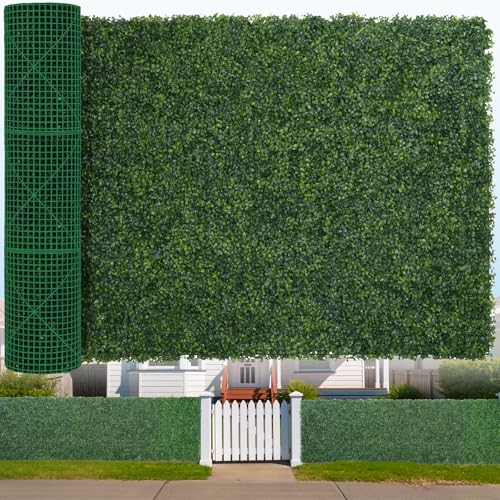
SylvanVerse 48x120in UV-Anti Faux Ivy Hedge Roll (40 sqft)

Windscreen4less 4-Pack 20″x20″ Artificial Boxwood Panels

TOPNEW 12-Pack 20″x20″ Artificial Boxwood Topiary Panels
Whole-fence coverage

AwnPro 18Wx54Hx12D Artificial Boxwood Partition Wall

AwnPro 72Wx54Hx12D Artificial Boxwood Partition Wall
What Each Pick Brings To The Table
The NatraHedge panel trades width for character, layering tropical leaves into a compact 20″x40″ tile that reads more like a curated jungle accent than a privacy wall. For renters and small-space dwellers who want greenery without committing to a full fence run, that smaller footprint makes it easier to anchor to a single balcony post, a garden gate, or a wall behind a bistro set.
Where the broader rolls later in this list stretch across entire property lines, this one shines as a focal piece over a mailbox, above a planter, or framing an outdoor reading nook. You may find the leaf texture looks denser at conversational distance than from across the yard, which is exactly where most people notice it anyway.
Advantages To Know
- Compact footprint fits tight balconies and entryway accents without dominating the wall.
- Tropical leaf styling reads as decorative greenery rather than standard boxwood grid.
- Lightweight build simplifies mounting on most wood and metal surfaces with basic hardware.
- Pairs well with the wider roll-out picks below when you want a focal point along a long fence.
Things To Consider
- Smaller coverage area means you need multiple panels for a full fence run, raising total cost.
- Like most faux foliage, occasional leaf rinse keeps dust from settling into the denser folds.
- Doesn’t carry the layered leaf density of the heavier SylvanVerse rolls further down this list.
Made For
Renters and small-space decorators who want a tropical-style greenery accent instead of full perimeter coverage.
Consider Something Else When
Whole-yard coverage seekers get a better fit from the ShadeMart 5′ x 16′ Fence Privacy Screen, which spans an entire fence panel in a single piece.
Switching gears from greenery panels to mesh screening, the ShadeMart 5′ x 16′ privacy screen handles the long-haul fence runs that eat up smaller panels. Made from 170 GSM (grams per square meter) HDPE (high-density polyethylene) knit fabric, it’s built for yards where one stretch of fence separates you from a busy street or a nosy neighbor’s second-story window.
The screen claims 90% visibility blockage, which makes it a stronger visual barrier than faux greenery but loses the natural-leaves aesthetic of the SylvanVerse rolls. Pre-cut grommets and included zip ties speed mounting along chain-link or wood fences, and the brand offers custom sizing for non-standard fence heights. In sun-soaked yards, expect a few seasons before the green tone softens.
The Practical Payoff
- Single 16-foot sheet spans most fence panels without seams showing through.
- 90% blockage rate screens out both curious neighbors and harsh afternoon sun.
- Knit HDPE fabric handles wind loads better than rigid greenery panels in exposed yards.
- Custom sizing option covers non-standard fence heights and odd property-line runs.
- Included zip ties and pre-punched grommets skip a separate hardware run.
Trade Offs
- Solid mesh reads as fabric barrier, not living greenery.
- Prolonged UV exposure can fade the green dye over multiple seasons.
- Not a fit for shopkeepers or renters wanting a decorative focal point.
Key Specs
Best Suited To
Homeowners covering long fence runs who prioritize visual blockage over a foliage aesthetic.
Swap It Out When
You want faux greenery instead of mesh, in which case the SylvanVerse 4-Layer Boxwood Roll delivers a denser, more leaf-like finish.
The SylvanVerse 48″x120″ roll trades modularity for raw coverage area, giving you 40 square feet of faux boxwood in a single sheet. Balcony dwellers covering a single railing span get the cleanest install here, while patio owners can run it along a fence line without obvious seams between smaller tiles.
Compared to the compact NatraHedge panel from pick 1, this roll trades decorative styling for sheer coverage volume. The mesh backing lets you cut the roll down to shorter fence heights, though trimming means you’ll want sharp scissors and a steady hand to keep the grid from unraveling.
Features That Help
- 40 square foot roll covers a full balcony rail or short fence section without seams.
- Trimmable mesh backing adapts to shorter fence heights.
- UV-treated leaves slow fading on exposed patios.
- High-density PE construction keeps the foliage rigid through weather swings.
Points To Note
- Single-layer leaf density looks thinner than the 4-layer version further down this list.
- Trimming requires careful cuts to keep the mesh grid intact.
- Heavy backing panel adds weight, so plan mounting hardware accordingly.
Who It Suits Best
First-time installers covering a balcony railing or a single fence run on a moderate budget.
Where Another Pick Suits Better
Shoppers wanting a richer leaf finish should jump to the SylvanVerse 4-Layer Boxwood Roll, which builds in extra foliage depth.
This is the same 48″x120″ coverage area as the previous roll, but with four stacked layers of leaves instead of one, which gives the foliage real depth. From across a patio, you get a hedge that looks like it has volume rather than the flat sheet feel you sometimes see in single-layer rolls. Privacy-first installers get the closest thing to a planted hedge without the wait.
The extra leaf layers do add weight, so mounting into studs or fence posts matters more here than with the lighter Windscreen4less tiles below. In our view, the payoff lands hardest on fences where neighbors can see straight through the gaps, since the layered foliage fills in those sight lines.
What Stands Out
- Four-layer leaf build fills in sight lines better than single-layer rolls.
- Color gradients and shadow detail hold up at conversational distance.
- High-density PE construction resists fraying where leaves meet the mesh.
- 40 sqft footprint handles full balcony or short fence sections without seams.
- UV protection slows color shift on south-facing fences.
- Reads as a real hedge from across a small yard.
Worth Noting
- Heavier than single-layer rolls, so use stronger mounting hardware.
- Costs more than the lighter SylvanVerse roll from pick 3.
Feature Snapshot
Right Fit For
Privacy-first homeowners who want the closest visual match to a real boxwood hedge without years of growth.
Not Your Match When
Modular installers prefer the Windscreen4less 4-Pack Tiles, which let you build the wall shape panel by panel.
The third SylvanVerse roll on this list shifts the focus to ivy-style foliage instead of boxwood, which gives your fence a different leaf shape than the rest of the lineup. If your garden already leans into trailing greenery, the ivy leaf pattern blends more naturally with surrounding plants than tight boxwood clusters would.
Sun-soaked patios benefit most from the explicit UV-anti treatment, since cheaper faux ivy can bleach out within a single summer in direct exposure. The 40 sqft coverage matches the other SylvanVerse rolls, so the install footprint stays consistent if you decide to mix ivy and boxwood across different fence runs.
What Works In Its Favor
- Ivy leaf styling blends with real trailing plants in mixed gardens.
- Reinforced UV treatment handles full-sun fence runs better than untreated foliage.
- 40 sqft footprint matches the other SylvanVerse rolls for mixed-style installations.
- High-density PE construction keeps leaves rigid through weather cycles.
- Trimmable mesh backing fits shorter fence heights with careful cuts.
Room For Improvement
- Single-layer leaf density looks thinner than the 4-layer boxwood roll from pick 4.
- Ivy shape won’t suit gardeners wanting the tight clipped-hedge look.
- Color uniformity can read less natural than mixed-tone boxwood from conversational distance.
Who Should Grab It
Garden owners wanting trailing ivy leaf styling that blends with real plants in full-sun fence positions.
Look Elsewhere When
Clipped-hedge aesthetics are your priority, in which case the SylvanVerse 4-Layer Boxwood Roll delivers the tighter geometric leaf finish.
Unlike the long rolls above, Windscreen4less ships its greenery as four 20″x20″ interlocking tiles that snap together without separate fasteners. That modularity lets you build L-shaped privacy corners, wrap a single fence post, or cover just the bottom half of a chain-link fence where pets tend to look through.
The four-panel count covers roughly 11 square feet, which is far less than the SylvanVerse rolls but trades raw area for install flexibility. Each tile weighs less than the larger SylvanVerse panels, so renters worried about drilling can mount these with lighter-duty hardware or outdoor-grade adhesive strips on smooth surfaces.
The Good Stuff
- Snap-lock tile design builds custom shapes without separate fasteners.
- Lighter weight than full rolls, friendlier for renter-friendly mounting.
- Polyethylene construction handles outdoor weather cycles without leaf shedding.
- Modular layout replaces single damaged tiles instead of full rolls.
Honest Caveats
- Four tiles cover less area than a single SylvanVerse roll.
- More seams mean visible grid lines on very long fence runs.
- Snap-lock connectors can loosen in extreme temperature swings.
Quick Facts
Made For
Renters and DIYers who want to build custom privacy shapes without committing to a full fence run.
Skip It When
Long, uninterrupted fence coverage is the goal, in which case the ShadeMart 5′ x 16′ mesh screen handles full runs in one piece.
TOPNEW ships twelve 20″x20″ panels in a single box, which works out to roughly 33 square feet of total coverage when laid flat. For homeowners covering a longer fence run on a tighter budget, that panel count often beats the per-square-foot math of the larger rolls above, even with the visible seams between tiles.
The polyethylene build carries UV-resistant certification, which matters when you’re committing twelve panels to a full sun exposure. Topiary-style leaf clusters give the surface a slightly rounded shape compared to the flatter SylvanVerse rolls, so the fence reads more like clipped hedge balls than a continuous green wall.
Useful Strengths
- Twelve-panel count covers longer fence runs at lower per-square-foot cost.
- UV-resistant treatment protects color on sun-exposed installations.
- Topiary-style leaf clusters add visual texture that flat rolls lack.
- Standard 20″x20″ size pairs with the Windscreen4less tiles for mixed installations.
Points To Keep In Mind
- Visible seams between tiles show on long, unbroken fence runs.
- Higher panel count means longer install time than a single roll.
- Spare panels are useful for replacing damaged sections later.
Whose Shelf It Belongs On
Budget-focused homeowners covering a long fence run who don’t mind working through more seams during install.
Reach For A Different Pick When
You want a seamless single-piece finish, in which case the SylvanVerse 4-Layer Boxwood Roll delivers 40 square feet without tile joints.
The first of two AwnPro entries on this list, the 18-inch-wide partition trades fence mounting for freestanding placement. At 18″ wide, 54″ tall, and 12″ deep, the unit functions more like a moveable greenery divider than a fixed wall, which suits renters and apartment dwellers who can’t drill into shared fences.
Thickened base plates keep the partition upright on flat patios and balconies, while the white flower decoration adds a softer note than the all-green palette of the other picks here. You may find the 18-inch width narrow for blocking wide sight lines, so think of this as a visual buffer for a single seating zone rather than a full property shield.
Everyday Advantages
- Freestanding design needs no fence mounting or drilling.
- Thickened base plate holds steady on flat patio and balcony surfaces.
- White flower detail softens the all-green palette common elsewhere.
- Moveable placement adapts when you rearrange outdoor furniture.
- Waterproof construction tolerates rain exposure without leaf shedding.
Less Ideal Details
- 18-inch width blocks narrower sight lines than fence-mounted rolls.
- Freestanding format takes up patio floor space rather than hugging a wall.
- Heavier base makes repositioning harder than the lighter Windscreen4less tiles.
Perfect Match For
Apartment dwellers and renters who need a freestanding privacy buffer without drilling into shared walls.
A Better Fit Elsewhere
Full fence coverage is your priority, in which case the TOPNEW 12-Pack Boxwood Panels spread greenery across much wider runs.
The wider sibling to the previous AwnPro partition stretches to 72 inches across while keeping the same 54-inch height and 12-inch depth. That’s enough width to screen off a hot tub, a single dining zone, or a small event backdrop without committing to fence installation. For homeowners wanting a freestanding hedge without the seams of tile systems, this format fills a specific gap.
The white flower decoration reappears here, matching the smaller AwnPro partition for design consistency if you want to place both units in the same yard. Like the 18-inch version, the freestanding format needs flat ground to stay upright, so sloped yards will want the fence-mounted rolls above instead.
Well-Handled Touches
- 72-inch width screens off larger patio zones than narrow partitions.
- Freestanding format needs no fence or wall installation.
- Thickened base plate stabilizes the unit on flat outdoor surfaces.
- White flower detail coordinates with the smaller AwnPro partition for matched setups.
- Waterproof construction holds up to rain exposure.
Where It Is Less Suited
- Freestanding design requires flat ground to stay stable.
- Heavier than the 18-inch version, so repositioning takes more effort.
- Costs more than fence-mounted rolls covering equivalent linear footage.
Built With In Mind
Patio owners screening off wider seating or dining zones who want a freestanding hedge without tile seams.
Where A Sibling Pick Shines
Linear fence coverage along a property line, where the SylvanVerse 4-Layer Boxwood Roll mounts directly to your existing fence.
Matching The Right Coverage Format To Your Yard
The first real call is between mesh screening and faux greenery, and each approach answers a different yard problem. Mesh screens like the ShadeMart entry handle long fence runs with strong visibility blockage, reading as a fabric barrier rather than foliage. Faux greenery panels and rolls mimic a planted hedge from conversational distance, which matters more when neighbors can see into social zones rather than just the property line.
Material construction separates entry-level picks from longer-lasting installs. Most options here use high-density polyethylene (PE), a stiff plastic that holds leaf shape through weather cycles, but only some carry explicit UV-resistant treatment that slows fading on south-facing fences. In our view, full-sun yards benefit most from UV-treated picks like the SylvanVerse ivy roll or the TOPNEW panel pack.
Mounting format shapes install effort more than people expect. Fence-mounted rolls and tiles need drill time, stable backing, and sometimes extra hands for the wider panels. Freestanding partitions from AwnPro skip that work entirely but trade wall coverage for floor space and need flat ground to stay upright.
Coverage math deserves a quick check before ordering. Measure the linear feet and height of the fence run you want to cover, then convert to square feet, since most products quote total coverage area. A 50-foot fence at 5 feet tall needs roughly 250 square feet of greenery, which means you’ll combine multiple rolls or pick a tile system like the TOPNEW 12-pack to hit that number.
Things Worth Thinking Through Before You Buy
Where Shoppers Go Wrong
The most common slip-up is underestimating total coverage area and ending up with one roll when the fence needs three. Measure first, then add roughly 10 percent extra for trimming waste and seam overlap. Another miss is choosing mesh screening when the goal is a foliage aesthetic, since fabric reads as fabric regardless of how green it looks.
The Upgrade Payoff
Spending more generally buys denser leaf layers, thicker mesh backing, and stronger UV treatment. The SylvanVerse 4-Layer Boxwood Roll justifies its higher cost over the single-layer version through foliage depth alone, which matters more on fences where sight lines sneak through leaf gaps. Premium freestanding partitions like the wider AwnPro entry cost more than tile systems but deliver seamless coverage without visible grid lines.
Frequently Asked Questions
How long do artificial privacy hedges last outdoors?
Most polyethylene panels last several seasons in moderate climates, with UV-treated options holding color longer in direct sun. Owners in coastal or extreme-heat zones may see faster wear than gardeners in milder regions.
Can these panels handle strong wind?
Mesh-backed greenery panels catch wind like a sail, so securing them firmly to fence posts or rails matters. Freestanding partitions handle wind better because their base plates add weight, but high-wind zones still benefit from anchoring.
Are artificial hedges safe around pets and kids?
High-density PE construction is generally non-toxic and odorless, though curious pets may chew on leaves. Trim any loose strands after install and check periodically for detached pieces that could become a choking hazard.
Do these work on chain-link fences?
Mesh screens and tile systems mount well to chain-link with zip ties or snap fasteners. The long greenery rolls need a sturdier backing rail since chain-link alone doesn’t give the roll enough flat surface to sit flush.
How do you clean artificial hedge panels?
A gentle rinse with a garden hose handles most dust and pollen. For heavier grime, a soft brush with mild soap works without damaging the leaves, though avoid pressure washers that can shred the foliage.
Closing Remarks
The right privacy hedge depends less on product specs and more on the yard you’re working with. Long fence runs favor mesh screens or wide greenery rolls, while balconies and rentals lean toward tiles and partitions that don’t need permanent mounting. Measure your space, match the format to your install limits, and pick the leaf density that matches how close neighbors actually are to your outdoor zone.
