

Bare fences, overlooked balconies, and a neighbor’s second-story window facing your patio: these are the everyday privacy problems that send people searching for fast, low-maintenance coverage. Privacy shrubs, whether living boxwood or faux ivy panels, solve the “I just want some peace outside” problem without the years of waiting a hedge takes to fill in. The picks below cover roll-out screens, expandable trellises, and potted topiaries, so you can match coverage to your exact layout, light level, and tolerance for upkeep.
The Lineup, Simplified

ColourTree 4′ x 50′ Green Fence Privacy Screen Windscreen Cover Mesh Cloth
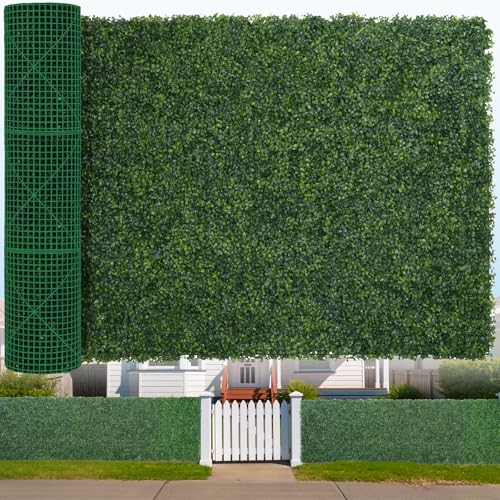
SylvanVerse Artificial Boxwood Roll 48×120 in (40 sqft)

SylvanVerse Artificial Boxwood Roll 60×120 in (50 sqft)

NatraHedge 20”x50” Artificial Privacy Grass Wall Decor

DOEWORKS Expandable Fence Privacy Screen 1PC Faux Ivy Panel

SylvanVerse Artificial Boxwood Roll 40×120 in (33.33 sqft)

ColourTree Expandable Faux Ivy Trellis Hedge Fence Screen (Double Sided)

DOEWORKS Expandable Faux Ivy Privacy Screen Double-Sided

GLANT Expandable Faux Ivy Fencing Panel with Blue Flowers

YEMMEN 2 Pack 5ft Artificial Cedar Topiary Trees
What Each Pick Brings To The Table
When the privacy problem is a long stretch of chain-link or a wooden fence that needs uniform coverage, fabric screen rolls earn their keep. The ColourTree 4′ x 50′ privacy screen delivers exactly that: a continuous 50-foot run of knit fabric that drops over the top rail and cinches down with cable ties, turning a bare boundary into a leafy green wall in an afternoon.
The 4-foot height suits standard residential fences, and the knit pattern blocks direct sightlines while still letting filtered light and breezes pass through, which most shoppers find more livable than solid tarp material. Compared with the artificial boxwood rolls later in this list, this one covers much more linear footage per purchase, but it trades the dimensional, hedge-like appearance for a flat fabric surface.
Reasons It Performs
- 170 GSM commercial-grade knit holds up to wind flapping better than lighter garden mesh.
- 50-foot continuous span covers an entire side yard without seams showing through.
- Knit weave filters sun, reducing glare on west-facing patios without going pitch black.
- Zip ties anchor the panel to fence rails in minutes, so installation requires no special tools.
Trade Offs
- Flat fabric lacks the dimensional foliage look of boxwood panels, so the aesthetic reads more “windbreak” than “hedge.”
- Owners in high-wind zones commonly reinforce the grommet edges, since strong gusts can stress the knit.
Feature Snapshot
Built With In Mind
Homeowners with long, straight fence runs who want fast, no-maintenance coverage will find this the most practical option on the list.
Consider Something Else When
If a three-dimensional hedge appearance matters more than coverage length, the SylvanVerse Artificial Boxwood Roll offers a far more lifelike texture.
For shoppers chasing the look of a mature English boxwood hedge without the five-year wait, the SylvanVerse 48″ x 120″ boxwood roll delivers. The 3D-molded plastic leaves are layered with depth and color variation, which is what separates convincing faux hedges from the flat, obviously fake panels of a decade ago.
The 4-foot height maps neatly to standard balcony railings and low patio walls, and the roll format means you can cut it to size with heavy scissors or a utility knife. UV-stabilized high-density polyethylene, the same plastic family used in outdoor furniture, helps the green tones resist fading in direct afternoon sun, though most owners in full-sun exposures should expect a year or two of color shift.
Why It Works Well
- 3D leaf layering and varied green tones read convincingly as living foliage at normal viewing distance.
- Backing grid holds the shape flat against chain-link, wood, or wire panels for clean installation.
- UV-treated polyethylene helps slow fading in sunny patio exposures.
Worth Noting
- Heavier than fabric screens, so the panel needs zip ties every few inches to avoid sagging.
- Cutting the backing grid requires a sturdy utility knife rather than household scissors.
Who It Suits Best
City dwellers outfitting a balcony railing or renters seeking landlord-friendly coverage that looks more garden than construction site.
Look Elsewhere When
Anyone wanting to fill a 50-foot fence run should look at the ColourTree 4′ x 50′ fabric screen, which is more economical at scale.
The taller sibling of the previous pick, this 60-inch SylvanVerse roll closes off sightlines that the 48-inch version simply cannot. On a standard 6-foot fence, the 5-foot coverage leaves a slim open band at the top, which is often exactly what you want for airflow and light while still stopping ground-level peeks from a neighboring deck.
Built from the same 3D-textured high-density polyethylene with a plastic mesh backing, the panel handles cuts without unraveling when you score along the grid lines. Compared with the smaller SylvanVerse roll, you trade weight and storage footprint for substantially more height coverage per foot of fence, useful when the privacy problem is people on an upper-story porch or second-floor window.
Notable Gains
- 5-foot height closes the gap that lower boxwood panels leave along tall fences.
- Plastic mesh backing makes the panel rigid enough to mount on a freestanding frame as a portable divider.
- UV protection helps the panel keep its color through at least two summers of direct exposure.
Honest Caveats
- Heavier than the 48-inch version, so it demands more zip ties and a second pair of hands during install.
- Storing an unused section requires a dry, flat area because folds can deform the leaf clusters over time.
Quick Facts
Right Fit For
Homeowners with a 6-foot privacy fence who want hedge-like coverage up to the top rail without resorting to fabric.
Skip It When
Apartment renters with limited storage and a small balcony should consider the more compact SylvanVerse 40″ x 120″ version instead.
Most boxwood and ivy panels assume a long, wide boundary. The NatraHedge 20″ x 50″ panel ignores that assumption. This compact laurel-leaf mat slips into gaps where the long rolls would be overkill, such as a small section of railing, a kitchen window view of a trash can area, or a narrow side-yard breezeway.
Mounted on a plastic mesh grid, the panel trims easily to a custom height and lays flat against wood, metal, or chain-link. The trade-off is that one panel covers roughly 7 square feet, so for a wide stretch you will be repeating the purchase, which is why this lands as a “compact choice” rather than a primary fence solution.
Benefits That Matter
- Compact 20″ width handles awkward gaps and narrow railing sections that long rolls cannot.
- Laurel leaf shape offers a slightly different silhouette than standard boxwood squares.
- Mesh grid backing allows easy zip-tie installation on existing fences or wire frames.
Points To Note
- At roughly 7 square feet per panel, the cost-per-foot of coverage is much higher than the larger boxwood rolls.
- Smaller panel means more visible seams when patching a long run.
Best Suited To
Shoppers patching a small problem area, like a kitchen window with a bad view, rather than dressing a full yard.
Swap It Out When
If the goal is a continuous green backdrop along an entire fence, the SylvanVerse 60″ x 120″ roll will be more efficient and look more cohesive.
The expand-and-contract format of the DOEWORKS panel changes the buying decision for many shoppers. Closed, the trellis measures 16″ x 45″, so it stores in a closet and ships cheaply. Pulled out, it stretches to roughly 92″ wide, which is enough to span a typical window or balcony segment without any cutting.
The frame is real willow rather than plastic, which gives the panel a more organic backbone than the all-synthetic options. Faux ivy leaves with a few accent flowers are woven into the lattice, and the polyethylene leaves handle rain and sun without wilting, so maintenance is essentially a yearly rinse with a garden hose.
What Works In Its Favor
- Telescoping width adjusts to fit openings from 16″ to 92″ without cutting.
- FSC-certified willow frame feels closer to a garden trellis than a plastic panel.
- Single-panel format moves easily for renters who cannot make permanent modifications.
Possible Compromises
- Coverage is opaque from one side only, so the back shows willow lattice rather than dense foliage.
- Closed 45″ height is shorter than a full fence, which is why most owners pair it with another method for tall boundaries.
Who Will Love This
Renters and small-space dwellers who want a storable, no-drill privacy solution they can adjust to different window widths.
A Better Fit Elsewhere
Homeowners covering long fence runs get more visual coverage per dollar from the ColourTree 4′ x 50′ fabric screen.
For balconies and railings where the 48″ and 60″ SylvanVerse panels feel oversized, the 40″ x 120″ version is the right size. The shorter profile handles the typical 36″ to 42″ rail with a bit of overhang, so you get clean coverage without folding or trimming that compromises the leaf density.
The same UV-treated high-density polyethylene build applies here, and the 40-inch width is light enough for one person to carry and mount. For shoppers with several long runs, the per-square-foot value is reasonable, though if you need a higher visual barrier you may find the 40″ height limiting against second-story views.
Real-World Strengths
- 40″ height matches the most common balcony railing dimensions without trimming.
- Mesh-backed panel lays flat against chain-link or wire without visible ripples.
- Lightweight enough for one-person install on a single afternoon.
A Few Limitations
- Lower height leaves upper windows exposed, so it is not the right pick for tall two-story sightline issues.
- 33 square feet per roll means longer fence projects will need multiple purchases.
Key Attributes
Made For
Small-balcony and patio-rail projects where standard boxwood panels would be too tall and too heavy.
Reach For A Different Pick When
Tall fences with neighbor upper windows need the higher coverage of the SylvanVerse 60″ x 120″ roll instead.
The double-sided ColourTree trellis answers the most common complaint about expandable ivy panels: the back looks empty. Foliage is attached to both faces of the willow lattice, so whether the neighbor is looking from their side or you are looking from yours, the panel reads as a leafy screen.
Closed, the panel measures 15″ x 48″ and stretches to roughly 116″ wide, which is enough for the widest apartment window or a long balcony segment. At 150 GSM, the polyethylene leaves are denser than budget faux ivy, which is what gives the panel its more solid appearance and its reported 90% blockage rate when fully expanded.
The Case For It
- Double-sided foliage keeps the visual consistent from both the owner and neighbor side.
- 116″ expanded width handles long balcony segments without joining multiple panels.
- 150 GSM leaf density reaches around 90% blockage in fully expanded form.
Potential Sticking Points
- Willow frame adds visible weight compared to all-plastic trellises, so the panel needs sturdy anchor points.
- Expanded width means less rigidity in the middle, so owners commonly add a center support to prevent sag.
Technical Highlights
Perfect Match For
Shared-boundary installations where the look from both sides of the fence matters, such as between attached homes or stacked balconies.
Where A Sibling Pick Shines
If the priority is full-fence coverage on a residential yard, the ColourTree 4′ x 50′ fabric screen is the more efficient long-run option.
The DOEWORKS double-sided ivy screen takes the telescoping concept from the earlier DOEWORKS pick and adds foliage to both faces, which most renters find matters more than they expect. Closed, the panel measures 16″ x 45″ and expands to 92″, with the FSC-certified willow frame giving the screen a less plastic feel than mass-market alternatives.
Realistic leaf veining and small accent flowers break up the green and reduce the “all identical leaves” effect that gives away cheaper faux plants. The polyethylene foliage is sunlight and water resistant, so an annual rinse keeps the panel looking fresh, with no trimming, watering, or fertilizing required.
Practical Advantages
- Double-sided foliage avoids the bare willow look from the neighbor’s side.
- Expandable 16″ to 92″ width adapts to different window and railing widths.
- FSC-certified wood frame gives the panel a more natural feel than all-plastic competitors.
Less-Strong Areas
- Closed height of 45″ is shorter than many full fence lines require.
- Willow frame is heavier than plastic, which is worth noting for those mounting on weaker railings.
Details At A Glance
Whose Shelf It Belongs On
Apartment and condo dwellers who want a storable, renter-friendly privacy screen that looks complete from both sides.
Not Your Match When
Long residential fences need a continuous fabric solution like the ColourTree 4′ x 50′ screen instead of repeating panels.
The GLANT expandable trellis is the most decorative pick in this roundup. Instead of solid green, the foliage is woven with small blue flowers, which adds visual interest where other ivy panels read as uniform green walls. For a garden party patio or a corner that needs a focal point, that bit of color shifts the panel from “functional” to “intentional design.”
The real-wood lattice stretches to fill different widths, and the polyethylene leaves are water and sunlight resistant for year-round outdoor use. The single-sided foliage is the honest trade-off, so this works best against a wall where only one face is visible, rather than a freestanding divider.
Good Reasons To Consider
- Blue flower accents create a more decorative look than plain green panels.
- Expandable wood lattice adapts to multiple window and railing widths.
- Sunlight- and water-resistant leaves hold up across seasons without trimming.
Things To Weigh
- Single-sided foliage shows bare lattice from the reverse side.
- Decorative flower styling is less suited to a strictly minimalist backyard aesthetic.
Who Should Grab It
Shoppers who want privacy that also contributes color and personality, particularly against an existing wall or garden backdrop.
Another Choice May Suit
Anyone needing a double-sided panel for a freestanding or shared boundary should consider the ColourTree double-sided trellis instead.
Privacy at the entry is a different problem than privacy along a fence, and the YEMMEN 2-pack of 5-foot artificial cedar topiaries fits that brief. Placed in matching pots flanking a front door, the pair creates a formal, framed entrance that signals the boundary between public and private space without any wall-building.
The UV-rated foliage keeps its color through the seasons, which matters at a south-facing entry where direct sun hits all afternoon. Because the trees come potted and weighted, you simply set them in place rather than mounting hardware, and you can move them as seasons or styles change.
Everyday Wins
- 5-foot height gives meaningful visual weight at a doorway without overpowering the facade.
- Potted format means no tools, no drilling, and no permanent modifications.
- UV-rated foliage maintains color through sun and weather exposure.
Practical Considerations
- Two-pack assumes a symmetrical entryway; asymmetrical porches may need a different solution.
- Topiary shape is more formal than casual garden style, which is worth considering against your home’s existing look.
Built With In Mind
Shoppers focused on front entry and doorway presentation rather than full-yard boundary coverage.
Where Another Pick Suits Better
For continuous fence-line coverage, the SylvanVerse 60″ x 120″ boxwood roll handles long boundaries far more efficiently than potted plants.
What Matters Most Before Choosing Privacy Shrubs
Match The Format To Your Boundary
The first decision is structural: do you need a continuous roll along a long fence, an expandable trellis for a specific window, or a pair of potted plants for a doorway? Each format solves a different shape of problem, and most shoppers who are unhappy with their purchase picked the wrong format for their layout rather than a bad product. Measure the length, height, and any width changes along the boundary before deciding.
Weigh Foliage Density Against Light And Air
A 90% blockage panel feels like a green wall and filters very little wind, which can feel stuffy on a small balcony. A 40% to 60% mesh screen lets air move and stops direct sightlines but offers less visual density. The honest read is that small enclosed balconies usually want higher blockage, while open side yards usually benefit from a more breathable screen that does not act like a sail in high wind.
Plan For Installation And Storage
Rolls require zip ties every few feet and a helper for the larger sizes. Expandable trellises are heavier than they look because of the wood frame, so mounting hardware needs to support the weight. Potted topiaries are the easiest install but the heaviest at the base, which matters on balcony decks with weight limits. Storage is often the forgotten factor, especially for renters who need to take screens down in winter.
Key Considerations Across These Picks
Where Shoppers Go Wrong
The most common mistake is buying a long-roll product to fill a small gap, ending up with awkward offcuts and visible seams. Measure twice and round up rather than down, since most faux foliage panels lose a few inches to trimming. Another trap is overlooking the back face of expandable trellises, where the bare wood lattice gives the whole project away from the neighbor’s side.
Where The Extra Money Goes
Higher-tier faux foliage earns its price with denser leaf counts, UV-stabilized polyethylene that holds color longer, and double-sided coverage. For a short-term rental project, budget panels look fine for a year or two. For a permanent home installation, the upgrade typically pays back in the third or fourth summer, when the color shift on cheaper panels becomes obvious and the panel needs replacing.
