

A good pair of pruner shears quietly shapes everything from a tidy rose bed to a productive orchard, and most people reach past two or three cheap pairs before realizing how much a sharp, well-built blade actually changes the work. Cuts heal cleaner, hands tire less, and the difference shows up in every shrub you touch.
The picks below cover everyday home use, heavier branch work, ergonomic grips for smaller hands, and a genuine replacement blade to keep a quality tool alive for years. The right choice depends on what you actually grow, how often you prune, and how much hand fatigue you can tolerate during a long Saturday in the yard.
The Essentials At A Glance
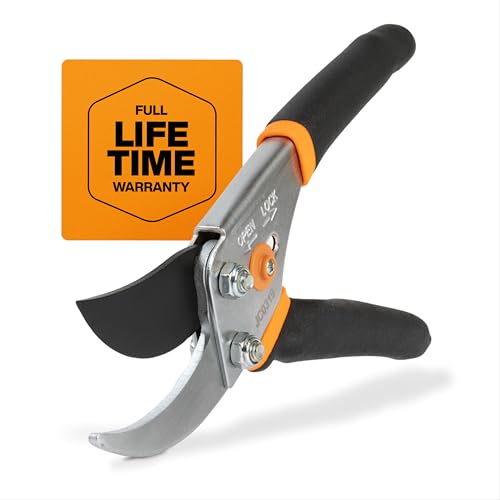
Fiskars Bypass Pruning Shears (5/8″ Cut)

TONMA TP-2 8.2″ Japanese Pruning Shears

VOTREK 8.5″ Bypass Pruning Shears

VOTREK 8.5″ Jam-Proof Spring Clippers

Fiskars Forged Steel Bypass Pruning Shears (1″ Cut)
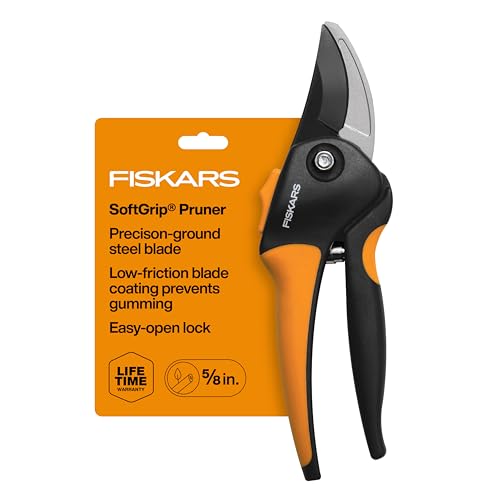
Fiskars SoftGrip Bypass Pruning Shears (5/8″)

Felco F2 9.25″ Swiss-Made Pruning Shears
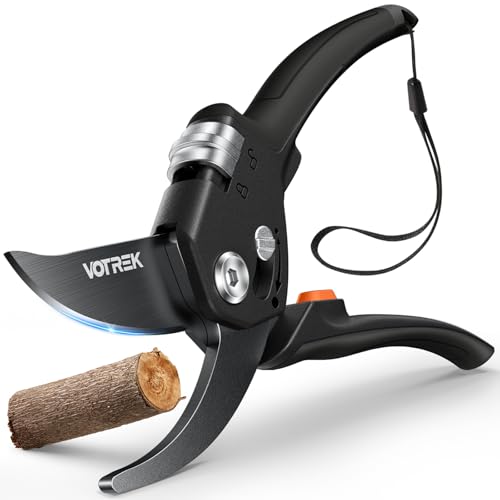
VOTREK 8.5″ Stepless Handle Garden Shears

VOTREK 8.5″ Stepless-Open Garden Shears

Felco Replacement Blade for F2, F4, F11
What Each Pick Brings To The Table
The classic workhorse you see hanging in half the garden sheds in the country. A bypass blade (two curved blades that pass each other like scissors, rather than meeting flat) handles live green growth cleanly, and the 5/8″ cut capacity covers most flower stems, rose canes, and small shrub branches you’ll meet on a Saturday morning sweep.
It’s the kind of tool that disappears into the routine rather than dominating it. For someone pruning a few roses, a hydrangea, and a tomato plant every week, the weight, grip, and cutting feel rarely get in the way.
Features That Help
- Fully hardened precision-ground steel blade (steel heated and cooled for hardness, then sharpened against a grinding wheel) stays sharp through regular use and resists dulling from woody stems.
- Bypass action slices cleanly through live green growth instead of crushing it, which helps plants heal faster.
- 5/8″ cut capacity handles most home-garden pruning tasks without forcing you to wrestle thicker branches.
- Lightweight enough for extended one-handed work above shoulder height.
Points To Keep In Mind
- Coating on the lower blade may wear over time, so wiping the blades after sappy cuts helps the tool last longer.
Who It Suits Best
Beginner to intermediate home gardeners maintaining flower beds, small shrubs, and a backyard rose or two.
Look Elsewhere When
You’re regularly cutting branches thicker than 5/8″ and want one tool that handles both light and heavy work, in which case the Fiskars Forged Steel Bypass Pruning Shears (1″ Cut) is the stronger match.
A compact tool with a serious bite. Made in Japan from SK5 steel, a high-carbon tool steel widely used in Japanese blades for its edge retention, the TONMA TP-2 punches above its 8.2″ length. Compared to the Fiskars bypass above, it cuts through noticeably thicker growth in a single squeeze, and the steel feels closer to a craft blade than a hardware-store clipper.
You feel the difference in woody material rather than tender stems, where the extra cutting power saves hand strain. The safety lock on this model is designed to stay put in any position, which is a small detail that matters when you’re climbing in and out of a wheelbarrow.
Where It Delivers
- SK5 high-carbon stainless steel blade holds a sharp edge through repeated thick cuts.
- Cuts branches up to roughly 1″ in diameter without forcing you to bear down hard.
- Compact 8.2″ length fits comfortably in most hand sizes and reaches into tight spots between canes.
- Tight-clip safety lock stays engaged during storage and transport, reducing the risk of an accidental snip.
Trade Offs
- Smaller handle opening than larger pruners, which can feel cramped during long sessions for users with bigger hands.
- Premium steel benefits from a quick wipe and dry after use to prevent surface staining on the blade.
Feature Snapshot
Made For
Home growers and hobby orchardists who prune woody stems regularly and want Japanese steel without jumping to a full pro-grade price.
Where A Sibling Pick Shines
You mostly cut tender live growth and want a softer, more cushioned grip, in which case the Fiskars SoftGrip Bypass Pruning Shears (5/8″ Cut) is the better daily companion.
The standout feature here is the Teflon non-stick coating on the SK5 blade, which keeps sap, resin, and moist green tissue from gumming up the cut. Anyone who has pruned grape vines, lilacs, or fig trees knows how quickly a clean blade turns into a sticky mess, and this coating slows that down considerably.
Combined with a sealed jam-proof spring (a spring enclosed in a housing that keeps debris out, so it doesn’t clog or corrode) and an ambidextrous thumb lock, the VOTREK C800 feels like a tool designed for the person who actually uses it every weekend. It sits in a useful middle ground between basic bypass pruners and the Felco F2’s professional tier.
Real Benefits
- Non-stick Teflon coating reduces sap buildup, so cuts stay cleaner through long pruning sessions.
- SK5 steel blade provides solid edge retention for woody growth up to its rated capacity.
- Sealed spring keeps debris out, reducing the need to pry apart a stuck tool mid-job.
- Ambidextrous thumb lock works equally well for left- and right-handed users.
Worth Noting
- Teflon coating can wear with heavy abrasive use over time, so avoid cutting near grit or sandy soil.
- Slightly heavier than minimal entry-level pruners, which adds up during overhead work.
Best Suited To
Home gardeners who deal with sappy or resinous plants and want a low-maintenance blade that doesn’t need wiping every few cuts.
Not Your Match When
You prune only occasionally and want the simplest, lightest tool possible, in which case the Fiskars Bypass Pruning Shears (5/8″ Cut) is the easier starter pick.
Where the previous VOTREK model leans into non-stick performance, this variant leans into low maintenance. The dual-coated SK5 blade plus the sealed spring system is built around the idea that you’d rather prune than service your tools. A quick wipe-down is genuinely enough to keep this pair cutting like new.
For someone who puts their pruners away in a shed and doesn’t want to think about rust between seasons, the design choices here make sense. It doesn’t feel quite as aggressive on thick wood as the Japanese TONMA above, but for routine home use it earns its place.
Practical Pluses
- Sealed jam-proof spring resists rust and debris, cutting down on routine cleaning time.
- Dual-coated SK5 blade holds up well through repeated use in damp outdoor conditions.
- Easy-thumb locking mechanism is intuitive for first-time users.
- Light enough to carry in a back pocket or garden apron without weighing you down.
A Few Limitations
- Lock placement may feel awkward at first for users with very small or very large thumbs.
- Maximum cut capacity is modest, so don’t push it into thick mature wood.
Whose Shelf It Belongs On
Homeowners who want a dependable, low-effort pruner they can store in a garage without worrying about corrosion.
A Better Fit Elsewhere
You’re tackling regular thick-branch work on a small orchard and want a more robust cut capacity, in which case the Fiskars Forged Steel Bypass Pruning Shears (1″ Cut) is the stronger match.
This is the step up when 5/8″ isn’t enough. The forged steel handles (steel shaped under high pressure for grain density and strength rather than cast or stamped) give this model a noticeably sturdier feel, and the 1″ cut capacity pushes it into light-branch territory. If you have mature lilacs, established roses, or a small fruit tree, you’ll stop fighting the tool and start making real cuts.
It’s heavier than the everyday Fiskars bypass above, which is the honest trade-off. The weight is what lets it bite through thicker growth, but you’ll feel it during extended overhead pruning.
What Pays Off
- Forged steel handle construction handles torque and repeated heavy cuts without flex.
- 1″ cut capacity tackles thicker stems that lighter pruners can’t reach.
- Fully hardened precision-ground steel blade holds its edge through demanding use.
Things To Weigh Up
- Heavier than the lighter Fiskars model, so extended overhead pruning can tire the forearm.
- Overkill for tiny ornamental work where a smaller bypass pruner is more precise.
Quick Facts
Who Will Love This
Homeowners with mature shrubs, climbing roses, or a small orchard who need one tool that handles stems a lighter pruner can’t.
Skip It When
You mostly do light deadheading and herb trimming, in which case the lighter Fiskars Bypass Pruning Shears (5/8″ Cut) is easier on the wrist.
The SoftGrip version of the classic Fiskars bypass focuses on the part of the tool that touches your hand. The non-slip cushioned handles genuinely make a difference during a long afternoon of deadheading, snipping herbs, and tidying up the front border.
It uses the same 5/8″ cut capacity and self-cleaning sap groove (a small channel cut into the lower blade that pushes sap away from the cutting edge so it doesn’t gum up) as the standard model, so you don’t give up cutting performance for the comfort upgrade. If you already have the basic Fiskars and find your hand aching after an hour, this is the targeted fix.
Good Reasons To Consider
- Soft non-slip grip handle reduces hand fatigue during longer pruning sessions.
- Self-cleaning sap groove keeps the blade from sticking on sappy stems.
- 5/8″ capacity covers typical home-garden cutting work comfortably.
- Steel blade stays sharp through heavy use, like the standard bypass model.
Some Limits To Know
- Same 5/8″ limit as the basic model, so it won’t reach thicker mature branches.
- Soft grip material can attract dust and plant debris in dry conditions.
Right Fit For
Pruners who do a lot of repetitive light cuts and want to protect their hands from blisters and fatigue.
Consider Something Else When
You frequently cut through sticky sap and want a non-stick blade coating, in which case the VOTREK 8.5″ Bypass Pruning Shears are a more sap-resistant choice.
The Felco F2 is the tool most professional gardeners reach for, and once you handle one, the reputation makes sense. The forged aluminum handles are light without feeling flimsy, the hardened steel blade takes a clean bite through branches up to about 1″ thick, and every moving part is designed to be disassembled, serviced, or replaced.
That replaceability is the real story. Instead of throwing the shears away when the blade dulls, you swap the blade (Item 10 on this list does exactly that) or replace the spring. Owners commonly report their F2s lasting decades with periodic blade changes and a drop of oil.
Positive Takeaways
- Hardened carbon steel blade delivers clean, precise cuts on branches up to ~1″ thick.
- Forged aluminum handles stay light during long pruning days.
- Fully replaceable parts mean a single tool can be serviced for years of use.
- Ergonomic design reduces hand strain during repetitive cuts.
Points To Note
- Premium price tier compared to consumer-grade pruners in this list.
- Carbon steel blade benefits from regular cleaning and a light oil to prevent surface oxidation.
Key Product Details
Perfect Match For
Serious home gardeners, small-plot growers, and professionals who prune often enough to justify a lifetime-spec tool.
Swap It Out When
You only prune a handful of times a year and want a more casual tool, in which case the Fiskars Forged Steel Bypass Pruning Shears (1″ Cut) gives similar cutting reach at a lower cost.
The defining feature is the dual adjustment system for handle spread and cutting width, which adapts the tool to hand sizes from small to extra-large without any extra tools. A stepless opening (a handle that slides smoothly to any position in its range rather than clicking into fixed notches) is genuinely useful when more than one person in the household reaches for the same pruners.
It’s a thoughtful design for shared gardens, couples who both prune, or anyone whose hands get cold and stiff in winter and need a tighter grip setting. The trade-off is a slightly bulkier handle mechanism than a fixed-spread tool.
A Few Strong Suits
- Stepless handle opening adjusts smoothly to fit different hand sizes in one tool.
- Cutting width also adjusts, giving finer control on small stems.
- No-tool adjustment is fast enough to switch between users in seconds.
- Works well for smaller-handed users who struggle with standard pruner spreads.
Practical Considerations
- Adjustment mechanism adds a small amount of bulk compared to fixed-spread pruners.
- Cutting capacity is suited to typical home pruning, not heavy branch work.
Built With In Mind
Households where multiple people share one pruner and hand sizes vary significantly.
Another Choice May Suit
You’re the sole user with a medium-to-large hand and prefer a simpler fixed-spread design, in which case the TONMA TP-2 8.2″ Japanese Pruning Shears are a clean everyday fit.
Functionally similar to the previous VOTREK stepless model, this version carries the same dual adjustment for handle spread and cut width, sized and tuned for smaller hands in particular. The “no tools required” claim is honest, since the adjustment is genuinely finger-operated in seconds.
For someone with smaller hands who has been squeezing standard pruners awkwardly for years, the comfort jump is significant. It’s also a reasonable gift choice for a new gardener since it grows with the user’s grip as they gain confidence.
Where It Excels
- One-handed adjustment means you don’t need a second tool or a flat surface to resize the grip.
- Adapts across a wide range of hand sizes, useful for shared family use.
- Smaller-hand fit reduces the strain that comes from over-squeezing a wide pruner.
- Good for users with arthritis or limited grip strength who need a more open handle.
Possible Compromises
- Adjustment sliders can loosen slightly with heavy use and may need occasional retightening.
Who Should Grab It
Gardeners with smaller hands, limited grip strength, or anyone sharing a tool across multiple users with different hand sizes.
Reach For A Different Pick When
You want a professional-grade tool you can service for decades, in which case the Felco F2 9.25″ Swiss-Made Pruning Shears are the long-term investment.
A spare blade isn’t a pruner, but it belongs on this list because it transforms the F2 from a one-time purchase into a multi-decade tool. When your Felco stops closing all the way to the tip, the edge has usually rolled or chipped, and replacing the blade restores the original cut quality in minutes.
Installation is straightforward. The packaging walks through the disassembly, and the hardened steel blade drops into the same slot the old one came out of. This is the kind of small, honest product that justifies the higher price of the original tool.
Reasons It Performs
- Hardened steel construction matches the durability of the original Felco blade.
- Restores like-new cutting performance to a worn F2, F4, or F11.
- Quick install with only basic disassembly, no specialty tools needed.
- Extends the working life of a quality pruner by years.
Where It Is Less Suited
- Only compatible with Felco F2, F4, and F11 models, not a universal fit.
Feature Card
The Right Fit
Anyone who already owns a Felco F2, F4, or F11 and wants to extend the tool’s working life rather than replace the whole pruner.
Not Your Match When
You don’t already own a compatible Felco model, in which case a complete pruner like the Felco F2 9.25″ Swiss-Made Pruning Shears is the starting point.
What Sets The Right Pruner Shears Apart From The Wrong Pair
Cutting mechanism matters more than people expect. Bypass pruners (two curved blades passing each other) make clean cuts on live green growth, while anvil pruners (a single straight blade closing onto a flat metal “anvil”) crush slightly but power through dead wood. For most home gardens with a mix of flowering shrubs, roses, and a few fruit trees, a bypass design is the safer default.
Cut capacity deserves honest attention. A 5/8″ pruner covers the vast majority of everyday cuts, but anyone with mature lilacs, climbing roses, or small fruit trees will hit that limit fast. Going up to 1″ capacity costs a little in weight but saves frustration when you reach for the loppers less often.
Handle ergonomics shape how often you actually prune. A pruner that hurts your hand after twenty minutes becomes the tool that stays in the shed. Soft grips, adjustable handle spread, and lighter forged-aluminum bodies all change how willing you are to do the small, frequent cuts that keep a garden healthy. The right handle setup depends on your hand size and how long a typical session lasts.
Build quality and serviceability decide how long the tool stays in use. Replaceable blades, sealed springs, and corrosion-resistant coatings all extend working life. A pruner you can sharpen, oil, and swap a blade on will outlast several disposable pairs, which is why the Felco F2 has a decades-long reputation.
Smart Choices Before You Cut
Slips First-Time Shoppers Commonly Make
Many people buy the cheapest pruner available, then use it on branches far above its capacity and blame the tool. Match the pruner to the actual stem sizes in your garden, not the worst-case branch you can imagine. Another common slip is ignoring hand fit: a pruner that’s too wide for your grip gets squeezed harder, tires the hand faster, and eventually gets put away and forgotten.
When The Higher Tier Earns Its Price
Premium pruners like the Felco F2 or the TONMA TP-2 cost more up front because of better steel, tighter tolerances, and replaceable parts. The upgrade makes sense once you prune often enough to feel the difference, or once you’ve thrown out two cheap pruners in three years. Spending more early often costs less over a decade of real use.
Frequently Asked Questions
What size pruner shears do most home gardeners need?
A 5/8″ bypass pruner covers the majority of home-garden cuts, including flower stems, small rose canes, and most shrub growth. If you maintain mature shrubs or small fruit trees, stepping up to 1″ capacity saves trips to the loppers.
How do you keep pruner shears sharp and rust-free?
Wipe the blades dry after each session, especially after cutting sappy or wet growth. A drop of light oil on the pivot and blade edge once a month prevents rust and keeps the action smooth. Sharpen with a small diamond file or whetstone along the original bevel when cuts start to crush rather than slice.
Are bypass pruners better than anvil pruners?
For live green growth, yes. Bypass blades pass each other like scissors and make a clean cut that heals quickly. Anvil pruners crush slightly and work better on dead wood, so most home gardeners want at least one bypass pair in their kit.
Can pruner shears handle small branches up to 1 inch thick?
Yes, but only models rated for that capacity. The Fiskars Forged Steel Bypass Pruning Shears (1″ Cut), TONMA TP-2, and Felco F2 all reach about an inch. Lighter 5/8″ pruners will struggle and may chip if forced beyond their limit.
When should a pruner blade be replaced instead of sharpened?
When the edge has chips, deep nicks, or no longer closes all the way to the tip. At that point sharpening won’t fully restore the geometry, and a replacement blade like the Felco replacement for F2, F4, and F11 models brings the tool back to factory performance.
Closing Remarks
The right pruner shears depend less on brand hype and more on what actually grows in your yard, how often you reach for them, and how your hands feel after a long session. A simple bypass pruner handles most home gardens beautifully, while heavier forged models and adjustable ergonomic designs earn their place for specific hands and heavier wood. Match the tool to the work, keep the blade clean, and a good pair will quietly outlast the trends.
