

Roses reward the gardener who respects their thorns. A clean cut on the right cane at the right angle sets up next season’s flush of flowers, while a ragged tear invites disease and dieback. Choosing the right cutting tool makes the difference between a shrub that thrives and one that struggles through summer.
This shortlist mixes classic hand pruners with a few specialized tools, including a Japanese-style soil knife, a cordless electric model, and a micro-tip snip for shaping. Each pick earns its spot for a specific type of rosarian, from weekend deadheaders to serious hobbyists maintaining dozens of bushes.
How The Shortlist Stacks Up
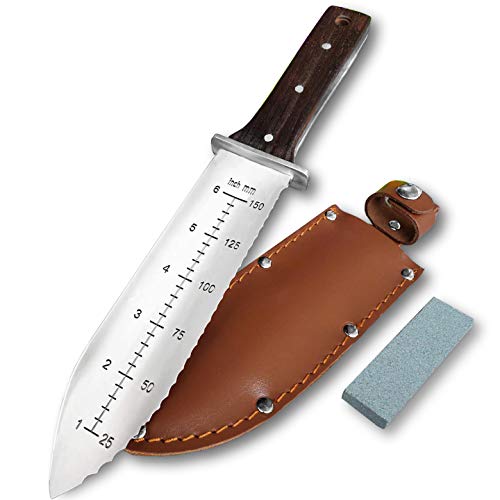
gonicc Professional Hori Hori Garden Knife with Leather Sheath

DEWALT 20V MAX Pruning Shears Cordless (DCPR320B)
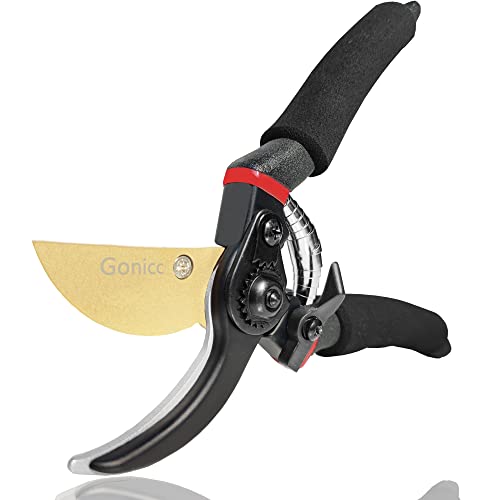
gonicc 8″ Professional Premium Bypass Titanium Pruning Shears
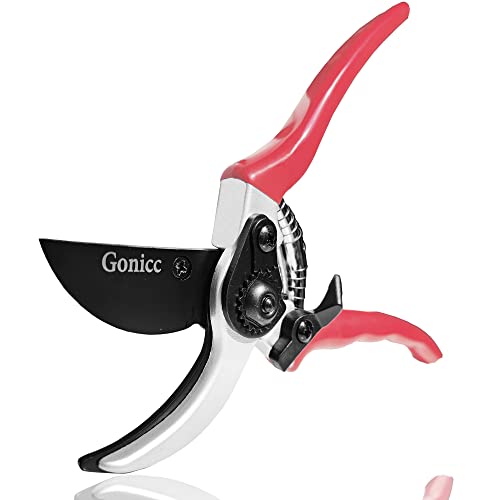
gonicc 8″ Professional Sharp Bypass Pruning Shears (GPPS-1002)

gonicc Micro-Tip Pruning Snips (GPPS-1008)
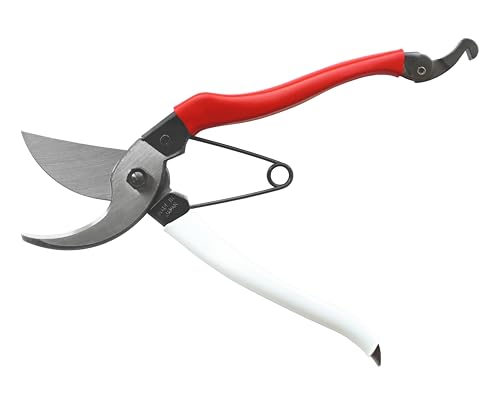
Okatsune Pruning Shears No. 104 (210 mm)

Fiskars 7″ Loop Micro-Tip Pruning Shears

Felco F2 Pruning Shears (9.25″, Swiss-Made)

Felco Hand Pruner Replacement Blade (2/3)
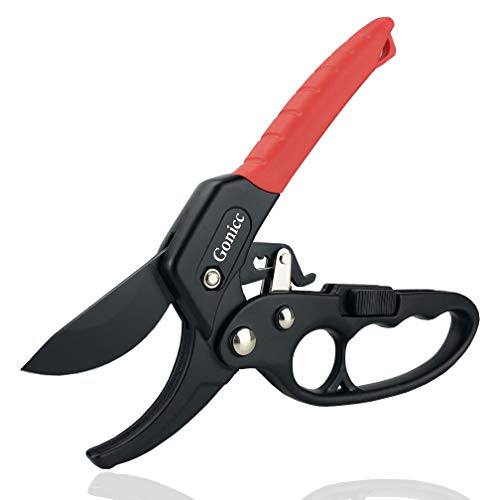
gonicc 8″ Professional Ratchet Anvil Pruning Shears (GPPS-1011)
The Picks, Examined More Closely
The hori hori (Japanese for “dig dig”) breaks the roundup format on purpose. It’s a soil knife first and a pruner second, but rosarians who maintain older, established beds often reach for one when a stubborn root or suckering growth needs removing from the crown.
The 440 stainless blade carries a handguard between handle and edge, which matters when you’re levering against woody material. Compared to the bypass shears further along in this list, this one trades finesse for raw versatility.
Bright Spots
- High-polished 440 stainless resists rust in damp garden sheds
- Dual-edge design: straight for slicing sod, serrated for tough roots
- Etched depth scale on the blade helps when transplanting
- Leather sheath with belt loop keeps the tool close at hand
- Handguard protects fingers during heavy leverage work
- Sharpening stone included for field maintenance
Things To Consider
- Not a true bypass cutter, so it can’t match clean scissor-style cuts on living canes
- Pulling it for delicate deadheading feels like using a bread knife for cake frosting
- Leather sheath needs occasional conditioning to stay supple in humid climates
Made For
Growers who treat rose care as part of a larger landscape routine and want one rugged blade for dividing, root trimming, and the occasional cane.
Consider Something Else When
Most of your work is deadheading dozens of spent blooms; the gonicc 8″ Professional Premium Bypass Titanium Pruning Shears will save your wrist on repetitive cuts.
For gardeners whose hands protest at the hundredth cut, cordless pruners change the math. The DCPR320B slips into a 20V MAX battery platform many homeowners already own, so there’s no second charger crowding the garage.
A non-stick coated blade helps sap slide off instead of gumming up the action. The on-board LED also brightens the inside of dense shrubs where you’d otherwise work by feel.
A Strong Showing
- Battery-powered action reduces grip strain on long pruning days
- Non-stick blade coating resists sap buildup between cuts
- Tool-free blade swap keeps downtime short
- Built-in LED lights up dense, shaded canopies
- Shares batteries with the wider 20V MAX ecosystem
Worth Noting
- Bare tool only, so the battery and charger add to the real cost
- Heavier than manual bypass shears, which can fatigue smaller hands
- Less precise than hand pruners on soft new growth
Key Specs
Whose Shelf It Belongs On
Anyone already invested in the 20V platform, plus rosarians managing climber tangles or large shrub roses who can’t squeeze a hand pruner through.
Reach For A Different Pick When
You only have a half-dozen hybrid teas and prefer a quieter, lighter hand tool; the Felco F2 Pruning Shears deliver that classic feel.
If you only buy one pair of pruners for rose care, a bypass model is the right call. The two curved blades pass each other like scissors, leaving a clean slice that roses heal quickly, which is the whole reason they’re favored over anvil designs.
These feature a titanium-coated SK-5 steel blade, a step up from the carbon steel on the cheaper GPPS-1002 covered next. The aluminum handles wrapped in PVC keep weight low during long sessions.
Where It Delivers
- Titanium coating slows rust and helps the blade glide through green wood
- Drop-forged construction holds up to seasonal use
- Aluminum core keeps the tool light without feeling flimsy
- Sap groove keeps sticky residue off the cutting face
- PVC handle wrap improves grip when hands are damp
Trade Offs
- Sharpening requires a whetstone rather than a quick honing rod pass
- Less refined than the Swiss-made Felco F2 in long-term precision
- Replacement parts aren’t as easy to source as premium brands
Who It Suits Best
Home gardeners with a dozen or so bushes who want a tool that feels substantial in hand without the premium price.
A Better Fit Elsewhere
Professionals pruning hundreds of cuts a day; the Felco F2 Pruning Shears offer replaceable parts that extend tool life year after year.
The GPPS-1002 is the no-nonsense sibling to the titanium-coated model above. It uses high-carbon steel finished with a fine polishing process rather than a titanium layer, which keeps the price accessible.
For someone just starting a rose bed, this pair covers deadheading, light shaping, and the occasional thicker cane without a learning curve. The shape mirrors the GPPS-1003, so the hand position feels familiar.
What Makes Sense
- Carbon steel holds a sharp edge and is straightforward to resharpen
- Drop-forged body adds heft without excess weight
- Sap groove keeps the blade from sticking mid-cut
- Non-slip handle suits sweaty summer sessions
- Versatile across roses, shrubs, and small ornamental branches
Points To Note
- Carbon steel needs a wipe-down after wet work to prevent surface oxidation
- Not as corrosion-resistant as titanium-coated alternatives
- Spring tension may need adjusting after extended use
Feature Snapshot
Best Suited To
Beginners building a rose collection who want a forgiving tool without committing to a premium price.
Look Elsewhere When
You live in a coastal or very humid climate; the gonicc 8″ Professional Premium Bypass Titanium Pruning Shears resist rust more reliably.
Standard bypass pruners can feel clumsy when you’re snipping individual spent blooms on a floribunda. The micro-tip design narrows the cutting head so you can reach into the cluster without taking neighboring buds with you.
Precision-ground high-carbon steel gives these snips their clean bite. For deadheading throughout summer, they become the tool you keep in your back pocket.
The Practical Payoff
- Narrow tip reaches into tight flower clusters
- Compact body reduces hand fatigue during long deadheading runs
- Spring action opens automatically between cuts
- Light enough to carry one-handed while holding a trug
Room For Improvement
- Small jaw can’t handle canes thicker than a pencil
- Easy to misplace in dense foliage due to compact size
Who Will Love This
Rosarians who deadhead religiously through July and August and want a second, lighter tool to complement their main pruners.
Skip It When
Your focus is renovating old wood on shrub roses; the Okatsune Pruning Shears No. 104 has the bite needed for thicker canes.
Okatsune sits quietly in professional tool belts across Japan and increasingly in the West. The No. 104 uses high-grade knife steel that sharpens to a noticeably keener edge than typical garden pruner stock.
The carbon steel handle and olefin-pattern grip feel old-school in the hand. There’s no pivot lock, no ratchet, no spring-loaded gadgetry. Just a clean bypass cut, which is exactly the point.
Notable Upsides
- High-grade knife steel sharpens to a precise edge
- Simple mechanical design means fewer parts to fail
- Light enough for extended use despite the steel construction
Honest Caveats
- No locking mechanism, so storage requires more care
- Less ergonomic than PVC-wrapped alternatives on very long sessions
- Carbon components need drying after wet pruning
Spec Overview
Right Fit For
Practical rosarians who want the sharpest cut possible and don’t mind skipping the comfort features of premium Western designs.
Swap It Out When
You prefer a softer grip and integrated safety lock; the Felco F2 Pruning Shears cover those bases with Swiss engineering.
Fiskars built its reputation on accessible garden tools, and these micro-tip snips follow that formula. The loop handle accommodates a wide range of grip styles, which helps newcomers avoid the cramped-hand mistakes that come from forcing a too-small tool.
The 7-inch length makes them nimble for shaping small floribundas or neat edging around miniature roses. For apartment patios, this compact size feels right.
Good Reasons To Consider
- Loop handle suits both small and large hands
- Steel blades stay sharp through repeated use
- Non-stick coating reduces sap drag
- SoftGrip texture improves comfort on long shaping sessions
- Compact enough for indoor herb and houseplant work too
Small Caveats
- Not suited to woody canes thicker than a finger
- Less common replacement parts than flagship bypass models
Perfect Match For
Patio gardeners and beginners who want a forgiving snip for shaping, deadheading, and light trimming without overspending.
Not Your Match When
You need to remove thick old wood; the DEWALT 20V MAX Pruning Shears Cordless (DCPR320B) handle that workload with electric assistance.
The Felco F2 is the pair you’ll spot hanging from belt loops at botanical gardens and rosariums. Forged aluminum handles keep the weight low while the hardened steel blade handles branches up to roughly an inch across.
What separates the F2 from less expensive options is its replaceable parts philosophy. Every spring, bolt, and blade can be swapped, so the tool can last decades with basic maintenance.
The Case For It
- Forged aluminum body balances strength and lightness
- Hardened steel blade delivers clean cuts on mature canes
- Replaceable parts extend tool life far beyond cheaper designs
- Ratcheting handle closure suits varied grip strengths
- Swiss manufacturing heritage signals consistent quality control
Less Ideal Details
- Premium price may stretch a casual gardener’s budget
- Replacement blades and springs add to long-term ownership cost
- Slightly larger than 8-inch pruners, which some users find bulky
Key Product Details
Built With In Mind
Rosarians who plan to keep the same pruner for fifteen years and value a tool that can be serviced rather than replaced.
Another Choice May Suit
You want a spare blade on hand for emergencies; the Felco Hand Pruner Replacement Blade (2/3) pairs with this model.
Replacement blades are not exciting purchases, but they’re the secret to decades of service from a quality pruner. The Felco 2/3 blade fits the F2, F4, and F11 models.
Installing one requires basic disassembly and the directions are printed right on the packaging. For gardeners who already own a compatible Felco, this is a sensible add-on.
Useful Touches
- Hardened steel construction matches the original factory spec
- Fits three popular Felco models, simplifying spare stocking
- Quick swap process keeps the tool out of the shop for hours
- Cost-effective compared to buying a whole new pruner
Points To Keep In Mind
- Only fits specific Felco models, not universal use
- You’ll need a small screwdriver or wrench for the swap
Who Should Grab It
Anyone who already owns a compatible Felco pruner and wants to extend its working life instead of buying a replacement tool.
Where A Sibling Pick Shines
You don’t yet own a Felco pruner; start with the Felco F2 Pruning Shears and then add the spare blade later.
Anvil pruners work differently than bypass models: the upper blade closes down onto a flat lower plate. For dead wood and very thick, tough canes, that cutting action paired with a ratchet mechanism reduces the hand strength needed for each cut.
For rosarians with arthritis, limited grip strength, or larger old shrub roses, this design opens up pruning that would otherwise be painful. The SK-5 steel blade handles the woody workload.
Noteworthy Benefits
- Ratchet mechanism stages the cut into manageable clicks
- SK-5 steel blade handles thick, woody rose canes
- Chrome vanadium handles add overall strength
- Reduces hand strain for gardeners with joint issues
- Cuts light tree branches and shrub wood beyond typical roses
A Few Limitations
- Anvil action crushes soft new growth, so less ideal for live summer pruning
- Heavier than bypass models due to the ratchet components
- Not the right shape for delicate shaping tasks
Best Suited To
Growers tackling old, woody shrub roses or anyone whose hands need mechanical help to close the blade through thicker material.
A Better Fit Elsewhere
Your rose work centers on green canes and live growth; the gonicc 8″ Professional Premium Bypass Titanium Pruning Shears make cleaner cuts on living tissue.
What To Weigh Before Choosing Pruners For Roses
Rose pruning rewards tools that match the wood you’re cutting. A pair of micro-tip snips shines on a cluster of spent floribunda blooms, while a ratchet anvil makes short work of a five-year-old cane that has gone brown and woody. Match the tool to the task rather than buying one do-it-all pair and forcing it to perform.
Bypass versus anvil is the first real decision. Bypass pruners use two curved blades that pass each other like scissors, leaving a clean slice that living rose tissue heals quickly. Anvil pruners bring a single blade down onto a flat plate, which crushes more than cuts, suiting dead wood but roughing up green canes.
Comfort and grip matter more than most shoppers expect. Look for handles that fit your hand without forcing a pinch, and consider coated grips if you sweat or prune in humid weather. A tool that feels good in your palm keeps you cutting longer and reduces blisters.
Build quality and replaceable parts separate one-time purchases from heirloom tools. Forged aluminum bodies and high-grade steel blades hold an edge and resist bending. Brands with replaceable blades, springs, and bolts let you service the tool instead of replacing it, which reduces waste over years of use.
Key Considerations Across These Picks
Wrong Turns To Avoid
Buying the cheapest pair you find often means thin blades that flex and bend on anything beyond pencil-thick canes. A bent blade never cuts cleanly, and the resulting tear invites cane dieback. Spend a little more for a forged body and a real steel blade.
Ignoring the bypass versus anvil split is another common slip. Anvil pruners look sturdy and feel powerful, but using one on live green growth crushes the cambium layer, the living tissue just beneath the bark. That wound takes longer to heal and leaves the cane vulnerable to fungal entry.
Where The Extra Money Goes
Premium pruners like the Felco F2 charge more for tighter manufacturing tolerances, replaceable components, and materials chosen for decades of use rather than a few seasons. For gardeners pruning dozens of bushes weekly, that investment pays back through sharper cuts and longer tool life.
Higher-tier models also tend to feature better ergonomics: shaped handles, balanced pivots, and grip materials that reduce fatigue. For anyone with arthritis or limited hand strength, that comfort difference can be the deciding factor between a tool you use and a tool you avoid reaching for.
Frequently Asked Questions
What Type Of Pruner Is Best For Roses?
Bypass pruners are widely recommended for roses because their scissor-like action leaves a clean cut on living canes. Anvil pruners suit dead wood and thicker, woody stems but can crush tender green growth.
How Often Should I Sharpen My Rose Pruners?
Light honing every few weeks during active use keeps the edge aligned, while a full sharpening once or twice a season restores the angle. Sharpen more often if you notice ragged cuts or extra hand pressure.
Can I Use The Same Pruners On Multiple Rose Bushes?
Yes, as long as you wipe the blade between plants. Cleaning with a cloth dampened with rubbing alcohol helps prevent the spread of fungal spores or bacteria from one bush to the next.
What Is The Best Handle Size For Pruning Shears?
Handle size should match your hand so your grip closes fully without forcing your fingers into a pinch. Test the grip in person when possible, and consider ratchet models if grip strength is limited.
Should I Oil My Pruners After Use?
A light wipe with camellia oil or a similar rust-inhibiting oil after cleaning extends blade life. Dry storage also helps, especially for carbon steel blades prone to surface oxidation in humid sheds.
The Takeaway
The right pair of pruners turns rose care from a chore into a satisfying ritual. Match the tool to your workload, keep the blade clean and sharp, and your roses will reward the attention with cleaner blooms and stronger canes. Whatever your budget or the size of your bed, there’s a solid option above waiting for a season of cutting.
