

A thick layer of thatch can quietly choke your grass long before you notice the browning. For anyone with a riding mower, ATV, or garden tractor already in the rotation, a pulls behind dethatcher turns one of the most tedious seasonal chores into a quick attachment hookup. Tow-behind dethatching covers more ground per pass than a handheld unit, and the right tool can pull up matted debris without tearing out healthy turf.
This roundup focuses on lawn tractor dethatcher attachments, the replacement parts that keep them running, and the adjacent accessories that round out a full lawn-care workflow. You’ll find core dethatching tools alongside aerators, sweepers, and landscape rakes that pair naturally with seasonal dethatching, so you can build a complete setup instead of buying blind.
The Essentials At A Glance

43783 Spring Tine Replacement for Agri-Fab Dethatcher, 8-Pack

EVEAGE 16-Inch 2-in-1 Electric Dethatcher and Scarifier

YITAMOTOR 48-Inch Tow Behind Lawn Aerator, 32 Steel Tines

YITAMOTOR ATV/UTV Landscape Rake for Manual Implement Lift

YITAMOTOR 48-Inch Tow Behind Lawn Sweeper, 20 cu. ft.
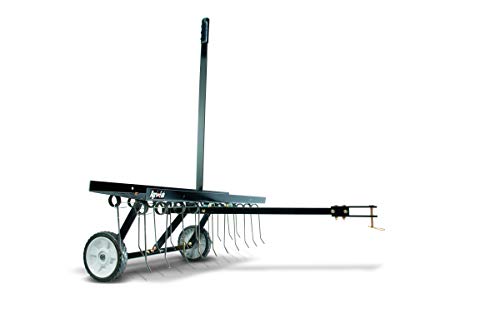
Agri-Fab 45-0294 40-Inch Tow Behind Lawn Dethatcher

Brinly 48-Inch Tow Behind Grass Dethatcher

YITAMOTOR 3 Point Landscape Rock Rake, 5 FT, CAT 1

YITAMOTOR 40-Inch Tow Behind Pine Needles Rake
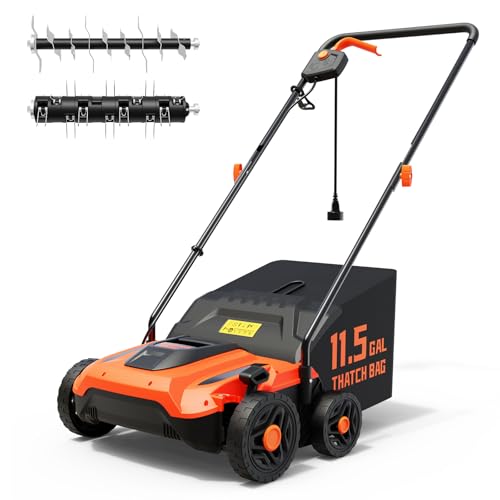
TIECTOWN 14-Inch 2-in-1 Electric Dethatcher and Scarifier
A Breakdown Of The Leading Choices
Already running an Agri-Fab 45-0294 or 45-02941 tow dethatcher? These Pulems replacement tines are the spares that keep the whole machine useful after a few seasons of hard use. Each tine measures roughly 4.5 inches wide, 2 inches tall, and 8.5 inches long, which lines up with the factory spring profile used on the 40-inch Agri-Fab dethatchers listed in the source fitment data.
Rather than replacing the entire deck, you can swap worn or bent tines one at a time. That matters because bent tines tend to dig into the soil instead of skimming the surface, leaving ruts and pulling up healthy grass along with the thatch.
Useful Highlights
- Direct replacement profile for the 43783 spring tine used on the Agri-Fab 45-0294, 45-02941, and 45-02942-131 dethatchers
- 8-pack lets you replace a full row in one session and keep spares in the garage
- Restores proper dethatching action without buying a whole new attachment
- Standard 4.5 x 2 x 8.5 inch dimensions match the original factory geometry
Points To Note
- Not a full dethatcher on its own, so you still need the compatible Agri-Fab deck to use them
- Installation is straightforward, but a basic wrench set and safety gloves make the job easier
Feature Snapshot
Who It Suits Best
Anyone already running a 40-inch Agri-Fab tow dethatcher and noticing torn turf or skipping tines after a couple of seasons.
Where Another Pick Suits Better
If you don’t yet own a dethatcher deck, the Brinly 48-Inch Tow Behind Grass Dethatcher is a more complete starting point for large-lawn owners.
No riding mower, no problem. The EVEAGE 16-inch dethatcher is a corded electric walk-behind that swaps between a dethatching blade and a scarifying blade (a scarifier slices shallow grooves into the soil to relieve compaction). With a 15-amp copper motor, it’s built to handle season-long work without bogging down in thicker thatch layers.
The 16-inch path is wider than typical 12- or 14-inch units, so you cover more ground per pass on small and mid-size lawns. A 14.5-gallon removable collection bag catches debris as you go, which keeps cleanup from turning into a second job.
Noteworthy Benefits
- 16-inch cutting width covers more ground than most walk-behind dethatchers
- 2-in-1 design includes both a dethatching blade and a scarifying blade
- 15-amp copper motor handles dense thatch without rapid stalling
- 14.5-gallon removable bag reduces the number of stops to empty
Trade Offs
- Corded design means managing a power cable across the yard, which gets awkward on larger properties
- Not a tow-behind unit, so it requires you to walk the full lawn
- Emptying the bag adds small but repeated stops on heavy thatch days
Right Fit For
Homeowners with small-to-mid-size lawns who prefer a powered walk-behind over a tow-behind setup and want scarifying capability in the same tool.
A Better Fit Elsewhere
Owners of larger properties already running a garden tractor should look at the Agri-Fab 45-0294 Tow Behind Lawn Dethatcher for far less walking.
Once you’ve cleared thatch, the next step is letting air, water, and nutrients reach the root zone. The YITAMOTOR 48-inch tow aerator pulls behind a lawn tractor and uses 32 steel tines to create the small channels that loosen compacted soil. Aeration pairs naturally with dethatching, and owners commonly run the two in the same weekend.
The included weight tray accepts up to 150 pounds of additional ballast (extra weight added to press the tines deeper). A stable locking mechanism keeps that tray in place during turns, which matters on rolling lawns where a shifting load can affect penetration depth.
Where It Delivers
- 48-inch width covers a wide path per pass, useful for half-acre and larger yards
- 32 steel tines distribute the work across the deck for steadier penetration
- Weight tray accepts up to 150 lb of ballast for tuning depth to soil conditions
- Locking tray mechanism resists shifting during turns on sloped ground
Things To Consider
- Tine-style aerators are less aggressive than plug aerators on severely compacted clay
- You supply your own ballast, so plan ahead with bags of sand or concrete blocks
- Storage footprint is similar to other 48-inch tow attachments, which can crowd a small shed
Key Specs
Made For
Lawn tractor owners tackling compacted soil after a dethatching pass, especially on yards large enough to justify a 48-inch working width.
Look Elsewhere When
You mainly need thatch removal and don’t want to add another heavy attachment, in which case the YITAMOTOR 40-Inch Tow Behind Pine Needles Rake handles both thatch and surface debris.
For ATV and UTV owners with the YITAMOTOR manual implement lift, this landscape rake expands what your rig can do. It handles leveling, debris clearing, and seedbed prep in the same pass, which makes it a useful complement to seasonal dethatching. The steel construction pairs with a rust-resistant coating to handle regular outdoor exposure.
Adjustable working width lets you size the rake to the job, and the manual lift integration keeps raising and lowering straightforward. It assumes you already own the compatible lift system, so factor that into any buying decision.
What Makes Sense
- Adjustable width adapts to different jobs, from tight garden beds to wide open lots
- All-steel design with rust-resistant coating for outdoor storage
- Works alongside a dethatcher as part of a full yard-recovery workflow
- Direct fit for the YITAMOTOR ATV/UTV manual implement lift system
Possible Compromises
- Requires the YITAMOTOR manual implement lift, so it’s not a standalone purchase
- ATV/UTV operation gives rougher results than a tractor-mounted rake on finished lawns
Who Will Love This
Rural property owners with an ATV or UTV already equipped with the YITAMOTOR manual lift, looking to handle leveling and debris without renting equipment.
Swap It Out When
You have a compact tractor instead of an ATV, in which case the YITAMOTOR 3 Point Landscape Rock Rake takes full advantage of a 3-point hitch setup.
After dethatching, you still have to deal with everything you just pulled up. The YITAMOTOR 48-inch tow sweeper follows your tractor and collects leaves, clippings, twigs, and loose thatch into a 20-cubic-foot hopper. That hopper volume is large enough to clear most half-acre lawns in a single fill, depending on debris load.
Adjustable sweeping height lets you tune the brushes to your surface, and the universal hitch is built to fit a range of lawn tractors, zero-turn mowers, and ATVs. The hopper empties without needing to detach the unit, which keeps the workflow moving.
Useful Strengths
- 20 cu. ft. hopper holds large volumes of debris, reducing how often you stop to dump
- 48-inch sweeping width covers a wide path per pass
- Adjustable sweeping height adapts to different grass lengths and conditions
- Universal hitch works with multiple mower and tractor brands
Worth Bearing In Mind
- Brush sweeper design works best on relatively smooth, established lawns
- Hopper emptying still requires a spot to dump, so plan for accessibility on larger properties
Feature Snapshot
Best Suited To
Property owners running a lawn tractor or zero-turn who want to clear debris and post-dethatching material in fewer passes.
Reach For A Different Pick When
You want one tool that handles debris and light thatch together, in which case the YITAMOTOR 40-Inch Tow Behind Pine Needles Rake covers both jobs.
The Agri-Fab 45-0294 has been a go-to tow dethatcher for years, and for good reason. The 40-inch deck pairs with 20 durable spring tines, and the heavy-gauge steel construction handles the kind of rough, root-tangled lawns that punish lighter tools. It’s designed to trail behind most lawn and garden tractors without modification.
Two 7-inch semi-pneumatic tires (air-filled rubber tires with a solid inner core) provide enough ground clearance to roll across uneven turf without snagging, and the assembly process is documented well enough that first-timers can finish setup with basic tools.
A Few Highlights
- 20 spring tines cover a 40-inch path for steady thatch removal
- Heavy-gauge steel deck resists bending on rough terrain
- Semi-pneumatic 7-inch tires roll over uneven ground without constant adjustment
- Universal hitch design fits a wide range of lawn and garden tractors
Soft Spots
- Some assembly is required, so budget 30-60 minutes with basic hand tools
- Spring tines wear out over time, though replacement 43783 tines are widely available
The Right Fit
Homeowners with a lawn or garden tractor who want a proven, mid-width dethatcher without overcomplicating the setup.
Not Your Match When
Your lawn is large and wide-open, where the wider Brinly 48-Inch Tow Behind Grass Dethatcher covers more ground per pass.
The Brinly 48-inch dethatcher is built for larger lawns where the extra 8 inches of width per pass actually matter. Pulling this behind a garden tractor means fewer laps around the yard, which adds up quickly on properties over half an acre. The flat black finish keeps the unit looking sharp even after a few seasons outdoors.
Thatch is the layer of dead grass, roots, and debris that builds up between the green top growth and the soil surface. When it gets too thick, water and air struggle to reach the roots. A tine dethatcher like this one uproots that material and dislodges lightly compacted dirt, prepping the lawn for seeding or fertilizing.
The Helpful Details
- 48-inch width reduces total passes on larger lawns
- Spring tine design uproots thatch without tearing healthy grass
- Provides shallow soil disruption useful before overseeding or fertilizing
- Sturdy frame designed for repeated tow-behind use
Practical Considerations
- Larger turning radius on tighter lawns with trees or beds
- Wider deck adds storage footprint compared to 40-inch alternatives
Feature Card
Perfect Match For
Owners of large, open lawns who want to finish dethatching in fewer passes and prep the surface for seasonal overseeding.
Skip It When
Your yard has narrow passages or heavy landscaping, where the more compact Agri-Fab 45-0294 40-Inch Tow Behind Lawn Dethatcher maneuvers more easily.
Compact tractor owners often want a single attachment that can handle serious cleanup, and the YITAMOTOR 3-point landscape rock rake fits that brief. The 5-foot working width moves a meaningful amount of material per pass, and the Category 1 hitch (a standardized three-point hitch size common on small and compact tractors) is the most common connection point on subcompact and compact machines.
It works well for leveling land, clearing hay, prepping seedbeds, and gathering rocks after a fresh till. If you’re working a larger rural property, this rake covers ground faster than an ATV-mounted unit and ties directly into your tractor’s hydraulics for raising and lowering.
What Pays Off
- 60-inch working width moves significant material per pass
- Category 1 three-point hitch fits a wide range of compact tractors
- Handles leveling, rock pickup, and seedbed preparation in one tool
- Steel construction supports heavy-duty rural use
Some Limits To Know
- Requires a compact or subcompact tractor with a Category 1 hitch
- Too large for typical suburban residential lawns
Built With In Mind
Compact tractor owners managing larger rural properties who need one tool for multiple grading and cleanup tasks beyond dethatching.
Another Choice May Suit
Suburban homeowners with riding mowers will find the YITAMOTOR ATV/UTV Landscape Rake a more size-appropriate alternative for lighter work.
Live under pine trees? Pine needles mat down fast and smother grass. The YITAMOTOR 40-inch tow rake uses 20 heat-treated spring tines to comb out thick thatch, dead grass, and stubborn needle layers, while also providing shallow aeration. That’s a useful double-duty action if your lawn sees heavy needle drop each fall.
The 40-inch width keeps the unit maneuverable around trees and beds, which is exactly where you need to do most of the cleanup. The spring tines are tougher than they look, though like all spring tines, they eventually bend or lose tension after years of service.
Reasons It Performs
- 20 heat-treated spring tines handle thick thatch and needle layers
- 40-inch width stays manageable around trees and landscape features
- Combines dethatching and light aeration in a single pass
- Compatible with most lawn and garden tractor hitches
A Few Limitations
- Smaller width means more passes on wide-open lawns
- Spring tines wear out and need periodic replacement after extended use
Who Should Grab It
Homeowners with treed properties where pine needles and thatch build up faster than a wider unit can comfortably manage.
Where A Sibling Pick Shines
Owners of large, open lawns get faster coverage from the Brinly 48-Inch Tow Behind Grass Dethatcher.
Small lawns don’t need a full tow-behind setup. The TIECTOWN 14-inch electric dethatcher and scarifier handles modest yards where walking the space takes less time than hooking up a tractor. The 13.5-amp motor drives both a dethatching blade and a scarifying blade, and the included 11.5-gallon collection bag catches material as you work.
Depth adjustment is straightforward: a 5-position control lever sets scarifying depth from -0.47 to 0.24 inches and dethatching depth from -0.32 to 0.39 inches, depending on what your lawn needs. A 3-position adjustable handle accommodates different user heights, which helps on longer sessions.
Advantages To Know
- 5-position depth control handles both dethatching and scarifying modes
- 11.5-gallon collection bag reduces cleanup stops on small lawns
- Tool-free blade swap saves time between dethatching and scarifying
- 3-position adjustable handle fits different user heights
What To Weigh
- Corded electric design requires extension cable management across the yard
- 14-inch path is narrower than the EVEAGE 16-Inch model, so it takes more passes on larger yards
Quick Technical Notes
Whose Shelf It Belongs On
Apartment and small-yard owners who want a compact electric dethatcher with both dethatching and scarifying capability in one tool.
Not Your Match When
Your lawn is medium-sized or larger, where the EVEAGE 16-Inch 2-in-1 Electric Dethatcher covers more ground per pass.
What To Weigh Before Choosing A Tow Dethatcher
Matching the Tool to Your Mower or Tractor
Tow-behind dethatchers, aerators, and rakes all rely on a hitch connection. Most riding mowers and lawn tractors use a standard pin-style hitch, while ATVs and UTVs need a compatible ball or pin setup, and compact tractors use a 3-point hitch. Confirming the connection type on your existing equipment before buying saves the frustration of an attachment that won’t seat properly. The width of the deck also matters: anything over 40 inches can feel bulky on lawns with tight turns or narrow gates.
Tine Style, Width, and Soil Condition
Spring tines (flexible coiled metal) are gentler on established lawns and work well for routine seasonal dethatching. Tine-style aerators, like the YITAMOTOR 48-inch aerator, slice into the soil to relieve compaction but don’t remove plugs the way dedicated core/plug aerators do. Soil type influences choice: hard clay benefits from added ballast on an aerator, while softer loam may not need any. The 43783 spring tine replacement pack keeps an existing deck working when original tines fatigue.
Power Source: Tow, Electric, or 3-Point
Tow-behind units cover the most ground with the least effort, but they require a compatible tractor or ATV. Corded electric dethatchers like the EVEAGE 16-inch and TIECTOWN 14-inch models work well for smaller lawns where walking the space is reasonable, though they need an outdoor outlet and a heavy-duty extension cord. Three-point landscape rakes suit compact tractor owners managing larger rural properties. Choosing the right power source means matching the tool to both the lawn size and the equipment you already own.
Key Considerations Across These Picks
Common Shopping Slip Ups
A frequent miss is buying a wider deck than the lawn actually needs. A 48-inch dethatcher sounds efficient, but on a yard with multiple narrow side passages, you’ll spend more time wrestling with turns than actually dethatching. Measure your tightest passage before settling on width. Another common error is overlooking hitch compatibility, especially when pairing tow attachments with zero-turn mowers, which often need a specific hitch adapter rather than the standard pin setup.
Where The Extra Money Goes
Stepping up to a wider deck or a heavier-gauge steel frame typically costs more because the manufacturer uses more raw material and adds reinforcement at stress points. The Brinly 48-inch and Agri-Fab 45-0294 both reflect that approach. Higher-tier models also tend to use treated spring steel for tines, which holds its shape longer under repeated flexing. For most homeowners with a half-acre or more, that upgrade pays off in fewer tine replacements and steadier performance over several seasons.
Frequently Asked Questions
How often should I dethatch my lawn?
Most cool-season grasses benefit from dethatching once a year in early fall, while warm-season grasses do best with a late spring pass. Heavy thatch buildup may require a second pass in the opposite direction for full coverage.
Can a tow dethatcher damage my grass?
A properly adjusted tow dethatcher skims the thatch layer without digging into healthy turf. Lower the tines too far or drive too fast and the tines may pull up green grass along with the dead material, so start with a higher setting and adjust downward.
Do I need to dethatch before aerating?
Running a dethatcher first removes the surface thatch layer, which gives an aerator clearer access to the soil underneath. Most lawn-care guides recommend dethatching first, then aerating in the same general window for the best results.
Are replacement tines worth buying instead of replacing the whole unit?
If the deck, wheels, and hitch are still in good shape, replacing worn tines extends the life of an existing dethatcher at a fraction of the cost of a new attachment. The 43783 replacement tines fit several common Agri-Fab 40-inch models, which is the most typical scenario.
What’s the difference between dethatching and scarifying?
Dethatching removes the loose layer of dead grass and debris above the soil, while scarifying slices shallow grooves into the soil surface to relieve compaction and prep for seeding. A 2-in-1 tool like the EVEAGE or TIECTOWN handles both jobs with a blade swap.
Final Verdict
The right pulls behind dethatcher depends on what you already own and the lawn you’re working with. Lawn tractor owners with mid-size yards get the most value from the Agri-Fab 45-0294, while larger properties benefit from the Brinly 48-inch coverage. Compact tractor users handling broader cleanup should look at the YITAMOTOR 3-point rake, and small-lawn owners get plenty of capability from a corded walk-behind like the TIECTOWN. Whichever tool you choose, matching it to your existing equipment and lawn size will pay off in smoother seasonal work and a healthier stand of grass.
