

Tracking rainfall at home sounds simple until a spring thunderstorm rolls through and your bargain gauge overflows, cracks, or mysteriously reports half an inch when the garden says otherwise. The right rain gauge for home use depends on what you actually need: a quick daily check, a serious weather log, or a multi-sensor station that pulls in wind, pressure, and humidity. This list rounds up ten solid options across standalone gauges, replacement tubes, mounting hardware, and complementary home weather gear, so you can match the tool to the task.
A Closer Look At The Lineup
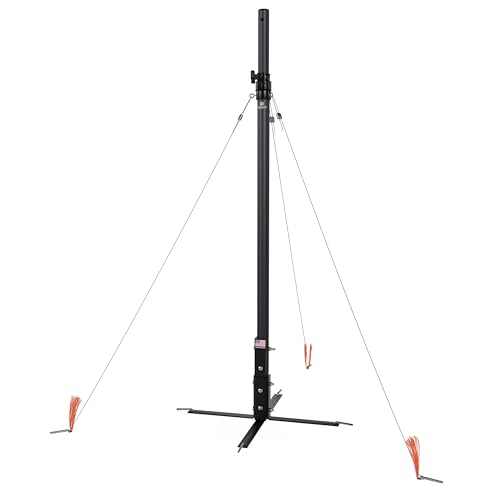
Universal Pole Mount with Guy-Wires for Tropo and Lightweight Weather Stations

JMBay 7 inch Plastic Rain Gauge Replacement Tube (2-Pack with Brush)

Tropo Precision Rain Gauge, CoCoRaHS Approved, High-Capacity, Dual Units

FUAUFAS KEXMY Rg202 Stratus Long-Term Professional Rain and Snow Gauge
7 inch Plastic Rain Gauge Replacement Tube (8.23 x 2.24 x 1.65 in)

Sainlogic SA68 12-in-1 Wireless Weather Station with Rain Gauge, Gray

Tropo Rain Gauge + Instrument Pole Mount Bundle (13.5 in Capacity)

Headwind EZRead 26 inch Giant Professional Outdoor Rain Gauge (Green)

Sainlogic Automatic Plant Waterer for 15 Potted Plants with Humidity Monitor
Sainlogic Indoor Air Quality Monitor (CO2, PM2.5, VOC) with 7.2 inch Display
What Each Pick Brings To The Table
A standalone rain gauge only reads as well as it’s mounted, and a wobbly fence-post install can throw measurements off during high winds. The Universal Pole Mount with Guy-Wires solves that foundation problem with a 1.25-inch steel pole, a ground spike, and four tensioned guy-wires that lock the assembly upright in exposed yards.
For homeowners in open or sloped lots where trees and eaves distort wind-driven rain, the elevated, guyed mount gives the gauge a clearer line of sky. Setup is genuinely weekend-friendly: spike the base, attach the wires to the included stakes, and tension each line until the pole stands straight. The powder-coated steel finish is the kind of detail that tends to hold up through several seasons of sun and storm.
Positive Points
- Guy-wire system keeps tall, lightweight gauges steady in real wind
- Compatible with Tropo and similar lightweight weather stations
- Powder-coated steel resists rust and UV fading over time
- Ground spike design avoids permanent concrete footings
- Elevated mounting reduces splash-back from hard surfaces
Things To Consider
- Requires soft ground for the anchor stakes; rocky or paved yards need a different approach
- Initial wire tensioning takes a few minutes to get right
Made For
Backyard weather watchers with open lawns who want a stable elevated mount for a precision gauge.
Where Another Pick Suits Better
Skip this mount in favor of the Tropo Rain Gauge + Instrument Pole Mount Bundle if you’d rather get the gauge and pole in a single order.
When an old tube cracks from a hard freeze or goes cloudy from years of sun, you don’t need a whole new gauge; you need the inner cylinder. The JMBay 7-inch plastic replacement tube arrives as a two-pack, which is helpful because the second tube becomes a spare the moment algae starts clouding the first.
Homeowners with a basic existing gauge who just want a low-cost swap will appreciate the textured, transparent plastic and large-font scale that reads clearly in low evening light. Each tube measures roughly 7 inches tall with standard inch increments, and the included cleaning brush reaches down into the bottom so sediment doesn’t accumulate. The freeze-resistant claim is the kind of feature that pays off in northern climates, where a brittle tube can split after one cold snap.
Everyday Perks
- Two tubes mean a backup is already on hand
- Large-font scale is easier to read at a glance
- Plastic body resists freeze-cracking better than cheap acrylic
- Cleaning brush included for routine maintenance
Worth Noting
- Plain plastic body can yellow after multi-year UV exposure
- Requires a compatible outer housing to function as a full gauge
Right Fit For
Garden owners replacing a cracked or sun-damaged inner cylinder without buying an entirely new setup.
Consider Something Else When
Pick the Lueudu 7-inch Plastic Rain Gauge Replacement Tube if you only need a single tube and prefer a slightly taller 8.23-inch option.
Citizen-science weather networks like CoCoRaHS (the Community Collaborative Rain, Hail and Snow Network) require gauges that meet strict accuracy standards, and the Tropo Precision Rain Gauge clears that bar. The dual-cylinder design mirrors the National Weather Service’s official 8-inch standard, which is why so many backyard observers trust it for serious logging.
For home weather enthusiasts who want real numbers rather than rough estimates, the inner measuring cylinder reads in hundredths of an inch while the outer tube catches overflow during heavy bursts. The dual-unit scale removes mental math when comparing totals to local forecasts. Owners commonly report that the larger capacity pays off during multi-day storms when a small tube would overflow and force premature emptying.
The Case For It
- CoCoRaHS approval opens the door to formal data reporting
- Dual-cylinder design handles both drizzle and downpours without overflow
- High-resolution 0.01-inch inner scale for precise daily totals
- Constructed for long-term outdoor exposure
Trade Offs
- Larger than a basic tube, so placement needs planning
- Decanting the outer cylinder takes a steady hand at first
Who It Suits Best
Weather hobbyists contributing to citizen-science networks or anyone who wants NWS-grade accuracy at home.
Not Your Match When
Choose the FUAUFAS KEXMY Rg202 Stratus gauge instead if you want a compact 4-inch opening with a quick-connect bracket for easier post mounting.
Most plastic gauges fade or crack within a few seasons, but the Rg202 Stratus uses heavy-duty UV-resistant polycarbonate with no metal parts to rust. That material choice is the real story here, especially in coastal or high-elevation yards where salt air and intense sun punish ordinary plastic.
Built to U.S. Weather Bureau standards, the gauge reads to 1/100th of an inch and handles both rain and melted snowfall. The Quick Connect bracket lets you lift the cylinder off the post for measurement and cleaning, which sounds small but matters when a frozen funnel needs a quick rinse. The 4-inch opening suits a single post mount, and the included hardware plus daily log sheet make first-day setup straightforward.
The Upside
- Polycarbonate body resists UV fading and heat cycling
- 1/100-inch resolution for serious precipitation records
- Quick Connect bracket speeds up routine measurement
- Handles both rainfall and melted snow in one instrument
Points To Note
- Smaller 4-inch opening collects less in extreme storms
- Requires a separate post or mount for proper installation
- Post-mounting bracket adds a step to the initial setup
Best Suited To
Long-term weather loggers in harsh-sun or coastal climates who need a gauge that holds up over multiple seasons.
Skip It When
Pick the Headwind EZRead 26-inch gauge if a giant, easy-read float display matters more than fractional precision.
When the inner tube on an existing gauge finally gives out, buying a whole new assembly is overkill. The Lueudu 7-inch replacement tube is a single-piece, cold-resistant cylinder that drops into compatible housings and gets the system reading again.
Homeowners in four-season climates will value the cold-resistance claim, since a tube that survives several freeze-thaw cycles is the difference between a one-time swap and a yearly chore. The 8.23-inch overall length with a 1.6-inch inner opening matches most standard mounting brackets, and the printed scale uses clearer markings than the original tube on many older gauges.
A Strong Showing
- Cold-resistant plastic reduces winter cracking risk
- Single-piece design simplifies installation
- Clear scale markings improve readability over older tubes
- Compatible with most standard gauge housings
Honest Caveats
- Single tube means no backup once it wears out
- Inner opening of 1.6 inches limits catch area in heavy storms
Perfect Match For
Homeowners with one damaged tube who want a straightforward, single-unit replacement without buying extras.
Look Elsewhere When
Choose the JMBay 7-inch Plastic Rain Gauge Replacement Tube 2-Pack if you’d rather keep a spare on the shelf for future swaps.
A standalone rain gauge answers one question; a full weather station answers twelve. The Sainlogic SA68 pairs a tipping-bucket rain sensor with wind speed, wind direction, barometric pressure, indoor and outdoor temperature, and humidity, all beamed wirelessly to a chunky indoor display.
For property owners managing a large yard, small farm, or hobby vineyard, having rainfall alongside wind data on the same console reveals patterns a single gauge can’t. The 8-inch console with adjustable backlighting reads from across a room, and the bold fonts help in dim hallways. The outdoor sensor array is a real piece of hardware that needs a solid pole mount, so factor that into placement.
Practical Advantages
- Twelve sensor channels cover wind, rain, pressure, and humidity
- Large 8-inch console with adjustable backlight
- Wireless transmission removes the need to run cables
- Tipping-bucket rain sensor records continuous totals
Small Caveats
- Sensor array requires a sturdy pole or post for accurate wind readings
- Tipping-bucket resolution is coarser than a manual 0.01-inch gauge
Who Should Grab It
Homeowners with larger properties who want a single console that tracks rain, wind, and pressure together.
Another Choice May Suit
Pick the Tropo Precision Rain Gauge if manual accuracy matters more than wireless wind and pressure data.
Buying a precision gauge and a separate mounting pole means matching threads, separate shipping, and the chance that the pole is too short once the snow line rises. The Tropo Rain Gauge + Instrument Pole Mount Bundle pairs both pieces so the fit is guaranteed.
The 13.5-inch combined capacity (1 inch in the inner cylinder plus 12.5 inches in the outer tube) is genuinely useful in regions with heavy multi-day storms or significant snowfall. The telescoping pole gives infinite height adjustment, so you can raise the gauge as snow depth climbs through winter. A pour spout and handle on the outer tube make decanting safer than wrestling a full cylinder.
Useful Touches
- Gauge and pole arrive together, removing compatibility guesswork
- 13.5-inch total capacity handles extended storms without overflow
- Telescoping pole adjusts for changing snow depth
- Pour spout and handle simplify emptying the outer tube
Where It Is Less Suited
- Larger footprint than a single-piece gauge
Built With In Mind
First-time backyard weather observers who want a matched gauge-and-pole system in a single order.
Swap It Out When
Choose the stand-alone Universal Pole Mount with Guy-Wires if you already own a Tropo gauge and only need the mounting hardware.
Walking out to a tiny tube to squint at a fine scale after dinner gets old fast. The Headwind EZRead stands 26 inches tall with a high-visibility float and water-level magnification, so a glance from the back porch tells you what’s happening.
For households that want a passive read rather than a hands-on measurement, the oversize float is the headline feature. Owners can check totals from up to about 50 feet away, which makes the gauge feel more like a yard ornament and less like a science experiment. The debris-shedding funnel keeps leaves from clogging the column, and the freeze-proof body means it stays outside through cold snaps without cracking.
Good Reasons To Consider
- 26-inch height readable from up to 50 feet
- Magnified float gives a clear line without bending down
- Debris-shedding funnel reduces leaf clogs
- Freeze-proof body handles cold winters
A Few Limitations
- Float-based reading is less precise than a calibrated cylinder
- Large profile stands out in low plantings
Whose Shelf It Belongs On
Homeowners who want at-a-glance rainfall numbers from indoors or the porch without committing to manual measurements.
Reach For A Different Pick When
Pick the Tropo Precision Rain Gauge instead if hundredths-of-an-inch accuracy matters more than remote readability.
Rainfall matters to a home gardener only because it changes how much supplemental watering plants need. The Sainlogic Automatic Plant Waterer flips that relationship: instead of measuring rain to plan watering, the system waters based on soil moisture readings, with a display that doubles as a quick humidity reference.
Travelers and busy households will appreciate the IP64-rated timer and deep-root drip emitters that handle 15 potted plants without daily attention. The 3.07-inch display gives a clear “WET” or “DRY” signal at a glance, and the humidity-triggered mode waters only when the soil actually needs it. This is a complementary pick to a rain gauge rather than a replacement: it acts on the data a gauge helps you track.
Positive Takeaways
- Handles up to 15 potted plants on a single reservoir cycle
- Humidity-triggered mode prevents over-watering
- IP64 rating tolerates splashes and humid indoor conditions
- Programmable timer suits different plant needs
Points To Keep In Mind
- Not a rain gauge; pairs with one for full garden planning
Who Will Love This
Indoor gardeners and frequent travelers who need plants watered reliably while away from home.
Where A Sibling Pick Shines
Pair this with the Tropo Precision Rain Gauge if you want both accurate outdoor rainfall totals and automated indoor watering.
Outdoor weather is only half the climate story. The Sainlogic Indoor Air Quality Monitor tracks CO2, PM2.5, PM10, PM1.0, HCHO, TVOC, temperature, and humidity on a 7.2-inch color display with a tri-color AQI (Air Quality Index) alert system. AQI is the standard scale that summarizes pollutant levels into a single number from 0 to 500.
For households that already monitor outdoor rain, adding indoor air quality gives a fuller picture of what the day actually feels like. The 7.2-inch screen reads from across a room, and user-defined alert thresholds mean the device can ping when CO2 climbs during a long work-from-home stretch. It doesn’t measure rainfall, but it complements a rain-focused setup by covering the conditions you live in.
A Few Highlights
- Nine indoor parameters on one display
- 7.2-inch screen with tri-color AQI alerts
- User-defined thresholds for personalized warnings
- Compact footprint fits on a desk or shelf
Less-Strong Areas
- Indoor-only; doesn’t replace an outdoor rain gauge
Best Suited To
Homeowners building a complete climate picture who already track outdoor rain and want matching indoor data.
A Better Fit Elsewhere
Choose the Sainlogic SA68 Weather Station if you want outdoor rain and wind on a single console first; this monitor is the indoor companion piece.
Matching A Rain Gauge To Your Yard
Choosing a rain gauge for home use comes down to three honest questions: how precise do your numbers need to be, how much capacity does your climate demand, and where will the unit actually live through the year.
A manual cylinder gauge like the Tropo Precision Rain Gauge or the FUAUFAS Rg202 Stratus suits anyone tracking precipitation for gardening, citizen science, or local reporting. Resolution matters here: gauges reading to 0.01 inch beat float-style displays for accuracy, but float designs like the Headwind EZRead win on at-a-glance convenience from indoors.
Capacity is the second filter. Coastal or mountain storms can drop several inches in a day, and a small tube overflows and forces a reset mid-event. Dual-cylinder designs with 12-inch-plus outer tubes handle multi-day storms without intervention. In contrast, a 7-inch replacement tube is fine for light-to-moderate rain and for swapping into an existing housing.
Placement and durability round out the decision. Open yards benefit from a pole mount with guy-wires to keep the gauge upright in wind. Northern climates need freeze-resistant plastic or polycarbonate to avoid yearly replacements. UV-stable materials hold up through intense summer sun, while a debris-shedding funnel reduces leaf clogs in wooded lots. If you also want wind, pressure, and humidity on the same console, a wireless weather station like the Sainlogic SA68 covers all of it on one screen.
Key Considerations Across These Picks
Mistakes Worth Dodging
Mounting a gauge too close to a roof, fence, or tree distorts the catch because wind eddies push rain away from the opening. The general guideline is to place the gauge at least twice the distance of the nearest obstacle’s height, which often means a yard edge rather than a deck corner. Skipping the outer-cylinder check during heavy storms is another common slip, since an overflow silently ends the day’s record. Calibrating against a known reference once a year also catches drift before it skews a whole season of data.
When Paying More Pays Off
Premium gauges justify the cost through longer service life, finer resolution, and dual-cylinder capacity. Polycarbonate bodies outlast cheap acrylic by several seasons, and CoCoRaHS-approved designs let you contribute to nationwide precipitation maps rather than keep numbers private. For anyone tracking irrigation, storm runoff, or garden microclimates, the upgrade typically pays back in fewer replacements and more reliable totals over the first few years.
Frequently Asked Questions
How often should a rain gauge be emptied?
Most manual gauges need emptying after every measurable rain event so totals don’t carry over into the next day’s log. A dual-cylinder design stretches that window during heavy storms.
Where is the best spot to mount a home rain gauge?
Place the gauge in an open area at least twice the distance of the nearest obstacle’s height, away from eaves, fences, and tree drip lines, on a level post or pole.
Do I need a digital or manual rain gauge?
Manual cylinders cost less and read to 0.01 inch; wireless tipping-bucket stations trade some resolution for automated logging and integration with wind and pressure data.
Can a rain gauge stay out year-round?
Yes, as long as the body is rated freeze-resistant and UV-stable. Cheaper plastic tubes typically need to be swapped every few seasons, while polycarbonate and metal-free designs last longer.
How accurate are home rain gauges?
CoCoRaHS-approved manual gauges match National Weather Service standards to within 0.01 inch. Wireless tipping-bucket units are slightly less precise but consistent enough for garden and storm tracking.
The Takeaway
The right rain gauge for home use depends on what you want from your numbers: a backyard gardener needs reliable daily totals, a citizen-science contributor needs certified accuracy, and a remote property owner needs a wireless station that logs automatically. Start with your climate, your placement, and your precision goals, then match those to the gauge, mount, or sensor system that fits. A small upfront decision here pays off in better data for years.
