

Knowing exactly how much rain fell in your yard changes how you water the lawn, plan the garden, and read incoming storms. A good rain gauge turns guesswork into a number you can trust, whether you’re tracking weekly totals for landscaping or logging daily precipitation for a small weather hobby. The picks below cover full systems, replacement tubes, post mounts, and oversized outdoor readers, so you can match the tool to the task.
How The Shortlist Stacks Up

JMBay 7 inch Plastic Rain Gauge Replacement Tube

Tropo Precision Rain Gauge, CoCoRaHS Approved

FUAUFAS KEXMY Rg202 Stratus Rain and Snow Gauge
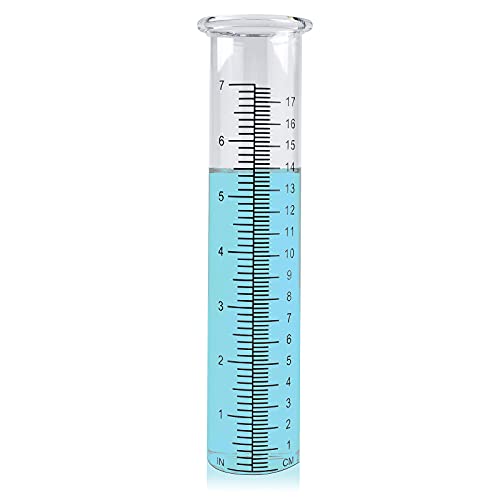
TBWHL 7″ Glass Rain Gauge Replacement Tube

Green Wash TFA Rain Gauge Post Mount
Lueudu 7″ Plastic Rain Gauge Replacement Tube

Toiclebor Rain Gauge Outdoor Model RM-BS7-002

Toiclebor Rain Gauge Outdoor Model RM-BS7-001

Headwind EZRead 26″ Giant Outdoor Rain Gauge

Toiclebor Rain Gauge Replacement Tube RM-T09
A Closer Look At Each Pick
Replacing a cracked or sun-hazed inner tube is the kind of small fix that keeps the rest of your rain setup working. The JMBay replacement tube ships as a two-pack, so a backup is already waiting the next time a falling branch or hard freeze finishes off your current cylinder.
The tubes use thick transparent plastic with standard inch increments printed in oversized font, which makes quick morning readings easier on the eyes. A small cleaning brush is included, which is the kind of touch longtime gardeners tend to appreciate when pollen and algae start to cloud the inside wall.
The Practical Payoff
- Two-pack format means one tube stays in storage until needed.
- Large-print markings speed up the daily glance-and-go routine.
- Cold-resistant plastic helps the tube survive shoulder seasons.
- Included brush handles the algae buildup that commonly forms inside outdoor tubes.
Worth Noting
- Plastic, not glass, so deep scratches may appear over years of use.
- You still need a compatible holder, since this listing is just the inner tubes.
Who It Suits Best
Homeowners who already own a mount or holder and want inexpensive spares for the season ahead.
Consider Something Else When
If you want a complete mounted system rather than inner tubes, the TFA Rain Gauge Post Mount is a more rounded starting point.
Citizen science observers and weather hobbyists need measurements that hold up to outside review, and the Tropo gauge is built around that exact standard. It carries CoCoRaHS approval, meaning its design meets the same calibration expectations used by the national observer network.
The body uses a dual-cylinder layout modeled on the National Weather Service’s official 8-inch gauge, so a wide outer funnel feeds into a narrow measuring tube for fine readings. That dual-unit readout lets you log precipitation in either inches or millimeters without doing mental math.
Reasons It Performs
- CoCoRaHS approval makes submitted reports credible to regional coordinators.
- Dual-cylinder design improves precision on light drizzle and heavy storms alike.
- Dual-unit markings let you skip conversions when logging daily totals.
- High-capacity outer tube handles multi-day accumulations without overflowing.
Trade Offs
- More involved to read than a basic cylinder, so beginners may face a learning curve.
- Precise readings depend on level mounting, which takes a few extra minutes during setup.
Key Specs
Made For
Volunteer weather spotters, backyard climate loggers, and anyone submitting numbers to local CoCoRaHS coordinators.
Look Elsewhere When
Casual gardeners who only need a rough weekly check should consider the Toiclebor RM-BS7-001 for a simpler daily read.
A long-term mount-and-forget gauge suits homeowners who want numbers they can trust across years, not just one season. The Rg202 Stratus is built around heavy-duty UV-resistant polycarbonate, with no metal parts to corrode after a few winters on a fence post.
Its 4-inch opening and 14-inch body hold up to US Weather Bureau standards, and the inner measuring tube reads to a hundredth of an inch. Snow and sleet can be melted and poured into the measuring tube for moisture content, so the same gauge covers both seasons without swapping parts.
Noteworthy Benefits
- UV-resistant polycarbonate handles years of direct sun without fading.
- Reads to 1/100th of an inch, fine enough for serious precipitation logging.
- Quick-connect bracket lets you lift the cylinder off the post for cleaning.
- Handles rain and melted snow in the same tube, no swap-out required.
Honest Caveats
- Post-mounting hardware adds a step versus stake-in-ground options.
- Larger footprint than the slim replacement tubes on this list.
Best Suited To
Homeowners in four-season climates who want one gauge to track rainfall and melted snowfall through every month of the year.
A Better Fit Elsewhere
Those wanting an oversized tube they can read from a distance should consider the Headwind EZRead 26-inch gauge instead.
Glass holds its clarity longer than plastic in many backyard setups, which is the main reason some gardeners stick with it season after season. The TBWHL replacement tube measures 8.27 inches tall by 2 inches in diameter, fitting common 7-inch gauge housings already on many decks.
The body resists cold-weather cracking and stays clear enough to read fine markings at a glance. Since it is glass, owners should plan for a safe spot away from lawnmower paths and foot traffic.
Key Advantages
- Glass body resists clouding better over multi-year use.
- Cold-resistant build for shoulder-season freezes.
- Standard dimensions drop into many common gauge holders.
Points To Keep In Mind
- Glass breaks on hard impact, so placement matters more than with plastic.
- Single tube in the box, so a backup costs extra.
Who Will Love This
Gardeners replacing a cracked glass cylinder who want the same clear look they had originally.
Swap It Out When
If you want a more forgiving material in a high-traffic yard, the JMBay two-pack plastic tubes are a tougher swap-in.
Sometimes the gauge itself is fine, and it is the holder that has given up. The TFA Rain Gauge Post Mount gives you a fresh vessel and stake in one piece, sized to read meaningful totals without dominating the border it sits in.
The wide-diameter vessel improves accuracy on heavier rains by catching more water per inch of fall. It also works in two ways: pushed directly into loose soil or screwed onto an existing post for a more permanent reading station.
Where It Helps
- Wide vessel diameter tightens accuracy on heavier downpours.
- Works as a ground stake or post mount, depending on the yard.
- Clear side scale handles small totals without guesswork.
- Removable inner vessel makes emptying and cleaning quick.
Practical Considerations
- Plastic construction can weather faster than polycarbonate over many seasons.
- International sourcing means warranty terms may vary by region.
Perfect Match For
Gardeners setting up their first dedicated rain station along a fence line or open lawn.
Reach For A Different Pick When
Anyone needing CoCoRaHS-grade precision should look at the Tropo gauge instead.
Single-tube replacements suit homeowners who only need one fresh cylinder rather than a full multi-pack. The Lueudu tube measures 8.23 by 2.24 inches, with a 1.6-inch opening that matches several common outdoor gauge housings.
Cold-resistant plastic helps it survive overnight freezes in early spring and late fall, and the printed scale is sized for clear reads at typical reading distance.
Advantages To Know
- Cold-resistant plastic handles shoulder-season temperatures.
- Generous print scale for quick readings.
- Works as a drop-in replacement or as a stand-alone inner cylinder.
Small Caveats
- Single tube, so there is no spare for next season’s swap.
- Plastic body can scratch if cleaned with abrasive pads.
The Right Fit
Shoppers replacing one worn cylinder and not looking to stock a backup just yet.
Where Another Pick Suits Better
If you want a backup on the shelf, the JMBay two-pack is the more economical route.
Reading a gauge through a screen door or from across the patio is easier when there is a color cue inside the tube. The RM-BS7-002 uses a blue stripe to give water a clear visual contrast, paired with a red float that rises with the level.
The plastic tube is light enough to move around the yard with you and reads up to 7 inches or 17 centimeters, covering most storm events short of a cloudburst. Markings sit around the collection opening, helping translate collected water into reliable readings.
Positive Points
- Blue stripe creates visible contrast, even in low light.
- Red float clearly marks the water level for fast glances.
- Dual scale covers gardeners who think in either inches or centimeters.
- Lightweight plastic reduces the risk of breakage during handling.
A Few Limitations
- Plastic can cloud faster than glass under constant sun exposure.
- No funnel above the collection opening to block debris.
Built With In Mind
Casual lawn-and-garden users who want a quick morning read without squinting at faint markings.
Not Your Match When
Anyone needing debris protection overhead should consider the Headwind EZRead with its built-in funnel design.
Beginners often want something that feels intuitive on day one, and the RM-BS7-001 leans into that with a clear glass tube, large markings, and a bright red float. It reads up to 7 inches or 17 centimeters, which covers the rainfall range in most residential settings.
The scale marks are calibrated to the actual collection opening, so the readings you see correspond directly to the water in the tube. It suits garden watering, lawn tracking, and light weather hobby use without adding complexity.
Everyday Wins
- Bright red float is easy to spot from a distance.
- Large markings help first-time gauge owners avoid misreads.
- Glass tube stays clearer than plastic over months of use.
- Compact size fits deck railings, sheds, and post mounts alike.
Where It Is Less Suited
- Glass body needs a safe spot to avoid breakage.
- No overhead funnel, so debris can land in the opening.
Whose Shelf It Belongs On
First-time gauge owners who want a clear, friendly readout without a steep learning curve.
Where A Sibling Pick Shines
Gardeners in leafy yards will find the Headwind EZRead’s debris funnel a more practical choice.
Big yards and open fields call for a gauge you can read without walking over to it. The Headwind EZRead stands 26 inches tall and is built to be readable from up to 50 feet away, which is helpful when the gauge sits in the middle of a garden or pasture.
A unique funnel on top blocks leaves and debris from dropping into the tube and throwing off readings, and the high-visibility float magnifies the water level for clearer numbers. The body is freeze-proof and mountable, suiting year-round outdoor use.
Good Reasons To Consider
- Readable from across a large lawn or small field.
- Debris-blocking funnel keeps the inner column clear.
- Float magnification improves readability for older eyes.
- Freeze-proof construction for all-season mounting.
Things To Weigh
- Tall profile needs a staked or mounted base to stay upright in wind.
- Larger footprint than typical backyard stake-in gauges.
Who Should Grab It
Owners of large yards, community gardens, or hobby farms who want a visible gauge without walking over to it.
Skip It When
Small-space gardeners may prefer the more compact Toiclebor RM-BS7-002 for tighter planting beds.
Refreshing a worn tube without buying a whole new gauge keeps the setup you already like in service. The RM-T09 fits 7-inch-capacity rain gauges and pairs a blue internal strip with a red float for high-contrast reading in any light.
The plastic body stands up to typical weather swings, and dual inch/centimeter markings mean you can log in whichever unit your gardening notes already use.
The Helpful Details
- Blue strip makes the water line pop visually inside the tube.
- Red float marker stays visible even in shaded corners.
- Weather-resistant plastic holds up across typical seasons.
- Dual scale covers both inch and centimeter records.
- Designed as a direct fit for common 7-inch gauge housings.
Some Limits To Know
- Plastic body is more prone to scratches than glass over years.
- Replacement only, so a worn holder still needs a separate fix.
Right Fit For
Homeowners who already have a working mount and just need a fresh inner cylinder to restore clear readings.
Another Choice May Suit
If your holder is also worn, the TFA Rain Gauge Post Mount gives you a complete refresh in one piece.
Factors To Consider When Choosing Rain Gauge
Measurement Accuracy And Scale Type
Accuracy starts with how the tube is built. Dual-cylinder designs, like the Tropo gauge, route water through a wide outer funnel into a narrow measuring tube, which makes small amounts easier to read precisely. Single-cylinder gauges trade some precision for simplicity, which is fine for casual garden tracking but less ideal if you log daily numbers for outside review. Look at the printed scale, too: large, high-contrast markings are easier to read at a glance, especially on cloudy mornings.
Mounting Style And Placement
Where a gauge sits changes what it actually measures. A post mount gives consistent height and level readings, while a stake-in-ground option is easier to relocate with the seasons. Open areas away from trees, roof overhangs, and fences give the most representative catch, since nearby obstacles can block or deflect rain before it enters the opening. For very tall gauges, like the Headwind EZRead, secure anchoring matters in windy spots.
Material And Weather Resistance
Plastic tubes resist breakage and handle cold, but they can cloud or scratch over years in the sun. Glass stays clearer longer but breaks on impact, so placement becomes the trade-off. Polycarbonate bodies, used in the FUAUFAS Rg202, balance clarity with impact resistance and UV tolerance for multi-season exposure. Match the material to your yard: high-traffic spots favor plastic or polycarbonate, while a quiet garden bed can support glass with no trouble.
Capacity And Readability Range
A 7-inch capacity covers most backyard storms, while longer gauges give you headroom during multi-day events without overflowing. If you want to read totals from a distance, oversized gauges with magnified floats make the daily glance much easier. Smaller replacement tubes suit refresh projects on existing housings rather than full setups.
Key Considerations Across These Picks
Pitfalls Shoppers Hit
The most common mistake is mounting a gauge too close to a roofline or fence, which throws off the catch and gives falsely low numbers. Another trap is assuming any replacement tube fits any holder; diameters and lengths vary enough that a quick measurement prevents a return. Buyers also tend to overlook cleaning access, so tubes that lift off a bracket clean faster than sealed designs.
Where The Extra Money Goes
Higher-tier gauges earn their cost with calibrated accuracy, dual-cylinder precision, debris-blocking funnels, and UV-resistant polycarbonate bodies that last across years. CoCoRaHS-approved designs go further, matching the standard used by national precipitation networks for credible reporting. For casual lawn-and-garden tracking, basic tubes and mounts cover the need without the added precision, but anyone logging serious data benefits from the upgrade.
Frequently Asked Questions
How high should I mount a rain gauge?
Aim for an open spot about 2 to 4 feet off the ground, away from trees, fences, and roof edges. Level mounting on a post gives the most consistent readings across seasons.
How often should I empty my rain gauge?
A daily empty works best for accurate day-by-day totals. Leaving water in the tube between readings risks evaporation skew and overflow during the next storm.
Can I leave a rain gauge out during winter?
Most gauges on this list are built for year-round outdoor use, though glass bodies benefit from a sheltered spot during hard freezes. Polycarbonate options like the FUAUFAS Rg202 handle winter exposure without issue.
What’s the difference between inches and centimeters on a gauge?
Inches are common in the US, while centimeters are standard in many other regions. Dual-scale gauges let you log in either unit without doing the math yourself.
Do I need a funnel on top of the gauge?
A funnel blocks leaves and debris from dropping into the tube, which protects accuracy. Open-top gauges work fine in clean spots but may need occasional clearing in tree-heavy yards.
Closing Thoughts
The right rain gauge depends on what you want to do with the numbers, from a quick lawn check to a serious weather log. Match the design to your yard, pick a mounting style that fits your routine, and lean on the comparison notes above to narrow the list. A few minutes of setup pays off every time the next storm rolls through.
