

Sticks pile up fast, especially after a windy weekend or a long winter. Whether you’re clearing pine straw, twigs, or garden debris, the right rake turns a frustrating chore into a quick sweep. A fire rake handles rugged brush in larger yards, while a compact handheld model sneaks under shrubs and around tight flower beds. The picks below cover everything from professional-grade steel heads to lightweight adjustable designs that suit smaller gardens and casual cleanup days.
The Lineup, Simplified

Council Tool Fire Rake (60″)

THE GROUNDSKEEPER II Rake (55″)
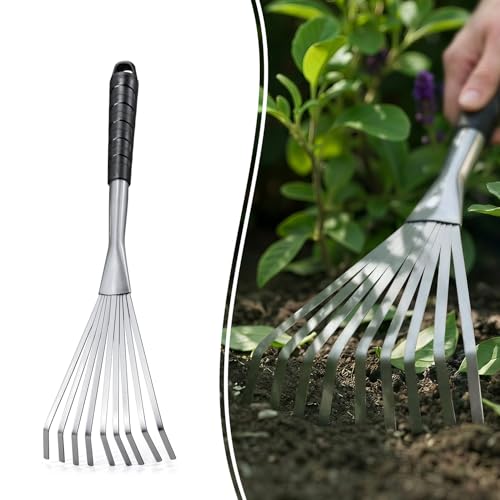
Colwelt Hand Rake 16.5″ (9 Tines)
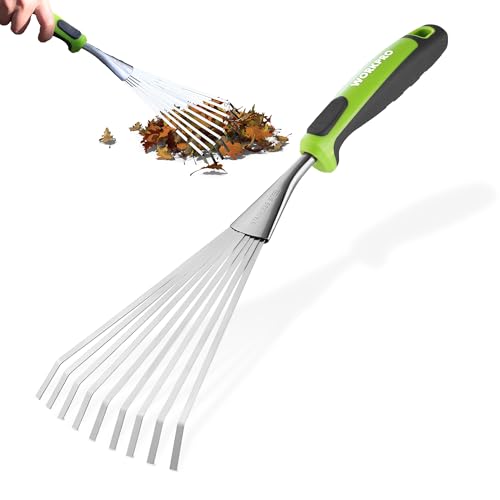
WORKPRO 16″ Hand Rake

Bully Tools Bow Rake (16″ Tines)

Garden Helper Japanese Hand Rake

GSBLUNIE Adjustable Rake (70″)

GARDEASE Leaf Scoops (Pair)

Feblomst Adjustable Rake (79″ Max)
What Each Pick Brings To The Table
Built to U.S. Forest Service specifications, the Council Tool Fire Rake is a serious tool for serious debris. The four-tooth steel head measures roughly 12 inches wide, while the straight ash handle runs 60 inches long, giving you plenty of leverage for clearing brush, slash, and heavy stick piles after storm cleanup. Ash wood absorbs vibration better than many alternatives, which helps during longer sessions of dragging limbs across rough terrain.
Compared to the fiberglass-handled GroundsKeeper II that follows, this one is heavier and more deliberate. You won’t flick it around a flower bed, but for wildfire defensible-space work or rural lot maintenance, the tool’s heft is an asset. It is a workhorse built for people who need something more rugged than a standard leaf rake.
Bright Spots
- Twelve-inch, four-tooth steel head plows through thick stick piles, not just loose leaves.
- Sixty-inch ash handle offers solid leverage and resists breakage under heavy loads.
- USFS-spec build signals genuine durability for property-line and rural work.
- Made in the United States, with material choices that hold up across seasons.
Trade Offs
- The 60-inch straight handle is less compact than the adjustable picks that come later in this list.
- Heavier than leaf-focused alternatives, which may tire out casual weekend users.
Key Specs
Built With In Mind
Homeowners with rural lots, defensible-space prep around cabins, or acreage cluttered with fallen branches will find this rake’s build matches the workload.
Look Elsewhere When
Suburban gardeners with small lawns should consider the lighter Colwelt Hand Rake instead, since its compact profile fits tighter landscaping.
The GroundsKeeper II swaps the flat flexible tines found on most rakes for round, hardened steel tines arranged in a spring-loaded pattern. That design lets the tines dig into debris without requiring you to push down, so you can work standing upright instead of hunching over the lawn. The 21-inch head covers a wide swath, which speeds up clearing after a windy weekend.
The fiberglass handle weighs noticeably less than the ash handle on the Council Tool above, and the co-polymer head resists cracking if you accidentally drop it. Replaceable torsion-spring tines extend the tool’s working life, which is the kind of detail that separates professional landscaping gear from disposable hardware-store models.
Where It Excels
- Spring-loaded steel tines pull sticks, pine straw, and acorns without forcing you to lean into the handle.
- Lightweight fiberglass build reduces arm fatigue during long yard sessions.
- Wide 21-inch head means fewer passes across larger lawns.
- Replaceable tines extend the tool’s working life.
Honest Caveats
- The aggressive tine geometry can catch on uneven roots or rocky ground.
- The co-polymer head, while durable, lacks the heavy-duty feel of a steel bow rake.
Right Fit For
Homeowners juggling leaves, sticks, and mulch across a medium-sized yard will appreciate how this rake handles mixed debris without swapping tools.
Another Choice May Suit
Users who want a smaller profile for flower beds should pair this rake with the Colwelt Hand Rake for tight spots the 21-inch head cannot reach.
At just 16.5 inches long, the Colwelt Hand Rake fits where full-size rakes cannot. The nine flat tines fan out for scooping leaves and small sticks from tight flower beds, while the slim profile lets you weed around hydrangeas and rose bushes without damaging the root zone. A hanging hole on the handle makes storage simple in a crowded shed or garage.
It fills the gap left by the GroundsKeeper II’s wide head. Think of this as the finishing tool, the one you grab after the bigger rake has cleared the open lawn. For container gardens, raised beds, and densely planted borders, it is hard to beat a compact hand rake with resilient flat tines.
Reasons It Performs
- Sixteen-inch frame reaches under low shrubs and into raised beds where full-size rakes jam.
- Flat tines gather loose debris without slicing into delicate root systems.
- Hanging-hole storage keeps it visible and accessible.
- Light enough to use one-handed during detail work.
Points To Keep In Mind
- Too small for clearing entire lawns efficiently.
- Metal construction may show wear faster than the stainless options that follow.
Key Specs
Who It Suits Best
Gardeners working in tightly planted flower beds or container setups will find this hand rake far more practical than a full-size tool.
Skip It When
Anyone clearing a half-acre lawn should reach for the Bully Tools Bow Rake instead, since the steel head covers far more ground.
The WORKPRO 16″ Hand Rake pairs a polished stainless steel head with a soft-grip handle, and that combination sets it apart from similar compact rakes. Stainless steel resists rust even after being stored in a damp shed, and the flexible tines bend rather than snap when they hit a buried stone. The soft handle reduces blistering during extended detail sessions around the garden.
Side by side with the Colwelt above, this one trades a metal handle for a cushioned grip. For gardeners with arthritis or anyone who spends an hour at a time on their knees, that comfort upgrade matters. It also tills lightly into soil, so you can loosen the surface while clearing debris in one motion.
Real Benefits
- Polished stainless steel head fights corrosion across seasons.
- Soft-grip handle reduces hand fatigue during long precision sessions.
- Flexible tines boost accuracy in tough soil without snapping.
- Suitable for light tilling, leaf clearing, and mulch spreading.
Some Limits To Know
- Sixteen-inch reach still limits use to small beds and borders.
- Flexible tines can deflect when tackling thicker twigs.
Perfect Match For
Detail-oriented gardeners who want a comfortable all-day tool for weeding, light tilling, and debris clearing in small spaces will appreciate the soft-grip design.
Reach For A Different Pick When
Anyone needing to clear larger stick piles should pair this with the Bully Tools Bow Rake for heavier workload coverage.
The Bully Tools Bow Rake is built like commercial landscaping equipment. Its 10-gauge American steel head is significantly thicker than the imported alternatives on the market, and robotic overwelded connections keep the tines from snapping under heavy pressure. The fiberglass handle is coated in a polyester veil to prevent splintering, with a rubber grip that absorbs hand shock during extended work.
Compared to the GroundsKeeper II’s polymer head, this one trades weight for raw durability. You can break up compacted soil, spread gravel, and gather heavy debris with the same tool. It is also available in 58-inch or 66-inch handle lengths, so taller users can find a more ergonomic fit.
Practical Pluses
- 10-gauge steel head holds up to commercial-grade workloads.
- Robotic overwelded tine connections resist breakage under pressure.
- Powder coat finish protects against rust across wet seasons.
- Choice of 58-inch or 66-inch handles fits different user heights.
Things To Consider
- Heavier than leaf-focused rakes, which may not suit casual weekend use.
- Assembly takes a few minutes with a screwdriver, unlike pre-assembled options.
Feature Snapshot
Best Suited To
Homeowners tackling compacted soil, gravel spreading, and heavy yard debris will appreciate a tool designed for more than just leaves.
Where Another Pick Suits Better
Those focused on stick and leaf removal in smaller yards may prefer the lighter GSBLUNIE Adjustable Rake for everyday cleanup.
The Garden Helper Japanese Hand Rake draws on a long tradition of small, precise garden tools. Its slim blade is forged from chrome-plated Japanese steel, which holds an edge and resists wear far better than typical carbon alternatives. The wooden handle feels balanced in the hand, and the compact design slips into narrow gaps that wider rakes cannot navigate.
Compared to the WORKPRO above, this rake has fewer tines but a more refined build. You trade the cushioned grip for a traditional wood handle that absorbs moisture differently. The slim profile makes it ideal for detailed cleanup under bonsai, in rock gardens, or along carefully mulched pathways where a wider fan rake would be clumsy.
A Favorable Mix
- Chrome-plated Japanese steel resists wear and holds detail edges.
- Compact size reaches into narrow spaces wider rakes cannot access.
- Wood handle provides balanced control during precision work.
- Made in Japan, with build quality suited for careful gardeners.
Where It May Fall Short
- Wood handle requires occasional drying to prevent swelling in wet climates.
- Not built for large-volume yard cleanup.
Whose Shelf It Belongs On
Gardeners who value craftsmanship and need precision in tight, curated spaces will appreciate this tool’s careful construction.
Consider Something Else When
Anyone clearing a half-acre of mixed debris will find the Feblomst Adjustable Rake more efficient for larger cleanup tasks.
The GSBLUNIE Adjustable Rake extends to roughly 70 inches, making it accessible for tall adults and older kids alike. The head measures 8.5 inches wide with eleven steel tines, which lets you slide under shrubs and along fence lines where wider rakes knock into obstacles. An anti-rust coating helps the metal tines survive damp sheds and humid summers.
Unlike the fixed-length picks earlier in this list, the adjustable design suits households where multiple people share one tool. You may find the telescoping mechanism requires occasional tightening, but the trade-off is genuine flexibility across different users and tasks.
Useful Touches
- Seventy-inch maximum reach suits multiple household members.
- Narrow 8.5-inch head reaches under shrubs and fences.
- Eleven close-spaced tines prevent leaves from wedging between gaps.
- Anti-rust coating extends the tool’s working life in damp conditions.
Potential Compromises
- Telescoping joints may loosen with heavy use over time.
- Not designed for breaking up soil or moving gravel.
Made For
Families with both adults and children sharing yard tools will appreciate the adjustable length and kid-friendly head size.
A Better Fit Elsewhere
Users focused on rugged soil work should look at the Bully Tools Bow Rake instead, since its steel head handles heavier tilling.
The GARDEASE Leaf Scoops are not technically rakes but oversized hand claws that act like an extra-large pair of hands for yard cleanup. The closed design scoops leaves, grass clippings, and twigs in a single motion, which speeds up bagging dramatically. They also act as a barrier between your skin and thorny rose bushes or stinging nettles.
Compared to the Colwelt hand rake above, these scoops trade tine precision for raw volume. They cannot loosen soil or reach under tight shrubs, but for the flat, open lawn areas where leaves pile deepest, they turn a tedious job into a fast sweep. The nesting design also stores compactly against a shed wall.
Useful Strengths
- Oversized claw design scoops large handfuls of debris per pass.
- Acts as a hand barrier against thorns and irritating weeds.
- Closed design contains debris during transport to bags or bins.
- Nesting shape saves storage space.
Worth Bearing In Mind
- Not designed for loosening soil or precision weeding.
- Plastic construction may not suit users who prefer metal durability.
Who Should Grab It
Homeowners focused on fast leaf and grass pickup across open lawn areas will appreciate the time savings over traditional raking.
Swap It Out When
Gardeners needing precision around perennials should pair these scoops with the WORKPRO 16″ Hand Rake for tighter work.
The Feblomst Adjustable Rake telescopes from roughly 37 to 79 inches, which means it works for a child helping with the lawn or a tall adult clearing deep border beds. The narrow 9-inch head with eleven steel tines fits between perennials, under low trees, and along the edges of camp pads. An anti-rust coating protects the steel across humid conditions.
Compared to the GSBLUNIE above, this rake offers a wider length range and a slightly different head geometry. For households where the tool gets shared between very different users, the range matters. The compact head is also useful for clearing tent sites and picnic areas during camping trips.
A Few Strong Suits
- Adjusts from 37 to 79 inches for varied users and tasks.
- Narrow 9-inch head reaches borders and under shrubs.
- Eleven tines sit close enough to prevent leaves from wedging.
- Anti-rust coating holds up across seasons.
What To Weigh
- Locking mechanism may need occasional tightening with heavy use.
- Not suited for breaking up soil or heavy brush.
Quick Facts
The Right Fit
Families and campers who want one rake that adjusts for different users and varied cleanup locations will find this design genuinely versatile.
Not Your Match For
Anyone needing to break up compacted soil or move gravel should consider the Bully Tools Bow Rake for that heavier workload.
What To Look For Before Choosing A Stick Rake
Rake head shape drives everything else. Bow rakes (meaning rakes with a curved, bow-shaped connector between the head and handle) handle heavy soil work and thick debris, while fan rakes spread wide for leaves and twigs on open lawns. Hand rakes reach tight spaces that full-size tools cannot, and ergonomic scoops cover large volumes of loose material quickly.
Handle material matters more than most shoppers expect. Ash wood absorbs shock naturally, fiberglass stays light and resists weathering, and steel is the heaviest option. Match the handle length to your height, since a tool that is too short causes back strain during longer sessions.
Tine design affects what each rake can do. Spring-loaded steel tines grip debris without forcing you to push down, flat tines suit delicate flower beds, and round tines stay rigid for heavy stick piles. For yards with a mix of leaves and sticks, look for a tine spacing that catches small debris without clogging.
Storage and durability round out the decision. Telescoping handles save space in smaller sheds, replaceable tines extend working life, and anti-rust coatings matter if you store tools in a humid garage or outdoor bin.
Key Details That Separate The Picks
Hidden Buying Traps
Choosing a rake purely by head width often backfires. A wide fan head sounds efficient, but in a yard full of shrubs, fences, and narrow paths, you spend more time maneuvering than raking. Match the head size to the spaces you actually clear, not to the open lawn you imagine.
Another common slip is overlooking handle ergonomics. A heavy steel handle on a tool you only use twice a year is fine, but for weekly cleanup, an uncomfortable grip turns a quick chore into a painful session. Look for cushioned or shaped handles if you garden often.
When Paying More Pays Off
Premium rakes earn their higher cost through materials that last. American steel heads, fiberglass handles with protective veils, and replaceable tine assemblies all extend working life well beyond cheaper imports. For homeowners who maintain the same yard year after year, those upgrades translate into fewer replacements and better performance over time.
Higher-tier models also tend to deliver better balance. When the head weight and handle length are properly matched, the rake feels lighter during use even if it actually weighs more. That difference shows up after thirty minutes of steady raking, when a well-balanced tool saves your shoulders and back.
Frequently Asked Questions
What size rake is best for clearing sticks?
A 12 to 16-inch bow rake or a spring-loaded rake with 21-inch coverage handles most stick piles efficiently. For tight spaces, an 8 to 10-inch hand rake reaches under shrubs and between plants.
Can a regular leaf rake handle sticks?
Lightweight fan rakes can clear small twigs, but thicker branches bow the tines and reduce effectiveness. For heavier debris, a bow rake with steel teeth or a stiff-tined rake like the GroundsKeeper II works better.
Are metal or plastic rake tines better for sticks?
Metal tines handle sticks far better than plastic. Steel stays rigid against rough debris, while plastic bends and eventually cracks under repeated pressure.
How do I prevent my rake handle from breaking?
Store rakes hanging on a wall rather than leaning against a shed corner, where they fall and stress the handle-to-head joint. Periodically check the connection and tighten any loose fittings before they worsen.
What is the best rake for a small yard?
For small yards with mixed debris, a compact hand rake or an adjustable-length model with a narrow head works well. The Colwelt Hand Rake and the Feblomst Adjustable Rake both suit tight spaces without sacrificing reach.
The Takeaway
Your yard’s size, debris type, and storage space all shape which rake makes sense. Larger rural lots benefit from rugged steel heads, while suburban gardens often do better with compact or adjustable designs. Match the tool to the workload, and cleanup stops feeling like a chore.
