

Big gardens demand real prep work. When the soil gets compacted, root-heavy, or layered with last season’s debris, hand tools lose the plot fast and a mid-size cultivator barely scratches the surface. The picks below cover the full range of options, from lightweight cordless cultivators suited to raised beds and smaller plots, to gas-powered mini tillers and heavier electric units that hold their own on larger areas. Each one earns its spot for a specific job, so match your soil, your plot size, and your tolerance for noise and maintenance before you commit.
A Fast Comparison Of The Options

Garden Weasel Double-Sided Garden Cultivator/Tiller 91367

Seesii 40V Cordless Tiller for Gardening 12″
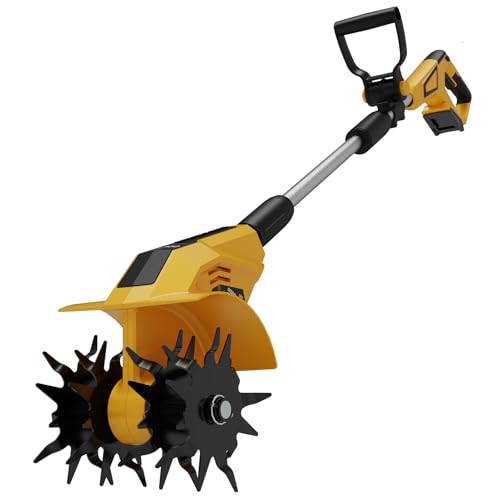
Brushless Cordless Tiller Cultivator for Dewalt 20V Max
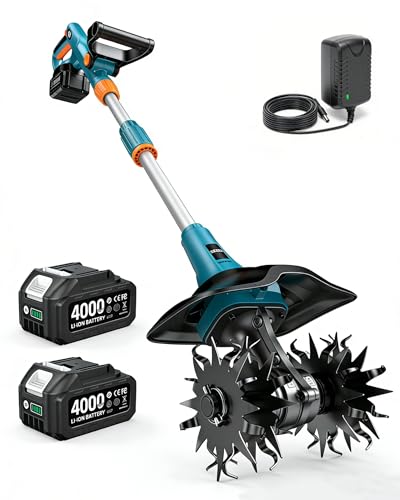
Seesii Cordless Tiller Cultivator 20V Electric

GARDTECH 2-in-1 Cordless Tiller Cultivator with Extension Pole

Honda FG110 Mini Tiller Cultivator (FG110KiAT)

BILT HARD Electric Tiller Cultivator 14 inch Corded

Mini Cordless Tiller Cultivator 20V Electric Rototiller

GARDTECH Cordless Tiller Cultivator 235RPM with 2 Batteries

GARDTECH Cordless Tiller Cultivator 235RPM (Yellow)
More On The Choices That Made The List
The Garden Weasel Double-Sided Cultivator isn’t a powered machine at all, and that’s the point. It’s a hand tool with a three-pronged head that rakes, aerates, cultivates, and breaks up soil through a twisting motion. On a quiet Saturday morning with one raised bed and a small planting area, it pulls double duty without the noise or fuel of any gas tiller on this list.
You won’t get a true rototiller experience here, but you also won’t wrestle with cords, batteries, or oil changes. For gardeners who want a low-fuss tool that lives in a shed and comes out twice a year, it’s a sensible starting point. The trade-off shows up the moment your plot grows past a few square meters.
What Stands Out
- Three-pronged head that cultivates, tills, and breaks up soil in one motion
- No fuel, batteries, or maintenance beyond an occasional wipe-down
- Light enough to store on a wall hook in a small shed
Worth Noting
- Hand-powered, so large plots will leave you sore well before the bed is done
- No source data on blade material or shaft length, so long-term durability is hard to confirm from the listing
Who It Suits Best
Small-plot gardeners and apartment patio growers who only need to fluff soil in one or two raised beds each season.
Skip It When
You maintain a serious backyard plot, where the Seesii 40V Cordless Tiller (Pick 2) is the more capable match.
The Seesii 40V lands in that middle zone where cordless platforms start to feel like real working tools. A 320W motor paired with four steel tines is meant to chew into compacted soil, clay, and stubborn roots without the noise of a four-stroke engine. It also handles around raised beds and tight corners where wider tillers can’t reach.
It is the only 40V system on this list, which puts it above the smaller 20V models in raw power and battery headroom. The catch is runtime, since high-torque tilling on a 40V pack still drains faster than most shoppers expect. For most home plots, one battery is enough to finish a bed before the charge dips.
What Earns Its Place
- Higher-voltage platform than the 20V picks below, so it pushes into harder ground
- Four steel tines, a useful step up from the two-tine cultivators you’ll see on budget mini tillers
- Simple assembly that gets you into the bed rather than staring at an instruction manual
Trade Offs
- Owners commonly report that fully tilling a large backyard in one session may require a second battery
- Heavier than the 20V handhelds, so fatigue shows up on long, unbroken runs
Right Fit For
Gardeners with mid-size plots and clay-heavy soil who want cordless convenience without stepping down to a 20V toy.
Not Your Match When
You already own a fleet of Dewalt 20V batteries, in which case the QESOO Brushless Cultivator (Pick 3) saves the cost of a new platform.
The QESOO Brushless Tiller is built for people who already have a stack of Dewalt 20V Max batteries on the bench. It’s a tool-only unit, meaning no battery or charger ships in the box, and that single detail makes the whole value equation flip for the right shopper. If you’ve already invested in that platform, you skip the cost of a new battery system entirely.
A brushless motor (which uses electronic commutation rather than carbon brushes) tends to run cooler, last longer, and squeeze more runtime from the same pack. The product itself is not affiliated with Dewalt, so factor that into any long-term warranty expectations. Within the 20V cordless category here, it carries more motor muscle than the entry-level 20V Seesii and Gardtech models below.
Positive Takeaways
- Brushless motor runs more efficiently and should outlast brushed designs in heavy seasonal use
- Reuses your existing 20V batteries, so total cost of ownership is lower for the right household
Room For Improvement
- No battery or charger included, so the listing only makes sense if you already own Dewalt 20V packs
- No source data on tilling width, depth, or weight, so matching it to plot size requires assumption
Best Suited To
Existing Dewalt 20V Max owners who want a tiller that drops into the batteries and chargers they already maintain.
Look Elsewhere When
You’re starting from a clean slate, where the GARDTECH 2-in-1 Cordless Tiller (Pick 5) ships ready to run with batteries in the box.
The 20V Seesii positions itself as a tiller, cultivator, and soil mixer in one body. For a typical backyard gardener, that means the same tool handles breaking hard ground in spring, mixing compost into an established bed mid-season, and aerating the soil between rows before fall planting.
It’s a 20V system, so you’re giving up the raw power of the 40V Seesii (Pick 2) for a lighter, more affordable package. For most home plots that aren’t battling virgin clay, that’s a reasonable trade. You also get a quick learning curve, since the controls are intentionally simple.
Benefits That Matter
- Three-in-one design covers breaking, loosening, mixing, and aerating in a single pass
- Cordless, so there are no extension cords to drag across a wet lawn
Possible Compromises
- 20V platform means it will struggle in compacted clay compared to the 40V Seesii model
- Source data doesn’t list tilling depth or width, so matching it to bed size is guesswork
Made For
Home gardeners with a mix of established beds and seasonal projects who value flexibility over raw power.
Swap It Out When
Your priority is breaking fresh ground in a brand-new plot, where the Seesii 40V Cordless Tiller (Pick 2) brings noticeably more torque.
What sets the GARDTECH 2-in-1 apart from the other cordless picks is the extension pole. At roughly 3.5 feet, it lets you till standing up rather than crouching over a bed, which is a quiet but meaningful upgrade for anyone with back or knee issues. Detach the pole and it becomes a compact handheld for tight corners and container work.
Two 2.0Ah rechargeable batteries ship in the box, so you can swap mid-job and keep moving. The 4-inch tilling width and depth make it a sensible fit for flower beds, garden rows, and small lawn patches rather than full field preparation. Compared to the cordless-only Seesii models above, the ergonomic reach is the headline feature.
Everyday Advantages
- Extension pole cuts down on bending, helpful for older gardeners or anyone with joint pain
- Twin batteries in the box mean less downtime mid-task on a typical afternoon
- 2-in-1 design handles both close-to-ground and extended-reach work
Honest Caveats
- 235 RPM and a 4-inch tilling width make it a small-plot tool, not a half-acre machine
- The 3.5-foot extension adds reach but not leverage in heavy, root-filled soil
Feature Card
Quick Facts
Who Should Grab It
Gardeners with back or knee concerns who want to till standing up and need a tool that fits narrow rows.
Reach For A Different Pick When
Your priority is a wider tilling path for a large open plot, where the BILT HARD 14-inch Corded Tiller (Pick 7) covers more ground per pass.
The Honda FG110 is the only gas-powered option in this roundup, and it earns that place honestly. A Honda GX25 four-stroke engine (a small, fuel-efficient gasoline motor that runs without mixing oil into the fuel) sits at the heart of the unit, and Honda’s patented hybrid tines use a mix of blade angles to both dig and cultivate in the same pass.
For shoppers who need to break ground rather than fluff it, this is the most capable machine on the list. It also runs without the charging downtime that limits every cordless pick above, so a long, ambitious Saturday project is genuinely possible. The catch is the usual gas-tool trade-off: fuel, oil, pull-start, and exhaust noise, plus a heavier unit to wheel around the garden.
Noteworthy Benefits
- Honda GX25 four-stroke engine is widely known for easy, reliable cold starts
- Hybrid tine design handles both initial digging and follow-up cultivating
- Unlimited runtime tied only to fuel, not battery charge
Points To Consider
- Gas engine means routine oil checks, fuel storage, and a pull-cord start that not everyone loves
- Heavier and louder than every electric pick on this list, so neighbors in close quarters may notice
Built With In Mind
Serious home gardeners who need to break new ground and want gas reliability without stepping up to a full rear-tine machine.
Consider Something Else When
You’d rather skip fuel and noise entirely, in which case the BILT HARD 14-inch Corded Electric Tiller (Pick 7) covers a similar work envelope without the engine.
The BILT HARD 14-inch tiller is the widest-cut option in this roundup and the only one with a full corded electric platform. A 10-amp AC motor spinning up to 17,000 RPM (the motor itself) and four steel tines running at up to 360 RPM give it serious cutting power for a mid-size garden plot, while the 14-inch width means you cover a bed in fewer passes than the 4-inch handheld picks above.
Two 6-inch wheels adjust between transport and tilling positions, and the H-handle folds down for shed storage. The foldable handle is a small touch, but it matters when your storage space is limited. You’ll need an outdoor outlet and a decent extension cord, since the runtime is unlimited but the reach is not.
A Favorable Mix
- 14-inch tilling width covers a typical backyard bed in far fewer passes than handheld units
- Four rust-resistant steel tines, each with four angled blades, for serious soil slicing
- Foldable handle cuts the storage footprint in half between seasons
A Few Limitations
- Corded design means an extension cord is part of the deal, and reach depends on the nearest outlet
- At roughly 18 pounds, it’s portable, but it’s a real step up in weight from the 2.6-pound mini cultivator below
The Right Fit
Gardeners with a medium backyard plot and a convenient outdoor outlet who want the widest, most consistent cut in this list.
A Better Fit Elsewhere
You need to till far from any power source, where the Honda FG110 Mini Tiller (Pick 6) trades cord reach for engine self-sufficiency.
The Seesii Mini Cordless Tiller is the lightest electric option in this list at roughly 2.6 pounds, lighter than a bag of flour. For seniors, apartment gardeners, or anyone who has put down a heavy tool halfway through a job and walked away, that weight matters more than any motor spec on the page.
It runs on a 20V platform and ships with two 2.0Ah batteries, so you can swap packs and keep going. The honest read is that this is a cultivator, not a ground-breaker, and treating it like a mini rototiller in hard soil will frustrate you. Match it to its actual job: loosening existing beds, prepping small patches, and refreshing container soil.
Useful Touches
- Featherweight body, light enough for one-handed operation during longer sessions
- Twin batteries in the box, so a half-day job isn’t held hostage by a single pack
- Cordless design sidesteps the extension-cord juggling of the BILT HARD model above
Small Caveats
- 20V motor and featherweight build mean it can’t replace a real tiller for breaking new ground
- Source data doesn’t specify tilling width or depth, so matching it to a specific bed is approximate
Whose Shelf It Belongs On
Seniors, light-duty gardeners, and anyone who wants a one-handed cultivator they can grab without warming up first.
Where Another Pick Suits Better
You want a wider working path and a real ground-breaking capability, in which case the BILT HARD 14-inch Corded Tiller (Pick 7) is the step up.
The GARDTECH 235RPM twin-battery model is the workhorse version of GARDTECH’s mini cultivator line. Four hardened 65Mn steel tines (a high-carbon manganese steel often used for blades and springs) spin at 235 RPM and cut a 4-inch path through loosened soil. Owners commonly report that it handles flower beds, garden rows, and weedy patches without bogging down.
The biggest difference from Pick 10 below is battery count. This version ships with two packs in the box, so a longer Saturday session stays on track when the first pack gives out. The trade-off is total weight during use, since you’re handling both the tool and the spare battery you keep nearby. For most households, the runtime win is the bigger deal.
What Helps Most
- Twin 2.0Ah batteries keep a longer session moving without waiting for a recharge
- 65Mn steel tines are a meaningful upgrade over softer mild steel for repeated seasonal use
- 235 RPM is steady enough for routine weeding between established plants
Practical Considerations
- 4-inch width means more passes on wide beds, so this is a finishing tool, not a primary ground-breaker
- Owners commonly report that dense clay will slow the tines and demand a second pass
Who Will Love This
Routine gardeners with multiple raised beds who want the runtime headroom of a second battery in the box.
Not Your Match When
You only need a tiller for occasional small jobs, where the single-battery GARDTECH Yellow (Pick 10) is the lighter commitment.
The yellow GARDTECH tiller is the most approachable model in this roundup for a first-time gardener. It runs on a single 2.0Ah battery, the same 235 RPM motor and 65Mn steel tine setup as the twin-battery version above, and a yellow body that is easy to spot in a cluttered shed. There is no learning curve beyond a single trigger and a safety switch.
What you give up is the spare battery, so a long job will need a recharge break partway through. For someone with a small backyard, a couple of raised beds, or a single in-ground garden strip, that’s rarely a real problem. The honest read is that this is a tool to build a habit with, not a machine to expand into a half-acre plot.
What It Does Well
- Simple controls make it the lowest-friction option for someone new to powered tilling
- Compact form is easy to store in a small garage or shed corner
- 65Mn steel tines hold up well for routine seasonal bed work
Worth Bearing In Mind
- One battery only, so a long afternoon of work may pause for a recharge
- 4-inch tilling width means more passes on a wide bed than the BILT HARD model above
Perfect Match For
First-time gardeners and casual hobbyists with a small backyard or a couple of raised beds.
Where A Sibling Pick Shines
Your beds are larger or your sessions run longer, where the twin-battery GARDTECH 235RPM (Pick 9) keeps the momentum going.
Choosing The Right Tiller For Bigger Plots
Power Source And Voltage
The first real fork in the road is power. Corded electric tillers (like the BILT HARD) offer unlimited runtime but tie you to an extension cord, which becomes a real limitation on large plots far from an outdoor outlet. Battery platforms (Seesii, QESOO, GARDTECH) trade some runtime for total freedom of movement, and within those, voltage tells you most of the story. A 40V platform has more torque and longer run time than a 20V platform, so heavier clay and root-filled ground lean toward higher voltage. Gas tillers (the Honda FG110) deliver the most raw power and unlimited runtime, at the cost of fuel, noise, and routine engine care.
Tilling Width And Depth
Width determines how fast you finish a bed. A 14-inch path (BILT HARD) means fewer passes across a typical backyard bed than a 4-inch cultivator path, but the wider tool is harder to maneuver between plants and in tight corners. Depth matters more in fresh ground than in established beds, since a 4-inch reach refreshes most annual beds while a deeper cut is useful for breaking new ground. For most home gardeners, a 4 to 8-inch working depth covers the year.
Battery Ecosystem And Runtime
Cordless shoppers should look closely at whether batteries and chargers are included, and whether the platform is one they already own. The QESOO brushless model is tool-only and makes sense only for existing Dewalt 20V owners. Models that ship with one battery limit how much you can do before a recharge, and models that ship with two packs (GARDTECH 2-in-1, Seesii Mini, GARDTECH twin-battery) buy you longer, uninterrupted sessions. As a rule of thumb, gardeners with multiple beds or larger plots get more value from a two-battery kit.
Ergonomics And Storage
The difference between a tool you keep using and one that gathers dust is often how it feels in the hand. Weight, handle design, and the option of an extension pole (GARDTECH 2-in-1) all change who can comfortably use the machine. Foldable handles (BILT HARD) cut down on storage footprint in a small shed. If you have any back, knee, or grip concerns, prioritize a lightweight cordless model with a comfortable grip and balanced weight distribution over a more powerful but heavier option.
Key Considerations Across These Picks
Pitfalls Shoppers Hit
A common mistake is buying the most powerful tiller on the page without checking the plot size. A 14-inch corded electric machine is wasted on a single raised bed, and a 2.6-pound cultivator is the wrong tool for a half-acre of new ground. The other frequent trap is ignoring the battery and charger situation. A tool-only unit (QESOO) is a smart buy for one shopper and a frustrating surprise for another who doesn’t already own the right platform. Read the inclusions carefully before checkout, and match the machine to your actual soil, not the soil you wish you had.
When Paying More Pays Off
The premium tier in this category typically buys a higher-voltage platform, a wider tilling path, or a brushless motor that extends tool life. For shoppers with mid-size plots and clay-heavy soil, the 40V Seesii and the Honda FG110 earn their step up from the 20V handheld options through real torque. The 14-inch BILT HARD earns its premium through fewer passes per bed. The honest read is that spending up pays off when the work is genuinely bigger than a starter tool can handle, and it doesn’t pay off when a simpler 4-inch cultivator would finish the same job in two extra passes.
