

Turning over a vegetable plot for the first time in spring is one of those chores that quickly exposes weak tools. The right rear tine tiller does the heavy pulling, and the wrong one bogs down the moment roots and clay show up. This list sorts nine options by engine type, tilling width, and the kind of soil they handle, so the choice lines up with the patch of ground waiting in your yard.
The Main Contenders

NOVUS Dual Direction Rear Tine Tiller 212CC 17-Inch

Sun Joe TJ604E Electric Garden Tiller 16-Inch

Sun Joe TJ603E Electric Garden Tiller

Honda FG110 Mini Tiller Cultivator

Etoolab 20V Cordless Electric Tiller

LITEKON Cordless Tiller 720RPM Brushless 10-Inch
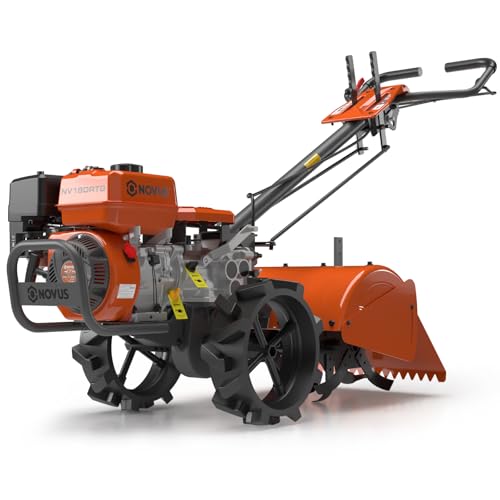
NOVUS 18-Inch Dual Direction Rear Tine Tiller
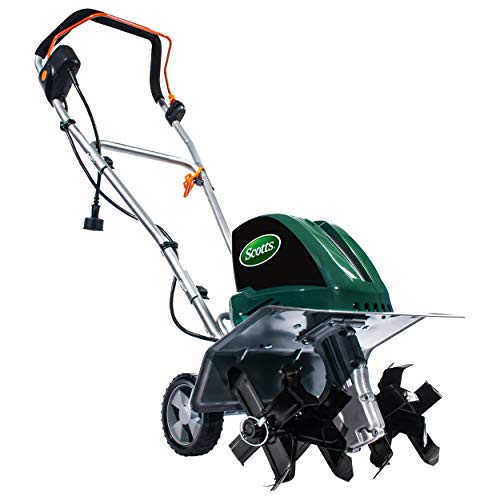
Scotts TC70135SS Garden Tiller 16-Inch

TaskStar 2-in-1 Cordless Tiller Cultivator 20V
A Breakdown Of The Leading Choices
This rear tine tiller lands at the top of the gas-powered class with a 212cc four-cycle engine that produces enough torque to slice into compacted earth without constant restarts. Its independent control panel puts forward, reverse, and neutral on separate handles, so swapping directions happens in one motion instead of two. You get sixteen heavy-duty steel tines turning against each other (counter-rotating), which is the setup that actually bites into soil rather than skating across the surface.
The 17-inch tilling path covers a standard raised bed in two passes, and the airless-style tire setup keeps the machine moving on uneven ground. Home gardeners dealing with previously unworked plots will find this the most capable option in the roundup.
Useful Highlights
- 212cc four-cycle gas engine delivers the kind of torque that punches through sod and root mats
- Counter-rotating tines pull the machine forward into the soil, reducing the push you have to apply
- Independent control panel places forward, reverse, and neutral on separate handles for quick switching
- 17-inch width finishes a typical vegetable bed in just a couple of passes
- Works on home gardens, vegetable plots, and farm applications without needing a different tool
Things To Consider
- Gas engines need seasonal maintenance including oil checks and air filter cleaning
- Heavier than corded and cordless options, so storage in a tight shed may be tricky
- Running costs include fuel, which adds up over a long tilling season
Feature Snapshot
Built With In Mind
Home gardeners and small-farm owners breaking ground on a plot that has sat unused for a season or two.
Swap It Out When
Smaller yard work calls for the lighter Etoolab 20V Cordless Electric Tiller, which skips fuel and engine maintenance.
Sun Joe’s TJ604E is the corded electric tiller that finally gave suburban gardeners a real reason to skip gas. A 13.5-amp motor drives six rust-proof steel-angled tines to a depth of 8 inches, which covers most annual bed prep. The 16-inch working width hits a sweet spot: wide enough to finish a row quickly, narrow enough to thread between established plantings.
Pull the handle down, the machine folds for storage against a garage wall, and there is no oil to change. For gardeners with a typical backyard plot and an outdoor outlet, the TJ604E handles repeated weekend use without complaint.
Strong Points
- 13.5-amp motor rivals small gas engines for typical bed-prep work
- Six rust-proof steel-angled tines hold up to rocky soil without dulling fast
- Folding handle design makes wall-mount storage realistic in small garages
- Zero fuel costs and no engine maintenance beyond keeping the housing clean
Trade Offs
- Cord limits reach, so a heavy-gauge extension cord and outlet planning matter
- Lighter than the gas NOVUS, which means more body weight leaning in on hard soil
- Not designed for breaking new ground the way a rear tine gas unit can
Right Fit For
Suburban gardeners with established beds who till several times per season and value quick setup over raw power.
Consider Something Else When
Untouched ground with thick root systems is better served by the NOVUS Dual Direction Rear Tine Tiller 212CC 17-Inch.
Where the TJ604E aims at medium-sized beds, the TJ603E tightens the focus for tighter quarters. The 3-position wheel adjustment is the standout feature here, letting you change tilling depth on the fly as you move between soft topsoil and firmer patches. Six rust-proof steel-angled tines do the cutting, and the rotary design churns through weeds and old roots without dragging the whole unit to a stop.
You give up some width compared to the larger Sun Joe, and the motor runs a touch lighter. For narrow side-yard plots and kitchen gardens, that trade is usually worth making.
What It Does Well
- 3-position wheel adjustment changes depth without stopping work
- Six rust-proof steel-angled tines handle weeds and root fragments reliably
- Folding handle keeps the footprint small in apartment storage
- Electric operation means no oil changes or spark plug replacements
Minor Gripes
- Narrower tilling path than the TJ604E, so larger beds take more passes
- Not built for breaking compacted ground, only maintaining existing beds
Best Suited To
Apartment dwellers and small-yard gardeners who mostly refresh existing beds and want a machine that tucks into a closet.
Look Elsewhere When
You need a battery option for spots far from an outlet, in which case the LITEKON Cordless Tiller 720RPM Brushless 10-Inch is the better match.
Honda’s FG110 sits in a category of its own: a mini tiller with the Honda GX25 four-stroke engine, which has a long reputation for quick, easy starts and years of reliable service. The patented hybrid tine design is the clever part: half the blades angle for digging while the other half angle for cultivating, so the machine handles both breaking ground and mixing amendments without a tine swap.
For a home gardener who values longevity and is willing to pay for a Honda engine, the FG110 rarely disappoints.
What Earns Its Place
- Honda GX25 4-stroke engine starts reliably and runs for years with basic care
- Hybrid tine design digs and cultivates without manual blade changes
- Compact frame fits between garden rows where larger tillers cannot go
- Low vibration compared to most gas tillers in this size class
Points To Note
- Premium price tag for a mini tiller, so casual gardeners may not see the value
- Not built for breaking large plots; the small tilling width is the trade-off for agility
Feature Snapshot
Who Should Grab It
Experienced gardeners who want a long-lasting machine and already trust the Honda engine reputation.
Reach For A Different Pick When
Budget matters more than longevity, in which case the Scotts TC70135SS Garden Tiller 16-Inch is a strong electric alternative.
Cordless tillers solve the problem the corded Sun Joe models cannot: reaching the far corner of the yard without an extension cord. The Etoolab 20V runs a high-torque motor with steel tines at 360 RPM, and the package includes two upgraded 4.0Ah batteries, each rated for around 30 minutes of runtime. Swap a battery and keep going, no fuel, no pull cord.
The 9-inch tilling width and 6.6-inch depth are modest, so this is a cultivator first and a ground-breaker second. For routine bed prep, lawn aeration, and soil cultivation between rows, it hits the mark.
Useful Touches
- Dual 4.0Ah battery system keeps you working with a quick swap
- 360 RPM high-torque motor handles compacted soil clumps and sod effectively
- Cordless design reaches the back of the property without outlet planning
- Quieter than any gas tiller, which matters in close-set neighborhoods
Softer Spots
- 30-minute runtime per battery means larger plots require recharging breaks
- Narrow 9-inch width is slower on open beds than wider corded or gas options
Perfect Match For
Gardeners who want quiet, emission-free tilling and already use 20V tool platforms around the home.
A Better Fit Elsewhere
Larger or unbroken ground calls for the NOVUS Dual Direction Rear Tine Tiller 212CC 17-Inch, where power beats portability.
The LITEKON brings brushless motor technology to the cordless tiller class, which means more efficient power delivery and longer motor life compared to brushed designs. The 720 RPM top speed is well above the Etoolab’s 360, and the 10-inch tilling width with 7-inch depth puts real ground-breaking ability in a battery-powered package. Two 5.0Ah batteries and a 1.5A fast charger round out the kit.
For gardeners who want cordless convenience without giving up tilling depth, this is the step-up option in the battery category.
A Favorable Mix
- Brushless motor delivers 720 RPM with greater efficiency and longer service life
- Two 5.0Ah batteries extend working time for medium-sized plots
- 10-inch tilling width and 7-inch depth handle tougher soil than typical cordless units
- Fast 1.5A charger reduces downtime between battery swaps
Honest Caveats
- Heavier than simpler cordless cultivators, which can wear on long sessions
- Battery and motor combination is more expensive than entry-level cordless options
Feature Snapshot
Whose Shelf It Belongs On
Home gardeners ready to invest in cordless and willing to pay more for genuine tilling depth rather than light cultivation.
Skip It When
You need to till far from any charging point for hours at a time, where a gas unit like the NOVUS 18-Inch Dual Direction Rear Tine Tiller is the better fit.
The bigger sibling to the 17-inch NOVUS, this 18-inch model swaps the belt-driven layout for a full gear transmission. Gears last longer than belts in this kind of work, which is why commercial operators tend to favor them. Sixteen durable steel tines run forward or reverse, and the airless tires keep the machine rolling on soft, freshly turned ground where pneumatic tires would sink.
Up to a 10-inch tilling depth opens up options for serious root vegetable beds and larger landscape renovations. This is the pick for property owners, not small-plot hobbyists.
Notable Gains
- Full gear transmission outlasts belt-driven designs under heavy use
- 18-inch tilling width finishes large plots with fewer passes
- 10-inch tilling depth handles serious bed preparation and root crops
- Airless tires eliminate flat-repair downtime mid-season
A Few Limitations
- Heavier footprint requires a real storage plan, ideally with ground-level access
- Gas engine maintenance is non-negotiable for long-term reliability
Who Will Love This
Property owners with multiple garden areas or a half-acre vegetable patch who need a transmission built for repeated heavy use.
Not Your Match When
Smaller suburban yards are better handled by the Sun Joe TJ604E Electric Garden Tiller 16-Inch, which is far easier to store and maintain.
The Scotts TC70135SS is the practical choice for gardeners who want flexibility in tilling width. The adjustable cutting width ranges from 11 to 16 inches, which means you can run narrow between established rows and wide on open beds without swapping attachments. A 13.5-amp motor matches the Sun Joe TJ604E for power, and the 8-inch depth handles standard prep work.
Conditioning soil, prepping for sowing, and clearing weeds all sit comfortably within this machine’s range.
What Pays Off
- Adjustable 11 to 16-inch tilling width adapts to row spacing and bed size
- 13.5-amp motor delivers corded-electric consistency without engine noise
- 8-inch tilling depth matches typical vegetable bed requirements
- Useful for weeding and soil conditioning in addition to fresh bed prep
Small Caveats
- Cord limits reach to the length of your extension cord and outlet placement
- Adjustable width mechanism adds moving parts that need occasional cleaning
Made For
Gardeners with mixed bed sizes who want one tiller that adjusts between narrow rows and wider open areas.
Another Choice May Suit
You need battery power for far-flung beds, in which case the Etoolab 20V Cordless Electric Tiller is the more flexible option.
The TaskStar takes a different approach: a 2-in-1 design that converts between a stand-up tiller and a handheld cultivator in seconds. The detachable extension pole twists on and off without tools, so you stand for raised beds and larger areas, then drop the pole for tight cultivation in pots, containers, and narrow planting spaces. At 4.9 pounds, the handheld configuration is light enough for raised-bed work without back strain.
Two 2.0Ah batteries ship with the unit, and 300 RPM is on the gentler side, which actually suits delicate flower beds better than aggressive tilling.
Practical Pluses
- 2-in-1 design switches between stand-up and handheld with a simple pole twist
- 4.9-pound handheld weight reduces arm and back fatigue during longer sessions
- Two 2.0Ah batteries included for immediate runtime
- Ideal for raised beds, pots, and tight planting spaces where larger tillers cannot reach
Areas To Watch
- 300 RPM is gentler than full-size cultivators, so compacted soil takes multiple passes
- Smaller 2.0Ah batteries mean shorter runtime per charge than higher-capacity options
Perfect Match For
Apartment gardeners and raised-bed enthusiasts who need agility over raw power and want a single tool for multiple setups.
Where A Sibling Pick Shines
Hard ground and larger plots call for the Sun Joe TJ604E Electric Garden Tiller 16-Inch, which has the width and motor for bigger jobs.
Picking The Right Rear Tine Tiller For Your Ground
Engine type sets the foundation for any rear tine tiller decision. Gas engines like the NOVUS 212cc models deliver the torque needed to break compacted or never-tilled soil, but they require fuel, oil, and seasonal maintenance. Corded electric tillers such as the Sun Joe TJ604E and Scotts TC70135SS offer consistent power with zero fuel cost, provided you have an outdoor outlet and a heavy-gauge extension cord. Cordless options like the Etoolab and LITEKON trade some raw power for portability and quiet operation, which suits smaller plots and noise-sensitive neighborhoods.
Tilling width and depth matter more than engine specs for matching the tool to your space. A 16 to 18-inch width covers standard vegetable beds in two or three passes, while a 9 to 10-inch width fits between established rows and in tight garden layouts. Tilling depth ranges from about 6.5 inches on the smallest cultivators to 10 inches on heavy-duty gas units, so root crops and deep soil amendment require the larger end of the range.
Tine rotation direction influences how the machine behaves in the soil. Counter-rotating tines, where the tines spin opposite to the wheels, pull the tiller forward into hard ground and reduce the pushing effort you have to apply. Forward-rotating tines are gentler and work well for established beds with softer soil.
Matching Power Source To Property
Homeowners with small backyard beds under 500 square feet generally get enough capability from a corded electric model. Properties between 500 and 2,000 square feet of tillable ground benefit from a cordless tiller with brushless motor technology and dual batteries. Anything beyond that, especially with compacted or previously untilled earth, calls for a gas-powered rear tine tiller with counter-rotating tines.
Considering Storage And Transport
Gas tillers weigh more and take up more floor space, so plan for a shed corner or garage spot with ground-level access. Corded electric models fold for wall-mounted storage. Cordless cultivators weigh under 30 pounds and often fit in a closet, which matters for apartment dwellers and anyone with limited outdoor storage.
Balancing Budget Against Use Frequency
Gardeners who till once a year in spring can save money with a basic corded electric tiller. Weekly cultivation during the growing season rewards the investment in a cordless or gas unit with more durable transmission and battery systems.
Key Considerations Across These Picks
Pitfalls Shoppers Hit
The most common mistake is choosing a cultivator when a tiller is what the soil actually needs. Cultivators mix loose topsoil and work between rows, but they do not break compacted ground effectively. Matching tool type to soil condition matters more than engine size. Another trap is underestimating extension cord gauge for corded electric tillers; a 16-gauge cord over 50 feet can rob the motor of the power it needs to keep tines turning under load.
Where The Extra Money Goes
Higher-tier rear tine tillers earn their premium through full gear transmissions, brushless motors, and airless tires. These components reduce the maintenance interruptions and mid-season repairs that budget models tend to develop after a few seasons of real use. For gardeners who till large plots repeatedly, the upgrade pays for itself in reliability rather than raw performance numbers.
Frequently Asked Questions
What is the difference between a tiller and a cultivator?
A tiller breaks compacted or untilled soil using heavy tines that dig deep, while a cultivator mixes loose topsoil, works in amendments, and handles weeds between rows. Rear tine tillers sit on the aggressive end of the spectrum.
How wide should a rear tine tiller be for a home garden?
For typical backyard vegetable beds, a 16 to 18-inch tilling width covers a standard raised bed in two passes. Smaller plots and tight row spacing benefit from 9 to 10-inch cultivator widths.
Are cordless tillers powerful enough for hard soil?
Cordless tillers with brushless motors and dual high-capacity batteries, like the LITEKON model, can handle moderately compacted soil. For heavily compacted or never-tilled ground, gas-powered rear tine tillers remain the more capable option.
How deep should a tiller dig?
Most home garden applications call for 6 to 8 inches of tilling depth, which matches the root zone of typical vegetables. Deeper tillers reaching 10 inches help with root crops and major soil amendment projects.
What maintenance does a gas tiller need?
Gas rear tine tillers require regular oil checks, air filter cleaning, and seasonal spark plug inspection. Full gear transmission units need gear oil changes less frequently but should not be skipped.
Closing Remarks
The right rear tine tiller lines up with your soil, your plot size, and how often you actually work the ground. Gas models handle the heavy breaking, corded electrics reward consistent weekend use, and cordless cultivators fit tight spaces and quiet neighborhoods. Match the machine to the patch in front of you, and the spring prep work gets a whole lot easier.
