

A persistent bush sending up fresh shoots from an old stump can turn a tidy yard into a constant chore. The right herbicide, matched to the species and the situation, makes the difference between one careful application and a season of regrowth. This roundup walks through ten widely used options for woody brush, ornamental shrubs, and tree-stump regrowth, with a focus on systemic action (where the plant carries the chemical down to the roots) and how each one fits a different kind of cleanup job.
The Leading Options At A Glance
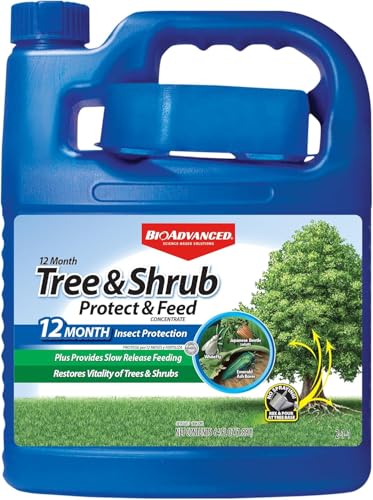
BioAdvanced 12 Month Tree & Shrub Protect and Feed Concentrate 64 oz

BioAdvanced All-In-One Rose and Flower Care Concentrate 64 oz
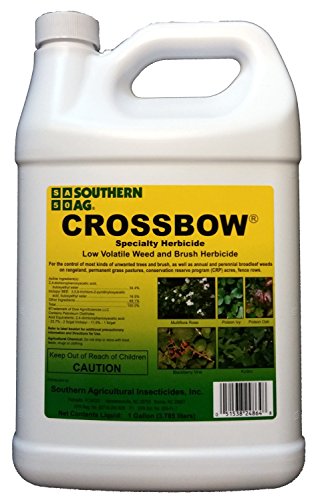
Southern Ag Crossbow Specialty Herbicide 128 oz Gallon

Corteva Tordon RTU Herbicide 32 oz Quart

Roundup Ready-to-Use Weed & Grass Killer III Refill

Preen Garden Weed Preventer 13 lb Bag
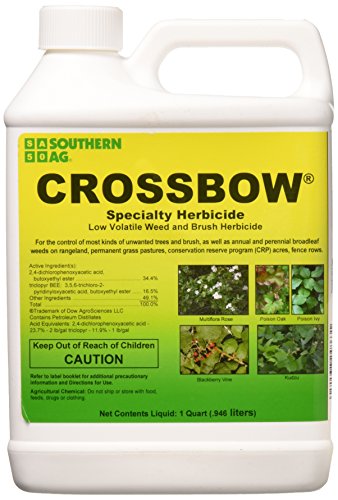
Southern Ag Crossbow Specialty Herbicide 32 oz Quart

BioAdvanced 12 Month Tree and Shrub Protect and Feed Granules 10 lb

Roundup Concentrate Plus Weed and Grass Killer 64 oz

Roundup Quick Pro 1 Box (Makes 5 Gallons)
A Closer Look At Each Pick
If your problem is more about defending established bushes from chewing insects than wiping out unwanted roots, this BioAdvanced concentrate earns its place on the bench. The bottle mixes with water and pours around the root zone, where the plant pulls the active ingredient up through the soil and into the leaves.
Once absorbed, the formula keeps working inside the plant for up to a year, which matters for homeowners who don’t want to re-treat every few weeks. Compared with the granular sibling later in this list, the liquid concentrate gives you more flexibility on dose and timing. You do need a watering can or hose-end sprayer to apply it, and the protection list is specific to the insects named on the label.
Notable Upsides
- Up to twelve months of insect protection from a single soil drench (a watering-can application poured directly onto the root zone).
- Systemic uptake reaches leaves and stems that sprays often miss on tall shrubs.
- Liquid format lets you adjust volume for a few potted plants or a full hedge.
- Useful on the ornamentals most homeowners actually grow: roses, boxwood, and small landscape trees.
Things To Consider
- Coverage list is limited to the pests named on the label, so unrelated problems go untouched.
- Watering-can application can be slow on large beds with many shrubs.
Whose Yard It Belongs In
Homeowners tending a small collection of established ornamentals and wanting a single seasonal treatment rather than repeat spraying.
Reach For A Different Pick When
You are clearing volunteer brush or unwanted tree seedlings, where the Southern Ag Crossbow Quart handles woody regrowth more directly.
Beds full of mixed perennials tend to attract a parade of different problems, and this concentrate is built for exactly that. It combines fertilizer, insect control, and disease control in one soil drench, so a single pass replaces the three-bucket routine many gardeners fall into.
The systemic action means rain cannot wash the protection off the foliage once it has been absorbed, which helps during wet stretches of spring. It is positioned for roses and flowering plants more than woody brush, so it sits beside the first BioAdvanced pick rather than replacing it. For roots specifically, its job is keeping the plant vigorous enough to push out healthy new growth rather than killing woody tissue.
The Helpful Details
- Three jobs in one bottle simplifies routine care for rose and perennial beds.
- Absorbed systemically so brief rain or overhead watering does not reduce its effectiveness.
- Designed for repeat use across a growing season on flowering ornamentals.
- Less measuring and switching between products for casual gardeners.
Trade Offs
- Protection window of about six weeks means reapplication during the active growing season.
- Not formulated to kill woody roots or volunteer brush, so it is the wrong tool for stump regrowth.
- Coverage is limited to the pests and diseases named on the label.
Feature Snapshot
Who It Suits Best
Rose gardeners and perennial-bed caretakers who want to combine feeding and protection in one routine drench.
Look Elsewhere When
You need to actually kill a woody root system, since the Southern Ag Crossbow Gallon is built for that work.
Once the conversation shifts from protecting a rose bed to clearing an overgrown fence row, this gallon jug from Southern Ag steps in. It is a low-volatile brush herbicide intended for the kind of woody regrowth that laughs at lawn weed sprays: saplings, root sprouts, and tough broadleaf weeds in non-cropland areas.
The concentrate dilutes into a large volume of spray solution, which is what makes the gallon format relevant. A handheld pump sprayer (a pressurized canister with a wand for spot spraying) is the typical delivery tool, and the mix rate should be measured carefully because the active ingredients are strong. Unlike the BioAdvanced products above, this is not a casual weekend job for a flower bed.
A Strong Showing
- Targets woody species that typical lawn weed sprays leave untouched.
- Gallon size dilutes into enough spray solution for multi-property jobs.
- Low-volatile formulation reduces vapor drift on warm days compared to older ester formulations.
- Useful on fence rows, pasture edges, and rural driveways where brush encroaches.
Where It May Fall Short
- Not labeled for use in home lawn areas or near desirable ornamentals.
- Mixing and application require a dedicated pump sprayer and protective gear.
- Effects on brush take time, so results show across weeks rather than hours.
The Right Fit
Rural and suburban property owners reclaiming neglected fence lines or field edges from established woody brush.
Skip It When
You only need a quart of mix for a backyard stump, where the Southern Ag Crossbow Quart saves you from storing concentrate.
Tordon RTU is not a broadcast spray. It is a ready-to-use formulation designed to be applied directly to cut stumps or as a cut-surface treatment on unwanted trees, which makes it the most targeted root-kill option on this list. The chemical is carried down into the remaining root crown (the woody base at the soil line where roots and stem meet) and prevents the suckering that otherwise follows cutting.
Use cases spelled out by the manufacturer include fence lines and non-cropland sites, not residential lawns or flower beds. For the homeowner with a few stubborn stumps from removed trees, the quart bottle goes a long way. The trade-off is that this is a specialized tool, not an everyday herbicide.
Noteworthy Benefits
- Ready-to-use format removes any mixing guesswork on cut stumps.
- Cut-surface application targets the root crown directly rather than relying on foliar uptake.
- Effective on species that resprout aggressively after being cut down.
- Quart size suits small property projects with several stumps.
Possible Compromises
- Restricted to non-cropland and cut-stump situations, not general weed control.
- Storage and disposal require attention because of the active ingredient’s persistence.
- Requires careful application to avoid contact with desirable nearby trees through shared roots.
Quick Facts
Built With In Mind
Property owners with a handful of freshly cut stumps from removed trees and a need to stop them from sending up shoots.
Not Your Match When
You need to clear a wide strip of brush by spray, where the Southern Ag Crossbow Gallon handles larger areas more efficiently.
For most homeowners, the appeal of a refillable spray is doing away with the measuring cup. This Roundup refill pours into a compatible wand sprayer and goes straight onto weeds and grass without any mixing. The formula reaches the root system of the plants it contacts, which is the part that matters for kill-down rather than regrowth.
It is positioned for use around flower beds, tree rings, walkways, and driveway cracks rather than as a brush killer. A single wand usually pairs with the bottle, and the small refill size keeps the weight manageable. Versus the Tordon RTU above, this is a daily-use tool for general weed control rather than a specialized stump treatment.
Strong Points
- No-mix convenience for quick touch-ups around the yard.
- Root-killing action on contact weeds prevents the fast regrowth that frustrates spot pullers.
- Compatible with existing Roundup wand sprayers, no extra equipment to buy.
- Suitable for vegetable garden perimeters, flower beds, and hardscape cracks.
Points To Note
- Limited to weeds and grasses, not woody brush or shrub roots.
- Requires a compatible wand sprayer, which is a separate purchase for first-time users.
- Rain can wash the spray off foliage before absorption if applied just before a shower.
Who Should Grab It
Casual gardeners who already own a wand sprayer and want a grab-and-go refill for routine spot weeding.
Consider Something Else When
You need to clear invasive woody shrubs in a hedgerow, where the Roundup Concentrate Plus paired with a pump sprayer covers more ground.
Preen works on a different principle than the rest of this list. It is a pre-emergent (a granular herbicide that stops weed seeds from germinating in the first place) that you spread over a prepared bed and water in. The 13-pound bag covers roughly 2,080 square feet, which lines up with a typical suburban flower border.
The catch is timing. Preen cannot do anything about weeds already growing, so the bed needs to be cleared first. Once activated, it suppresses new weeds for months and is generally safe around established shrubs and perennials. For the root-killer conversation, it prevents the problem rather than treating the symptom.
Benefits That Matter
- Prevents weed seeds from germinating, cutting down on routine pulling later in the season.
- Granular broadcast is faster than spraying individual weeds in large beds.
- Safe for use around a wide range of established ornamentals on the label.
- Coverage of 2,080 square feet suits average residential beds without leftover product.
Softer Spots
- Existing weeds and grasses must be removed before application, which adds a step.
- Not designed to kill existing roots or woody regrowth.
Spec Overview
Best Suited To
Gardeners with established flower or shrub beds who want to stop next season’s weed seeds before they appear.
Swap It Out When
The target is an existing woody shrub sending up suckers, where the BioAdvanced Tree and Shrub Concentrate reaches the roots from inside the plant.
Same active formulation as the gallon version above, but in a quart bottle that does not overcommit you to mixing large volumes of spray. For suburban lots where the brush problem is a fence corner or a hedge-line regrowth, this size is easier to store and finish within a season.
The label carries the same restrictions around desirable plants and the same cautions about protective gear. Quarts are convenient for a single weekend project, and leftover concentrate (if any) keeps for the next round of stump work. It is essentially the entry-level way to try Crossbow before stepping up to the gallon.
Features That Help
- Smaller bottle avoids the long-term storage commitment of a gallon jug.
- Same brush-spectrum control as the larger Crossbow container.
- Useful for one-off backyard projects with a handheld sprayer.
- Lower up-front cost for a first-time brush-killing project.
Worth Bearing In Mind
- Mixing and sprayer cleanup still required, even at smaller volumes.
- Same restrictions as the gallon regarding lawn and ornamental safety.
- Per-ounce cost runs higher than the gallon format for bigger jobs.
Perfect Match For
Suburban homeowners tackling a single brush patch and wanting enough concentrate without committing to a full gallon.
Where A Sibling Pick Shines
Larger rural properties with miles of fence row, where the Southern Ag Crossbow Gallon becomes the better value per ounce.
The granular version of the BioAdvanced 12-month formula trades the mixing step for a sprinkle-and-water routine. You measure the granules around the root zone of each shrub or tree, water them in, and let the soil carry the active ingredient down to the roots. The plant takes it from there.
Compared with the liquid concentrate at the top of this list, granules suit gardeners who would rather skip the watering can entirely. The protection targets the same insect list and runs for up to a year per application, with the addition of slow-release fertilizer feeding the plant at the same time. Granular feeding can wash off slopes if applied just before heavy rain, which is worth thinking through on hilly lots.
Everyday Perks
- No measuring or mixing, which simplifies the application around multiple shrubs.
- Twelve-month insect protection with the same active ingredient as the liquid version.
- Built-in slow-release fertilizer feeds the plant while protecting it.
- Works on landscape trees, shrubs, and container plants on the label.
Honest Caveats
- Granules can shift on steep slopes before they dissolve into the soil.
- Coverage of a 10-pound bag depends heavily on the size and number of plants treated.
Made For
Landscape gardeners with several established shrubs or small trees who prefer spreading granules over mixing liquids.
A Better Fit Elsewhere
Tight container gardens where the liquid concentrate gives more precise dosing per pot.
This concentrate is the bulk-spray sibling to the Ready-to-Use refill, designed for a tank sprayer and larger coverage areas. The built-in measure cap takes some of the guesswork out of mixing, and a single bottle stretches across lawn-replacement projects, driveway edges, and bed renovations. The formula reaches plant roots for kill-down rather than just browning the tops.
It is not labeled for use around existing edibles, so fruit and vegetable gardens need a different approach. For non-edible areas, the rainproof window keeps the active ingredient working even after a brief shower. Compared with the Brush killers from Southern Ag, this is a general-purpose weed-and-grass tool rather than a woody-brush specialist.
What Earns Its Place
- Concentrate format scales to large lawn-replacement or renovation projects.
- Built-in measure cap reduces mixing errors for occasional users.
- Root kill-down on weeds and grasses prevents the regrowth common with top-burn products.
- Works around flowers, shrubs, and trees on the label, plus hardscape cracks.
Details To Watch
- Requires a tank sprayer, which is a separate purchase for first-time users.
- Not labeled for use around existing edible plants.
- Mixing concentrates requires attention to dose to avoid over-application on windy days.
Technical Highlights
The Right Fit
Homeowners preparing a large area for re-sodding or renovation and needing a single bulk product to clear existing vegetation.
Another Choice May Suit
Targeted brush and tree-stump work, where the Tordon RTU Quart handles cut stumps with much less spray volume.
Roundup Quick Pro is a water-soluble powder rather than a liquid concentrate, and that difference matters in a few practical ways. The powder mixes into spray solution in the field and combines two active ingredients for faster visible results on weeds and grasses than single-active formulas typically show.
One box dilutes into roughly five gallons of spray, which suits a backpack sprayer (a wearable sprayer with a pump handle, carried on your back for larger areas) or a small tank rig. It is positioned for commercial-style cleanup rather than routine home weeding, so the casual gardener may want something gentler. For property managers clearing lots or right-of-way style work, the dual-active approach earns attention.
The Upside
- Dual-active formula delivers faster visible kill than single-active concentrates.
- Powder format ships lighter and stores longer than liquid concentrates in some conditions.
- One box scales to five gallons of spray for medium projects.
- Works across annual and perennial weeds in non-cropland settings.
Some Limits To Know
- Mixing powder requires thorough agitation to keep the spray solution uniform.
- More aggressive formulation than most home garden concentrates, so application care matters.
- Not the right tool for delicate ornamental beds or near edibles.
Who Will Love This
Property managers and serious DIYers clearing larger lots or preparing areas for new landscaping.
Not Your Match When
The job is a single backyard flower bed, where the BioAdvanced All-In-One Concentrate covers routine care with less mixing.
Picking The Right Formula For The Job
The biggest fork in the road is whether the goal is killing an existing root system or preventing new weeds from showing up. Stump regrowth, volunteer saplings, and tough woody brush call for a systemic brush herbicide like Crossbow or a cut-surface treatment like Tordon RTU. Established flower and shrub beds often benefit more from prevention, where Preen keeps new weeds out without disturbing the roots of ornamentals you want to keep. A soil drench (a watered-in treatment absorbed through the roots) like the BioAdvanced protect-and-feed products sits between those two camps, feeding the plant you want while defending it from chewing insects over a long window.
Consider the target species and the surrounding landscape together. Brush killers and broad-spectrum concentrates will damage desirable plants as readily as weeds, so proximity to shrubs and trees matters as much as the size of the patch. For mixed ornamental beds, a systemic insect-and-disease product that travels inside the plant avoids the drift risk of sprays. For large fence-line or pasture work, low-volatile formulations reduce vapor movement to sensitive species on neighboring properties.
Practical ownership factors deserve weight too. Liquid concentrates need a sprayer, protective gear, and a place to store leftover product safely. Granular products skip the mixing but depend on watering-in and behave differently on slopes. Refillable wand bottles are the simplest day-to-day option for spot weeding but lack the volume needed for renovations. Match the format to the kind of gardener you actually are, not the biggest possible job.
Application timing also matters more than the bottle label suggests. Systemic herbicides move with the plant’s growth, so treatment during active growth gets better uptake than mid-dormancy applications. Pre-emergents need to go down before seeds germinate, and cut-surface treatments work best on freshly cut stumps where the vascular tissue (the plant’s internal plumbing that carries water and nutrients) is still open to carry the chemical downward.
Key Considerations Across These Picks
Common Shopping Slip Ups
Treating the symptom rather than the cause leads to repeat purchases. A pre-emergent applied over existing weeds does nothing for the plants already growing, and a foliar spray on a woody shrub rarely reaches deep roots. Match the product type to the actual life stage of the target plant, and clear existing growth before laying down a barrier product. Skipping protective gear on brush herbicides is another common shortcut, since low-volatile still means concentration at the nozzle.
Where The Extra Money Goes
Higher-tier options buy stronger active ingredients, longer protection windows, or more concentrated formats that dilute further. A jug of Crossbow costs more up front but mixes into dozens of gallons of spray, so the per-job cost often beats smaller bottles on big fence-line work. The BioAdvanced twelve-month line costs more than a six-week rose product because the protection window is genuinely longer. Where the upgrade is worth it depends on how often you would otherwise re-treat, and how many plants you are covering.
Frequently Asked Questions
What is the difference between a brush herbicide and a weed killer?
Brush herbicides target woody plants and tough perennial root systems, while general weed killers handle broadleaf weeds and grasses in lawn and bed settings. Mixing them up leads to undertreated brush or damaged lawn areas.
Can these products be used near desirable shrubs and trees?
Most systemic brush and broad-spectrum products will damage desirable plants through spray drift or shared roots. Soil-drench protectants like the BioAdvanced line are designed to work inside specific ornamentals, while brush killers need careful application away from plants you want to keep.
How long does it take for a root killer to work on bushes?
Systemic action takes days to weeks, with visible results often appearing after a couple of weeks on woody brush. Faster-acting formulas like Quick Pro show visible effects sooner, but root kill-down still depends on the plant moving the chemical through its vascular tissue.
Do I need a special sprayer for concentrate products?
Concentrates require a dedicated pump or tank sprayer that you can calibrate for the right mix ratio. Wand sprayers are designed for ready-to-use refills and will not give accurate dosing on concentrates, which leads to wasted product or under-treated areas.
Is a pre-emergent a substitute for killing existing roots?
No. Pre-emergents only stop new seeds from germinating and leave established roots untouched. Use a pre-emergent after clearing existing growth to keep new weeds from filling back in, not as a replacement for direct root treatment.
Final Verdict
The right pick depends on what is actually growing in the yard. Cut stumps and woody brush point toward Tordon RTU or Crossbow, established ornamental beds call for BioAdvanced or Preen, and general weed-and-grass work is well covered by the Roundup family in the size that matches the job. Read the label carefully, match the product to the target, and your yard stays ahead of regrowth for the season.
