

There’s a particular kind of frustration that comes with watching a volunteer tree sucker sprout in the middle of your lawn or seeing woody vines crawl across a fence you just stained. Cutting the visible growth feels productive, but most of the root system laughs it off and pushes new shoots within weeks. A targeted herbicide is what actually starves the roots over time, and the right pick depends on whether you’re tackling a single stubborn stump, a wide patch of brush, or just trying to defend a flower bed.
This shortlist mixes dedicated systemic herbicides for genuine root-kill work with a couple of supportive products that protect trees you want to keep. Read it as a toolbox: some items are heavy hitters, others are quiet defenders.
The Shortlist At A Glance

Roundup QuikPro 6.8 lb Jug

BioAdvanced All-In-One Rose and Flower Care Concentrate

Gly-Star Plus Herbicide 2.5 Gallons
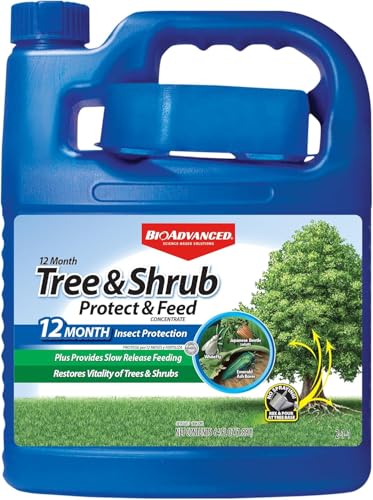
BioAdvanced 12 Month Tree and Shrub Protect and Feed Concentrate

BioAdvanced All-in-One Rose and Flower Care Granules

BioAdvanced 12 Month Tree and Shrub Protect and Feed Granules

Roundup Weed and Grass Killer4 Concentrate

Great White Mycorrhizal Fungi 4 oz

Roundup Concentrate Plus Weed and Grass Killer

Honcho K6 Glyphosate Herbicide 48.7%
The Picks, Examined More Closely
QuikPro is what you reach for when a brush patch has been mocking your mower all summer. The water-soluble granules mix into a sprayable solution, and the dual-active formula (a systemic herbicide paired with a faster-acting partner) is engineered to push results that show up within roughly 24 hours.
For property owners clearing fence lines, old orchard regrowth, or volunteer saplings that keep sprouting from an old stump, this jug covers a lot of ground per mix batch. You will need a dedicated sprayer and basic protective gear, but the application itself is straightforward once you calibrate for coverage.
A Few Highlights
- Visible browning often within a day, so you can confirm coverage quickly
- Targets woody brush, stumps, and roots in one pass
- Granules store longer than pre-mixed liquids and let you dial concentration per job
- Useful for both spot treatment and larger overgrown sections
Things To Consider
- Requires accurate mixing, and over-application can scorch nearby desirable plants
- A dedicated sprayer is strongly recommended to avoid cross-contamination with other yard chemicals
Who It Suits Best
Homeowners with established brush problems, particularly old roots that keep sprouting after cutting, will get the most from this jug.
Skip It When
Casual spot weeding around a flower bed is overkill, and BioAdvanced All-In-One Rose and Flower Care Concentrate handles that routine work better.
This concentrate leans the opposite direction from a hard-kill herbicide. It feeds flowers and roses while defending them against listed pests and diseases in one pour-and-measure routine, which is why it earns a place on a list about root health: a vigorous root system is a defended one.
The systemic uptake means protection travels inside the plant, so rain shortly after application is less of a panic. For gardeners juggling multiple rose bushes, flowering shrubs, and border perennials, that single-bottle approach trims down the seasonal shopping list.
Real-World Strengths
- Combines fertilizer, insect control, and disease control in one application
- Systemic action resists wash-off from rain once absorbed
- Cuts down the number of separate products a flower gardener needs to buy
- Supports stronger root development alongside visible blooms
Points To Keep In Mind
- Designed for flowers and roses, not woody brush or volunteer tree saplings
- Concentrate requires basic measuring and a watering can or sprayer for application
Key Specs
Made For
Rose growers and mixed flower bed gardeners who want one routine to keep plants fed and defended through the season.
Reach For A Different Pick When
Tackling woody brush or a stubborn tree stump calls for Roundup QuikPro 6.8 lb Jug instead.
When the project is a half-acre reclaim or clearing a neglected corner of pasture, a 2.5-gallon jug of concentrated glyphosate makes economic sense. Gly-Star Plus arrives with surfactant already loaded, so you skip the extra adjuvant purchase.
Unlike the QuikPro granules in the first slot, this is a liquid concentrate designed for tank sprayers and broader application work. Annual weeds show damage within days, while deep-rooted perennials and woody growth typically take longer but do take the hit.
The Helpful Details
- 41 percent glyphosate concentrate handles large areas without constant refilling
- Built-in surfactant simplifies tank mixing
- Effective on broadleaf weeds, grasses, brush, and trees when applied to green foliage
- No soil residual means replanting timelines are not disrupted long-term
Honest Caveats
- Storage requires a cool, dry spot away from children, pets, and feed
- Mixing accuracy matters; calibrated sprayers give the most consistent results
- 2.5 gallons is more than a small suburban yard needs in a single season
Whose Shelf It Belongs On
Rural property owners, small acreage managers, and anyone planning a one-time major reclamation project.
A Better Fit Elsewhere
For a single stubborn patch in a normal suburban lot, Roundup Weed and Grass Killer4 Concentrate is easier to handle.
This is the choice when you want to keep trees standing rather than kill them. The concentrate is poured around the root zone and pulled into the plant, where it works against listed pests like aphids, scale, and Emerald Ash Borers while feeding the tree for an extended window.
One application per year simplifies spring chores for anyone managing a row of young ornamental trees or a backyard maple that suddenly attracts every aphid in the neighborhood. Because uptake happens through the roots, foliage spraying is unnecessary.
Everyday Wins
- Targets destructive pests like Emerald Ash Borer with a single yearly application
- Root uptake means no overspray drift onto flowers or lawn
- Includes feeding, so trees get nutrition alongside pest defense
- Ideal for trees that are too tall to spray safely from a ladder
Trade Offs
- Only listed insects are controlled, so it is not a catch-all for every garden pest
- Requires watering in around the root zone, so dry ground means extra effort
Feature Snapshot
Right Fit For
Homeowners with valuable shade or ornamental trees who want a hands-off annual defense routine.
Look Elsewhere When
Removing a tree is the goal, in which case Roundup QuikPro 6.8 lb Jug takes the opposite approach.
If mixing and spraying feels like a barrier to actually doing the work, these granules are the friendlier path. You scoop, sprinkle around the base of the plant, and water in. The systemic formula takes care of feeding, pest control, and disease prevention from there.
For apartment gardeners with a balcony rose or a casual weekend gardener who wants visible results without a sprayer, the format removes a lot of friction. The 4-pound jug lasts through a moderate-size bed for several feedings.
The Case For It
- No mixing, no measuring cup, no sprayer to clean afterward
- Same triple-action benefits as the concentrate version above
- Granules stay put on windy days and reach roots through watering
- Beginner-friendly format for gardeners new to chemical care
Where It May Fall Short
- Less precise dosing for very large or mature specimens
- Coverage on a broad acre-plus lawn becomes labor-intensive compared to spraying
Best Suited To
Casual rose growers and weekend gardeners who would rather not set up a sprayer at all.
Consider Something Else When
You need a single bottle that scales across many flower beds quickly, in which case the BioAdvanced All-In-One Rose and Flower Care Concentrate is faster.
Same protective logic as the concentrate in pick 4, but in a granular format that suits long hedge rows and a string of foundation shrubs. The 10-pound bag covers a substantial landscape, and the slow-release feeding component nourishes roots over the active growing months.
If you maintain a privacy screen of evergreens or a layered shrub border, this bag keeps the routine simple: spread, water in, and move on. It complements pick 4 rather than replacing it, depending on whether you prefer pouring a liquid or scattering dry granules.
Positive Points
- Slow-release feeding supports root growth across multiple months
- Covers many trees and shrubs from a single bag
- Insect control lasts up to a year per application
- No sprayer cleanup, which saves end-of-season maintenance time
Practical Considerations
- Granules need rainfall or supplemental watering to activate
- Distribution can be uneven on sloped ground if not worked in carefully
Who Will Love This
Homeowners managing long hedge lines or several foundation shrubs who prefer a granular yearly routine.
Not Your Match When
You only have one or two trees to treat, since the BioAdvanced 12 Month Tree and Shrub Protect and Feed Concentrate avoids leftover storage.
This is the classic bottle most suburban gardeners keep on a shelf. The concentrate mixes into a pump sprayer and tackles dandelions, crabgrass, poison ivy, and clover down to the root, then becomes rainfast in roughly half an hour.
For a walkway that keeps greening up at the joints or a fence line where vines resprout weekly, the visible-within-hours turnaround means you can check results the same afternoon. Many users like the planned replanting window, which is far shorter than older formulations demanded.
What Helps Most
- Knocks out tough broadleaf weeds like poison ivy to the root
- Rainfast quickly, so an unexpected shower does not waste the work
- Allows replanting on a short timeline once weeds die back
- Refillable 64 fl oz bottle suits the typical suburban weed load
Worth Bearing In Mind
- Not selective, so nearby ornamentals need shielding during application
- Requires a clean pump sprayer dedicated to herbicide use
Built With In Mind
Suburban homeowners who want a familiar, dependable concentrate that handles most weed and grass complaints without overthinking.
Swap It Out When
The target is heavy woody brush or a half-acre reclamation, where Gly-Star Plus Herbicide 2.5 Gallons makes more practical sense.
Great White sits on the opposite end of the spectrum from the kill products in this list, but it earns its slot for a reason. Mycorrhizal fungi form a symbiotic relationship with plant roots, extending their reach for water and nutrients. The concentrated powder is dusted onto roots at transplanting or mixed into a starting hole.
For gardeners replacing a removed tree or shrub with a new specimen, this product supports faster establishment. The 4-ounce jar treats a meaningful number of transplants and stores compactly on a garage shelf.
A Few Strong Suits
- Encourages vigorous root development in transplants and seedlings
- Compact 4 oz size is easy to store and reseal
- Useful alongside the root-kill products above when replacing removed plants
- Pairs naturally with organic and conventional gardening routines
A Few Limitations
- Does not kill anything, so it is not a substitute for an actual herbicide when removal is the goal
- Direct root contact at planting is the most reliable application method
Perfect Match For
Gardeners replanting after clearing brush or simply wanting stronger roots on new trees and shrubs.
Another Choice May Suit
If your goal is purely destruction of unwanted growth, the BioAdvanced and Roundup picks earlier in this list are the right tools.
The “Plus” version of Roundup concentrate trades the trigger sprayer for an easy-measure cap and a tank-sprayer workflow. For homeowners who already own a backpack or pump sprayer and want to cover more ground without constant refilling, the 64-ounce bottle delivers an economical batch.
It is rainfast in about half an hour and handles everything from patio edges to gravel driveways. For lawn replacement prep, a single treatment of this concentrate clears the area so new sod or seed has a clean start.
Real Benefits
- Economical coverage for larger suburban lots and lawn conversion projects
- Built-in measuring cap removes one source of mixing errors
- Works along foundations, fences, and gravel where weeds love to sneak in
- Reasonable drying time means weather does not cancel the whole job
Some Limits To Know
- Tank sprayer required, which adds gear to buy if you do not already own one
- Not for use near existing edible crops, so vegetable gardens need a different approach
The Right Fit
Homeowners with a tank sprayer and a lawn replacement or whole-bed cleanup on the calendar.
Where A Sibling Pick Shines
For a smaller, more occasional job the Roundup Weed and Grass Killer4 Concentrate is easier to deploy without extra gear.
Honcho K6 is the heavyweight in this roundup. The potassium glyphosate formulation at 48.7 percent delivers a higher active load per gallon than typical consumer concentrates, which is why farmsteads, vineyards, and serious acreage owners reach for it.
For most home gardeners, the concentration is overkill, but if you are maintaining multiple acres or coordinating with an agricultural operation, the formulation pays off through fewer trips to refill and stronger uptake on stubborn brush and vine growth.
Everyday Perks
- Higher active concentration means less product per acre
- Systemic action kills top growth and root systems together
- Built-in surfactant supports even coverage on leaf surfaces
- Compatible with industrial and field spraying equipment
Points To Weigh
- Strength is wasted on a small suburban lot with light weed pressure
- Mixing accuracy matters more at higher concentrations, so calibrated gear is essential
Quick Facts
Best Suited To
Rural property owners, small farm managers, and anyone comfortable with calibrated spraying equipment.
Not Your Match When
The job is a single backyard patch, where Roundup Weed and Grass Killer4 Concentrate is easier to manage without overkill.
What Matters Before You Choose A Root Killer
Tree and brush removal is rarely a one-product hobby, so the smarter purchase is the one that matches your actual scale and goals. A homeowner staring down a single stubborn stump has very different needs from someone reclaiming a fence line or replanting a cleared bed.
Match The Product To The Job
Non-selective herbicides like the Roundup and Gly-Star options kill any green plant they touch, which is perfect for unwanted trees and brush but dangerous near flowers or lawn you want to keep. Selective or systemic care products like the BioAdvanced tree and shrub line work in the opposite direction: they protect a tree you value. Figuring out whether you are trying to destroy or defend is the first filter, and it narrows the list fast.
Think About Application Format
Granules, ready-to-spray liquids, and concentrates each suit different comfort levels. Granules (like pick 5 and pick 6) skip the sprayer entirely and appeal to casual gardeners. Concentrates (most of the heavier-duty picks) require a dedicated tank sprayer and basic calibration but cover more ground per dollar. Ready-to-spray bottles trade convenience for higher per-ounce cost.
Consider Replanting And Recovery
Some herbicides linger in the soil briefly and delay replanting, while others break down quickly and let you reseed or resod within weeks. If the plan includes putting something new in the cleared spot, check the replanting window on the label. Pairing an aggressive herbicide with a follow-up root booster like Great White gives new transplants a head start once the cleared area is safe to plant.
Size Up The Target Properly
A young sapling responds to lighter concentrations, while a mature trunk or deep root system needs higher concentration or repeat applications. Underestimating the target leads to frustration when shoots return, while over-applying wastes product and risks collateral damage to nearby plants.
Things To Watch Before You Click
Common Buying Traps In The Herbicide Aisle
Buying a concentrate when you do not own a sprayer, or grabbing a small ready-to-spray bottle for a half-acre job, are the two most common mismatches. Both leave you with either unusable gear or a job that takes ten times longer than expected. Match the format to the equipment you actually have.
Where Spending More Earns Itself Back
Higher-concentration professional formulas like Honcho K6 cost more upfront, but the per-acre price drops quickly. Built-in surfactants, longer protection windows, and dual-active formulas (as in QuikPro) reduce repeat trips and the labor of re-treating regrowth. The honest read is that concentrated products pay off when the work is real, while smaller ready-to-use bottles suit the casual shopper just fine.
