

Roses don’t negotiate. A thick climber that blooms in June will leave you scratched and bleeding in July if you reach in with the wrong pair of gloves. The right pair needs to do two contradictory things at once: stop thorns and let you feel what you’re doing. Pulling a spent bloom, tying in a wayward cane, or teasing a sucker out of the rootstock all demand fingertip precision that heavy chainsaw gloves simply can’t deliver.
The picks below cover the full range of rose work, from light deadheading to wrestling with old climbers and rambling roses. Some are breathable enough for daily summer work. Others run gauntlet-high up the forearm to guard against the worst thorns. A couple of all-purpose leather gloves handle rough garden tasks beyond the rose bed. Read the full breakdown to find the right match for your garden.
The Picks In Brief

4 Pack Atlas Glove NT370 Nitrile Garden Gloves (Small, Assorted)

HTR Gardening Gloves for Women with Grip (Medium)

Wells Lamont Women’s Botanical Print Slip-On Gloves (Large, 7753L)
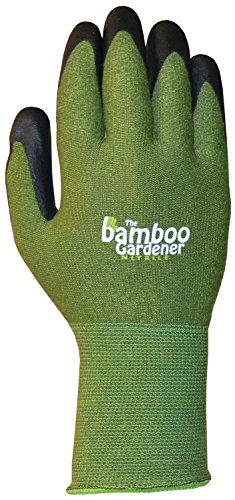
Bellingham C5371M Bamboo Gardener Gloves with Nitrile Palm (Medium, Green)

HANDLANDY Long Cowhide Leather Rose Pruning Gauntlet Gloves (Medium, Brown)

HANDLANDY Rose Pruning Thorn Proof Gardening Gloves

WZQH Cowhide Leather Work Gloves for Gardening (Medium, Rose Red – Grey)
What Each Pick Brings To The Table
Starting a rose bed with the Atlas NT370 is a smart move before you commit to heavy leather. These thin nitrile-coated gloves hug the hand like a second skin, and the four-pack means you can leave a pair by the back door, in the potting shed, and in the car without scrambling to find one. For container roses on a patio or small shrub pruning, you almost forget they’re on.
The coated palm gives a confident grip on pruners, and the snug fit makes tip work, like snipping at a five-leaflet leaf just above the bud, much easier than bulkier options. Elastic at the wrist keeps grit out while you kneel in the bed.
Well-Handled Touches
- The thin nitrile palm lets you feel the cane, so you can find the right cut without removing the glove.
- Buying a four-pack means a fresh pair is always on hand, helpful when the last one finally falls apart.
- Machine-washable construction (the nitrile stays flexible after a rinse), which matters after a sticky day with roses.
- You get dependable grip on smooth pruner handles even when palms get clammy.
Honest Caveats
- These won’t stop determined thorns from old climbers. Expect a prick or two through the fabric on thick wood.
- Limited hand protection above the wrist, so long sleeves or sleeves from another glove are needed for deep reaches.
Right Fit For
Light deadheading, container rose care, and quick touch-ups on a small shrub bed.
Look Elsewhere When
You need to reach into a thick climber or old garden rose: the HANDLANDY Long Cowhide Leather Rose Pruning Gauntlet Gloves handle that profile better.
The HTR glove leans into the comfort side of rose work, where most of your time goes to weeding, mulching, and tying in new growth rather than fighting thorns. The seamless polyester knit breathes in a way that leather simply cannot, and the latex foam palm gives just enough grip for wet pots and slippery tools.
Compared to the Atlas nitrile pick above, this one trades a touch of fingertip feel for noticeably cooler hands. Mid-summer pruning in a humid climate feels less punishing. A snug knit cuff keeps debris from dropping into the glove while you work the soil.
The Helpful Details
- The lightweight knit reduces hand fatigue, useful for the long, slow sessions of late-summer deadheading.
- Latex foam on the palm grips smooth plastic handles better than bare hands, which helps when pruners get dewy.
- You can rinse the knit under a tap and hang it to dry; it usually air-dries within an hour.
Points To Note
- You may find the thin fabric lets thorns from established roses through, so it suits younger, less thorny cultivars.
- The snug fit can feel tight across the knuckles for those with broader hands, and sizing up is worth considering.
Made For
Gardeners who handle a mix of weeding, light pruning, and potting in warm weather.
Consider Something Else When
You want a balance of breathability and real thorn defense: the Bellingham C5371M Bamboo Gardener Gloves offer a tougher nitrile palm in a cool knit.
The Wells Lamont 7753 sits in a useful middle ground between the ultralight knit picks and the heavier gauntlet gloves later in this list. The synthetic leather palm brings real abrasion and puncture resistance, while the stretch spandex back keeps the hand cool and lets the glove move with you. A floral print on the cuff is a small touch that makes the glove feel less like PPE and more like garden gear.
For shaping a hybrid tea or coaxing a climbing rose along a trellis, the dexterity holds up. The lightly padded palm helps when you’re gripping pruners through a long session, and the wrap-around elastic wrist keeps dirt from migrating inside.
What Stands Out
- Reinforced fingertips extend glove life where wear shows up first, particularly around the thumb and index finger.
- The terry cloth nose wipe on the thumb is unexpectedly useful for wiping sweat during a hot July prune.
- Slip-on design with elastic wrist means you can pull them on and off one-handed at the compost bin.
Trade Offs
- Coverage stops at the wrist, so for climbing roses that whip back, a longer gauntlet is a safer match.
- Synthetic leather breathes less than knit, so palms can get clammy during a long, slow afternoon.
Best Suited To
Hybrid tea and floribunda owners who do detailed shaping, deadheading, and tying work most weekends.
Another Choice May Suit When
You mainly tackle rugged, old garden roses with thick thorns: the HANDLANDY Rose Pruning Thorn Proof Gardening Gloves offer heavier leather coverage up the arm.
For gardeners who run hot or live somewhere muggy, the Bellingham C5371M is a quiet standout. The bamboo rayon knit feels noticeably cooler than standard polyester, and it wicks sweat away from the skin rather than trapping it. The 13-gauge seamless knit (a tight, mid-weight weave) gives a close fit that holds up to the kind of constant reaching rose pruning demands.
The nitrile-coated palm is more substantial than the HTR pick’s latex foam, which means real puncture resistance against the smaller thorns on shrub roses. Where the Bellingham differs from the heavier gauntlet picks below is in keeping your hand agile enough to deadhead a climber without removing the glove every two cuts.
What Earns Its Place
- Bamboo knit runs cooler than synthetic alternatives, which matters during August pruning in a humid zone.
- Seamless construction reduces the rubbing that causes blisters across the palm after an hour of grip work.
- The nitrile coating shapes to your hand over time, improving dexterity the more you wear them in.
A Few Limitations
- Protection stops at the wrist, so for long-caned climbers, sleeve coverage from another glove helps.
- Coating can wear through on the index finger faster for heavy daily users, depending on the pruner style.
Who Should Grab It
Anyone working a rose bed in warm conditions who values dexterity and breathability over maximum thorn armor.
Swap It Out When
You face aggressive climbers with cane-long thorns: the HANDLANDY Long Cowhide Leather Rose Pruning Gauntlet Gloves offer the long-cuff coverage this pick lacks.
Once you start wrestling with climbing and rambling roses, thin gloves stop being a sensible choice. The HANDLANDY gauntlet steps in with cowhide leather, which is more porous than standard leather, and a long cuff that runs well past the wrist toward the elbow. Reaching into a tangled thicket becomes a routine chore rather than a blood-and-bandages event.
Compared to the lighter picks earlier in the list, the trade-off shows up immediately in dexterity. This is a glove for pulling out dead canes and tying in new shoots, not for fine snipping. The fit runs a touch small in some hands, so sizing up is the safer path.
A Favorable Mix
- Long gauntlet protects the forearm from the cane whip-back that climbers are known for.
- Cowhide leather breathes better than synthetic alternatives, keeping hands cooler than expected for full coverage.
- The palm and cuff construction is built for puncture resistance, helpful when cutting out old wood.
Softer Spots
- Sizing runs small for some hand shapes, and ordering one size up is commonly the right call.
- Leather stiffens when it dries after getting wet, so conditioning or proper drying helps maintain flexibility.
Who It Suits Best
Climbing rose and rambling rose owners doing seasonal hard pruning, training, and cane removal.
A Better Fit Elsewhere When
You need a glove for general property work beyond the rose bed: the WZQH Cowhide Leather Work Gloves cover chainsaw, ranch, and brush-clearing tasks with similar leather protection.
The shorter-cuff sibling to the gauntlet above covers the same thorny ground with a trimmer fit. The pigskin palm has the porous texture that makes leather breathe, and after getting wet, the leather dries soft rather than stiff. For a thick shrub rose, an old Bourbon, or a wild hedge rose, this glove stops the worst scratches.
Where it differs from the long-cuff HANDLANDY gauntlet is reach: this one protects the hand and lower wrist, not the forearm. A long-sleeved shirt fills the gap for many gardeners. The lighter feel helps when you’re making a lot of cuts in one sitting.
Where It Excels
- Pigskin palm dries soft after rain or sweat, which means the glove doesn’t turn into a cardboard shell by the end of the season.
- The thorn-resistant leather stands up to the heavier canes on old garden roses and shrub types.
- Lighter build than the gauntlet pick makes fast, repeated cuts less tiring.
Practical Considerations
- Forearm coverage is limited, so long sleeves help against the cane whip that climbers produce.
- Leather absorbs moisture and stains from soil and sap, so cleaning takes a little more attention than with knit gloves.
Whose Shelf It Belongs On
Shrub rose and hedge rose owners who want a balance of thorn defense and hand mobility.
Skip It When
You need full forearm reach for a tall climber: the HANDLANDY Long Cowhide Leather Rose Pruning Gauntlet Gloves deliver the longer cuff that this pick leaves out.
The WZQH splits the difference between a rose-specific glove and a general utility glove. The split cowhide shell is thick enough to shrug off bramble scratches, and a cotton lining keeps the leather from rubbing the skin raw during long sessions. The reinforced palm adds another layer exactly where pruners and loppers bear down.
It is a glove for the day after the bloom, when you’re hauling cut canes to the brush pile, dragging out old rootstock, or tackling a fence line tangled with multiflora. Rose bed maintenance is one of several jobs it handles. Sizing tends to run a little roomy in the fingers.
Points In Its Favor
- Split cowhide holds up to abrasion, helpful for dragging thorny brush out of the bed.
- Cotton lining absorbs sweat and makes the glove more comfortable than unlined leather.
- Adjustable wrist keeps debris out when you kneel in the soil.
Things To Consider
- Thicker leather reduces fingertip feel, so fine tip-pruning is harder than with the lighter picks above.
- It runs slightly bulky for hands used to closer-fitting gloves, depending on the hand shape.
Perfect Match For
Gardeners who clear thorny brush, do general property work, and want a single heavy glove to cover multiple chores.
Reach For A Different Pick When
You’re spending most of your time doing delicate shaping on a hybrid tea: the Wells Lamont Women’s Botanical Print Slip-On Gloves give the dexterity this pick trades away.
Factors Worth Weighing Before Choosing Rose Gardening Gloves
Match the Glove to the Rose
Not all roses punish the same way. A tidy floribunda in a container is a different job from a 15-year-old climber draped over a fence. Lightweight knit and nitrile-coated gloves handle the former with comfort, while leather gauntlets earn their keep on the latter. Matching the glove to the worst rose in your garden sets the bar.
Decide Where Dexterity Stops and Protection Starts
Fingertip feel matters when you’re making a cut just above a bud eye, but it shrinks fast when thorns get thick. Gloves with a synthetic leather palm (Wells Lamont 7753) keep reasonable dexterity with real puncture resistance. Full cowhide and pigskin give up feel for genuine thorn blocking.
Think About the Cuff, Not Just the Palm
Rose thorns hit the forearm as often as the hand, especially on climbers. A glove that stops at the wrist leaves the lower arm exposed to cane whip-back. Gauntlet cuffs running toward the elbow close that gap for tall work.
Plan for Breathability and Drying
A glove that holds sweat becomes uncomfortable fast, and leather that dries stiff loses its shape. Bamboo and polyester knits breathe well, while porous pigskin stays flexible after getting wet. Choose based on your climate and how often the gloves will see rain or irrigation.
Key Considerations Across These Picks
Where Shoppers Go Wrong
The most common misstep is buying a glove for a job that doesn’t match. A thin nitrile glove on a climber means a scratched arm, while a heavy gauntlet on a hybrid tea means fumbling every cut. The second mistake is ignoring the cuff, since most rose injuries happen on the forearm, not the palm. Sizing gets overlooked too: leather gloves often run small, and knit gloves can feel tight across the knuckles for broader hands.
Where The Extra Money Goes
Higher-tier rose gloves buy thicker leather, longer cuffs, and reinforced palms. The trade-off is reduced dexterity, so the upgrade pays off when the garden leans toward climbers, old shrubs, and tangled thickets. For a small patio bed of modern shrub roses, the upgrade adds bulk without adding real value. Spending up makes sense when the worst rose in your garden is the one you reach into most often.
Frequently Asked Questions
Do I really need long gauntlet gloves for roses?
Long gauntlets help when you work climbing, rambling, or old shrub roses that have thorns on the canes. For compact hybrid teas in a small bed, a wrist-length glove with a synthetic palm is usually enough.
Can I machine wash rose gardening gloves?
Knit and nitrile-coated gloves typically tolerate a machine wash on cold. Leather and pigskin gloves need spot cleaning and air drying to keep the hide from stiffening and cracking.
How do I stop rose thorns from going through fabric gloves?
Thorns push through thin knits when the fabric sits close to the skin. Choosing a glove with a thicker nitrile or synthetic leather palm, and wearing a long-sleeved shirt underneath, closes the gap.
What size should I order for rose pruning gloves?
Leather gloves often run small, so sizing up is the safer path. Knit gloves should feel snug without pulling across the knuckles. Measuring around the palm and matching the brand’s size chart is the most reliable approach.
Are leather gloves worth the extra cost over knit ones?
Leather gives up breathability and dexterity in exchange for genuine thorn blocking. The upgrade is worth it for thick-caned roses and rough pruning, while knit gloves handle the lighter end of the work comfortably.
The Takeaway
The right rose glove depends entirely on the worst rose in your garden and how often you reach into it. Knit and nitrile picks earn their keep on modern shrubs and containers. Leather gauntlets step in once climbers, ramblers, and old garden roses enter the picture. Pick for the toughest job you actually do, and the rest of the season stays comfortable.
