

Choosing the right rotary mower shapes how your weekends feel all season. The wrong deck width turns a quick trim into a slog, and the wrong drive type makes flat ground feel like a hill. Whether you’re reclaiming a patchy front lawn or upgrading from a tired electric, the walk-behind category has quietly grown into something worth a careful look.
A Quick View Of The Lineup

Einhell GC-EM 1742 Rotary Manual Lawn Mower

Honda HRX-BE 21-Inch Battery Powered Lawn Mower

PowerSmart 18-inch 144cc Gas Lawn Mower

Earthquake Walk-Behind String Mower with Hurricane Cutting Head

SENIX 20 inch Gas Push Lawn Mower, 144cc 4-Cycle
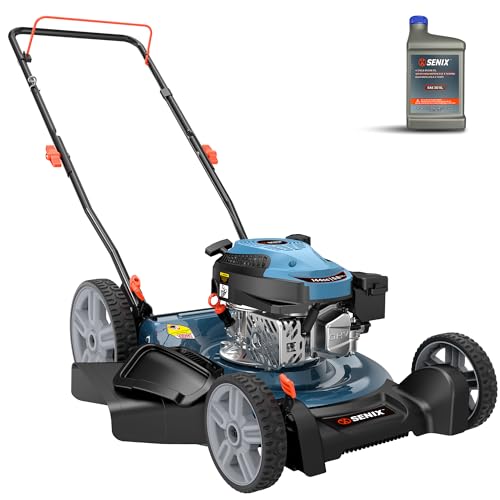
SENIX 21-Inch Gas Push Lawn Mower, 144cc 2-in-1 Mulching
What Each Pick Brings To The Table
Compact lawns in townhouses and tight courtyards don’t need a gas engine humming away on a Saturday morning. The Einhell GC-EM 1742 trims that reality down to a hand-pushed reel that weighs little and stores flat against a shed wall. Its 42cm cutting width is honest about what it’s built for, and the lack of a drive system means there’s nothing to charge, fuel, or warm up before you start pushing.
This pick assumes you actually want quiet weekends and a workout your arms can handle. If your patch of grass tops out at a few square meters, the manual approach simply costs less over time and skips the maintenance chain that gas and battery models drag behind them.
Everyday Wins
- Lightweight manual design needs no fuel, charging, or engine servicing.
- 42cm width covers typical small lawns in under ten minutes.
- Whisper-quiet operation keeps neighbors happy on early starts.
- Minimal storage footprint fits narrow sheds and balcony closets.
Things To Consider
- Push-only motion can feel tiring on longer passes or slightly uneven ground.
- Reel-style cutting struggles with very tall or wet grass, so frequent trimming matters.
Made For
Urban gardeners with postage-stamp lawns and a preference for simple, durable tools over motorized convenience.
Consider Something Else When
Your yard exceeds a modest suburban plot, in which case the SENIX 20 inch Gas Push Lawn Mower handles the workload without wearing you out.
Honda’s battery walk-behind is the closest a cordless mower gets to gas-powered confidence without the noise, fumes, or pull cord. The HRX-BE pairs a 21-inch deck with the brand’s reputation for keeping RPMs steady under load, which is the real test any mower faces in dense, damp grass. It also carries the Versamow system with a Clip Director that lets you swap between mulching, bagging, discharging, and leaf-shredding without changing attachments.
For homeowners ready to leave gas behind, this is the rotary mower that argues loudest for the switch. You’ll trade the instant refuel of a gas tank for quieter operation and lower routine maintenance, and the trade feels reasonable.
Where It Delivers
- 21-inch deck trims mowing time on mid-size lawns noticeably.
- Clip Director toggles between mulch, bag, discharge, and leaf-shred modes on the fly.
- Battery drive means no fuel mixing, oil changes, or exhaust smell.
- Honda-grade engineering typically holds resale value longer than commodity brands.
Points To Keep In Mind
- Battery runtime depends on grass thickness and mode, so larger yards may need a second pack.
- Premium positioning means replacement batteries and parts cost more than mainstream alternatives.
- Steel decks need a wipe-down after mowing wet grass to prevent surface corrosion.
Best Suited To
Suburban households ready to commit to cordless convenience and willing to pay for Honda-level build quality.
A Better Fit Elsewhere
Budget-focused shoppers managing a smaller patch will find the PowerSmart 18-inch 144cc Gas Lawn Mower delivers similar capability at a noticeably lower cost.
First-time gas mower owners often stall out on the pull cord before they ever reach the lawn. The PowerSmart 18-inch tackles that friction head-on with auto choke and a primer bulb, so cold starts feel less like arm wrestling and more like a button press. The 144cc OHV (overhead valve) engine delivers reliable torque for typical suburban grass without the weight of larger displacement units.
This is the entry-level gas pick that respects your learning curve. The 18-inch deck suits lawns that are bigger than what the Einhell manual can comfortably handle but smaller than what demands a wide-cut workhorse.
Where It Helps
- Auto choke and primer bulb reduce the learning curve for cold starts.
- 18-inch cutting deck balances maneuverability with reasonable pass width.
- Side-discharge layout suits open lawn shapes without bagging hassle.
- Compact frame stores upright in most standard sheds.
Worth Noting
- Side-discharge only, so there’s no built-in mulching or bagging option.
- Gas engines require seasonal oil checks and occasional spark plug swaps.
Who Should Grab It
New homeowners transitioning from electric or reel mowers who want gas power without wrestling with traditional pull-start systems.
Skip It When
You want mulching capability built in, in which case the SENIX 21-Inch Gas Push Lawn Mower offers 2-in-1 versatility at a similar size class.
Standard rotary mowers hit a wall the moment your lawn stops being a lawn and starts becoming a meadow. The Earthquake Walk-Behind String Mower lives on the other side of that wall, with a 160cc Viper 4-cycle engine and a Hurricane cutting head that chews through brush, tall weeds, and saplings where ordinary decks would choke. Its 22-inch swath and airless wheels keep it moving across rough ground that would stop a wheeled mower cold.
Think of this as a string trimmer on wheels, built for acreage where grass has gone feral. The Grab-N-Go bail and adjustable handlebar make it approachable despite its rugged spec sheet.
A Favorable Mix
- 160cc 4-cycle engine delivers the torque needed for thick brush and weeds.
- Airless 2.5″ x 14.5″ wheels roll over rough terrain without flats.
- 22-inch cutting diameter clears wide paths through overgrown areas quickly.
- Adjustable handlebar accommodates different user heights comfortably.
Trade Offs
- String cutting creates more debris than a bagged rotary, so protective eyewear matters.
- Heavier frame can feel unwieldy on manicured lawn sections.
- Not designed for the clean, striped finish a standard rotary delivers.
Right Fit For
Property owners managing fields, ditches, fence lines, and neglected corners where ordinary mowers can’t reach or simply quit.
Not Your Match When
Your goal is a tidy suburban lawn, in which case the Honda HRX-BE 21-Inch Battery Powered Lawn Mower delivers a far cleaner cut and finish.
Mid-size suburban lawns ask for a sweet spot the SENIX 20 inch finds comfortably: a 144cc 4-cycle engine that runs cleaner than older 2-stroke designs, paired with a 20-inch deck that finishes the job before the afternoon heat sets in. The 4-stroke layout skips the oil-gas mixing ritual that complicates entry-level gas ownership.
It lands in the practical middle of this list, slotting between compact push mowers and the heavier half-acre machines. For homeowners whose yards sit in that common middle ground, this rotary mower covers the workload without overspending.
Good Reasons To Consider
- 20-inch deck balances cutting width with push-friendly maneuverability.
- 4-cycle engine improves fuel efficiency and cuts emissions noticeably versus 2-stroke models.
- Lower noise output keeps weekend mowing from bothering the whole block.
- Standard form factor means parts and accessories are widely available.
Some Limits To Know
- Push-only drive can tire out users on sloped or expansive lawns.
- Regular oil changes and air filter cleaning remain part of ownership.
Whose Yard It Belongs In
Suburban households with medium lawns who want gas reliability without stepping up to a self-propelled or wide-deck model.
Look Elsewhere When
Your lawn stretches close to half an acre, where the SENIX 21-Inch Gas Push Lawn Mower’s wider deck and mulching function finish the job faster.
Bigger yards demand wider passes, and the SENIX 21-Inch steps up with a deck broad enough to chew through lawns approaching half an acre. The 144cc 4-stroke engine maintains steady RPMs under load, which is where underpowered mowers stall and force constant restarts. The 2-in-1 mulching capability adds versatility for homeowners who want to feed clippings back into the turf rather than bagging every pass.
For most larger suburban properties, this pick finishes a full mow in a single comfortable session. The trade is push-only operation, which can feel like a workout on longer stretches.
Everyday Perks
- 21-inch deck cuts down passes on larger lawns noticeably.
- 2-in-1 mulching returns clippings to the soil as natural fertilizer.
- 144cc high-torque engine keeps blade speed steady in dense turf.
- Suited to yards up to half an acre in a single mowing session.
Honest Caveats
- Push-only operation demands stamina on extended mowing sessions.
- Mulching mode works best when grass is dry; wet clumps reduce the benefit.
Built With In Mind
Homeowners managing larger suburban yards who want mulching versatility without committing to a self-propelled or riding mower.
Reach For A Different Pick When
Overgrown brush and rough terrain dominate your property, where the Earthquake Walk-Behind String Mower outperforms any standard rotary deck.
What Matters Most When Choosing a Walk-Behind Rotary Mower
Deck Width and Lawn Size
The cutting deck determines how many passes your lawn takes. A compact 18-inch deck suits small yards under a quarter acre where tight turns around flower beds matter more than raw coverage. Mid-range 20 to 21-inch decks hit the sweet spot for typical suburban properties. Match the deck to your lawn rather than chasing the widest option, since larger decks add weight and reduce maneuverability in fenced yards.
Power Source Trade-Offs
Gas engines deliver consistent torque and unlimited runtime, but they demand fuel, oil changes, and seasonal maintenance. Battery-powered rotary mowers have closed the gap on cutting quality and now rival gas for typical residential use, though runtime can limit very large yards. Manual reel mowers cost almost nothing to own but require physical effort and frequent trimming to handle taller growth. For most suburban settings, gas still wins on raw power, while battery wins on convenience.
Cutting Modes and Versatility
Mulching chops clippings finely and returns them to the lawn as natural fertilizer, which suits homeowners who want less bagging and waste. Side-discharge sends clippings back onto the lawn in larger pieces and works well for open areas. Bagging collects clippings for a tidy finish but adds stopping points to empty the bag. A 2-in-1 or 4-in-1 system gives flexibility across seasons without buying extra attachments.
Build Quality and Storage
Steel decks outlast plastic but need wiping down to prevent rust, especially after mowing wet grass. Foldable handlebars save valuable shed space during off-season storage. Wheel size affects how rough terrain feels underfoot, with larger wheels smoothing out uneven ground noticeably.
Smart Considerations Before You Pick
Pitfalls Shoppers Hit
Buying a mower wider than your yard can handle leads to scuffed fences and frustration on every turn. Choosing gas without planning for fuel storage and seasonal maintenance catches first-time owners off guard. Ignoring deck material means a plastic deck may crack after a few seasons of hard use, while steel demands basic rust prevention.
Where The Extra Money Goes
Premium rotary mowers like the Honda HRX-BE invest in stronger engines, refined drive systems, and cutting decks designed for longer service life. Self-propelled drive, when present, reduces fatigue on slopes and larger lawns. Higher-tier models also tend to use better wheel bearings, longer-lasting blades, and more corrosion-resistant finishes. For homeowners mowing weekly across multiple seasons, those upgrades typically pay back through reduced maintenance and longer replacement cycles.
Frequently Asked Questions
What size rotary mower deck do most suburban homes need?
A 20 to 21-inch deck covers most suburban lawns up to half an acre efficiently. Smaller yards under a quarter acre can comfortably use an 18-inch deck for better maneuverability around landscaping.
Are gas rotary mowers better than battery-powered ones?
Gas rotary mowers typically deliver stronger torque and unlimited runtime, making them well-suited to thick grass and large properties. Battery models have improved significantly and now handle most residential mowing with quieter operation and less maintenance, though runtime can limit very large yards.
How often should rotary mower blades be sharpened?
Sharpening rotary mower blades once or twice per mowing season maintains a clean cut and reduces strain on the engine. Dull blades tear grass rather than cutting it, leaving brown tips and stressing the lawn over time.
Can a rotary mower handle wet grass?
Most rotary mowers can manage lightly damp grass, but wet conditions clog decks, clump clippings, and reduce cut quality. Mowing dry grass gives the cleanest results and extends blade life.
What maintenance does a gas rotary mower need each season?
Gas rotary mowers typically need oil changes, air filter checks, spark plug inspection, and blade sharpening each season. Fuel stabilizer helps if the mower sits unused through winter months.
The Takeaway
The right rotary mower depends less on spec sheets and more on the lawn you actually own. Small urban plots thrive with quiet simplicity, while mid-size suburban yards reward fuel-efficient gas power and wider decks. For overgrown terrain, specialty string mowers earn their keep. Match the machine to your ground, and the weekend routine stops feeling like a chore.
