

A small garden doesn’t ask for much: just a tool that breaks up the soil without taking over the yard or tripping breakers every time you start it. Choosing the right rototiller for small garden work means balancing reach, power source, and how much storage space you have left after you bring it home. This shortlist covers hand tools, corded electrics, cordless battery models, and a gas option, each suited to a different style of small-plot gardening. Pick the one that fits your soil, your storage closet, and the kind of garden you’re actually building.
How The Shortlist Stacks Up

Garden Weasel Double-Sided Garden Cultivator/Tiller (91367)
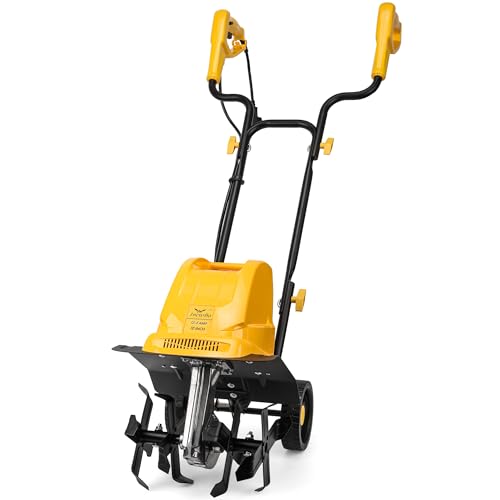
IncwBo 12″ 13.5-Amp Electric Roto Tiller Cultivator

Seesii 40V Cordless Tiller, 12″ Electric Cultivator
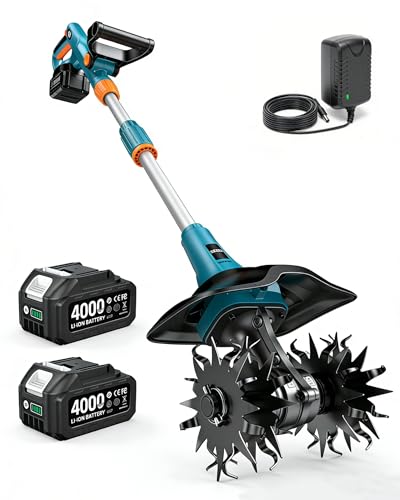
Seesii Cordless Tiller Cultivator, 20V Electric Tiller

IncwBo 12″ 8.5-Amp Small Electric Corded Tiller
IncwBo 12″ 10.5-Amp Electric Roto Tiller Cultivator

IncwBo 12″ 15-Amp Electric Roto Tiller Cultivator

Honda FG110 Mini Tiller Cultivator (FG110KiAT)

BILT HARD Electric Tiller Cultivator 14″ (Foldable)

Mini Cordless Tiller Cultivator, 20V Electric Rototiller
A Deeper Look At The Lineup
For a window-box herb garden or a tight row of annuals, a motor is mostly in the way. The Garden Weasel Double-Sided Cultivator is a manual three-pronged hand tool that pulls double duty, with one set of tines for breaking soil and another for cultivating the surface. Twist it into the ground and the curved tines bite down without much effort, then pull back and the soil lifts.
Compared to the powered picks further down this list, it trades raw speed for total control. There’s no cord to manage, no battery to charge, and no noise that sends the dog over the fence. You work at your own pace and feel exactly what the soil is doing, which is helpful in newly planted beds where you want to avoid slicing into roots.
Useful Touches
- Three-pronged design pulls weeds and loosens soil in one motion
- Reversible heads let you switch between cultivating and heavier digging
- Sturdy metal construction handles compact clay better than you’d expect from a hand tool
- Zero ongoing cost since there is no battery, fuel, or motor to service
Honest Caveats
- You supply all the power, so a full vegetable bed will leave your shoulders sore
- Not suited to breaking new ground; works best in already loose soil
- Tines need occasional cleaning to keep soil from caking on the metal
Key Specs
Right Fit For
Container gardeners and anyone tending a small herb bed who wants a quiet, no-cord option.
Look Elsewhere When
A larger vegetable plot where a powered cultivator like the IncwBo 13.5-Amp would finish the job in a fraction of the time.
If you’ve outgrown the hand tool and want to actually break ground, the IncwBo 13.5-Amp pulls its weight. A 13.5-amp motor drives four rust-resistant steel tines (the curved metal blades that do the cutting) that work a 12-inch-wide swath up to 8 inches deep. That’s a useful middle size for a backyard plot: wide enough to cover real ground, narrow enough to thread between established plants.
The metal baffle keeps debris from flying back at you, which is a quiet safety win most shoppers don’t think about until the first clump of dirt arcs across the yard. For most small gardens, this hits a sweet spot between the lightweight 8.5-amp version and the more aggressive 15-amp IncwBo reviewed later.
Where It Helps
- 13.5-amp motor handles compacted backyard soil without bogging down
- 12-inch tilling width balances coverage with maneuverability around plants
- Up to 8-inch working depth reaches below typical garden amendment zones
- Push-button start skips the pull-cord frustration of gas tillers
Worth Noting
- Corded design limits range and requires an outdoor extension cord
- Larger motor adds weight that may tire out smaller gardeners on long beds
Feature Snapshot
Made For
Home growers with a mid-size backyard plot and a nearby outdoor outlet who want a reliable corded tiller.
Not Your Match When
You’d rather skip extension cords altogether, in which case the Seesii 40V Cordless Tiller offers similar coverage on lithium power.
Most cordless garden tools feel like compromises dressed up as convenience, but the Seesii 40V shows up with real muscle. A 40-volt battery system powers a 320-watt motor through four steel tines, taking on compacted soil, stubborn roots, and clay that would make lighter tillers quit. The 12-inch working width matches the IncwBo 13.5-Amp above, so coverage stays comparable even without the cord.
You trade the unlimited runtime of a corded tiller for total freedom of movement. There are no extension cords to trip over and no gas cans in the shed. That’s a meaningful upgrade for gardeners working in awkward corners or far-flung raised beds where running a cord just isn’t practical.
Where It Excels
- 40V platform delivers more torque (rotational force) than typical 18V or 20V garden tools
- Cordless design reaches raised beds, fence lines, and corners no cord can follow
- Steel tines handle hard-packed and clay-heavy soil that stalls lighter tillers
- Quieter than gas models, so you can run it without disturbing the whole block
Trade Offs
- Battery runtime is finite; larger plots may need a backup battery on hand
- Heavier than the cordless 20V Seesii reviewed below, which may matter for smaller gardeners
At A Glance
Best Suited To
Garden owners with tougher soil and an outdoor layout that makes extension cords impractical.
Reach For A Different Pick When
You mainly need a cordless tool for very small beds, where the lighter Seesii 20V Cordless Tiller Cultivator is a more comfortable fit.
The Seesii 20V Cordless Tiller leans into the small-garden side of the category without giving up real tilling work. Marketed as a tiller, cultivator, and soil mixer in one, it handles loosening compacted ground, working compost into beds, and aerating around established plants. That’s a useful triple-threat if your garden tasks change week to week.
Where the bigger Seesii 40V model pushes for raw power, this 20V version values maneuverability. For most raised beds and modest backyard plots with decent soil, the lighter battery platform is easier to wrestle around corners without sacrificing too much bite.
Key Advantages
- Three-in-one function breaks, loosens, and mixes soil in one tool
- Lighter 20V battery is friendlier for smaller-framed gardeners
- No exhaust, no fuel mixing, and no cord to drag across the lawn
Room For Improvement
- Less torque than the Seesii 40V, so very compacted or rocky ground takes more effort
- Best paired with a charged spare battery for larger sessions
Whose Shelf It Belongs On
Anyone running multiple small beds or container gardens who wants one cordless tool that flexes between tasks.
Consider Something Else When
Your soil is genuinely tough and you want a more aggressive cordless option, in which case the Seesii 40V Cordless Tiller is the step up.
The 8.5-Amp IncwBo is the easiest on-ramp into powered tilling. The motor is small enough to stay light in your hands but big enough to chew through typical backyard soil that hasn’t been touched in a season. The 12-inch width and 8-inch depth match the larger 13.5-amp sibling, so you don’t give up coverage by stepping down.
Beginners benefit from the predictable corded setup: there’s no battery management curve and no startup procedure beyond plugging in and flipping a switch. You may find the lower torque demands more patience on heavy clay, but for first-time gardeners, that slower pace is often a feature, not a flaw.
Advantages To Know
- Lightweight corded design is approachable for first-time users
- Simple plug-and-go operation skips any learning curve
- Same 12-inch coverage as the higher-amp IncwBo models
Small Caveats
- Lower amp rating means more passes on hard-packed soil
- Requires an outdoor-rated extension cord within reach
Who It Suits Best
New gardeners with a manageable plot who want a fuss-free corded tiller that grows with them.
A Better Fit Elsewhere
Your soil is dense or never been worked, in which case the IncwBo 13.5-Amp Electric Roto Tiller Cultivator offers more torque for similar coverage.
Slotted between the entry-level 8.5-amp and the aggressive 15-amp, the IncwBo 10.5-Amp is the model that quietly does the most jobs. The 12-inch cutting width and 8-inch depth are unchanged from the rest of the line, so you get the same coverage, just with a motor sized for typical backyard soil rather than extreme compaction.
If your garden mixes flower beds, a small vegetable patch, and the occasional spot of heavier soil, this 10.5-amp tiller keeps up without feeling oversized. Compared to the 13.5-amp version, it asks a little more patience but rewards you with easier handling and lower arm fatigue.
Everyday Wins
- 10.5-amp motor sits in the comfort zone for mixed backyard use
- Maintains the line’s standard 12-inch coverage and 8-inch depth
- Manageable weight for gardeners who find the 13.5-amp tiring
Points To Note
- Won’t muscle through the roughest clay as easily as the 15-amp sibling
- Corded operation still requires extension cord planning
Core Details
Perfect Match For
Gardeners with a mix of bed types who want one dependable corded tiller that doesn’t lean too small or too aggressive.
Swap It Out When
You face serious compaction or new ground, where the IncwBo 15-Amp Electric Roto Tiller Cultivator makes the extra power worthwhile.
At the top of the corded IncwBo lineup, the 15-Amp model is built for the rough stuff. A 15-amp motor and four rust-proof, replaceable steel tines take on compacted soil, hidden roots, and ground that hasn’t seen a tiller in years. The 12-inch coverage and 8-inch depth stay the same as the rest of the line.
Owners commonly note that replaceable tines extend the working life of the tool once the originals wear down. Depending on your soil, the heavier motor may slow you on long sessions, but for tough jobs the trade is worth it.
Practical Pluses
- 15-amp motor is the most powerful in the IncwBo corded line
- Replaceable tines extend service life once the originals wear down
- Metal baffle helps contain flying debris during aggressive tilling
- Push-button start keeps operation simple compared to gas tillers
Practical Considerations
- Heavier motor adds fatigue during longer tilling sessions
- Overkill for soft, already-worked garden soil
Who Should Grab It
Garden owners with tough, compacted soil or brand-new beds that need serious power to break ground.
Skip It When
Your beds are already loose and you mostly maintain them, where the IncwBo 8.5-Amp or 10.5-Amp models are easier to live with.
The Honda FG110 is the outlier in this lineup, and it’s worth your attention for that reason. A Honda GX25 four-stroke gas engine (a small, fuel-efficient engine that runs without mixing oil into the gas) drives Honda’s hybrid tines, with one half of the blades angled for digging and the other for cultivating. That hybrid setup means it both opens new ground and maintains existing beds without swapping hardware.
Compared to every electric on this list, the FG110 is louder, heavier, and needs fuel and periodic engine care. In return, you get unlimited runtime, long-term durability, and the kind of torque that corded electrics struggle to match. For gardeners with a yard but no outdoor outlet, it’s a sensible choice.
A Favorable Mix
- Honda GX25 engine is well-known for reliable, easy starts
- Hybrid tines dig and cultivate without manual blade changes
- No cord and no battery anxiety for long sessions
- Proven long-term durability in a market flooded with disposables
Less-Strong Areas
- Louder and heavier than any electric option on this list
- Requires gas, oil checks, and occasional engine maintenance
Built With In Mind
Long-term gardeners who want a gas tiller they can rely on for many seasons and don’t mind routine engine care.
Where Another Pick Suits Better
You want quiet, low-maintenance operation, in which case the cordless Seesii 40V Tiller is a far easier everyday option.
Storage is the part nobody thinks about until the tiller is leaning against the wall blocking the lawn mower. The BILT HARD 14-inch electric tiller solves that with a foldable handle and four quick-release bolt knobs. The H-handle folds down flat, and at roughly 18 pounds with two-position 6-inch wheels, it’s portable enough to wheel to the garden and back.
The 10-amp motor spins at up to 17,000 RPM, while four rust-resistant steel tines rotate at 360 RPM to slice soil up to 14 inches wide and 8.7 inches deep. That’s wider than the IncwBo line reviewed above, so you cover more ground per pass, useful for gardeners who want to finish tilling quickly.
Strong Points
- Foldable H-handle collapses for shed or garage storage
- 14-inch tilling width covers ground faster than 12-inch models
- Two-position wheels adjust for transport versus working depth
- About 18-pound build is easier to lift than full-size tillers
Potential Compromises
- Bolt knobs occasionally loosen over time and need a quick re-tighten
- Corded design still requires outdoor extension cord planning
The Right Fit
Small-space gardeners and apartment dwellers with a tight shed who still want full-width tilling.
Another Choice May Suit
You want a cordless tool instead, where the Seesii 20V Cordless Tiller Cultivator trades width for wire-free use.
At roughly 2.6 pounds, this Mini Cordless Tiller is closer to a powered hand tool than a traditional tiller. The 20V battery platform and dual 2.0Ah batteries let you work raised beds, patio containers, and small flower patches one-handed without the wrist fatigue of a heavier machine.
Compared to the Seesii 20V Cordless Tiller Cultivator reviewed earlier, this one is much lighter and more compact, at the cost of working width and torque. It’s the right shape for the gardener who wants to weed between tomato plants or refresh a window box, not break new ground.
Positive Takeaways
- About 2.6-pound body is manageable for seniors and one-handed use
- Two included batteries extend working time for short sessions
- Cordless design reaches planters and balcony gardens with no setup
Some Limits To Know
- Limited torque makes compacted or root-heavy soil a workout
- Best kept to maintenance work rather than breaking new ground
Who Will Love This
Seniors, patio gardeners, and anyone who needs a featherweight tool for maintaining small plantings.
Where A Sibling Pick Shines
You want real tilling muscle rather than light cultivation, where the Seesii 40V Cordless Tiller delivers much more bite.
What Matters Most Before Choosing Rototillers For Small Garden
Power Source And Garden Layout
A small garden can mean many things, from a single raised bed to a patchwork of plots spread across the yard. Power source is the first fork in the road. Corded electric models like the IncwBo line and the BILT HARD offer unlimited runtime but tether you to an outdoor outlet, which becomes awkward if the garden is far from the house. Cordless models like the Seesii 40V and 20V options trade that limit for finite battery life and lighter handling. Honda’s FG110 mini tiller runs on gas, freeing you from both cords and batteries, with the trade-off of louder operation and routine engine care.
Tilling Width, Depth, And Soil Reality
Spec sheets tend to focus on amp ratings and tine counts, but the more useful numbers for small gardens are tilling width and depth. Most picks on this list work a 12- to 14-inch swath, which fits naturally between established plants and inside raised beds. Depth of 8 to 8.7 inches reaches typical vegetable amendment zones. Tine design matters just as much: angled steel tines slice through soil while dull or flimsy ones skate across the surface.
Maneuverability, Storage, And Comfort
How a tiller feels in the hand matters more than raw power for small-plot work. The Garden Weasel and Mini Cordless Tiller both succeed because they fit the gardener, not the other way around. Weight, handle design, foldable frames, and adjustable wheels decide whether the tool ends up at the back of the shed or in regular use. For most small gardens, the tiller you actually pick up is more valuable than the one with the most impressive specs.
Key Considerations Across These Picks
Where Shoppers Go Wrong
Many first-time garden tiller shoppers chase amp ratings without checking what their soil actually demands. A 15-amp corded tiller in soft, well-amended soil is more tool than the job requires, and you’ll spend the season wrestling weight you didn’t need. The opposite mistake is buying a featherweight mini cultivator for breaking new ground, then wondering why it stalls in the first row. Match the tool to your soil, your outlet access, and how often you really want to till.
When Paying More Pays Off
Higher-tier tillers earn their keep when they replace cheaper tools sooner. A replaceable-tine design like the IncwBo 15-Amp, a wider tilling path like the BILT HARD, or the long-term engine of the Honda FG110 all reduce how often you replace the tool. For small gardens with tough soil, repeated seasons of use, or limited storage, that upgrade often pays for itself. For a single-season rental-style job, a simpler pick does the work without the extra spend.
Frequently Asked Questions
What Size Rototiller Do I Need For A Small Garden?
For a small garden under about 500 square feet, a tiller with a 10- to 14-inch working width and an 8-inch depth covers most planting scenarios. Anything wider becomes hard to maneuver between beds, and anything narrower turns a quick job into many passes.
Are Cordless Tillers Powerful Enough For Small Gardens?
Modern 20V and 40V cordless tillers handle typical small-garden soil, including loose clay and established beds. For genuinely compacted ground or unbroken sod, a corded or gas tiller is still the more reliable choice, depending on how tough your soil actually is.
How Deep Should I Till A Small Garden Bed?
Most vegetables and annuals benefit from 6 to 8 inches of loosened soil. Going deeper than 8 inches can bring up subsoil with fewer nutrients, which may work against your plants rather than for them.
Can I Use A Small Rototiller In Raised Beds?
Smaller cordless cultivators and mini tillers work well in raised beds because they fit the limited space. Full-size tillers are usually too wide and too heavy to use without damaging the bed walls.
How Do I Maintain A Small Garden Tiller?
Clean tines after each session, dry metal parts before storage, and check bolts on foldable handles periodically. Gas models need occasional oil and air filter checks, while electric models mainly need cord and battery care.
Closing Remarks
The right rototiller for small garden work is the one that matches your soil, your layout, and your willingness to deal with cords, batteries, or fuel. Start with how and where you actually garden, then match the power source and width to that reality. A tool you reach for regularly will always serve you better than a powerful machine that lives in the shed.
