

Sloped yards and bumpy ground turn a quick mow into a slog. A rough terrain mower handles dips, climbs, and uneven patches without bogging down, so weekends don’t get eaten up by wrestling a stubborn machine.
The lineup below covers everything from manual reel mowers for flat, tidy lawns to battery and gas walk-behinds with real muscle, plus robotic models that map your yard and tackle slopes on their own. Each pick here earns its spot for a specific kind of terrain and a specific kind of yard owner.
How The Shortlist Stacks Up

Scotts 304-14S 14-Inch 5-Blade Push Reel Mower
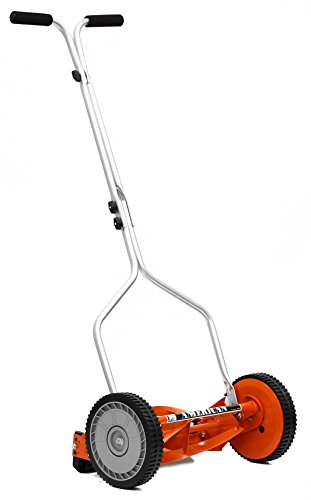
American Lawn Mower 1204-14 14-Inch 4-Blade Reel Mower
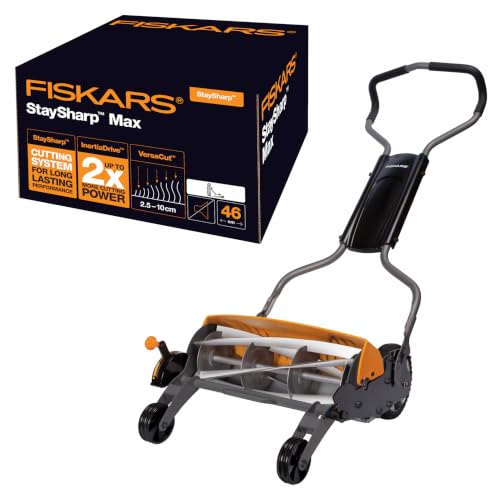
Fiskars StaySharp Max Reel Mower

Honda HRX-BE 21-Inch Battery Walk-Behind Mower
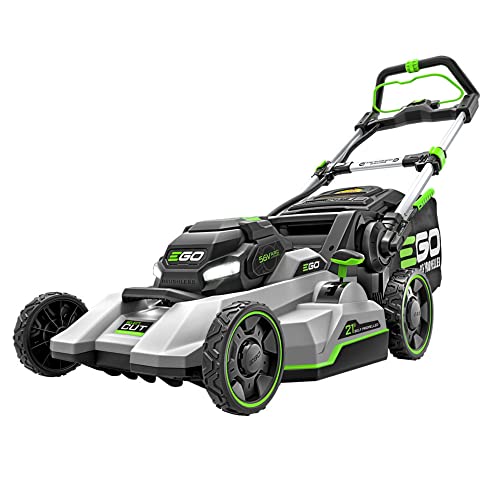
EGO POWER+ Self-Propelled Cordless Lawn Mower

Segway Navimow i110N RTK+Vision Robot Mower
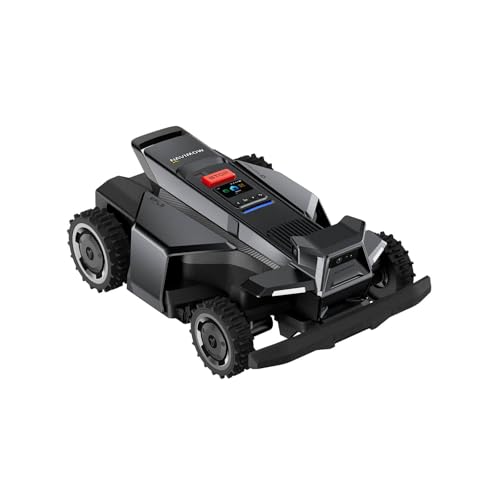
Segway Navimow X430 4WD Robot Mower

Segway Navimow i210 AWD Robot Mower

SENIX 20-Inch 144cc Gas Push Mower
The Picks, Examined More Closely
The Scotts 304-14S sits firmly in the manual reel category, so expectations should match: quiet cutting on flat, well-kept turf rather than conquering rugged hills. The 14-inch cutting width trims a narrow path with each pass, which works fine for a small city lot or a tidy side yard.
Where it earns attention is the simplicity. There’s no gas, no oil, no battery to charge, and no starter cord to yank. You push, the reel spins, and the grass falls. Compared to the American Lawn Mower 1204-14 below, this one adds an extra blade to the reel, which in practice helps a slightly cleaner finish on common cool-season grasses.
Real Benefits
- Cuts cleanly without engine noise, so early-morning mowing won’t bother neighbors
- Heat-treated alloy steel blades hold an edge across a full growing season for most owners
- Light enough to carry down basement steps or hang on a shed wall
- Tool-less assembly means you can be cutting within minutes of opening the box
- Zero ongoing fuel or battery cost, which adds up over years
Worth Noting
- Struggles on tall or thick grass past about 4 inches, so weekly mowing matters
- No engine means hills and dips demand real leg power
- Cutting height tops out near 1.75 inches, so it isn’t a fit for tall-fescue lovers
Quick Facts
Whose Yard It Belongs On
A flat, well-kept lawn under roughly 1,500 square feet owned by someone who mows often and values quiet, low-effort ownership.
Look Elsewhere When
If your yard has real slopes or thick weeds, the Segway Navimow i210 AWD is built for that kind of terrain.
The 1204-14 is the stripped-down classic: a 4-blade reel, polymer wheels, and a 19-pound frame. It exists for the person who wants the lightest push mower available and isn’t trying to tame anything rougher than a backyard putting green.
Relative to the Scotts 304-14S above, this one trades a cutting blade for a few pounds of weight savings and a smaller price tag. You give up a touch of cut quality on thicker grass, but you gain easy carrying and storage in tight spaces.
The Value In It
- Lightweight 19-pound build makes carrying up stairs or across a patio simple
- Polymer wheels resist rust and denting
- Same 0.5 to 1.75-inch height range as pricier reel mowers
- Commonly used by owners of small patch lawns who want the cheapest path to a clean cut
Trade Offs
- 4-blade reel is less effective on thick or weedy turf than 5-blade designs
- Manual push only, so uneven ground exposes the limitations fast
- No grass catcher included, so clippings stay where they fall
Made For
Apartment patios, small courtyards, and tight urban lawns under 1,000 square feet where any engine would feel like overkill.
Skip It When
If your lawn runs larger or has any slopes at all, the EGO POWER+ self-propelled cordless model handles that workload with far less effort.
Fiskars takes the manual reel concept and re-engineers the cutting geometry. The StaySharp system uses a horizontal-blade design that the brand claims requires less push force, and the wider reel handles more grass per pass than the 14-inch options above.
Think of this as the reel mower for someone who likes the idea of gas-free mowing but found the Scotts and ALM models underpowered on their lawn. It adds inertia and reach, which translates into easier work on slightly taller or thicker turf.
Benefits That Matter
- Wider cutting swath covers more lawn per pass than 14-inch reel mowers
- StaySharp blade geometry reduces the push effort typically associated with reel mowers
- Optional collection tray attaches without tools for cleaner finish
- Quieter than any powered mower, making it practical for noise-restricted neighborhoods
Honest Caveats
- Optional grass catcher is a separate purchase
- Heavier than basic reel mowers, which matters on hills
- Still a manual mower, so rough terrain will test your legs
Best Suited To
Mid-size lawns up to a third of an acre where quiet, low-maintenance mowing ranks high and terrain stays manageable.
Consider Something Else When
Yards with thick slopes or tough grass call for the SENIX 20-inch gas push mower, which brings real engine power to the work.
The Honda HRX-BE brings Honda’s well-known GCV-series torque to a battery platform. The result is a 21-inch deck with the brand’s signature 4-in-1 Versamow system, meaning mulching, bagging, discharging, and leaf shredding from one housing.
Where this lands differently from the EGO POWER+ below is the Honda pedigree and the Clip Director feature, which lets you toggle between bag and mulch without swapping parts. Battery power means no oil changes, no pull cord, and quieter operation than a gas equivalent.
Positive Points
- Honda battery motor maintains RPM under load, which helps in thick grass
- 4-in-1 cutting system with Clip Director eliminates attachment swaps
- Twin MicroCut blades produce fine clippings that break down fast when mulching
- Lower noise and zero in-use emissions suit residential noise ordinances
Softer Spots
- Battery and charger frequently ship separately, raising the total spend
- Walk-behind only, so larger properties eat into runtime
- Heavier than basic reel mowers, which affects shed storage
Quick Facts
Who Should Grab It
Homeowners with medium to large lawns who want Honda build quality, four-mode cutting, and the convenience of battery start.
Swap It Out When
If your yard is small and you prefer set-it-and-forget-it automation, the Segway Navimow i110N handles mowing on its own.
EGO built the LM2130SP for owners who want cordless simplicity without sacrificing muscle. The Select Cut multi-blade system ships with two interchangeable lower blades, mulching and bagging, so you can pick the right tool for the cut. Self-propelled drive takes the leg work out of slopes.
Against the Honda HRX-BE above, the EGO adds the Touch Drive self-propelled control, which uses a palm sensor to engage the wheels. The catch: battery and charger aren’t included, so factor that into any comparison.
Everyday Perks
- Select Cut system swaps mulching and bagging blades for the job
- Self-propelled drive reduces fatigue on slopes and longer runs
- Touch Drive palm control feels intuitive compared to lever systems
- Brushless motor runs quieter than gas and needs less long-term service
A Few Limitations
- Battery and charger sold separately, raising real cost
- Runtime depends on the battery size you pair it with
- Heavier than non-self-propelled walk-behinds
Right Fit For
Homeowners committed to cordless yard tools who already own or plan to buy into the EGO battery platform.
Reach For A Different Pick When
For a yard where walking behind a mower is unrealistic, the Segway Navimow X430 tackles up to an acre on its own.
The Navimow i110N uses RTK (Real-Time Kinematic) satellite positioning paired with a vision system for centimeter-level accuracy. That combination lets the mower navigate without buried perimeter wire, which is the chore most people dread when installing a robot mower.
Coverage tops out around a quarter acre, so this is the right size for many suburban lots. App control handles zones, schedules, and no-go areas from a phone, and the 58 dB operating volume is quiet enough to run at night.
The Practical Payoff
- Wire-free installation removes the worst part of robotic mower setup
- RTK plus vision keeps navigation stable under trees and in narrow passages
- Multi-zone management suits front, back, and side yards
- AI-assisted mapping learns the lawn over time, which reduces manual tweaking
Things To Consider
- Quarter-acre cap won’t suit larger properties
- RTK signal can struggle near tall buildings or heavy tree cover in some cases
- Cutting performance on overgrown lawns is limited compared to walk-behinds
Quick Facts
Who Will Love This
Busy homeowners with a quarter acre or less who want a mower that handles itself and avoids the perimeter wire install.
A Better Fit Elsewhere
For an acre-plus lawn with serious slopes, the Segway Navimow X430 climbs where the i110N can’t reach.
The X430 is the rough-terrain specialist of the robotic category. ORV-tuned dual suspension, 4WD, and a claimed 84% slope rating put it in off-road vehicle territory, while the zero-turn steering keeps the turf from getting chewed up on tight pivots.
Two 180W motors drive the wheels and the cut, and the cutting height spans 0.75 to 4 inches. Compared to the Navimow i110N above, this one trades ease of setup for genuinely steep ground and much larger coverage.
Why It Works Well
- 84% slope rating tackles hills that defeat most robotic mowers
- Dual suspension handles uneven ground and minor obstacles up to a few inches
- Zero-turn steering reduces turf damage during direction changes
- Covers up to an acre, which fits many rural and semi-rural properties
Potential Drawbacks
- Premium price relative to walk-behind and small robot mowers
- Steep terrain still benefits from clean edges and obstacle prep before runs
- Repair and parts access can be limited outside major metro areas
Built With In Mind
Owners of large, hilly properties who want hands-off mowing and have terrain that rules out conventional robotic mowers.
Not Your Match When
For a flat quarter acre, the Navimow i110N delivers the same automation at a more approachable spend.
The i210 AWD slots between the i110N and the X430. Coverage stays at a quarter acre, but all-wheel drive and automotive-grade electronic stability control let it climb 45% slopes that would stall a standard robot mower.
The concentric third-wheel design supports true zero-turn steering, which matters on slopes where a sliding turn leaves visible tire tracks. Wire-free setup keeps installation simple.
Practical Advantages
- AWD plus stability control keeps the mower planted on steep ground
- Zero-turn geometry protects turf during direction changes
- Wire-free boundary via app saves a real install headache
- Quieter than gas alternatives and quiet enough for early or late runs
Where It May Fall Short
- Slope rating tops out below the X430’s extreme capability
- Quarter-acre coverage is small for properties beyond a city lot
- Battery runtime is the limiting factor on thicker spring growth
Perfect Match For
Homeowners with hilly quarter-acre yards who want automation but need real traction where a basic robot mower would slip.
Another Choice May Suit
For flatter yards where slope capability doesn’t matter, the Fiskars StaySharp Max delivers manual control without any setup.
SENIX keeps things simple: a 144cc four-cycle gas engine, a 20-inch deck, and a push format that doesn’t pretend to be self-propelled. That simplicity is the appeal, since fewer systems mean fewer things to maintain.
Against the Honda HRX-BE above, you trade four-mode cutting and battery convenience for a lower price and familiar gas operation. For thick grass and rough patches, a gas four-stroke still delivers the dependable torque many owners trust.
Good Reasons To Consider
- 144cc four-stroke engine delivers steady torque for thick grass
- 20-inch cutting width balances deck size and maneuverability
- Push format keeps the cost and weight lower than self-propelled models
- Gas runtime is limited only by fuel, not by battery charge
Practical Considerations
- Requires fuel mixing awareness, oil checks, and seasonal tune-ups
- Louder than battery and robotic alternatives
- No self-propelled drive, so steep terrain still demands effort
Feature Snapshot
Who It Suits Best
Homeowners who want gas reliability for a mid-size lawn and don’t mind routine engine upkeep.
Where Another Pick Suits Better
If you want to skip engine maintenance entirely, the EGO POWER+ self-propelled cordless mower covers similar ground with less routine care.
Picking the Right Mower for Your Yard
Terrain dictates the choice more than any other factor. Flat lawns under a quarter acre lean toward manual reel mowers like the Scotts 304-14S, the American Lawn Mower 1204-14, or the Fiskars StaySharp Max. These push units handle even turf with low noise and almost no routine care, though they struggle once grass gets tall or the ground gets uneven.
Mid-size lawns with mixed conditions call for powered walk-behinds. The Honda HRX-BE and EGO POWER+ LM2130SP bring self-propelled or wide-deck cutting without engine oil. Battery platforms also mean quieter operation, which matters in dense neighborhoods. For owners who prefer gas simplicity, the SENIX 20-inch delivers reliable torque in a familiar push format.
Rough terrain changes the conversation entirely. Sloped or uneven yards need traction, ground clearance, and stability control. The Navimow i110N handles wire-free automation up to a quarter acre. For real hills, the Navimow i210 AWD adds all-wheel drive and 45% slope capability. The Navimow X430 stretches that envelope to 84% slopes across up to an acre.
Cutting width and deck size determine how fast the work finishes. Reel mowers at 14 inches suit small yards. Walk-behinds at 20 to 21 inches cut a meaningful amount of time on larger properties. Robotic mowers trade raw width for the ability to run on a schedule without supervision.
Maintenance tolerance matters too. Reel mowers need blade sharpening and basic cleaning. Battery mowers need battery care. Gas engines need oil, spark plugs, and air filters. Robotic mowers need software updates and occasional blade swaps, but skip the fuel and oil entirely. Matching your willingness to maintain the machine to the technology you choose keeps the mower useful for years.
Smart Considerations Before You Commit
Pitfalls Shoppers Hit
A common mistake is buying a reel mower for a yard that grows fast and unevenly. Reels cap out at roughly 4 inches of grass height, and rough ground exposes every limitation. For thick or tall grass, powered walk-behinds or robotic mowers with adequate torque save real frustration.
Another slip is assuming all robotic mowers handle slopes. Many budget units lose traction on anything beyond a gentle grade. Verify the slope percentage against your actual yard before committing, and prefer models with AWD or stability control for hilly properties.
Battery sizing trips up cordless mower purchases too. The Honda HRX-BE and EGO POWER+ LM2130SP frequently ship without battery and charger, and a too-small battery kills runtime mid-lawn. Plan the battery capacity around your actual square footage plus a buffer for thick spring growth.
Where The Extra Money Goes
Premium pricing on rough-terrain mowers buys specific upgrades. In robotic mowers, it funds AWD motors, suspension, RTK positioning, and slope-rated engineering. The Navimow X430’s 84% capability and dual suspension come from genuine engineering, not just branding.
In walk-behinds, premium tiers add four-mode cutting systems, twin blades, and brushless motors that maintain RPM under load. These features show up most clearly in tall or wet grass, where a budget engine bogs down and a premium one keeps cutting. The upgrade pays off for owners with dense turf who mow less often.
Frequently Asked Questions
What counts as rough terrain for a mower?
Rough terrain usually means slopes above 15%, uneven ground, ruts, roots, or thick grass that resists a clean cut. Reel mowers struggle in any of those conditions, while AWD robotic mowers and self-propelled walk-behinds are built for them.
Can robotic mowers really handle hills?
Yes, within their rated slope percentage. The Navimow i210 AWD manages 45% slopes, and the Navimow X430 reaches 84%. Always check the manufacturer’s slope spec, since ratings assume dry grass and proper installation.
Are reel mowers practical for larger yards?
They can be, but only with frequent mowing and on flat, even turf. Most owners find powered walk-behinds or robotic mowers less tiring once the lawn passes a third of an acre.
How long do battery mower batteries last?
Battery lifespan depends on chemistry, charge cycles, and storage conditions. Most lithium-ion mower batteries deliver several seasons of typical residential use before noticeable capacity loss. Avoid storing them fully discharged in extreme temperatures.
Is a gas mower still worth buying?
For large properties, thick grass, or owners who prefer unlimited runtime, gas still earns its place. Modern four-stroke engines also run cleaner and quieter than older two-stroke designs. For smaller lawns with easier terrain, battery and robotic options handle the work comfortably.
Closing Remarks
The right rough terrain mower comes down to your yard’s shape, your tolerance for maintenance, and how much effort you want to put in each weekend. Flat and tidy points to reel simplicity, mid-size mixed yards favor powered walk-behinds, and slopes or uneven ground point toward AWD robotics. Pick the machine that matches the conditions you actually have, and mowing stops being a fight with your yard.
