

Starting seeds indoors gives you a longer growing season, stronger transplants, and the satisfaction of watching life pop up under your own care. The catch is light: most homes simply do not have enough natural sun in late winter to keep seedlings compact and stocky. A quality grow light changes everything, turning a dim spare room into a reliable nursery. This roundup covers ten solid options, from tall floor stands to clip-on bulbs and slim under-shelf panels, so you can match your space, your plants, and your routine.
A Closer Look At The Lineup

GLOWRIUM 48W Grow Lights for Indoor Plants with Stand
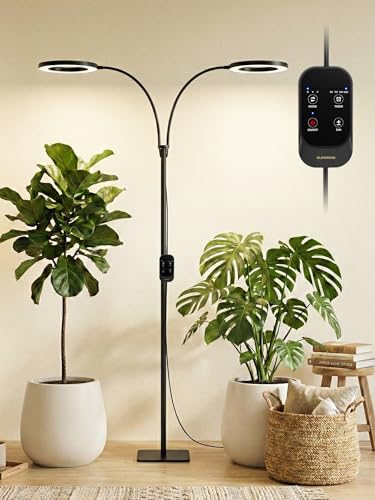
GLOWRIUM Tall Plant Grow Light for Indoor Plants

GLOWRIUM Grow Lights for Indoor Plants with Stand

Briignite LED Grow Light Bulb A19, Full Spectrum

Briignite Full Spectrum Grow Light Bulb

Briignite 2 Pack LED Grow Light Bulb BR30

DOMMIA Under Shelf Grow Light, Daylight White

DOMMIA Under Shelf Grow Light, Pinkish White

DOMMIA Under Shelf Grow Light, Full Spectrum

VIIVUU Clip-On Plant Light, 2 Pack
More Details On Our Top Picks
The 48-watt GLOWRIUM floor stand solves a real beginner problem: you do not want to build a whole shelving rig before you have even germinated your first seed. The four-section pole telescopes up to roughly 79 inches, which means the lamp head can sit well above tomato seedlings one week and lettuce starts the next without burning either.
Compared to the dome-style desktop lamps, this stand trades portability for reach, and that trade is usually worth it for anyone starting a tray or two on the floor. Stepless dimming and three spectrum modes let you tune the light from a soft blue-leaning glow for germination to a stronger mixed output as plants push out true leaves. For most first-time seed starters, this is the safe centerpiece to build around.
Real Benefits
- Full-spectrum output covers seedling, vegetative, and flowering stages in one fixture.
- Stepless dimming lets you drop intensity for delicate germination phases.
- Tall pole keeps light above leggy seedlings without constant re-adjustment.
- Three switchable spectrum modes adapt as plants mature.
- Stands freely on the floor, so no shelf or clamp is needed.
Things To Consider
- The footprint of the base may crowd narrow apartment corners.
- Heat buildup at full intensity can be noticeable in small, enclosed rooms.
Key Specs
Who It Suits Best
First-time seed starters with floor space who want one adjustable fixture to grow through several plant stages.
Consider Something Else When
You mainly need light for a single small herb pot on a desk, where the GLOWRIUM Tall Plant Grow Light for Indoor Plants may be a tighter fit.
The dual-head GLOWRIUM tall stand stretches about 71 inches and uses 268 individual LEDs spread across two panels, so you can angle one head toward a tomato cluster and the other toward a tray of basil without moving the whole unit. For growers juggling a small indoor collection rather than a single flat of seeds, that flexibility matters.
The three preset spectrum modes (Seedling, Vegetative, Flowering) are tuned to specific growth phases, which simplifies decisions when you are still learning what wavelengths your plants actually need. The stand design echoes the previous GLOWRIUM pick, but the dual heads change the use case from a single tray to a wider bench of mixed plants.
Why It Works Well
- Dual adjustable heads spread light across two plant groupings.
- High LED count (268) supports a wider canopy.
- Preset spectrum modes remove guesswork for new growers.
- Sturdy floor base keeps the unit stable around kids or pets.
Worth Noting
- Heavier than single-head stands and harder to reposition daily.
- Dual heads at full brightness may run warm in a small room.
Made For
Indoor gardeners managing several mid-sized plants who want broad, adjustable coverage without buying multiple lamps.
Look Elsewhere When
You only need a single tight tray of seeds, where the GLOWRIUM 48W Grow Lights for Indoor Plants with Stand keeps things simpler.
The three-position GLOWRIUM stand (32, 47, or 63 inches) is built around the idea that seedlings do not stay small for long. You start with the lamp low over a freshly sown tray, then add pole sections as the plants climb. A 360-degree rotating head helps you redirect light without dragging the base across the floor.
Three spectrum modes (warm white for germination, white plus red for flowering, full spectrum for general growth) and a six-step dimmer from 10 to 100 percent give you more control than most entry-level stands. Owners commonly appreciate the timer options (3, 9, or 12 hours) for hands-off daily cycles.
Strong Points
- Three detachable pole sections match plant height changes.
- Rotating lamp head aims light without moving the stand.
- Six dimming levels support delicate seedlings and mature plants alike.
- Built-in timer automates common day-length schedules.
Trade Offs
- Shorter maximum height than the 79-inch GLOWRIUM above.
- Timer is controller-based, so losing the controller pauses scheduling.
Quick Facts
Best Suited To
Hobbyists starting a mixed seed batch who want height flexibility and a built-in timer in one package.
A Better Fit Elsewhere
You need a fixed overhead solution for a tall, single plant, where the GLOWRIUM 48W Grow Lights for Indoor Plants with Stand reaches higher.
The A19 bulb shape is the same as a standard household lamp, so you can screw this into an existing clamp fixture, a desk lamp, or a socket you already own. Inside, Briignite hides a red and blue spectrum tuned for photosynthesis while keeping the visible color around a neutral 4000K. That balance is helpful if you do not want a magenta glow in your living room.
With a 180-degree beam and 1000-lumen output, this bulb is more useful for a small herb pot or a single seedling tray than for a full nursery. You may find its reach a little short for a wide shelf without adding a second bulb.
Strengths Worth Knowing
- Standard A19 base fits lamps you may already own.
- Full-spectrum output without a heavy purple tint.
- Lower up-front cost than a whole fixture.
Room For Improvement
- Limited coverage area compared with panel-style fixtures.
- Requires a compatible socket or clamp fixture to position correctly.
Who Will Love This
Anyone who wants to repurpose a household lamp into a seedling light without buying a new fixture.
Skip It When
You need to cover a long tray of seedlings, where the Briignite 2 Pack LED Grow Light Bulb BR30 spreads light more evenly.
This Briignite bulb leans cooler, with a 5000K visible color that reads closer to daylight than the 4000K sibling above. The same red and blue spectrum sits underneath, so plants still get the wavelengths they need, but the room itself looks brighter and more natural to your eyes.
For shared spaces where the grow light stays on while you work or relax, the cooler tone is easier to live with. The 180-degree beam and 1000-lumen output mirror the A19 above, so the coverage footprint is comparable.
Everyday Advantages
- Daylight-toned output keeps living areas looking natural.
- Full-spectrum wavelengths under a neutral hue.
- Drops into any standard A19 socket.
Points To Note
- Coverage is still best for one or two small pots.
- Slightly cooler tone may look bluish in a warm-toned room.
Perfect Match For
Apartment growers who want grow light output without a colored glow disrupting the room.
Reach For A Different Pick When
You want the warmer, softer visual tone of the Briignite LED Grow Light Bulb A19 instead.
The BR30 shape is the wider, recessed-friendly bulb you see in can lights and track fixtures, which makes this two-pack the easiest way to retrofit an existing overhead setup into a seedling station. The 3500K visible color reads as a soft warm white while still hiding the red and blue spectrum plants use for photosynthesis.
Two bulbs per pack means a single shelf or a small rack can get even coverage front to back. The trade-off is that you need a fixture that accepts BR30 bulbs and aims them downward at the plants.
Practical Advantages
- Fits recessed and track fixtures already mounted in many homes.
- Two-pack spreads light across a wider shelf.
- Warm 3500K appearance blends with most room lighting.
Honest Caveats
- Requires a compatible BR30 fixture to install.
- Beam direction is fixed once the fixture is mounted.
Feature Snapshot
Right Fit For
Homeowners with existing recessed or track lighting who want a low-effort seedling retrofit.
Not Your Match When
You want a portable clamp or stand setup, where the VIIVUU Clip-On Plant Light offers more flexibility.
The DOMMIA under-shelf panel is barely thicker than a smartphone (about 0.28 inches) and slides under a standard bookshelf to light a tray of seedlings from above. The integrated USB controller is the real headline feature: a built-in timer with 6, 12, and 16-hour cycles, plus a four-step dimmer from 25 to 100 percent, removes the need for a separate smart plug or wall timer.
The daylight white output keeps the look of the room normal while still serving young plants. For renters or anyone without a dedicated seed room, the slim form factor tends to be the deciding factor.
Notable Upsides
- Ultra-slim panel fits under standard shelves and bookcases.
- Built-in timer and dimmer cut out extra accessories.
- USB power keeps cords tidy and outlets free.
- Daylight white tone blends with most room lighting.
Points To Keep In Mind
- Coverage is limited to one small tray per panel.
- Requires a shelf or surface to mount above the plants.
Who Should Grab It
Apartment seed starters who need a slim, unobtrusive panel that fits under existing furniture.
Swap It Out When
You want a soft pinkish hue instead of daylight white, where the DOMMIA Under Shelf Grow Light, Pinkish White fits the mood better.
Same slim panel, same built-in controller, same USB power, just a different color choice. The pinkish white output adds a touch of warm hue that some growers prefer when the panel sits in a living area or a guest room where the light stays on during evening hours.
You get the same 6/12/16-hour timer cycles and four brightness levels as the daylight version above. The choice between the two is really about room decor and personal taste rather than performance.
Positive Points
- Pinkish hue softens the visual impact in shared living spaces.
- Identical integrated timer and dimmer to the daylight sibling.
- Slim profile works under most standard shelves.
Small Caveats
- Color preference is subjective and may not suit every decor.
- Coverage still limited to one small tray per panel.
Built With In Mind
Seed starters who want grow light output without the harsher bluish tint of daylight panels.
Another Choice May Suit
You prefer cooler light or want full spectrum in the same slim body, where the DOMMIA Under Shelf Grow Light, Full Spectrum fits.
If you want the broadest spectrum from this DOMMIA lineup without committing to a heavy purple tint, this version lands the closest to balanced. The 4-inch-by-4-inch panel slips under a shelf just like the other two DOMMIA picks, but the diodes aim to cover the wavelengths seedlings lean on most across every growth phase.
The integrated timer and dimmer carry over, so you are not giving up convenience for a better spectrum. You may find the panel slightly less bright than a dedicated full-size fixture, but the footprint savings are usually worth it on a small shelf.
Benefits That Matter
- Full-spectrum output without the colored glow.
- Integrated controller handles timer and brightness in one unit.
- Slim profile slips under most standard shelves and bookcases.
Where It Is Less Suited
- Smaller coverage than a full panel or floor stand.
- USB power source can limit placement near outlets.
Whose Shelf It Belongs On
Compact-space growers who want a full-spectrum fix that fits under a shelf without buying a separate timer.
Where A Sibling Pick Shines
You need a taller setup for floor-level trays, where the GLOWRIUM Grow Lights for Indoor Plants with Stand covers more vertical room.
The VIIVUU clip-on light is the most flexible option in the roundup because it works two ways: clamp it onto the rim of a pot or shelf, or use the included stake to push it straight into the soil. That dual mounting makes it easy to aim light at a single herb pot on the kitchen counter or a small seedling cluster on a windowsill.
Two heads per pack double the value for someone with a few scattered plants rather than one tray. The hollow ring lamp head keeps weight low so the clamp stays put without drift.
Reasons It Performs
- Two mounting options (clamp or soil stake) cover more spots.
- Two-pack value for multi-plant households.
- Lightweight head keeps the clamp from slipping.
- Easy to reposition as plants grow or move.
A Few Limitations
- Coverage is small, so each light serves only a few seedlings.
- Clamp size may not fit thicker shelf edges.
Feature Card
The Right Fit
Casual growers with one or two small herb pots who want flexible placement over a fixed rig.
Not Your Match When
You want a full tray of seedlings under one wide panel, where the DOMMIA Under Shelf Grow Light, Full Spectrum covers more evenly.
What To Weigh Before Picking A Seedling Light
Seedlings need steady, close light for 12 to 16 hours a day to stay short and stocky, so the right fixture is less about raw brightness and more about how evenly you can cover the canopy. Full-spectrum diodes in the 380 to 780 nanometer range mimic natural sunlight, which keeps you from swapping bulbs as plants move through germination, leafing, and flowering. If you do not see a spectrum range listed, you are usually looking at a partial spectrum that may need supplementing for fruiting crops later.
Form factor matters as much as output. Floor stands are easy for renters because they do not require shelves or clamps, while under-shelf panels fit where ceiling height is tight. Bulb-style options like the Briignite BR30 let you repurpose existing fixtures, which is helpful in rentals where drilling is off-limits. For most home setups, two fixtures spaced across a shelf outperform one large lamp in the middle, because seedlings at the edges stretch toward the nearest source.
Decide your timer strategy before you buy. Some units like the DOMMIA panels have timers and dimmers built into the controller, while basic bulbs need a separate smart plug or outlet timer. New growers may find the integrated controls easier; experienced seed starters often prefer plain bulbs and a dedicated timer they can move between setups.
Higher output does not always mean healthier seedlings. LEDs running at full intensity can scorch young leaves if the lamp sits too close, and dimmer fixtures placed a few inches above the canopy often outperform bright fixtures hung high. Look for dimming or adjustable height so you can fine-tune distance as plants grow.
Smart Choices Across These Picks
Mistakes Worth Dodging
Buying a fixture without checking its spectrum is the most common slip-up. If the listing mentions only “white light” or a single color temperature, the diodes may not cover the red and blue bands seedlings need most. Always confirm a full spectrum range, especially for fruiting crops like tomatoes and peppers.
Another trap is underestimating heat. LEDs run cooler than older fluorescent tubes, but enclosed fixtures can still build up warmth that dries out soil and stresses new roots. Make sure your setup has airflow, especially if the lamp stays on for 14 hours or longer.
When Paying More Pays Off
Higher-tier picks like the dual-head GLOWRIUM earn their keep when you grow across multiple plant stages at once, because separate spectrum modes cut down on swapping bulbs or adding fixtures. Built-in timers and dimmers in mid-priced panels save the cost of an extra smart plug, which adds up across a multi-shelf rack. For most beginners, though, a value-priced full-spectrum option covers the basics until you know exactly how much seed starting you will actually do each season.
Frequently Asked Questions
How close should a grow light sit to seedlings?
Most LED panels and bulbs work best at 4 to 8 inches above the canopy. Start higher and lower the lamp as seedlings strengthen, watching for any bleaching or curling on the top leaves.
How long should grow lights stay on each day?
Seedlings typically need 14 to 16 hours of light, followed by a dark period so plants can rest and process growth. A built-in timer or smart plug makes that cycle automatic.
Do full-spectrum lights really help all growth stages?
Full-spectrum diodes cover the wavelengths plants use across germination, vegetative growth, and flowering. They are not magic, but they remove the need to swap fixtures between stages.
Can I use a regular lamp instead of a grow light?
Standard household bulbs usually lack the red and blue wavelengths seedlings need. You will see leggy, pale plants that lean hard toward any window.
What is the difference between A19 and BR30 bulbs?
A19 is the classic household bulb shape, while BR30 is wider and designed for recessed or track fixtures. Both can carry grow light diodes, but they fit different sockets.
Closing Remarks
You do not need a complicated setup to start seeds well. A single full-spectrum fixture, a small timer habit, and the discipline to keep the light close are usually enough to grow sturdy transplants. Match the form factor to your space, dim or raise the lamp as plants grow, and adjust the schedule as the season shifts. The picks above cover most of the common layouts, so pick the one that fits your room and your routine, and get planting.
