

A week-long vacation used to mean coming home to drooping fiddle leaf figs and crispy herbs. Self-watering containers solve that quiet problem by giving plants a slow, steady drink from a reservoir below, so you stop guessing when to water and your greenery stops punishing you for a busy schedule.
Whether you’re outfitting a sunny windowsill, a shaded patio, or a row of grow bags on the back porch, the right reservoir-based setup can stretch your watering interval from every other day to once a week or longer. The trick is matching the container’s design to the plant’s root depth, your home’s humidity, and how hands-off you actually want to be.
A Snapshot Of The Selections

Lechuza Cube Cottage 50 Granite Self-Watering Square Planter
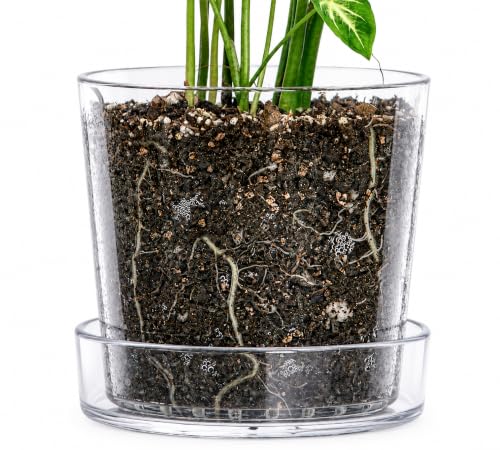
Phoenix Vine 8 Inch Clear Acrylic Planter Pot with Tray

VIVOSUN 4-Pack FlexFeed Self-Watering Fabric Pot Base

KUGAZ 3-Pack Self-Watering Pots Black Brown

KUGAZ 3-Pack Self-Watering Pots White Brown

KUGAZ 3-Pack Self-Watering Pots Green Brown

Lechuza CILINDRO Color 32 White Self-Watering Tall Planter

VIVOSUN 10-Pack Terracotta Self-Watering Spikes

Lechuza Quadro LS 43 Cream White High Gloss Self-Watering Square Planter
Why These Options Stand Out
The Lechuza Cube Cottage 50 is the planter you reach for when a small fiddle leaf fig or a young lemon tree needs a permanent home. At roughly 19 inches on every side, it swallows enough root mass that transplant shock becomes a non-event, and the granite-toned wicker texture disappears nicely into both modern lofts and rustic patios.
Built in Germany from polypropylene, the body shrugs off UV rays and winter frost, so it lives happily on a south-facing balcony or beside a sunny bay window. Unlike the Phoenix Vine pot covered later, this one hides its reservoir behind a wicker-patterned shell, which keeps the look decorative rather than utilitarian.
Points In Its Favor
- Genuine 19-inch cube footprint gives large root balls room to spread.
- Frost- and UV-resistant PP plastic tolerates outdoor placement year-round.
- Integrated inorganic granulate reservoir feeds roots from below on demand.
- Optional drainage plug releases excess rainwater once the planter sits outside.
- Granite wicker finish reads as a furniture piece, not a grower’s container.
Things To Consider
- Refilling the reservoir requires reaching into the planter, so plan a clear access path.
- The 19-inch footprint may overwhelm a small entryway, depending on your floor plan.
- Planters of this size commonly need two people to move once soil is added.
Who It Suits Best
Owners of indoor trees, large snake plants, or citrus who want a decorative statement piece that doubles as a low-maintenance watering system.
A Better Fit Elsewhere
Travelers who want a portable, lightweight option will find the VIVOSUN FlexFeed base easier to lift and rearrange.
Few self-watering containers let you watch the water work, and that’s exactly the Phoenix Vine pot’s hook. The clear acrylic walls show roots creeping downward, which matters for orchids and other plants that throw dramatic root fits when something goes wrong with their moisture balance.
At 8 inches across with a deep attached saucer, it leans into bottom watering, a method where roots draw moisture up rather than absorbing it from overhead pours. That setup tends to suit anyone who has killed a phalaenopsis by loving it too much with a watering can.
Why It Works Well
- Transparent body lets you monitor root health and water clarity at a glance.
- Break-resistant acrylic weighs less than glass and resists everyday knocks.
- Integrated deep saucer simplifies the bottom-watering technique.
- Drainage holes prevent root rot when you accidentally overfill the saucer.
Worth Noting
- Clear acrylic shows mineral buildup on the inside walls, so periodic cleaning matters.
- Direct sun can encourage algae growth inside the pot, so you may prefer a bright indirect spot.
- An 8-inch size suits smaller specimens, not the bushy monsteras.
Made For
Orchid growers and herb gardeners who want to watch root behavior and rely on bottom watering for steady moisture.
Consider Something Else When
Households styling a high-traffic living room will probably prefer the opaque lacquered Lechuza Quadro LS 43 covered later.
The VIVOSUN FlexFeed system sits underneath a fabric grow pot, so the plant itself stays in breathable cloth while the base quietly handles irrigation. Glass fiber-reinforced polypropylene gives each base a working capacity near 130 pounds, so a fully watered five-gallon fabric pot doesn’t bow the rim.
Each reservoir holds about 1.3 gallons, which stretches watering frequency out toward a full week for thirsty vegetables or herbs. Compared to the KUGAZ three-pack covered below, this one targets growers rather than living-room decorators.
The Good Stuff
- Reinforced polypropylene supports heavy saturated fabric pots without flexing.
- Generous 1.3-gallon tank reduces refill trips to roughly once a week.
- Compatible with standard 5-gallon fabric pots already in most grow tents.
- Optional drip kit upgrade turns the base into a scheduled irrigation node.
Trade Offs
- Requires separate fabric grow pots, which adds to the total cost of the setup.
- The utilitarian look suits a garage or greenhouse more than a styled living room.
Key Specs
Right Fit For
Vegetable growers running a small indoor tent or sunroom rack who want hands-off irrigation without buying a full drip system.
Look Elsewhere When
Designers styling a living room corner will find the Lechuza Quadro LS 43 a far more decorative alternative.
KUGAZ’s three-pack lands as the easy entry point into self-watering containers, bundling 12, 10, and 8 inch pots so you can pot a small monstera, a mid-size ZZ, and a compact pothos from a single order. The included water-level indicator strip takes the guesswork out of refills, showing when the reservoir actually needs topping up.
An absorbent cotton wick pulls moisture from the deep reservoir up into the soil, which means even the smallest 8-inch pot keeps a plant happy through a long weekend. The dark brown and black colorway blends well in offices and dim hallways where lighter pots might feel stark.
Positive Takeaways
- Three coordinated sizes cover most common houseplants in one purchase.
- Visible water-level indicator removes the guesswork of refill timing.
- Wick-based system feeds water directly to the root zone.
- Built-in drainage holes protect roots from accidental overwatering.
Points To Keep In Mind
- Plastic construction scratches more easily than ceramic or lacquered alternatives.
- Wicks occasionally need replacement once they accumulate mineral buildup.
Who Will Love This
First-time plant parents setting up a starter collection and wanting matched sizes with a forgiving watering margin.
Reach For A Different Pick When
Homeowners decorating a minimalist living room will find the Lechuza Cube Cottage 50 a more sculptural alternative.
The white-and-brown colorway on this KUGAZ set is what sets it apart from its dark-toned sibling reviewed above. White exteriors bounce light around a small apartment, which matters in north-facing studios where every surface counts toward brightness.
The mechanics match the black version: a 12, 10, and 8 inch trio, a wick-fed reservoir, and a water-level indicator that signals when to refill. You get the same forgiving watering margin with a lighter visual footprint.
Notable Upsides
- Lighter exterior brightens dim apartments and shaded corners.
- Three coordinated sizes suit a starter plant collection.
- Indicator strip tells you when the reservoir needs a top-up.
- Drainage holes protect against accidental overwatering.
Honest Caveats
- White plastic shows water spots and dust more readily than darker finishes.
- Smaller 8-inch pot still suits modest plants rather than tall specimens.
Best Suited To
Apartment dwellers furnishing a small windowsill with pothos, philodendrons, and compact snake plants.
Skip It When
Anyone outfitting a tall entryway will appreciate the vertical drama of the Lechuza CILINDRO Color 32 more than a trio of low pots.
The green-and-brown KUGAZ set rounds out the trio of colorways, giving you the same trio of 12, 10, and 8 inch pots with an earthy tone that visually echoes foliage. If your collection leans heavily on trailing greens or variegated leaves, this palette tends to disappear into the background rather than compete with the plants.
Like the other KUGAZ sets, you get the wick-driven reservoir, the visible water gauge, and the integrated drainage holes that save roots from sitting in stale water.
A Favorable Mix
- Earthy green tone blends with foliage-heavy groupings and natural interiors.
- Three sizes address most common houseplant root depths.
- Wick-and-reservoir combo keeps soil evenly moist for a full week.
- Visible water indicator prevents both over- and under-watering.
Room For Improvement
- Green plastic may clash in rooms dominated by cool gray or stark white palettes.
- Wicks tend to require occasional rinsing to prevent mineral crust.
Perfect Match For
Plant collectors curating a dense foliage shelf who want the pots to recede so the greenery takes center stage.
Another Choice May Suit
Minimalists wanting a single sculptural statement should consider the Lechuza Quadro LS 43 instead of a coordinated trio.
The CILINDRO 32 trades horizontal bulk for vertical reach, standing about 22 inches tall with a slim 12.6-inch diameter. That proportion solves the awkward corner problem where a wide planter looks stunted and a narrow one looks empty.
Lechuza’s water-level indicator sits at the base, so refills happen without uprooting anything. The lightweight recyclable plastic body moves easily between rooms, depending on how the light shifts through the seasons.
Advantages To Know
- Tall slender silhouette fills narrow corners without crowding walkways.
- Visible water-level indicator takes the guesswork out of refills.
- Lightweight construction makes seasonal repositioning manageable.
- Silken matte white finish pairs with most interior styles.
Less Ideal Details
- Slim base may topple with top-heavy plants like tall dieffenbachia.
- Plastic body scratches if dragged across textured floors.
Key Specs
Whose Shelf It Belongs On
Anyone styling an empty corner with a tall, slim plant like a snake plant or a columnar cactus wants this proportion.
Swap It Out When
Decorators craving a glossier, lacquered statement should look at the Lechuza Quadro LS 43 covered below.
Spikes are the retrofit path to self-watering, and these VIVOSUN terracotta stakes drop into any standard potted plant with a reservoir bottle. The porous clay slowly releases water as the soil dries, drawing moisture down through capillary action rather than relying on a built-in reservoir.
A 10-pack gives you enough spikes to outfit most of a houseplant collection for the price of a single premium planter. The 7-inch length suits small to medium pots rather than oversized containers.
The Upside
- Drop-in design converts existing pots without buying new containers.
- Natural terracotta is porous and forgiving of slightly inconsistent watering.
- 10-pack covers a multi-plant household in one purchase.
- Compact size suits windowsills and crowded plant shelves.
Small Caveats
- Spikes work best with a refill bottle nearby, so a stash of soda bottles helps.
- Mineral-heavy water can clog the pores over time, depending on your tap.
Built With In Mind
Frequent travelers and forgetful waterers who already own pots they love and just want a smarter watering routine.
Not Your Match When
Anyone starting fresh with large floor planters will appreciate the integrated reservoir of the Lechuza Cube Cottage 50 more than retrofit spikes.
The Quadro LS 43 closes the list with a lacquered high-gloss finish that dresses up the usual plastic planter. At roughly 17 inches square and 15 inches tall, it lands in that sweet spot where it’s substantial enough for a sizeable floor plant without overwhelming a smaller room.
Like the CILINDRO covered earlier, it accepts Lechuza’s PON granulate substrate as a drainage layer that doubles as a slow-release nutrient source. The fill level shows on the integrated indicator, so refills happen only when needed.
Reasons It Performs
- Lacquered high-gloss surface reads as a piece of furniture rather than a grower’s pot.
- Compatible with Lechuza PON substrate for integrated nutrient delivery.
- Square geometry lines up neatly in rows or corner groupings.
- Visual indicator simplifies reservoir refills without guesswork.
Possible Compromises
- High-gloss finish shows fingerprints and water spots, depending on your lighting.
- Square footprint demands a clear patch of floor space rather than a tight nook.
Key Specs
The Right Fit
Style-conscious homeowners who want a planter that earns a place next to a credenza or in a styled entry vignette.
A Better Fit Elsewhere
Vegetable growers outfitting a sunny patio will get more function from the VIVOSUN FlexFeed base than from a decorative lacquered square.
What Matters Most Before Choosing Self-Watering Containers
Reservoir Type And Capacity
The two main reservoir approaches are integrated tanks built into the planter base and wick-driven systems that pull from a side chamber. Integrated tanks tend to last longer between refills, while wick systems usually let you see exactly when the reservoir runs dry. Match capacity to your watering interval: a week-long trip calls for at least one gallon of reservoir per medium plant.
Material And Finish
Polypropylene keeps weight manageable and resists frost, which matters for outdoor placement. Lacquered finishes dress up a room but show fingerprints, while wicker-look textures disguise scuffs. In a busy household, slightly textured surfaces hide everyday wear better than high-gloss options.
Size And Root Depth
A common slip is choosing a pot that looks right above the soil line but cramps the roots below. For most houseplants, depth should equal roughly one-third of the plant’s expected mature height, which gives roots room to anchor without waterlogging the lower soil. Large floor plants usually need pots at least 12 inches deep to support healthy root systems.
Indoor Versus Outdoor Use
Outdoor placements demand UV- and frost-resistant materials plus a way to drain excess rainwater, since a sudden storm can overwhelm a closed reservoir. Indoor planters can prioritize finish and color over weatherproofing, but they still need overflow protection in case of an accidental overfill.
Key Considerations Across These Picks
Pitfalls Shoppers Hit
The most common slip is grabbing a pot without checking the wick or indicator quality, then discovering the reservoir runs dry invisibly. A clear gauge or visible water line removes that mystery. Another trap is choosing a pot that matches the plant’s top growth but not its root depth, which leads to stunted plants and frequent repotting.
Where The Extra Money Goes
Premium picks like the lacquered Lechuza line cost more because of the finish, the engineered reservoir, and the long service life of the materials. For larger floor plants or showcase positions, that upgrade pays off through fewer replacements and a more polished look. For utility spots like a back patio or grow tent, a value pack or a fabric base gets the irrigation job done without the styling premium.
