

Stripping sod, lifting stubborn turf, or clearing a patch of lawn for a new garden bed takes a tool that bites into the ground instead of bouncing off it. A flat-headed spade just skims the surface, while the right shovel sinks in, slices through shallow roots, and pulls up clean squares of grass you can carry away. The picks below range from nimble 28-inch spades for tight flower beds to heavy all-steel beasts built for rocky, root-choked ground.
The Shortlist At A Glance

Root Slayer 22011 Garden Shovel, Serrated Blade

Ashman Heavy-Duty Digging Shovel 41-Inch with Trenching Blade

HANTOP Sharp Blade Flat Spade Shovel

HANTOP Sharp Blade Mini Round Digging Shovel 28-Inch

HANTOP 4-in Sharpened Blade Trench Shovel 57-Inch

HANTOP Sharp Sawtooth Blade Round Garden Shovel
HANTOP Round Digging Shovel 58-Inch

HANTOP Drain Spade Garden Shovel 44-Inch

Metal Concepts All-Steel Sharpshooter Shovel
Why These Options Stand Out
Tearing up a chunk of lawn that has been growing for years feels less like gardening and more like archaeology. The Root Slayer earns its name with an inverted V cutting point that parts through compacted soil and fibrous grass roots instead of bouncing off them like a flat spade. For homeowners ripping out stubborn Bermuda or thinning out a thick patch before reseeding, that serrated geometry is what separates a quick afternoon job from a sore back and a snapped handle.
The whole tool leans into the idea that one blade can do the work of three. Lift sod, chop a tap root, then saw through a woody stem, all without swapping implements. Gardeners dealing with established ground cover or planting new trees in root-bound soil will get the most from this design. Beginners who have only ever used a flat spade will notice the difference the first time they sink the tip into packed dirt.
Positive Points
- Inverted V cutting point bites through roots that round shovels simply push past.
- Multi-role design replaces a hatchet, saw, and standard spade for many weekend jobs.
- Ergonomic shape helps reduce strain on hands and wrists during long digging sessions.
- Serrated edge pulls up cleaner sod squares that transplant more easily than chunks ripped by a flat spade.
- Solid build handles rocky clay where lighter fiberglass tools tend to flex.
Things To Consider
- Serrated edges dull over time and require occasional file work to stay aggressive.
- Not the best choice for someone who just wants a clean trench along a sidewalk.
Quick Facts
Who It Suits Best
Homeowners clearing established lawn or tackling root-heavy landscaping projects who want one versatile blade.
Look Elsewhere When
The HANTOP 4-in Sharpened Blade Trench Shovel suits you better when the goal is a narrow irrigation channel rather than broad sod removal.
Not every grass removal project demands a specialty blade. The Ashman Heavy-Duty Digging Shovel takes the classic round-point layout and tunes it for real outdoor labor: trenching along a fence line, moving compost, or scooping out a planting hole. A 41-inch overall length gives it the middle-ground stance that shorter camping spades and taller contractor tools both miss.
Where the Root Slayer leans into root-slicing geometry, this one prioritizes versatility. Gardeners who want a single tool to handle turf removal, transplanting, and general cleanup will appreciate not having to baby it. The comfortable grip and longer handle mean a few hours of yard work don’t leave blisters, which matters if you only own one shovel.
What Pays Off
- 41-inch length works for most adults without forcing a deep knee bend.
- Round-point head scoops loose material and cuts a clean edge along sod lines.
- Solid build handles digging, trenching, and material moving in one tool.
- Comfortable grip reduces fatigue during multi-hour yard sessions.
Points To Keep In Mind
- Standard point, not serrated, so very thick roots may still need a saw.
- Heavier than fiberglass-handled alternatives during long carry jobs.
Made For
Homeowners who want one reliable shovel for grass removal, trenching, and general landscape work without specialty attachments.
Swap It Out When
The HANTOP Mini Round Digging Shovel fits better for kneeling work in tight flower beds where a full-size handle gets in the way.
Edging a lawn along a walkway or driveway is one of those jobs where a round-point shovel feels clumsy. The HANTOP Sharp Blade Flat Spade cuts a vertical line the way a knife slices bread. At 43 inches overall with a 7.5×2-inch head, it lands in the sweet spot for kneeling-adjacent work where you need precision more than leverage.
Unlike the Root Slayer, this blade is flat and sawtoothed, so it parts turf with a clean edge rather than ripping it. Gardeners defining a new flower bed or refreshing a tired lawn border get a straight, repeatable cut. The 1050MN steel head and fiberglass handle keep weight near 4.5 lbs, light enough for repeated cuts without tiring your shoulders.
Everyday Wins
- Sawtooth flat head creates crisp lawn edges along walkways and beds.
- Fiberglass handle stays lighter than solid wood and resists weather warp.
- Compact 7.5-inch blade fits into tight corners a round shovel can’t reach.
Honest Caveats
- Less effective at scooping loose soil than a round-point design.
- Not the tool for lifting large rolls of sod in one pass.
Feature Snapshot
Right Fit For
Homeowners refreshing lawn borders and edging flower beds who want straight, clean cuts along hard surfaces.
Reach For A Different Pick When
The Metal Concepts Sharpshooter is a smarter buy if you face rocky fill or heavy root masses that resist a flat spade.
Sometimes you don’t want a full-length spade. The HANTOP Mini Round Digging Shovel comes in at 28 inches and roughly 2 lbs, which puts it in kneeling-work territory. Stripping a small patch of crabgrass between pavers or digging out tap-rooted weeds along a fence line is much easier when the tool doesn’t dwarf the job.
Compare that to the taller HANTOP Round Digging Shovel covered later, which trades portability for leverage. This shorter version keeps the same 1050MN steel head and fiberglass handle in a tighter package. Gardeners with smaller hands or anyone working raised beds will find the proportions friendlier than scaling down a full-length tool.
What Earns Its Place
- 2 lb total weight keeps wrist strain low during detail work.
- Sawtooth round point cuts roots while still scooping loose soil.
- Short 28-inch length fits between established plants and tight borders.
- Fiberglass handle resists weather damage during outdoor storage.
Some Limits To Know
- Short handle means more bending for taller gardeners on big patches.
- Not designed for breaking new ground in hard clay.
Quick Technical Notes
Best Suited To
Gardeners working raised beds, tight borders, or small lawn patches who prefer precision over leverage.
Another Choice May Suit
The HANTOP 4-in Sharpened Blade Trench Shovel works better when you need a deep narrow channel rather than scooping action.
Laying a drip line, edging a long garden, or cutting a clean channel along a patio calls for a blade that drops straight down rather than flaring out. The HANTOP 4-inch Trench Shovel brings a narrow V-shaped head on a 57-inch fiberglass shaft, giving you the reach to stand upright while the tip cuts a 4-inch-wide slit through turf.
Compared to the flat spade earlier in this list, this one trades width for depth. You get less material per scoop but a more controlled cut that won’t disturb nearby plantings. Landscapers installing irrigation or homeowners cutting a defined line between lawn and gravel benefit from that precision.
What Helps Most
- Narrow V-shaped blade slices deep without uprooting surrounding plants.
- 57-inch handle lets you stand nearly upright while trenching.
- Fiberglass shaft stays straight through weather cycles and rough use.
- Maintenance-free handle means less upkeep than wood.
Practical Considerations
- 4.7 lb weight adds up across a long trenching session.
- Too narrow for scooping loose soil in volume.
Feature Card
Whose Shelf It Belongs On
Homeowners installing irrigation lines, edging long borders, or cutting narrow channels between lawn and hardscape.
Consider Something Else When
The Root Slayer Garden Shovel is a stronger match for broad sod stripping where a 4-inch blade feels too narrow.
A round shovel without teeth slides off roots; one with teeth chews through them. The HANTOP Sharp Sawtooth Blade Round Garden Shovel adds a custom sawtooth edge to the familiar round-point shape, so you can scoop and slice in the same stroke. At 43 inches overall with a 9×3.5-inch head, it sits in the middle of the HANTOP lineup.
Unlike the flat-blade HANTOP spade covered earlier, this one retains the rounded scoop action that gardeners expect from a traditional shovel. The D-shaped grip adds control for prying stubborn roots loose. Anyone clearing neglected corners of the yard where grass has grown through old root systems will notice the difference immediately.
Practical Advantages
- Sawtooth round head cuts roots while still scooping loose material.
- D-shaped grip gives leverage when prying up tough turf.
- Mid-size 9×3.5-inch head balances capacity and control.
- 1050MN steel resists bending in rocky soil.
Where It May Fall Short
- Sawtooth edges require occasional sharpening to stay effective.
- Heavier than the mini round version for kneeling work.
Perfect Match For
Gardeners clearing root-choked lawn patches where a smooth-edged shovel slides off the work.
Skip It When
The Metal Concepts Sharpshooter is a smarter call if your yard is full of rocks and you need an all-steel tool that chews through anything.
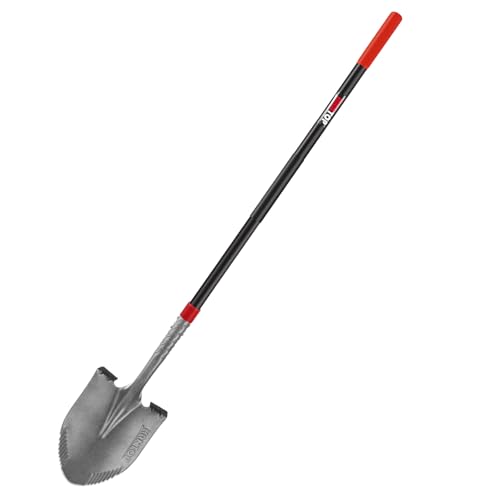
Bending over a shovel for hours is a fast track to lower back pain. The HANTOP Round Digging Shovel stretches to 58 inches, the longest handle in this roundup, so taller gardeners stay closer to upright while they dig. The 9×4.7-inch head gives up some narrow-blade precision in exchange for moving more material per scoop.
Compare that to the shorter HANTOP Sawtooth Round Shovel covered earlier, which trades length for maneuverability. Where the longer tool shines is open yard work, where the extra reach adds leverage and reduces the constant stoop. The non-slip grip and fiberglass shaft keep the total weight manageable at 4.9 lbs.
Features That Help
- 58-inch shaft reduces bending and lower-back strain.
- Wide 4.7-inch head moves more soil per scoop than narrower picks.
- Non-slip grip stays secure with sweaty or gloved hands.
- Fiberglass handle resists weather warp across seasons.
Honest Caveats
- Longer handle is harder to maneuver in tight raised beds.
- Not specialized for narrow trenching or detailed edging.
Built With In Mind
Taller homeowners and anyone with a history of back strain who wants a full-size round shovel with extra reach.
A Better Fit Elsewhere
The HANTOP Drain Spade is the better choice when you need a narrow blade for transplanting shrubs or digging irrigation ditches.
Drain spades have a cult following among gardeners for good reason. The HANTOP Drain Spade pairs a slim 2-inch blade with a 44-inch fiberglass handle, so it slips into the tight spaces a full-size round shovel can’t reach. Pulling up shallow-rooted shrubs, cleaning out ditches, or digging holes for transplants all become less awkward.
Where this tool differs from the trenching shovel covered earlier is in blade shape and intent. A drain spade has a slightly rounded tip meant for digging holes and prying out root balls, while a trenching blade is built to carve a channel. The PP non-slip grip and 1050MN steel head keep weight near 4.4 lbs for controlled work around existing plants.
Benefits That Matter
- Narrow 2-inch blade slips between established plants without damaging roots.
- 44-inch handle balances reach and control for transplanting depth.
- Sharpened head pierces compacted garden soil cleanly.
- Non-slip PP grip provides secure handling in damp conditions.
Soft Spots
- Narrow blade removes less material per scoop than wider picks.
- Less effective than a sawtooth blade when roots are thick.
Spec Overview
The Right Fit
Gardeners transplanting shrubs, cleaning out drainage ditches, or working in crowded perennial beds.
Not Your Match When
The HANTOP Trench Shovel is a better match if your priority is a long narrow channel along a hardscape edge.
When the lawn gave up its topsoil years ago and what remains is rocky clay laced with old roots, lightweight tools just bounce. The Metal Concepts Sharpshooter answers that problem with an all-steel build and roughly 13 lbs of digging weight behind a heat-sharpened chromoly head. The 15-inch sharpened blade and 78-inch overall length create serious leverage.
Sharpshooter shovels (also called ditching spades) are a traditional tool for trenching irrigation lines and digging post holes. This version adds a weighted handle so gravity does part of the work on each stroke. Landscapers and homeowners dealing with construction-grade soil will appreciate the way it powers through material that stops lighter fiberglass tools cold.
The Case For It
- 13 lbs of all-steel construction drives the blade without extra force.
- Heat-sharpened chromoly head cuts through roots and rocky clay.
- 78-inch length keeps you upright during deep digging.
- Heavy-duty build suits trenching, post holes, and root removal.
Trade Offs To Consider
- 13 lb weight is tiring on long sessions for smaller gardeners.
- Overkill for established lawn removal in soft topsoil.
Who Should Grab It
Homeowners and pros facing rocky fill, old root systems, or any yard where lighter shovels can’t break through.
Where Another Pick Suits Better
The Root Slayer Garden Shovel is a friendlier choice for general sod stripping when you don’t need the full steel weight.
What Matters Most Before Choosing Shovels To Remove Grass
Blade Shape Versus Job Type
Round-point heads scoop and dig well in open ground, while flat blades cut cleaner edges along walkways. V-shaped or sawtooth designs slice through roots that smooth blades slide past. Match the blade to the dominant task, because switching mid-project costs time and energy.
Handle Length And Your Body
A 28-inch handle suits kneeling detail work and shorter gardeners, while 57 to 78-inch shafts keep taller users upright. Picking a length that fits your height and posture reduces the back strain that turns a Saturday project into a week of recovery.
Steel Type And Weight
1050MN steel and chromoly alloys resist bending in rocky soil, while fiberglass handles stay lighter and weather-resistant. All-steel builds add weight that becomes a feature in hard ground but a burden in soft topsoil. Choosing between them comes down to your soil type and stamina.
Real-World Use Scenarios
Removing a small patch of crabgrass between pavers calls for a compact spade. Stripping a 500-square-foot lawn for a new bed needs a mid-size round-point with a sharp tip. Cutting an irrigation trench along a long fence line rewards a narrow V-shaped blade. Mapping your project to the tool saves hours of frustration.
Key Considerations Across These Picks
Mistakes Worth Dodging
Choosing a generic flat spade for root removal leaves you swinging without progress, while grabbing a heavy all-steel model for soft topsoil wastes energy on every stroke. Skipping handle-length consideration often means trading the project for a sore back by the end of the day.
Where The Extra Money Goes
Higher-tier picks like the Metal Concepts Sharpshooter invest in chromoly steel and one-piece construction that survive rocky ground year after year. Mid-range HANTOP models spend the budget on fiberglass handles and 1050MN heads, balancing weight and durability for general yard work. The upgrade pays off when your soil regularly throws rocks and roots at the blade.
