

A rose’s fragrance is what separates a pretty plant from a memorable one, and choosing the right rose bush is less about glossy photos and more about knowing which cultivars deliver real perfume, which fit your zone, and which match the way you actually garden. This roundup covers ten strong options across fragrant shrubs, climbing roses, compact bloomers, and ready-to-display fresh-cut bouquets, so you can match a pick to your space, climate, and scent expectations without overselling on hype.
The Picks In Brief

AVERAR Purple Lilac Tree Live Plant, Flowering Shrub

AVERAR Purple Lilac Bush Live Plant, Flowering Shrub

AVERAR Purple Lilac Plant Live, Flowering Shrub

Heirloom Roses Black Baccara Red Rose Bush

Ma Cherie Roses Claire Rose Bush, 2 Quart Pot

Aquarossa Farms 24 Assorted Fresh Roses Bouquet

Ma Cherie Roses Cecille Brunner Climbing Rose

Aquarossa Farms 24 Red Fresh Roses Bouquet
Aquarossa Farms 24 Stem Peruvian Lilies
Perfect Plants Peach Drift Rose Live Plant
The Strengths Of Each Pick
The AVERAR Purple Lilac Tree is the kind of starter plant that earns a permanent spot in a cold-climate yard. Shipped at 20 to 28 inches tall, it arrives closer to garden-ready than a tiny seedling, so you skip the fragile first-year stage many mail-order shrubs go through. Plant it once and it can settle into USDA Zones 3 through 7, sending up the kind of dense purple clusters that turn an ordinary side yard into a spring landmark.
Mature height lands somewhere between 8 and 15 feet, which gives you room to shape it as a tall shrub or train it as a small flowering tree. Lilac fragrance carries further than most rose perfume, so a single plant near a window or path can scent an entire corner of the garden. Compared to the AVERAR bush picks below, this one trades compactness for presence, rewarding a patient gardener with bigger blooms and stronger perfume once established.
What Pays Off
- Cold-hardy to Zone 3, so northern gardeners don’t need to baby it through winter
- Reaches 8 to 15 feet at maturity, giving it the scale of a small flowering tree
- Classic old-fashioned lilac fragrance that carries across a yard
- Versatile form: prune as a dense shrub or train into a single-stem tree shape
- Ships at a workable 20 to 28 inches, skipping the seedling stage
Things To Consider
- Final size may overwhelm a small foundation bed, so plan space ahead of planting
- Like most lilacs, it puts on its biggest show for a few spring weeks rather than all season
Key Specs
Who It Suits Best
Northern gardeners in Zones 3 through 7 who want a fragrant focal point and have the space to let a large shrub mature.
Consider Something Else When
Small-yard owners may prefer the more manageable AVERAR Purple Lilac Bush Live Plant, which stays compact and is easier to place in tighter beds.
The AVERAR Purple Lilac Bush ships smaller and friendlier to a budget, which makes it the easiest way for a first-time gardener to add real lilac fragrance without committing to a tree-sized plant. At 9 to 12 inches tall, it looks modest on arrival, but it grows into the same 8 to 15 feet at maturity that the larger AVERAR lilac reaches, just on a slower timeline. That’s a fair trade for the lower upfront cost.
It fits the same Zones 3 to 7 sweet spot, so it works in cold climates where tender roses often struggle. Plant it along a fence, near a mailbox, or as a low hedge starter, and you’ll get that same old-fashioned perfume once it settles in. Compared to the larger tree-form AVERAR above, this one is for gardeners who want the fragrance without giving up a full corner of the yard.
A Few Strong Suits
- Lower entry cost than the taller AVERAR lilac tree
- Cold-hardy across USDA Zones 3 to 7
- Grows into the same full-sized lilac at maturity
- Compact shipped size makes planting and shipping simpler
- Works well in borders, beds, and as a hedge starter
Worth Noting
- A 9 to 12 inch starter takes longer to deliver a big floral show than the 20 to 28 inch tree option
- Newly transplanted lilacs sometimes skip a bloom cycle while they root in
Made For
First-time shrub planters on a budget who want classic lilac fragrance and live in a cold-winter climate.
Not Your Match When
Gardeners wanting fast impact above head height should step up to the AVERAR Purple Lilac Tree, which arrives larger and fills space sooner.
The AVERAR Purple Lilac Plant is the most forgiving of the three AVERAR lilacs for gardeners still learning their soil and sunlight. It’s another 9 to 12 inch starter, but it’s positioned as a low-maintenance flowering shrub that doesn’t need much fuss once you set it in a sunny spot. Lilacs in general tolerate poor soil and harsh winters better than most people expect, and this one inherits that toughness.
Like the other AVERAR lilacs, it covers USDA Zones 3 to 7 and matures into an 8 to 15 foot shrub or small tree, depending on how you prune it. New gardeners benefit from the fact that lilacs aren’t demanding about fertilizer or deadheading, and they get better with age instead of worse. Compared to the rose picks later in this list, the lilac trade-off is a shorter bloom window for a much easier care routine.
A Strong Showing
- Low-maintenance choice for new gardeners
- Hardy across USDA Zones 3 to 7 for cold-winter climates
- Grows into a sizable 8 to 15 foot shrub at maturity
- Tolerates average garden soil without heavy amendments
Trade Offs
- Shorter bloom period than repeat-blooming roses, so the show is concentrated in spring
- Needs full sun to produce the densest flower clusters
Right Fit For
New gardeners in cold zones who want a tough, fragrant shrub that doesn’t demand constant attention.
Look Elsewhere When
Anyone wanting repeat blooms from spring through fall should look at the Perfect Plants Peach Drift Rose, which flowers for many months.
The Heirloom Roses Black Baccara is the deep-red hybrid tea on this list, and the standout detail is that it ships on its own roots rather than as a grafted plant. Own-root roses, meaning the plant you receive grows from the same rootstock as the variety above ground, tend to come back true after a hard winter and produce more flowers over their lifetime. For gardeners who have lost grafted roses to a tough freeze, that detail alone can justify the upgrade.
It arrives in a one-gallon container at 12 to 16 months old, which puts it well ahead of a tiny band-size rose. Hardiness covers Zones 6 through 10, and it’s a lightly fragrant, repeat-blooming hybrid tea that keeps producing through the season. Compared to the AVERAR lilacs earlier, this is the choice for someone who wants a true red rose cutting garden more than a single spring spectacle.
Good Reasons To Consider
- Own-root production means the variety stays true and recovers better from winter dieback
- Hardy across USDA Zones 6 to 10 for warm-season growers
- Repeat-blooming hybrid tea with a lightly fragrant profile
- Ships in a one-gallon container at 12 to 16 months old
Minor Gripes
- Fragrance is described as light, so scent seekers may want a stronger-perfumed cultivar
- Hybrid teas typically need more feeding and deadheading than shrub roses
- Not suited to Zone 5 and below without significant winter protection
Best Suited To
Warm-climate rosarians who want a deep red hybrid tea cutting rose with strong plant genetics.
Skip It When
Cold-zone gardeners who need a hardier shrub should consider the Ma Cherie Roses Cecille Brunner Climbing Rose, which handles tougher conditions.
The Ma Cherie Roses Claire Rose Bush is an English-style shrub rose with a vintage pedigree: registered name Auslight and originally released in 1986. What you get is a classic cupped bloom form, packed with a high petal count that opens into soft pink flowers rather than the flatter hybrid tea shape. Gardeners who love the cottage-garden look will recognize the form immediately.
It arrives in a 2 quart pot, which is a transplant-ready size that fills in quickly once you set it in the ground. Mature size lands at about 4 to 5 feet tall and 3 to 4 feet wide, making it a manageable mid-bed shrub rather than a wall-filler. Fragrance and vigor are highlighted as strengths, and the rose is described as easy to grow, even for less experienced gardeners. Compared to the Heirloom Roses hybrid tea above, this one prioritizes flower form and garden character over cutting-stem length.
Positive Takeaways
- Classic cupped English-style blooms with high petal count
- Mature size of 4 to 5 feet tall fits mid-bed plantings
- Transplant-ready 2 quart pot fills in quickly once planted
- Marketed as vigorous and approachable for newer rose growers
Points To Note
- Heirloom varieties sometimes take longer to establish than modern shrub roses
- High petal count can trap rain, so airflow matters in humid climates
Feature Snapshot
Who Should Grab It
Cottage-garden style planters and gift-givers who want a romantic English-style rose that won’t take over the bed.
A Better Fit Elsewhere
Anyone wanting a deep red cutting-stem rose should pick the Heirloom Roses Black Baccara, which is bred for hybrid tea performance.
The Aquarossa Farms Assorted Fresh Roses bouquet shifts the conversation from planting to entertaining. You get 24 handpicked, long-stem roses shipped in bud form, and they open up over 2 to 3 days after they arrive. That bud-stage shipping matters: buds travel better than full blooms and still give you the satisfaction of watching the flowers open at home.
The assortment covers a range of colors, so it works for hosts who want variety on a dinner table rather than a single-tone display. Each bouquet ships with a care guide, and the natural fragrance is highlighted over any artificial scent treatment. Note that the listing specifies no vase is included, so you’ll want to have one ready. Compared to the live rose bushes earlier in this list, this pick is for fragrance-now rather than fragrance-later.
Why It Works Well
- 24 long-stem roses in mixed colors for a varied display
- Handpicked and shipped in bud form for better arrival condition
- Natural rose fragrance without artificial perfumes
- Care guide included to help extend vase life
Honest Caveats
- Vase not included, so you’ll need to supply your own
- Cut-rose lifespan is measured in days, not weeks
Perfect Match For
Hosts and gift-givers who want a colorful rose centerpiece without waiting years for a garden shrub to bloom.
Swap It Out When
Anyone wanting a single-color romantic gesture should pick the Aquarossa Farms 24 Red Fresh Roses bouquet instead, which delivers a unified red display.
The Ma Cherie Roses Cecille Brunner Climbing Rose is the vertical accent of this roundup. It’s a pink climbing rose, and Cecille Brunner is one of the older heritage names in the rose world, known for a moderate fragrance and tidy, sweet-shaped blooms. Climbers like this one earn their place when you have a fence, trellis, or arch that needs softening, and a fragrant one doubles the payoff.
It arrives in a 2 quart pot, sized for easy transplanting, and ships in a specialized soil mix meant to give the roots a vigorous start. You also get a complimentary cotton rose bag, which is a small but useful touch for early-season protection or transport. Compared to the bush-form Ma Cherie Claire above, this one is for gardeners who want fragrance at eye level and above, not just in a mid-bed.
The Upside
- Climbing habit covers trellises, fences, and arches
- Moderate fragrance typical of heritage Cecille Brunner varieties
- 2 quart pot in a specialized soil mix for a healthy start
- Includes a cotton rose bag for early protection
Soft Spots
- Climbers need a sturdy support structure from day one
- First-year growth can look sparse while the plant establishes its framework
Built With In Mind
Garden designers who want a fragrant vertical element on a fence, pergola, or arched entry.
Reach For A Different Pick When
Anyone working with a small patio bed should pick the Perfect Plants Peach Drift Rose, which stays low and wide instead of climbing.
The Aquarossa Farms 24 Red Fresh Roses bouquet is the classic anniversary and romantic gesture on this list. You get 24 long-stem red roses, handpicked and shipped in bud form, so they open gradually over a couple of days after they arrive. A care guide comes with the bouquet to help extend vase life, and the scent is the natural rose aroma rather than anything artificially added.
Because the color story is unified red, this is the right pick when you want a single-message display rather than a rainbow effect. It’s also the strongest fit for occasions like Valentine’s Day, anniversaries, or milestone dinners, where color consistency matters as much as fragrance. Compared to the assorted Aquarossa Farms bouquet earlier, the difference is variety versus focus.
Notable Upsides
- 24 long-stem red roses for a unified color display
- Handpicked and shipped in bud form for better arrival condition
- Natural rose fragrance without artificial perfumes
- Care guide included to help blooms last longer in the vase
Practical Considerations
- Vase not included, so plan to provide your own
- Cut roses are a short-lived display measured in days
The Right Fit
Anyone sending a traditional romantic gesture who wants a clean, all-red rose presentation.
Another Choice May Suit
Hosts planning a colorful dinner party should pick the Aquarossa Farms Assorted Fresh Roses, which delivers more color variety for the table.
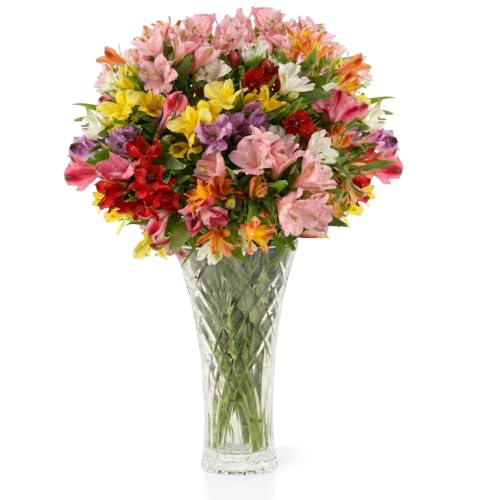
The Aquarossa Farms Peruvian Lilies, also sold as alstroemeria, are the longest-running fresh-cut option in this roundup. You get 24 colorful stems that ship in bud form and open over a couple of days, and the listing emphasizes vibrant color shades plus durability in the vase. For shoppers who want flowers that last more than a few days, this is the more forgiving choice.
Peruvian lilies don’t carry the same heavy perfume as a true rose, but they make up for it with a wider color range and a longer display window. Each bouquet comes with a care guide, and the handpicked packaging is designed to protect the buds in transit. Compared to the Aquarossa Farms rose bouquets above, this one trades rose romance for extended table life.
Points In Its Favor
- 24 stems of long-lasting alstroemeria for extended vase display
- Colorful mix of shades that brighten a room
- Handpicked and shipped in bud form for protected delivery
- Care guide included to help blooms open properly
Things That May Matter
- Fragrance is lighter than a true rose bouquet
- Vase not included in the package
Whose Shelf It Belongs On
Hosts and gift-givers who want a colorful, low-maintenance centerpiece that lasts well beyond a single evening.
Where A Sibling Pick Shines
Anyone wanting true rose scent and romance should pick the Aquarossa Farms 24 Red Fresh Roses bouquet, which delivers heavier perfume in a classic red color story.
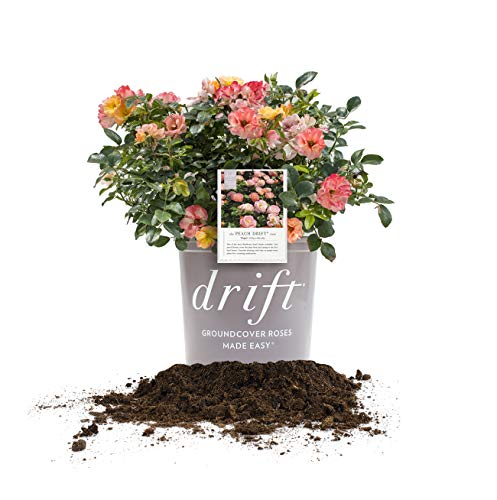
The Perfect Plants Peach Drift Rose rounds out the list with the most compact option. Drift roses, for the uninitiated, are a low-growing cross between full-size and miniature roses, bred to spread along the ground like a flowering groundcover. The peach color stands out from the typical red and pink rose palette, and the bloom season is unusually long at 8 to 9 months in suitable climates.
It arrives in a 3 gallon container, which is generous for a low-growing rose and helps it establish faster than a smaller pot would. Mature size lands at just 1 to 2 feet tall and 2 to 3 feet wide, so it works along walkways, at the front of borders, and near patios where taller shrubs would block the view. Compared to the AVERAR lilacs earlier, this is a true repeat bloomer, though the fragrance profile is generally lighter than a heritage shrub rose.
The Helpful Details
- Blooms 8 to 9 months of the year in suitable climates
- Low-growing, groundcover-style habit suits borders and walkways
- Peach color adds variety to typical red and pink rose plantings
- 3 gallon container supports a faster establishment
Possible Compromises
- Drift roses typically carry lighter fragrance than heritage or hybrid tea roses
- Plant food included with shipment, but ongoing feeding still matters in poor soil
- Shipping restrictions can apply to certain states, so verify availability for your location
Quick Facts
Who Will Love This
Walkway, patio, and mailbox gardeners who want a long-blooming, low-growing rose with a softer color palette.
Consider Something Else When
Shoppers chasing strong perfume should look at the AVERAR Purple Lilac Tree, which delivers heavier fragrance on a larger scale.
What To Weigh Before Choosing Smelling Rose Bushes
Fragrance intensity varies more than most catalogs admit. Some roses, particularly damask and heritage English types, fill a garden with scent for a few weeks. Others, like many modern hybrid teas and landscape roses, lean on visual performance over perfume. Reading the description for terms like “strongly fragrant” or “lightly fragrant” matters more than the bloom photo.
Cold hardiness and zone match are the next filter. A rose that thrives in Zone 8 may struggle in Zone 5, while cold-hardy lilacs handle Zone 3 winters without complaint. Match the plant to your lowest expected winter temperature, not your summer highs, so you don’t lose a new rose to a bad cold snap.
Mature size and habit should fit your space before you fall in love with a color. Climbing roses need a sturdy structure, drift roses want room to spread along a walkway, and tree-form shrubs command a focal-point spot. A rose that outgrows its bed becomes a pruning chore instead of a pleasure.
Bloom timing and repeat flowering separate one-hit-wonders from season-long performers. Lilacs shine for a few spring weeks, hybrid teas and drift roses keep producing through summer and into fall. Decide whether you want a single dramatic show or a longer, steadier display.
Picking Smelling Rose Bushes With Confidence
Pitfalls Shoppers Hit
The most common mistake is choosing a rose for its catalog photo rather than its zone rating. A gorgeous bloom that can’t survive your winter is a waste of the planting cost. The second pitfall is underestimating mature size, which leaves you constantly fighting a shrub that’s trying to take over a walkway or a window.
Another trap is buying a bare-root or tiny band rose expecting instant impact. Most roses need at least one full growing season to put on a real show, and some climbers take two. Plan for patience, not instant gratification.
Where The Extra Money Goes
Higher-tier roses typically earn the price through own-root production, larger container sizes, or heritage genetics. Own-root plants, like the Heirloom Roses Black Baccara, recover better from winter dieback and stay true to variety. Larger containers, like the 3 gallon Peach Drift, transplant with a stronger root system and establish faster.
Premium pricing can also reflect breeder reputation and rare cultivar status. The Claire Rose, for instance, is a heritage English-style rose that’s harder to mass-produce than a modern landscape shrub. Pay more when the genetics, root system, or plant size genuinely match your garden goals, and save when a smaller starter plant will perform just as well in your conditions.
Frequently Asked Questions
Which roses smell the strongest?
Heritage and English-style roses generally carry heavier perfume than modern landscape types. Damasks, old garden roses, and many climber varieties offer some of the strongest scents, while many hybrid teas and drift roses trend lighter.
How long does it take a new rose bush to bloom?
Most roses bloom in their first full growing season after planting, though first-year shows can be modest. Climers and heritage varieties sometimes take two seasons to put on a full display while they build a strong framework.
Do roses need full sun to smell strong?
Yes, sunlight drives the production of the essential oils that create rose fragrance. Most fragrant roses perform best with at least six hours of direct sun, and more sun typically means stronger scent and denser blooms.
Can I grow fragrant roses in containers?
Many shrub and miniature roses do well in large containers with proper drainage. Climbing roses and full-size tree-form shrubs are harder to contain long-term, so choose varieties with mature sizes that match your pot.
How often should I water a newly planted rose?
New roses need consistent moisture for the first several weeks as roots establish. Deep watering two to three times a week is usually better than light daily sprinkling, especially in well-draining soil.
Closing Remarks
The right scented rose depends on whether you want fragrance this weekend, this spring, or for the next twenty years. A live shrub or climber is a long-term investment that rewards patience with bigger and better blooms each season, while a fresh-cut bouquet delivers immediate scent for an occasion. Match the plant to your zone, your space, and your timeline, and the rest of the choice gets much easier.
