

Running a sprinkler across thirsty tomato rows wastes more water than it delivers. Soaker hoses solve that by letting moisture seep slowly through the hose wall directly into the root zone, where soil can actually absorb it. The trick is matching the hose’s diameter, length, and connector style to the shape of your beds. The picks below cover raised beds, long vegetable rows, foundation plantings, and full lawns, with a couple of accessory kits for building or expanding a custom layout.
How The Shortlist Stacks Up

GARDENA Soaker Hose Connection Set
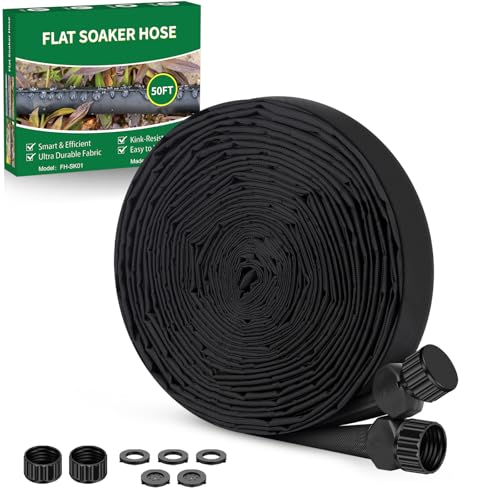
Advinski Soaker Hose 50 ft with Drip Irrigation

ZGWDrip 25 ft Soaker Hose with Brass Connectors

Taisia 5/8 in Round Rubber Soaker Hose 30 ft

ZGWDrip 100 ft 5/8 in Soaker Hose with Brass Fittings

Friyvilo 50 ft Soaker Hose with Drip Irrigation

Aurssa 5/8 in 75 ft Rubber Soaker Hose

Swan Products Element Sprinkler Soaker Hose 50 ft

iMopo 20-Piece Irrigation Fittings Kit for 1/2 in Tubing
More On The Choices That Made The List
This GARDENA bundle is not a hose at all. It’s the small hardware kit that lets any standard soaker hose actually start and stop cleanly. You get a connection unit with a built-in control valve for the inlet end of the run, plus a water stop to seal the far end so water cannot keep escaping after you close the spigot.
For someone just unrolling their first 25 or 50 foot run, that single pack removes the most common stumbling block: figuring out which fittings match which ends. You can pop the parts on by hand and skip the trip to the hardware store. It pairs naturally with the ZGWDrip 25 ft covered below, or with any other 1/2 in soaker hose you already own.
Everyday Perks
- Includes both the inlet fitting and the end cap, so a new hose is ready to use the moment it arrives.
- Built-in control valve on the inlet lets you throttle flow without walking back to the outdoor faucet.
- Compact package at roughly 22 x 10.5 x 4.2 cm, easy to store in a small garden bin through the off season.
- Hand-assembly, with no extra tools or clamps required for a basic installation.
Things To Consider
- Sourced through the Global Store, so manufacturer warranty terms can differ from domestic equivalents.
- Best treated as an accessory rather than a full irrigation solution on its own.
Right Fit For
First-time soaker hose owners who need a clean starter kit to get a small bed running without a separate trip for fittings.
Consider Something Else When
Anyone planning to water a large vegetable plot should reach for the ZGWDrip 100 ft 5/8 in Soaker Hose, which already ships with brass connectors and staples.
The Advinski 50 ft model targets the middle of most backyard layouts. At a half inch in diameter, it’s slim enough to snake between vegetable rows and orchard plantings, yet long enough to reach across a moderate bed without splicing. The linkable design means two of these can chain together when a single run is not enough.
For gardeners weighing water cost against soil depth, this is a sensible middle-of-the-road option. It runs a steady, low seep along its length, so root zones get moisture with minimal evaporation. Color is black with a blue nozzle trim, which makes it easier to spot in dense foliage when you’re checking for clogs or kinks.
Strengths Worth Knowing
- Linkable ends let you extend coverage without buying a whole second hose system.
- Half-inch diameter is friendly to tight rows and curved bed layouts.
- Slow seep pattern suits deep-rooted vegetables and small orchard saplings.
- Blue nozzle accents make the hose easier to follow visually during inspection.
Worth Noting
- A 50 ft run on a single spigot may deliver uneven moisture at the far end, depending on household water pressure.
- Half-inch flow is modest, so very sandy soil may need a second pass or shorter cycles.
- Like most flat-style soakers, owners commonly report the hose wants to coil back up after a season of storage.
Built With In Mind
Home gardeners with medium vegetable beds or a small orchard who want linkable length without investing in a full irrigation buildout.
Skip It When
Anyone covering broad lawn turf should look at the Swan Products Element Sprinkler Soaker Hose, which doubles as a sprinkler for wider areas.
The 25 ft ZGWDrip is built for tight footprints. A single raised bed, a narrow herb strip along a patio, or a row of foundation shrubs all fit inside this length without leftover slack pooling in the yard. The 3/4 in solid brass connectors are the real talking point, since brass resists corrosion far better than plastic where fittings meet the spigot.
You can bury or mulch over a soaker hose to hide it from view, and the half-inch profile makes that easy to do without trenching. Compared to the longer Advinski run above, this one trades length for connector quality, which matters most if your outdoor faucet sees daily use through the growing season.
A Favorable Mix
- Solid brass connectors outlast plastic alternatives where fittings meet outdoor faucets.
- 25 ft length suits a single raised bed or a tight foundation planting without excess hose to hide.
- Half-inch diameter lays flat for mulch burial and even root-zone seepage.
Trade Offs
- Short length means you’ll need a second hose or the ZGWDrip 100 ft model if your bed is wider than 25 ft.
- Brass adds a small amount of weight at the coupling end, which can tug on the fitting during setup.
Key Specs
Made For
Raised-bed gardeners with one or two beds who want durable brass fittings without committing to a longer hose they’ll never fully use.
Look Elsewhere When
Anyone tending long rows or a wide lawn will be better served by the ZGWDrip 100 ft 5/8 in Soaker Hose, which covers much more ground per run.
Taisia’s round rubber design feels more substantial in hand than flat recycled-rubber soakers. The 5/8 in diameter carries more water per foot, which helps when your bed runs longer than the hose’s 30 ft and you want a steady output from start to finish. The round profile also resists kinking when you drape it around corners of a curved bed.
Rubber walls tend to weather freeze-thaw cycles more gracefully than thin PVC soakers, so this one tends to last multiple seasons if you drain it before winter. Compared with the Advinski 50 ft model above, this is shorter but heavier duty, which suits gardeners who move hoses around frequently or leave them out year-round.
Positive Points
- 5/8 in diameter delivers higher flow than a half-inch hose over the same run length.
- Round rubber wall resists kinking when curving around bed edges or stepping stones.
- Better cold tolerance than flat PVC soakers, which simplifies off-season storage.
- Steady seep pattern that works for mixed plantings of vegetables, shrubs, and flowers.
Points To Note
- Rubber is heavier to drag around the yard than lighter flat-style soakers.
- 30 ft may fall short for larger layouts, requiring a second run or extension.
Who It Suits Best
Gardeners with mid-size beds who want a sturdy rubber hose that holds up to repeated handling and seasonal temperature swings.
A Better Fit Elsewhere
Shoppers wanting maximum length in one piece should consider the Aurssa 5/8 in 75 ft Rubber Soaker Hose for longer stretches.
For larger properties, the 100 ft ZGWDrip is the long-distance option of the bunch. The 5/8 in bore keeps flow steady across that extra distance, and the package includes metal staples so you can pin the hose down through mulch without it wandering after a few watering cycles. Solid brass connectors match the smaller ZGWDrip 25 ft covered above.
Used in a serpentine pattern across a lawn or large landscape bed, this single hose can replace multiple shorter runs. Compared to the Advinski 50 ft unit, the trade is double the reach for slightly more weight and a higher flow demand at the spigot. For most backyards with municipal water pressure, that’s a comfortable fit.
The Upside
- 100 ft length covers substantial lawn or landscape areas in a single run.
- 5/8 in bore maintains flow at the far end better than a 1/2 in hose of similar length.
- Solid brass connectors resist corrosion at the spigot through repeated seasonal use.
- Included metal staples keep the hose pinned through mulch and foot traffic.
Soft Spots
- Long hose demands even water pressure to avoid dry patches at the far end.
- Bigger diameter means more storage space required during the off season.
- Heavier weight than half-inch soakers, which can tire out gardeners during layout changes.
Best Suited To
Homeowners with a sizable lawn, large foundation bed, or multi-row vegetable garden who want one long hose rather than chaining shorter pieces.
Reach For A Different Pick When
Gardeners with tighter rows or container setups may find the Friyvilo 50 ft Soaker Hose easier to manage day to day.
The Friyvilo 50 ft leans on a double-layer construction: a flexible PVC inner core for water delivery, wrapped in a fabric-reinforced outer sheath for abrasion resistance. That extra layer is the kind of detail that matters if your hose will sit on gravel, rough mulch, or sun-baked soil all summer. It’s also linkable, so two units can combine into a longer run.
For gardeners upgrading from a basic vinyl soaker, this is a modest step up without jumping into full rubber territory. It handles typical residential water pressure without ballooning at the coupling ends, and the fabric outer layer helps the hose lay flat instead of curling.
The Value In It
- Double-layer build pairs a flexible PVC core with a fabric-reinforced outer jacket.
- Linkable ends allow expansion if your watering needs grow beyond 50 ft.
- Fabric layer helps the hose stay flat under mulch rather than coiling back up.
Less Ideal Details
- Half-inch flow will feel modest on long runs or sandy soil without multiple cycles.
- Not as cold-tolerant as full rubber options like the Taisia model.
Feature Snapshot
Perfect Match For
Gardeners who want a tougher-than-basic soaker at modest cost, especially in plots with rough mulch or stony soil.
Not Your Match When
Anyone needing maximum reach in one continuous piece should look at the ZGWDrip 100 ft 5/8 in Soaker Hose instead.
The Aurssa 75 ft model leans hard into durability. The manufacturer describes an improved rubber blend designed to reduce cracking and splitting, which is the most common failure point on soaker hoses left out year after year. Tiny holes run the full length for consistent seep, and a sealed end cap is included.
This is the right pick for a vegetable gardener who wants to set up once and forget about it for a few seasons. Connectors and an end cap come in the box, so you’re not chasing fittings like with the GARDENA set above. For most backyards with a 75 ft reach, this covers a generous plot without needing two hoses.
Notable Gains
- Upgraded rubber blend is engineered to resist cracking across multiple seasons.
- 75 ft length suits long vegetable plots or extended foundation beds.
- 5/8 in bore holds flow over the longer distance better than half-inch alternatives.
- Connectors and end cap ship in the box, so no separate fitting purchase is required.
Practical Considerations
- Rubber is heavier to handle than PVC or fabric-reinforced soakers.
- 75 ft in one piece needs decent pressure at the spigot to seep evenly from start to end.
Quick Facts
Who Should Grab It
Vegetable gardeners with long plots who want a long-lasting rubber hose and don’t want to chase down fittings separately.
Swap It Out When
Anyone with a much smaller bed will do fine with the ZGWDrip 25 ft model and save on storage space.
The Swan Products Element is the hybrid option of the group. It works as a soaker when laid flat along a bed, but it can also operate as a low spray pattern for broader coverage. That dual personality makes it useful when you want to water a lawn strip and a flower bed from the same hose run.
At 50 ft with a green exterior, it blends into lawn grass better than black hoses and stays visible against mulch. For gardeners who want one hose that flexes between root-zone watering and wider area coverage, this offers flexibility the dedicated soakers above don’t.
Real-World Strengths
- Doubles as a soaker and a low-pattern sprinkler for mixed lawn-and-bed layouts.
- Green color blends into grass and stays visible against dark mulch.
- 50 ft length covers a meaningful lawn strip or two parallel beds in one run.
Points To Keep In Mind
- Sprinkler mode uses more water than pure seep mode, depending on duration.
- Hybrid design means slower seep rate than dedicated rubber soakers like the Aurssa 75 ft.
Feature Rundown
Whose Shelf It Belongs On
Homeowners who want one flexible hose that handles both soaker duty for beds and gentle spray for lawn strips.
Where A Sibling Pick Shines
Vegetable gardeners focused on root-zone moisture savings should reach for the Aurssa 75 ft Rubber Soaker Hose instead.
The iMopo kit is the build-your-own-system toolbox. Twenty barbed fittings cover the three shapes you actually need: 8 couplings for joining two runs, 6 tees for splitting flow at a junction, and 6 elbows for turning corners around bed edges or hardscape. Sized for 1/2 in tubing with a 0.600 in inner diameter, the parts match standard polyethylene drip line.
For someone who’s already laid out a custom drip plan or wants to repair a damaged section without buying a whole new hose, this is the missing piece. It pairs naturally with the GARDENA connection set above, but goes further by including tees and elbows for branching layouts.
What It Does Well
- 20-piece kit covers couplings, tees, and elbows in one purchase.
- Barbed design pushes onto standard 1/2 in tubing without clamps or specialty tools.
- Useful for both repairs and new custom drip layouts.
- Elbows make routing around corners and raised-bed frames much cleaner.
Where It Is Less Suited
- Designed specifically for 1/2 in tubing, so it won’t adapt 5/8 in soaker hoses without reducing fittings.
- Kits without instructions assume you already know where each fitting belongs in a layout.
Spec Overview
Who Will Love This
DIY gardeners building a custom drip layout or repairing an existing system without buying individual fittings piece by piece.
Another Choice May Suit
Shoppers who just need a basic inlet and end cap for a single hose should start with the GARDENA Soaker Hose Connection Set.
Picking The Right Hose For Your Beds And Lawns
The first call is length. Measure the total run of bed, foundation planting, or lawn strip you want to water, then add a small allowance for snaking around corners. Under-buying forces two hose connections and uneven pressure, while over-buying leaves dead coils that waste water at the spigot end.
Diameter matters more than most shoppers realize. A 1/2 in soaker is fine for short runs under roughly 50 ft, where modest flow still reaches the end. Past that distance, a 5/8 in hose keeps output steady along its length, which is why picks like the ZGWDrip 100 ft and the Aurssa 75 ft both step up to the wider bore.
Connector material determines how many seasons you’ll go before replacing a fitting. Solid brass threads outlast plastic where the hose meets the outdoor faucet, which sees the most weather and the most handling. Rubber hose walls weather freeze-thaw better than thin PVC, which matters for gardeners who forget to drain hoses before the first frost.
Key Considerations Across These Picks
Pitfalls Shoppers Hit
The most common misstep is buying a hose that’s too long for the available water pressure. A 100 ft run on a low-pressure spigot will deliver moisture at the inlet end and air at the tail. Match length to your home’s actual flow rather than to the size of your ambition.
Another easy miss is overlooking connector compatibility. A half-inch soaker hose and a 3/4 in brass fitting both sound standard, but they don’t always thread onto the same spigot without an adapter. Check your outdoor faucet thread size before ordering, and consider grabbing the GARDENA connection set above if you’re starting from scratch.
Why Top Tier Costs More
Premium rubber soakers command more because the rubber blend itself resists cracking across multiple seasons, and the manufacturer has engineered the seep pattern for even flow from start to finish. Brass fittings add cost too, but they tend to outlast the hose they attach to.
For most home gardeners, the upgrade pays off when the hose lives outside year-round or services a long run. If your setup is a single raised bed you drain and store every fall, a basic half-inch model like the ZGWDrip 25 ft will probably serve you just as well without the extra spend.
Frequently Asked Questions
How long should I run a soaker hose?
Most gardeners find 30 to 45 minutes per session works for established beds, but run time depends on soil type. Sandy soil absorbs faster and may need shorter, more frequent cycles, while clay soil needs slower, longer runs to avoid runoff.
Can I bury a soaker hose under mulch?
Yes. A 2 to 3 inch layer of mulch over a soaker hose hides it from view and slows evaporation, which improves water delivery to roots. Just avoid burying so deep that you forget where it runs before digging later.
What’s the difference between 1/2 inch and 5/8 inch soaker hoses?
Diameter affects how much water flows per foot. A 5/8 in hose carries more volume, which helps on longer runs where a 1/2 in hose would deliver less moisture at the far end. For short beds, 1/2 in is plenty.
Do soaker hoses work with a timer?
Standard hose timers thread between the spigot and the hose inlet, so they work with any soaker system. Adding a timer is the easiest way to water consistently without having to remember to turn the faucet on and off.
How do I store a soaker hose for winter?
Drain the hose completely before the first hard frost, then coil it loosely and store it in a shed or garage. Rubber hoses handle cold better than PVC, but extending any hose’s life through proper off-season storage is wise.
The Takeaway
Soaker hoses reward gardeners who match length and diameter to the shape of their beds, then commit to a few minutes of setup. Pick the shortest run that actually reaches your planting area, step up to 5/8 in for anything past 50 ft, and grab a connector kit if you’re building from scratch. The right combination saves water and keeps roots happy without any of the spray drift of a traditional sprinkler.
