

Gardening without the right watering setup turns into a full-time chore. Soaker hoses deliver slow, targeted moisture directly to the root zone, cutting down on evaporation and giving you back your weekends. Whether you’re tending a row of tomatoes or refreshing raised beds, the right hose makes all the difference.
The Choices Worth Comparing
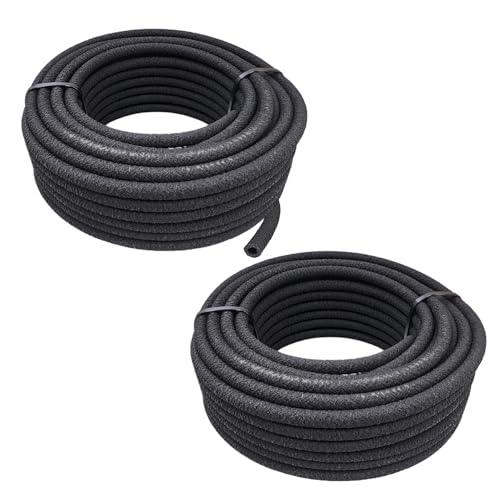
One Stop Outdoor 1/4 in. 100 ft Dripline Soaker Hose

GARDENA Soaker Hose Connection Set

Water Right 700 Series Polyurethane Soaker Hose 25 ft

RAINPOINT 100FT Flat Soaker Hose with Aluminum Ends
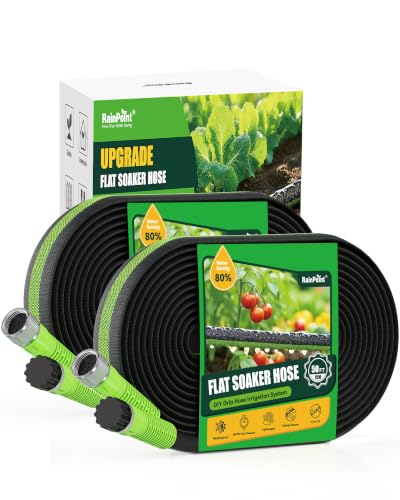
RAINPOINT 100FT Flat Soaker Hose (50FT x 2)

Friyvilo 50FT Soaker Hose With Drip Irrigation

Aurssa 5/8 in. 75ft Rubber Soaker Hose

RAINPOINT 15FT Flat Soaker Hose with Aluminum Ends

RAINPOINT 25FT Flat Soaker Hose, Heavy-Duty
Meet The Standout Selections
If you already run a drip irrigation system from Raindrip, Rain Bird, Orbit, or DIG, this quarter-inch dripline slides right into the same fittings you own. The black rubber tubing weeps water along its entire length, turning a single hose run into a slow, steady soak for narrow planting strips.
At 100 feet, you’ve got enough line to thread through several garden rows or a long vegetable bed. Unlike the GARDENA connection set covered later, this isn’t an accessory but the working hose itself, so it suits someone building a drip layout from scratch.
Everyday Perks
- Works with standard quarter-inch drip fittings from major irrigation brands, so retrofitting is simple
- The flexible black rubber handles gentle curves without kinking in tight bed layouts
- Even weeping along the full length keeps moisture consistent from start to finish
- Ideal operating pressure sits at 25 PSI, matching typical residential drip systems
Things To Consider
- Quarter-inch tubing restricts maximum run distance, so very long stretches may need a pressure regulator
- Owners commonly report that direct sun exposure can shorten rubber life, so storing it shaded helps
Quick Facts
Who Will Love This
DIYers upgrading an existing drip irrigation system will find the brand compatibility especially convenient.
Consider Something Else When
For a turnkey setup with built-in shutoff, the GARDENA Soaker Hose Connection Set offers a more complete starter package.
This little accessory kit solves a problem soaker hose owners hit constantly: how to start and stop the flow cleanly. The GARDENA set bundles a connection piece with a control valve for the inlet and a water stop for the outlet end, so you can shut off sections without walking back to the spigot.
Unlike the One Stop Outdoor dripline, this isn’t a hose at all but a finishing kit. It suits gardeners who already own a GARDENA soaker hose and need the original fittings to get it running properly.
What Helps Most
- The control valve at the inlet lets you throttle flow without returning to the faucet
- End-side water stop keeps residual pressure contained between watering sessions
- All required GARDENA system fittings arrive in a single package, simplifying setup
Points To Note
- Designed specifically for GARDENA hoses, so mismatched brands may not seat properly
- The compact 22 x 10.5 x 4.2 cm box holds fittings only, no actual hose included
Who Should Grab It
Anyone finishing a GARDENA soaker hose installation will appreciate having every fitting in one box.
A Better Fit Elsewhere
For a complete hose-plus-fitting solution, the Water Right 700 Series soaker hose works without needing separate accessories.
Polyurethane is the quiet hero of this hose. Where rubber soakers leave residue and stain patio stone, the 700 Series stays clean to the touch and resists marring surfaces, a real plus for raised beds next to a deck or walkway.
The 25-foot length and half-inch inner diameter deliver slow, even weeping across the full run, hitting roots directly without waste. Compared with the entry-level One Stop Outdoor dripline, this trades compatibility for material purity, which matters most around edibles.
Everyday Advantages
- Non-toxic polyurethane construction makes it well suited to vegetable and herb gardens
- The half-inch inner diameter delivers steady weeping pressure across 25 feet
- No residue on hands or surfaces means cleaner handling during setup and adjustment
- The Pine Straw color blends into garden mulch rather than standing out visually
Honest Caveats
- Hard water can leave mineral buildup over time, so a faucet-side filter is recommended
- Exposure to lawn chemicals may shorten hose life, so keep it clear of fertilizer runoff
Feature Snapshot
Built With In Mind
Organic gardeners growing edibles will value the non-toxic material and clean-handling design.
Look Elsewhere When
For long row coverage beyond 25 feet, the RAINPOINT 100FT Flat Soaker Hose delivers more reach.
Flat soaker hoses earn their keep by rolling up tight for winter storage, but this one pushes durability further. The dual-layer construction pairs a thickened rubber inner tube with a high-density fabric outer sleeve, cutting evaporation while standing up to dragged corners and stony soil.
The anodized aircraft aluminum fittings solve a chronic weak point, since cheap plastic couplings crack under sun exposure. For long vegetable rows where you’d otherwise run multiple short hoses, the 100-foot coverage here replaces two or three separate runs.
What Makes Sense
- Anodized aluminum end fittings resist corrosion far better than typical plastic couplings
- The dual-layer rubber-and-fabric build reduces evaporation, conserving water across long layouts
- Flat profile stores compactly on a reel or in a bucket when winterizing the garden
Trade-Offs To Consider
- At 100 feet, pressure at the far end may weaken in yards with low water pressure
- The fabric sleeve can stain visibly after a season of contact with wet mulch
Quick Facts
The Right Fit
Vegetable gardeners running long, straight rows will appreciate the reach and tough outer sleeve.
Reach For A Different Pick When
For shorter patio containers or herb planters, the RAINPOINT 15FT Flat Soaker Hose offers easier handling.
Buying a single 100-foot hose sounds efficient until your yard has two separate beds on opposite sides. This two-pack splits the coverage into two 50-foot runs, so you can run one down each raised bed without buying a splitter or extra fittings.
The thick rubber inner core and protective fabric sleeve keep the same dual-layer construction that defines the RAINPOINT line. Where the single 100-foot option favors long straight rows, this pair adapts to L-shaped or split layouts.
Positive Takeaways
- Two separate 50-foot runs let you cover disconnected beds without buying extra splitters
- Heavy-duty flexible construction handles tight curves around bed corners
- Flat design coils neatly for off-season storage in a garage or shed
Worth Bearing In Mind
- Two hoses means two connection points to winterize, slightly more maintenance than a single run
- If your layout is one long straight row, the single 100-foot coil wastes half the potential
Who It Suits Best
Gardeners with separate planting zones or multiple raised beds will value the modular flexibility.
Not Your Match When
For a single long row, the Aurssa 75-foot rubber soaker hose offers continuous round coverage.
Linkable drip hoses solve the puzzle of mid-sized gardens that outgrow a starter kit. The 50-foot length covers a typical backyard vegetable patch, and the linkable ends let you extend coverage as your planting ambitions grow.
The double-layer design pairs a flexible PVC inner core with a protective fabric jacket, balancing cost against durability. Unlike the heavier RAINPOINT aluminum-ended models, this one stays simple and accessible for first-time drip irrigation users.
The Upside
- Linkable ends allow daisy-chaining additional hoses as your garden expands
- The PVC inner core holds shape well during seasonal temperature swings
- Fabric reinforcement protects against abrasion from mulch and stone borders
Factors To Consider
- At 50 feet without aluminum fittings, durability under heavy UV exposure is a fair question over multiple seasons
- Standard plastic couplings may need replacement sooner than metal alternatives
Best Suited To
Beginners with mid-sized beds who want room to expand their setup later will appreciate the linkable design.
Skip It When
For maximum longevity in full sun, the RAINPOINT 100FT model with aluminum fittings is a sturdier pick.
Round rubber soaker hoses feel different from flat driplines, and that heft matters when you’re watering established trees or large lawn borders. The 5/8-inch diameter and 75-foot length deliver the kind of water volume that flat designs can’t match.
Tiny perforations along the entire length keep distribution consistent, and the sealed end cap means you control flow from the faucet side only. Compared with the lighter RAINPOINT flat models, this rubber round profile trades portability for raw durability in permanent landscape setups.
Key Advantages
- The 5/8-inch round profile delivers higher volume for thirsty trees and shrubs
- Heavy-duty rubber construction stands up to rough terrain and rocky soil
- Multiple length options in the same line let you match hose to specific zones
- Sealed end cap maintains pressure evenly across the full 75-foot length
Potential Drawbacks
- Round rubber is heavier to move and coarser to coil than flat alternatives
- Lacks the metal fittings found on premium RAINPOINT models, so coupling durability is a fair concern
Feature Card
Perfect Match For
Homeowners watering established trees, large vegetable plots, or expansive lawn borders will appreciate the volume.
Swap It Out When
For lightweight storage or patio container gardening, the RAINPOINT 15FT flat hose handles better.
Patio herb planters and small balcony gardens don’t need 100 feet of hose. This 15-footer from RAINPOINT brings the same dual-layer construction and anodized aluminum fittings as the longer siblings, scaled down for tight spaces.
The lightweight flat profile slips behind a planter or coils into a drawer without complaint. Compared with the chunkier Aurssa rubber model, this trades raw volume for finesse in containers and raised beds where you’d otherwise drag around a heavyweight hose.
A Strong Showing
- Aluminum fittings resist the corrosion that plagues plastic couplings in outdoor settings
- Lightweight flat design stores easily in small patios, balconies, or sheds
- Can be daisy-chained with other RAINPOINT units for gradual expansion
Where It May Fall Short
- At only 15 feet, larger gardens will outgrow this quickly without additional hose sections
- The thin flat profile can kink more easily than round rubber alternatives if stepped on or bent sharply
Made For
Apartment dwellers and patio gardeners with small container setups will find the size ideal for daily use.
Another Choice May Suit
For herb gardeners who prefer non-toxic materials near edibles, the Water Right polyurethane hose is a cleaner option.
Twenty-five feet is the sweet spot for a single raised bed or a modest herb garden along a fence. This RAINPOINT entry brings the same heavy-duty dual-layer construction found on the longer 100-foot models, just sized for smaller daily routines.
The flat profile lays flush against soil without disturbing mulch, and it coils compactly between uses. Where the longer RAINPOINT coils assume a sprawling yard, this one assumes a tidy suburban bed.
Strong Points
- The 25-foot length is right-sized for one or two raised beds without waste
- Heavy-duty flexible core handles repeated coiling without cracking
- Connects easily to standard outdoor faucets and timers
Some Limits To Know
- Single 25-foot run limits coverage to compact gardens unless paired with another hose
- Mid-range length means you may need to upgrade as your garden expands over several seasons
Tech Snapshot
Whose Shelf It Belongs On
Suburban gardeners with one or two raised beds who want a tidy, compact setup will appreciate the proportions.
Where A Sibling Pick Shines
For container herbs on a patio, the shorter RAINPOINT 15FT model offers an even lighter footprint.
Choosing The Right Soaker Hose for Your Garden
Hose diameter changes everything about how water moves. Quarter-inch driplines restrict flow to a slow trickle suited to narrow planting strips, while half-inch and 5/8-inch hoses push enough volume for established trees, large beds, and lawn borders. For most home vegetable gardens, half-inch hits the practical middle ground without wasting water to pressure loss.
Material matters more than length in the long run. Polyurethane resists staining and stays clean to handle, which suits edible gardens where residue is a real concern. Rubber soakers handle higher volumes and rougher conditions, but they weigh more and may leave marks on light-colored stone. Flat fabric-jacketed designs split the difference, with easy storage and decent durability for seasonal use.
Length and layout go hand in hand. Measure your longest single run before buying, then add 10 percent for curves and bed corners. If your garden splits into two disconnected zones, a two-pack or linkable design saves you from buying splitters and extra fittings. A pressure regulator at the faucet helps far-end performance on any run over 50 feet.
Fittings decide how many seasons you get out of the hose. Plastic couplings crack under UV exposure and frequent handling, while anodized aluminum or brass fittings hold up for years. Storage habits matter too: draining and coiling before winter prevents freeze damage, especially in rubber hoses with sealed ends.
Smart Shopping Considerations
Pitfalls Shoppers Hit
Buying more hose than your layout needs leaves you with slack that reduces pressure at the far end. Measure first, then size up only by a small margin. Another common trap is matching fittings by appearance rather than thread standard; quarter-inch dripline fittings differ from half-inch and 5/8-inch threading, and a mismatch leaks from day one.
Where The Extra Money Goes
Premium hoses earn their higher cost through better materials and tougher fittings. Anodized aluminum couplings outlast plastic by several seasons, and dual-layer fabric sleeves reduce evaporation enough to matter in dry climates. For gardeners who run their hose daily through summer, the upgrade typically pays back in fewer replacements and more consistent watering.
Frequently Asked Questions
How long should a soaker hose run per session?
Most gardens do well with 30 to 60 minutes of run time, depending on soil type. Sandy soil drains faster and may need shorter, more frequent sessions, while clay holds moisture longer.
Can soaker hoses be buried under mulch?
Yes, a light layer of mulch over the hose reduces evaporation and keeps the line cool. Avoid deep burial, since that makes it harder to spot leaks or reposition the hose between seasons.
Do soaker hoses need a pressure regulator?
Above 25 PSI, a regulator protects the hose from blowouts and ensures even weeping. Most residential spigots deliver more pressure than soaker hoses are designed to handle.
How do you store soaker hoses for winter?
Drain the line completely, coil it loosely, and store it in a garage or shed. Tight coiling or leaving water inside can crack rubber and damage fabric jackets during freeze cycles.
Are soaker hoses safe for vegetable gardens?
Yes, especially polyurethane models marketed as non-toxic. Rubber soakers are also widely used for edibles, though some gardeners prefer to flush the line briefly before harvest.
Closing Remarks
The best soaker hose is the one that matches your garden’s size, soil, and shape without overcomplicating your routine. Start with accurate measurements, pick the material that suits your watering style, and don’t overspend on reach you won’t use. Your plants will reward the consistency more than the brand on the package.
