

Soil that refuses to drain, lawns that yellow no matter how often you water, raised beds where seedlings stall halfway through spring: most of these headaches trace back to the dirt itself, not the fertilizer on top of it. A soil conditioner works below the surface, rebuilding structure, balancing pH, or feeding the microbial life that keeps everything else alive. The ten picks below cover the most common scenarios home gardeners run into, from heavy clay to depleted vegetable plots.
A Snapshot Of The Selections

Neptune’s Harvest Organic Crab & Lobster Shell Plant Food (5-3-0) 12 LB
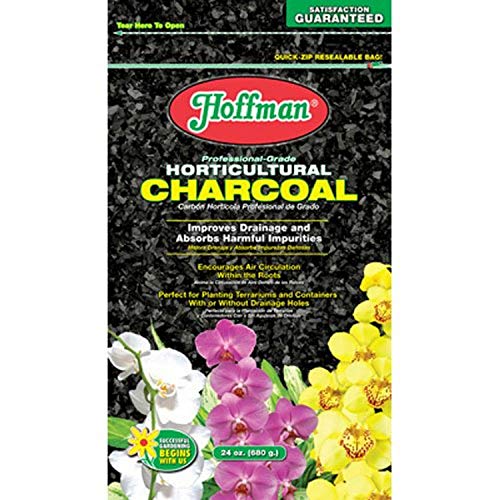
Hoffman 17502 Charcoal Soil Conditioner, 24-Ounce

Earth Science Fast Acting Lime Granules 5lb

Earth Science RevitaSoil 4lb Premium Organic Soil Revitalizer

Purple Cow Organics Liquid Biology Bundle Concentrate
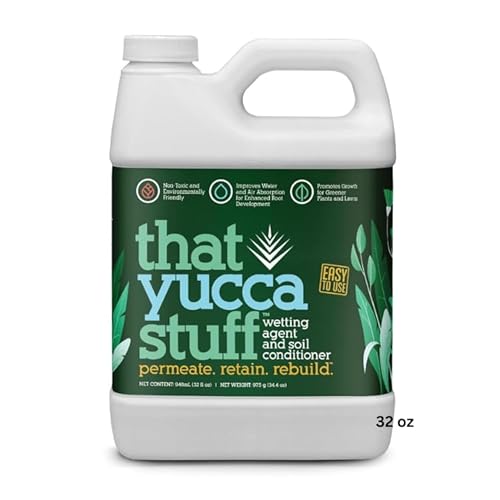
That Yucca Stuff OMRI Soil Conditioner and Wetting Agent 32 oz
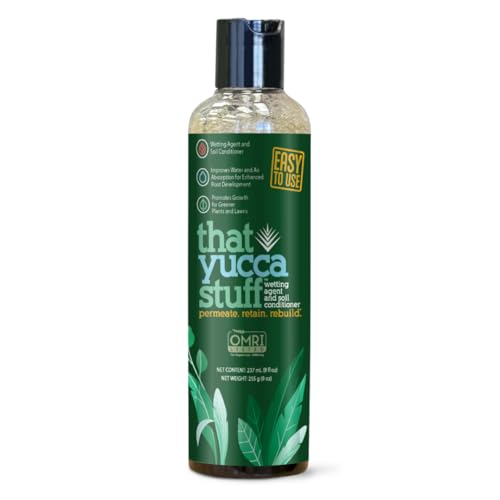
That Yucca Stuff OMRI Soil Conditioner and Wetting Agent 8 oz

That Yucca Stuff OMRI Wetting Agent 3 Liter Refill

Earth Science Fast Acting Gypsum Granules 5 lb

Earth Science Fast Acting Sulfur Granules 5lb
The Picks, Examined More Closely
A 12-pound resealable bag of ground crustacean shell sounds unusual next to a bag of lime, yet gardeners reach for this exact product for a reason. Neptune’s Harvest Crab & Lobster Shell is a 5-3-0 organic meal that feeds calcium, magnesium, and a small nitrogen charge, while the chitin in the shells wakes up the beneficial microbial population already living in the soil.
For most vegetable plots, flowering borders, and bulb beds, that combination is doing two jobs at once: feeding plants slowly and rebuilding the underground ecosystem that keeps nutrients cycling. Unlike the granular mineral products that follow in this list, this one leans biological, so results show up over a season rather than a weekend.
The Value In It
- Slow-release calcium and magnesium feed vegetables without forcing a growth surge.
- Crustacean shell chitin supports beneficial fungi and bacteria in the rhizosphere.
- Resealable 12-pound bag covers a sizeable home garden with a single purchase.
- 5-3-0 NPK ratio stays gentle enough for lawns, bulbs, and tender transplants alike.
- One application per season is generally enough for established beds.
Worth Noting
- Strong, ocean-like aroma during initial watering can linger briefly outdoors.
- Slow biological release means patience is required before you see greener leaves.
- Granules need watering in or light tilling to reach the root zone.
Key Features At A Glance
Built With Organic Vegetable Gardens In Mind
Home growers running organic vegetable plots, flower borders, or bulb rotations who want one slow-release feed that also wakes up soil life.
A Better Fit Elsewhere When
You need to shift soil pH fast, in which case Earth Science Fast Acting Lime Granules 5lb will get you there in a single application.
Hoffman’s 24-ounce jar of horticultural charcoal is a small-format problem solver. The porous structure pulls excess moisture away from roots and encourages air to move through the root zone, which is exactly what happens in a tight pot without drainage holes.
Container gardeners and terrarium builders often mix this directly into the substrate or use it as a base layer. Compared to the soil biology focus of Neptune’s Harvest, this charcoal is a structural fix for waterlogging rather than a feed.
Strong Points
- Porous charcoal particles open up airflow around potted roots.
- Helps water drain through dense container mixes that hold moisture too long.
- Small 24-ounce jar fits on a potting bench without dominating shelf space.
- Useful as a bottom layer in decorative pots that lack drainage holes.
Trade Offs
- Limited volume means you will need multiple jars for raised bed work.
- Not a fertilizing product, so it pairs with a separate feeding routine.
- Charcoal dust during pouring can be messy without a steady hand.
Feature Snapshot
Right Fit For
Indoor plant owners working with decorative containers, terrarium builders, and orchid or tropical growers fighting soggy mix.
Skip It When
You want a single product that handles a full backyard, in which case Earth Science Fast Acting Gypsum Granules 5 lb covers far more ground.
Sour soil is one of the most common silent problems in home lawns. Earth Science Fast Acting Lime Granules push pH up quickly, which in turn unlocks nutrients that have been sitting in the dirt unavailable to grass roots. The fast-acting formula gets to work in days rather than months, which matters when spring growth is already underway.
For most home lawns and vegetable beds in regions with acidic rainfall, a single spring application of these 5-pound granules shifts the soil into the range where fertilizer actually pays off. Compared to the biological feed of item one, this is a mineral correction, not a feed.
What Stands Out
- Granular form spreads cleanly with a standard broadcast or drop spreader.
- Quick reactivity shortens the wait between treatment and visible greening.
- Adds calcium while correcting pH, feeding the lawn from two angles.
- Five-pound bag suits small to mid-size suburban lawns.
Points To Note
- Over-application raises pH too far and locks out other nutrients.
- Not useful for acid-loving plants like blueberries or azaleas.
- A soil pH test before use prevents costly overcorrection.
Made For Suburban Lawns
Homeowners with cool-season grass in regions where rainfall tends to acidify the soil and who want faster results than traditional lime delivers.
Look Elsewhere When
You grow acid-loving beds of blueberries and hydrangeas, since Earth Science Fast Acting Sulfur Granules 5lb does the opposite job correctly.
When a raised bed has been producing vegetables for a few years and the harvests start shrinking, the cause is usually tired soil rather than bad seeds. Earth Science RevitaSoil combines earthworm castings with other natural nutrients in a 4-pound bag intended to cover up to 16 square feet, restoring biological activity to worn-out plots.
Unlike lime or gypsum, this is a regenerative product aimed at soil life rather than mineral balance. Gardeners working with smaller plots appreciate that a single bag is enough to refresh a bed or two without buying in bulk.
Useful Highlights
- Earthworm castings feed both plants and beneficial microbes.
- Compact 4-pound bag is easy to handle and store on a garage shelf.
- Works for indoor and outdoor containers, beds, and planters.
- Suited to flowers, vegetables, and herbs without crop-specific formulas.
Honest Caveats
- Up to 16 square feet coverage means larger yards need several bags.
- Works gradually, so visible results lag behind synthetic alternatives.
- Best worked into the top few inches rather than left as a surface dressing.
Core Details
Best Suited To
Backyard gardeners refreshing a single raised bed, a small vegetable plot, or a cluster of containers after a few seasons of heavy feeding.
Not Your Match When
You are correcting clay or salt damage on a wide lawn, where Earth Science Fast Acting Gypsum Granules 5 lb is the more targeted call.
The Purple Cow Organics bundle pairs two 500 mL liquid concentrates: a broad-spectrum biology bottle containing bacteria and fungi, and a “supercharger” that adds humic and fulvic acids plus plant nutrients. Together they aim at the soil food web rather than the N-P-K numbers on a bag.
For gardeners running no-till beds, living-soil setups, or any operation where biology is the priority, this concentrate replaces the granular approach entirely. Compared to dry options earlier in the list, application shifts from spreading to mixing into a watering can or sprayer.
Noteworthy Benefits
- Liquid biology introduces live bacteria and fungi directly to the root zone.
- Supercharger adds humic and fulvic acids for nutrient transport.
- Two-bottle system keeps the biology fed through every watering.
- Flexible enough for indoor houseplants and outdoor beds alike.
Some Limits To Know
- Higher per-application effort than spreading a granular product.
- Biological results depend on consistent use across a season.
- Liquid concentrates require proper storage to keep microbes viable.
Whose Shelf It Belongs On
Biological gardeners, no-till enthusiasts, and houseplant collectors who treat soil as a living system and prefer liquids over granules.
Reach For A Different Pick When
You want a one-and-done dry application for a tired lawn, where Neptune’s Harvest Crab & Lobster Shell Plant Food (5-3-0) 12 LB keeps things simpler.
That Yucca Stuff is a 97 percent yucca schidigera extract blended with citric and humic acids, OMRI listed for organic production. The yucca saponins (naturally occurring surfactant compounds) act as a wetting agent, helping water move into soil that has become hydrophobic and refuses to absorb irrigation.
For dry, compacted, or thatchy lawns where water beads and rolls off instead of soaking in, this 32-ounce bottle changes the behavior of the soil surface within a watering or two. Compared to granular conditioners earlier in the list, this one is mixed into a watering can or hose-end sprayer.
Practical Pluses
- Wetting action reduces runoff on slopes and hydrophobic patches.
- OMRI listed so it fits organic gardening programs.
- Concentrated format means a little goes a long way per application.
- Improves oxygen flow and root development in stressed beds.
Practical Considerations
- Dilution ratios must be followed to prevent over-sudsing in sprayers.
- Reapplication through the season is typical for sustained results.
- Concentrate bottle needs cool, dark storage between uses.
Quick Facts
Perfect Match For
Organic gardeners and lawn owners dealing with dry spots, slopes, or compacted soil where irrigation water refuses to soak in evenly.
Consider Something Else When
You need a high-volume refill for a large property, where That Yucca Stuff OMRI Wetting Agent 3 Liter refill saves on per-ounce cost.
The 8-ounce trial-size bottle of That Yucca Stuff delivers the same 97 percent yucca extract with citric and humic acids as the larger 32-ounce version. It is sized for a small yard, a few houseplants, or anyone wanting to test the wetting action before committing to a larger jug.
Compared to the 32-ounce bottle covered above, this one suits indoor growers and patio gardeners rather than full-lawn use. The smaller format also keeps the price entry low for first-time yucca users.
Real Benefits
- Same OMRI-listed formula in a manageable trial size.
- Useful for houseplants showing signs of hydrophobic soil.
- Lower upfront cost than the larger 32-ounce format.
- Concentrate dilutes down for several small-batch applications.
Room For Improvement
- Limited volume rules it out for yard-wide applications.
- Per-ounce cost runs higher than the bigger sibling bottles.
- Smaller bottle may run out mid-season on outdoor beds.
Who Should Grab It
Houseplant owners, balcony gardeners, and anyone curious about yucca-based wetting agents who wants to try before buying in volume.
Swap It Out When
The 8-ounce bottle proves itself and you move to lawn-scale use, where the 3-liter That Yucca Stuff OMRI Wetting Agent refill keeps costs sensible.
When the lawn is sizeable or the property has multiple beds, the 3-liter refill of That Yucca Stuff keeps the per-treatment cost manageable. It carries the same 97 percent yucca schidigera extract with citric and humic acids, plus the OMRI organic-production listing that smaller bottle carries.
For growers who already know they want yucca-based wetting action and have committed to a season-long program, the 3-liter format cuts down on reorder frequency. Compared to the 32-ounce bottle covered earlier, this one is the bulk choice.
Strengths Worth Knowing
- 3-liter volume supports repeated treatments across a full growing season.
- Concentrate format keeps shipping and packaging waste to a minimum.
- Compatible with hose-end sprayers and watering cans alike.
- Same OMRI-listed organic formulation as the smaller bottles.
Things To Weigh Up
- Larger container needs dedicated shelf space in a garage or shed.
- Refill bottles are awkward to pour without a small funnel.
- Overkill for gardeners with only a few pots or a tiny bed.
The Right Fit
Large-lawn owners, market gardeners, and landscape professionals applying wetting agents across multiple beds over the course of a season.
Another Choice May Suit When
You only have a handful of houseplants and want to keep the bottle small, in which case the 8-ounce That Yucca Stuff trial bottle fits a shelf.
Gypsum is the right tool when the soil is heavy clay or carries salt buildup from winter de-icing or irrigation. Earth Science Fast Acting Gypsum Granules use a calcium-based mineral to loosen compacted soil and repair salt damage, with a Nutri-Bond feature that helps keep the calcium where you spread it instead of running off.
Unlike lime, gypsum does not shift soil pH, which makes it safe to apply around plants that prefer neutral or slightly acidic conditions. For most home lawns with stubborn clay or visible salt streaks, this 5-pound bag handles a meaningful area in a single pass.
Key Advantages
- Loosens clay without raising pH, protecting acid-loving plants.
- Supplies calcium that strengthens cell walls in grass and ornamentals.
- Nutri-Bond technology reduces nutrient runoff into storm drains.
- Granular form works with a standard lawn spreader.
Worth Bearing In Mind
- Results depend on how deep the compaction actually runs.
- Severely damaged soil may need more than one growing season of treatment.
- Bag weight can be awkward to haul without a wheeled spreader.
Who It Suits Best
Homeowners in regions with heavy clay soil, near-coastal salt exposure, or roadside lawns that took on winter de-icing salt.
Where A Sibling Pick Shines
Your lawn issue is sour pH rather than compaction, where Earth Science Fast Acting Lime Granules 5lb addresses the actual problem.
Acid-loving plants only thrive when soil pH sits in their preferred range, and that is exactly what Earth Science Fast Acting Sulfur Granules deliver. The elemental sulfur works fast to lower pH, helping hydrangeas shift toward blue tones, blueberries absorb nutrients, and azaleas hold their color through summer.
For most ornamental beds dedicated to ericaceous (acid-preferring) plants, a single 5-pound bag is enough for a season of touch-ups. Compared to the lime covered earlier in the list, this is the inverse correction for the opposite problem.
The Good Stuff
- Lowers pH for blueberries, azaleas, rhododendrons, and hydrangeas.
- Granular format spreads evenly with a small hand spreader.
- Works in a single season rather than requiring years of patience.
- Helps unlock iron and manganese that alkaline soil locks away.
Points To Keep In Mind
- Requires a soil pH test to avoid over-acidifying the bed.
- Sulfur dust can irritate eyes during spreading on windy days.
- Reapplications are typical for beds with persistent alkaline irrigation water.
Made For
Growers maintaining a dedicated bed of blueberries, azaleas, camellias, or mophead hydrangeas that struggle in alkaline native soil.
Not Your Match When
The lawn or bed leans acidic and needs a pH lift, in which case Earth Science Fast Acting Lime Granules 5lb is the correct direction.
Choosing Soil Conditioners That Match What Your Yard Actually Needs
Start with a soil test before buying anything. A basic pH and nutrient reading tells you whether the problem is mineral (lime, gypsum, sulfur), biological (worm castings, yucca biology), or structural (charcoal, gypsum). Without that data, even the right product can push soil in the wrong direction.
Match the format to your scale. Granular products spread quickly with a broadcast spreader and suit lawns, while liquids mix into watering cans and fit beds, containers, and spot treatments. Concentrates save money per application but require measuring and storage discipline.
Consider how the conditioner interacts with your existing fertilizer. Lime raises pH and unlocks nutrients already in the soil, while sulfur does the opposite. Gypsum adds calcium without changing pH, and worm castings feed the microbes that move nutrients around. Picking the right role matters more than picking the strongest product.
Finally, weigh certification if you garden organically. OMRI-listed options like the yucca-based wetting agents and worm-casting revitalizers fit organic programs, while standard mineral conditioners work in conventional lawns. The label is the simplest way to keep your soil program consistent from one season to the next.
Key Considerations Across These Picks
Common Shopping Slip Ups
The most frequent misstep is treating soil conditioners as interchangeable with fertilizer. They serve different purposes: fertilizer feeds plants directly, while conditioners rebuild the medium they grow in. Buying a 5-3-0 crab shell meal and hoping it will green a yellow lawn in a week sets the wrong expectation.
Another slip is skipping the soil test and reaching for lime or sulfur based on a hunch. Wrong-direction pH adjustments are slow to reverse and can lock out nutrients for a full season. A simple test strip or local extension service reading is cheap insurance before buying.
What The Higher Tier Buys
Spending up on a larger container, like the 3-liter yucca refill, pays off in per-ounce cost for gardeners who already know the product works for them. For first-time users, however, a smaller 8-ounce trial bottle avoids tying up cash in a concentrate that may not match the soil’s actual need.
Premium biological bundles like the Purple Cow two-bottle system add value when the soil has been chemically overworked and needs microbial reintroduction. In a healthy new build landscape, that level of biological intervention may exceed what the soil actually requires, making a simpler organic feed the smarter call.
Frequently Asked Questions
What does a soil conditioner actually do?
A soil conditioner improves the physical, chemical, or biological condition of soil rather than feeding plants directly. Products in this list adjust pH, loosen compaction, add calcium, support microbes, or improve water penetration depending on the formula.
How often should soil conditioners be applied?
Most granular conditioners are applied once or twice per season, while liquids like the yucca wetting agents may need repeat treatments every few weeks during the growing season. Always follow the label and re-test soil annually to confirm the program is still working.
Can I use a soil conditioner and fertilizer at the same time?
Yes, but timing matters. Lime and sulfur should go down a few weeks before fertilizer so pH has time to shift, while gypsum and biological products often pair well with regular feeding. Avoid mixing dry products together in the spreader to prevent uneven application.
Are OMRI-listed conditioners necessary for home gardens?
OMRI listing only matters if you garden to organic certification standards or prefer inputs approved for organic production. For a conventional lawn or vegetable bed, non-listed mineral conditioners perform the same job in the soil.
Will one conditioner fix every soil problem?
No single product handles every issue. A clay-heavy lawn may need gypsum plus a wetting agent, while an acidic vegetable bed might call for lime followed by a biological feed. The picks above work best as a matched set rather than a single cure-all.
Closing Thoughts
The right soil conditioner depends less on brand and more on what your soil is actually missing. Start with a test, match the format to your scale, and treat the conditioner as a season-long program rather than a one-time fix. With the right match from this list, the next growing season should feel noticeably easier from the ground up.
