

Growing vegetables in pots, planters, and grow bags changes the rules of gardening. The soil in a container has to do everything at once: hold moisture, drain freely, feed hungry roots, and stay light enough for a tomato plant to breathe through a long summer. Garden beds have ground beneath them; containers only have what you put inside. That single decision shapes everything else, from watering frequency to which fertilizer makes sense.
This roundup looks at ten soil mixes and soil-adjacent products that cover the practical situations container gardeners actually face. Some are pure growing media built from coco coir, peat alternatives, or rich composted blends. A few are soil amendments, slow-release granules, and water-soluble feeds that pair well with any base mix. One is a coarse mineral conditioner. Together they cover the spectrum from a single bag of ready-to-use soil to a layered system you build over a weekend.
The goal here is to help you match the product to the project: a small herb pot on a balcony, a row of grow-bag tomatoes, a long raised-bed-style container along a sunny fence. The picks below are organized so you can scan the comparison table, then read deeper on whichever one fits your setup.
A Fast Comparison Of The Options

MODELLOR Coco Coir Bricks 4-Pack 5 lb, 9-Gallon Yield

PlantBest Coco Mulch Compressed Block 9.1 lb, 64 Quart

FoxFarm Ocean Forest Potting Soil 1.5 cu ft

Organic Plant Magic Compressed Potting Soil, 4x Expansion
Organic Plant Magic All-Purpose Fertilizer 1/2 lb

Organic Plant Magic Slow Release Granular Fertilizer 4 lb

Organic Plant Magic Potting Soil and Granular Fertilizer Bundle

PlantBest Coco Peat Garden Soil, 11 lb Concentrated Block

PlantBest Coco Mulch Compressed Block 9.1 lb, 64 Quart
PVP Industries Horticultural Coarse Vermiculite
The Details Behind The Selections
If you are starting a container garden from scratch and want a forgiving base, these compact coco coir bricks are an easy entry point. Coco coir is a fiber derived from coconut husks, and it acts like a sponge: it absorbs water, holds it around the root zone, then releases it slowly. The four-brick pack totals 5 pounds dry, and once hydrated, the source notes it expands into roughly 9 gallons (36 quarts) of fluffy medium.
For most home gardeners, that is enough to fill a handful of small to medium pots or to mix into an existing blend to lighten it. The triple-washed, low-EC (low electrical conductivity, meaning fewer residual salts) treatment means you are not pouring salty water around young seedlings, which is a common issue with cheaper coir blocks.
Useful Touches
- The dry brick format stores on a shelf without taking up floor space, which matters in apartments and small garages.
- pH-balanced (pH measures how acidic or alkaline a medium is, on a 0 to 14 scale with 7 being neutral) growing medium works well for most vegetables right out of the package.
- Reusable across multiple seasons: a single hydrated brick can be broken up, refreshed, and repotted.
- Lightweight enough to carry from a kitchen sink to a balcony in one trip.
Things To Consider
- Coir alone holds moisture well but contains very few nutrients, so you will need to pair it with a fertilizer from this list for fruiting crops like tomatoes and peppers.
- You may find the bricks take a few minutes of soaking and breaking apart before they fully expand, which is normal but adds setup time.
Key Specs
Who It Suits Best
New container gardeners and balcony growers who want a clean, lightweight base they can mix with compost or fertilizer as confidence grows.
Consider Something Else When
Vegetable gardeners growing heavy feeders like tomatoes in large pots will get a better result from FoxFarm Ocean Forest Potting Soil, which arrives pre-charged with nutrients.
Where the MODELLOR bricks are sized for small herb pots, this PlantBest block scales up for bigger jobs. A single 9.1-pound compressed block expands to roughly 64 quarts of mulch and covers up to 17.5 square feet, which is enough to top-dress a long row of large containers or refresh a sunny back patio. The coco mulch here is a top-layer product: you spread it across the surface of pots to slow evaporation, block light from weed seeds, and give the soil a tidy finished look.
The honest read is that this is mostly a moisture and presentation product, not a soil builder. For container vegetable gardening, it works best paired with a richer base mix underneath.
What Pays Off
- One block replaces several heavy bags of loose mulch, which makes transport and storage far easier.
- Expansion happens in minutes once water hits it, so setup is quick on a Saturday morning.
- Helps containers hold moisture through hot afternoons, reducing how often you have to water.
Trade Offs
- Used alone it does not feed plants, so it is best thought of as a finishing layer on top of a base mix rather than the only medium in the pot.
- Over time the mulch breaks down and may need a top-up, depending on how exposed the containers are to rain and sun.
Right Fit For
Container gardeners with many large pots who want to cut down on summer watering without hauling bulky bags of bark or straw.
Where Another Pick Suits Better
Balcony growers with just a couple of small herb pots will get more value from the MODELLOR Coco Coir Bricks 4-Pack, which doubles as a base mix and amendment.
Of all the picks on this list, FoxFarm’s Ocean Forest is the one that arrives ready to grow. It is a pre-blended potting soil with a light, aerated texture, and it is designed to be poured directly into a container without mixing. For gardeners who do not want to measure coir, perlite, and compost on their own, that convenience is the whole point.
At 1.5 cubic feet, the bag fills a meaningful number of mid-size pots, and it works across vegetables, herbs, and flowers. The blend includes natural fertilizers that feed plants over the first several weeks, so newly transplanted seedlings and young vegetable starts get a soft landing.
Notable Upsides
- Pre-mixed formula removes the guesswork for gardeners who do not want to build a custom blend from scratch.
- The light, aerated texture helps oxygen reach roots, which matters in dense containers that get watered often.
- Compatible with a wide range of vegetables, so a single bag can serve tomatoes, peppers, lettuce, and herbs across the season.
Points To Note
- Heavier than compressed coir blocks and takes up more storage space, which may matter in small homes.
- Because nutrients are pre-included, you may need to start a supplemental feeding routine for heavy feeders like tomatoes once the initial charge runs out, depending on your crop.
Feature Snapshot
Made For
Container gardeners who want a single, well-regarded bag of soil they can pour into pots and start planting, with no mixing required.
Skip It When
You need a compact, easy-to-store option for a small balcony; Organic Plant Magic Compressed Potting Soil stores more neatly until you need it.
Unlike the MODELLOR bricks, this compressed potting soil brings its own nutrients along for the ride. The granules are made from coconut coir and worm castings (worm castings are the nutrient-rich waste that earthworms leave behind, often called nature’s slow-release fertilizer), and they expand roughly four times in volume when you add water. According to the source, a single bag yields up to 3 gallons of finished soil.
That sounds modest next to the bigger blocks, but the real value is the package size. The bag is light, resealable, and easy to tuck on a closet shelf, which is a major plus for anyone gardening in a small apartment where 40-pound bags of soil are not realistic.
Benefits That Matter
- The coir and worm castings combination means you are starting with a richer medium than plain coir alone.
- Compact, resealable packaging lets you mix only what you need and save the rest for next month.
- Works for both indoor houseplants and outdoor containers, so the bag pulls double duty.
Worth Noting
- The 3-gallon finished yield is enough for a small herb pot or two, so larger setups will need multiple bags.
- You may find the worm casting content delivers a soft start, but fruiting crops still need supplemental feeding later in the season.
Quick Facts
Best Suited To
Apartment gardeners and indoor growers who want a tidy, storable soil that already includes organic nutrients.
Reach For A Different Pick When
You are filling a large raised-bed-style container; PlantBest Coco Peat Garden Soil yields a much bigger finished volume from a single block.
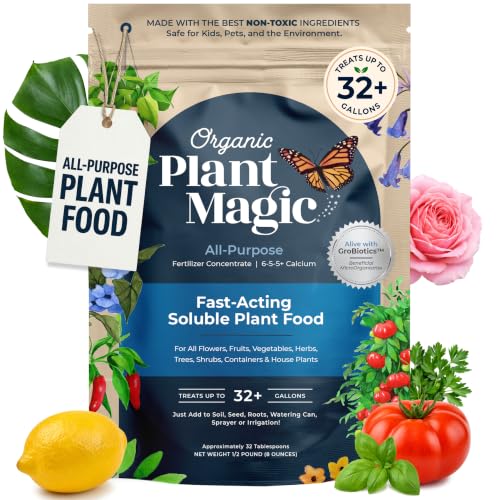
Soil is only half the story in a container; feeding is the other half. This water-soluble fertilizer concentrate is a powdered organic plant food that you mix with water and pour onto pots. The 1/2-pound bag is small in the hand, but according to the source it makes more than 32 gallons of liquid feed, which covers a long season of regular watering for a full container garden.
Because it is water-soluble, nutrients reach the roots quickly. That is helpful during the heavy-feeding stretch of summer when tomatoes, peppers, and squash are setting fruit and pulling hard on the soil reserves.
Features That Help
- One bag stretches across many feedings, so storage stays minimal even in a small kitchen.
- Suitable for vegetables, flowers, herbs, fruit trees, and houseplants, which means a single product can serve an entire growing space.
- Liquid application gets nutrients to the root zone fast, which helps during the high-demand fruiting stage.
Honest Caveats
- Requires consistent mixing and a watering routine; it is not a set-and-forget option, which may frustrate very busy gardeners.
- Used alone without a base mix, it is not a soil substitute; it works alongside the coir, peat, or bagged soils above.
Feature Card
Perfect Match For
Active gardeners who water frequently and want an organic feed that covers the full range of containers on their patio or windowsill.
Look Elsewhere When
You would rather not mix feed at every watering; Organic Plant Magic Slow Release Granular Fertilizer sprinkles in once and feeds over time.
If the water-soluble option above sounds like more mixing than you want, this granular version is the calmer sibling. You sprinkle the granules into the planting hole, mix them into the top layer of soil, or top-dress by hand. Slow release means the nutrients break down gradually, feeding plants over weeks rather than minutes, which is a gentle fit for containers that cannot hold a lot of reserve fertility.
The 4-pound bag covers a meaningful footprint, and the source describes it as suitable for vegetables, flowers, fruit trees, shrubs, and houseplants. In a container garden setting, that flexibility removes the need to keep multiple fertilizers on hand.
Where It Excels
- One application feeds over a long window, which is easier to maintain than weekly liquid feedings.
- Simple sprinkle-and-mix setup is friendly to first-time gardeners and busy households.
- Works across edible and ornamental containers, so the same bag supports a mixed patio.
Small Caveats
- Slow release means you cannot rescue a starving plant as fast as with a water-soluble feed; the response time is by design longer.
- Granules can clump in humid storage, depending on your shed, so a sealed bin is a good idea.
Who Should Grab It
Growers with several containers who want a low-maintenance organic feed and would rather spend time harvesting than measuring fertilizer at every watering.
Swap It Out When
You are starting a single small herb pot and would rather not buy a 4-pound bag; Organic Plant Magic All-Purpose Fertilizer comes in a more compact size.
For someone setting up a container vegetable bed from a clean slate, this bundle pairs the compressed potting soil from Item 4 with the slow release granular fertilizer from Item 6. That removes the question of which feed matches which medium; the two are designed to work together, with the soil expanding 4x on hydration and the granules feeding plants over a long stretch.
The source notes the fertilizer component can cover up to 1,000 square feet, which is more than most home container setups will use in a season. That headroom is helpful for gardeners with multiple beds or a community plot.
Positive Points
- Single purchase covers both the growing medium and the long-term feed, simplifying a new setup.
- Compressed soil keeps the package small until you hydrate it, which is easier to handle than a heavy pre-bagged soil.
- Slow release fertilizer reduces how often you need to remember to feed mid-season.
Points To Keep In Mind
- The compressed soil still yields a modest finished volume, so multiple pots will need extra bags of medium.
- As a bundle you cannot tune the ratio of soil to fertilizer for very small projects; the granular feed is sized for a larger footprint.
Feature Rundown
Built With In Mind
First-time container gardeners who want a matched soil-and-feed pairing and would rather not research two separate products.
A Better Fit Elsewhere
Gardeners who already have a bagged soil they trust will save money buying Organic Plant Magic Slow Release Granular Fertilizer on its own.
Think of this as the bigger sibling to the MODELLOR bricks. A single 11-pound compressed block of coco peat expands to roughly 79 quarts (about 2.65 cubic feet) of peat-free (meaning it does not use harvested peat moss, which protects sensitive bog ecosystems) growing medium. That is enough to fill a row of large planters, a few grow bags, or a long rectangular container along a deck railing.
The source describes it as triple-washed and low in salts, similar to the smaller coir products above. The trade-off is the weight: 11 pounds is more than the small bricks but still a fraction of an equivalent loose-bag shipment.
The Value In It
- High expansion ratio turns a manageable block into a serious volume of finished medium.
- Peat-free composition is friendlier to bog ecosystems than traditional peat-based mixes.
- Works equally well as a base mix or as a soil lightener mixed into an existing blend.
Less Ideal Details
- You will need a large container or wheelbarrow to hydrate the block comfortably, which is not realistic in a small kitchen sink.
- As with the smaller coir products, it contains very little inherent nutrition, so pair it with a fertilizer like Organic Plant Magic All-Purpose Fertilizer for fruiting crops.
Whose Shelf It Belongs On
Container gardeners filling multiple large pots, grow bags, or a long planter who want a clean coir base without hauling loose-bag soil.
Not Your Match When
You have only a couple of small herb pots; the MODELLOR Coco Coir Bricks 4-Pack is sized for smaller projects.
This entry shares its core spec sheet with Item 2: a 9.1-pound compressed coco mulch block expanding to 64 quarts and covering up to 17.5 square feet. The role here is different. Where Item 2 was a first-time-purchase recommendation, this one is positioned for gardeners who already know they like the PlantBest mulch and want a straightforward reorder listing.
Functionally, the two blocks do the same job. The point of including both is to show the option exists across listings, which helps when one version is temporarily unavailable or ships faster for your area.
A Strong Showing
- Same reliable expansion and coverage as the original PlantBest mulch block.
- Easy to lift from the porch to the patio without dragging a heavy loose bag.
- Reorders are simple for gardeners who have already worked out their mulching routine.
A Few Limitations
- Like the other mulch block, it does not substitute for a soil mix; it is a top-dress product.
- Storing a 9.1-pound block still requires a dry corner, depending on your shed space.
The Right Fit
Container gardeners refreshing mulch mid-season who want to reorder a product they already know and trust.
Another Choice May Suit
First-time mulch shoppers should start with the original PlantBest Coco Mulch listing and compare both options once familiar with the product.
Vermiculite is a heat-expanded mineral that holds water and air in soil, and the coarse grade here is built for horticulture rather than industrial use. You would not fill a pot with vermiculite on its own; the value comes from blending it into a base mix to improve water retention and aeration at the same time.
For container vegetable gardening, that is useful in pots that dry out quickly, like terra-cotta planters along a sunny wall, or in seed-starting blends where even moisture matters. The source describes it as clean, odorless, non-toxic, and pH neutral, with no rot or mold risk over time.
Everyday Advantages
- Mineral-based conditioner that does not break down, so a single bag lasts across many seasons of mixing.
- Improves both water retention and air pockets, which addresses two common container problems at once.
- pH neutral and odorless, so it does not fight the rest of the soil chemistry.
Some Limits To Know
- Not a standalone growing medium, so you still need a base mix or coir to fill the pot.
- Coarse grade is well suited to large containers and outdoor mixes, but you may find a finer grade more appropriate for small seed-starting cells.
Who Will Love This
DIY mixers who like to build their own blends and want a long-lasting mineral conditioner to dial in water and air balance.
Where A Sibling Pick Shines
Container gardeners who want a one-step solution will find PlantBest Coco Peat Garden Soil easier, since it is ready to hydrate and use on its own.
What Matters Most When Picking Soil Mixes For Container Vegetable Garden
Container vegetable gardens live and die on three attributes: drainage, water retention, and feed. Drainage matters because roots suffocate in soggy soil, especially in plastic or glazed pots without a lot of surface evaporation. Water retention matters because containers dry out faster than ground beds, often within a single hot afternoon. Feed matters because a small pot of soil holds only a fraction of the nutrients a vegetable plant needs over a full season, and the plant cannot forage beyond the container wall.
Drainage And Aeration
A good container mix feels light and crumbly when you squeeze it, and it does not turn into a muddy paste after watering. Coco coir, perlite, and vermiculite are common ingredients because they create air pockets that roots need to breathe. The picks above lean on coir for lightness, and PVP Industries Horticultural Coarse Vermiculite for gardeners who want to dial in aeration on their own.
Water Retention Without Waterlogging
The opposite problem, soil that drains so fast the plant wilts by noon, is just as common in containers. Coir and vermiculite both hold water while still letting excess drain. In hot, sunny patios, mulching the surface with PlantBest Coco Mulch slows evaporation further and reduces how often you have to water.
Nutrition For The Long Season
Vegetables pull hard on soil nutrients, and containers cannot recycle fertility the way a ground bed can. A pre-charged bag like FoxFarm Ocean Forest Potting Soil covers the first stretch, and a slow release granular like Organic Plant Magic Slow Release Granular Fertilizer carries the rest of the season with minimal effort.
Storage, Weight, And Practicality
How you get the soil to the pot matters as much as what is in the bag. Compressed coir blocks and granular fertilizers are far easier to carry up apartment stairs than a 40-pound bag of wet soil. For small-space gardeners, the MODELLOR bricks or Organic Plant Magic compressed soil tuck into a closet, while the larger PlantBest block suits a garage or shed.
Smart Choices Across These Picks
Pitfalls Shoppers Hit
The most common mistake is grabbing a bag of “garden soil” instead of “potting soil.” Garden soil is designed to be mixed into the ground; in a container it compacts, drains poorly, and can introduce weed seeds. Every product on this list is either a true potting mix, a coco coir medium, a soil amendment, or a fertilizer, none of which carry that risk.
Another slip is ignoring weight and storage. A bargain bale of soil is not a bargain if you cannot carry it from the car to the patio. Compressed blocks, smaller bags, and concentrated fertilizers are often the smarter pick for small homes, even when the per-quart price is higher.
The Upgrade Payoff
The step up from a basic compressed coir to a richer blend like FoxFarm Ocean Forest is mostly about convenience and nutrition. You pay more per cubic foot, but you skip the need to source and measure your own amendments. The step up from a water-soluble fertilizer to a slow release granular is about routine. The higher-tier product costs more up front, but it saves you the weekly mixing and remembering, which for many gardeners is the difference between feeding consistently and feeding sporadically.
Frequently Asked Questions
How Often Should I Replace The Soil In My Vegetable Containers?
Refresh the top third each season and fully replace the mix every two to three seasons, depending on what you grew. Heavy feeders like tomatoes and cabbage use up nutrients faster than herbs and lettuce. Refreshing with new compost or a slow release fertilizer at the start of each season is a common approach.
Can I Mix Different Products From This List Together?
Yes, and that is often the smartest move. A common recipe is two parts coco coir to one part compost, with a slow release granular mixed in at planting. You can also blend vermiculite into a coir base for extra water retention in hot, exposed locations.
Is Coco Coir Better Than Peat Moss For Containers?
Coco coir is a popular peat alternative because it is a renewable byproduct, holds water well, and rewets easily after drying out. Peat moss is traditional but tends to repel water when it dries, which can frustrate container gardeners. Either works, though coir is generally easier for beginners to manage.
Do I Still Need Fertilizer If I Use A Pre-Charged Bagged Soil?
For the first few weeks, no. After that, heavy feeders like tomatoes, peppers, and squash will need supplemental feeding. A water-soluble or slow release organic fertilizer extends the productive life of the same bag of soil across the season.
How Much Soil Does A Typical Vegetable Container Need?
A 5-gallon container holds roughly 0.7 cubic feet of soil, and a 10-gallon container holds around 1.4 cubic feet. Most bagged potting soils list their volume, and compressed coir blocks list their expanded yield, so you can match the product to the size of your pots.
Closing Remarks
Container vegetable gardening rewards a thoughtful start. The right soil mix gives roots the drainage, moisture, and nutrition they need in a small space, and the right fertilizer keeps that mix productive through a full season. Match the product to the size of your setup, the crops you grow, and the storage you have, and the rest of the season tends to take care of itself.
