

A soggy pothos, a crispy fern, and a tomato plant that refuses to set fruit usually trace back to one culprit: guessing when to water. Soil moisture meters take that guesswork out, giving you a quick read on what’s actually happening at root level rather than what the surface looks like. The nine picks below cover a wide range of gardening setups, from a single houseplant shelf to a raised-bed kitchen garden and everything in between. Each one was chosen for a clear reason, whether it’s probe depth, multi-function capability, or sheer ease of use for beginners.
A Snapshot Of The Selections

Wirezar Soil Thermometer, 5 Inch Stainless Steel Stem

XLUX Soil Moisture Meter, Indoor and Outdoor

XLUX Long Probe Soil Moisture Meter

XLUX 2 Pack Long Probe Soil Moisture Meter
LAWNFUL Digital Soil pH Meter, LCD Display

EDGEVEIL 4-in-1 Wireless Soil Meter
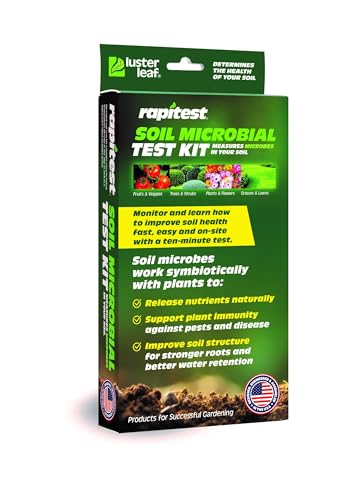
Rapitest Soil Microbial Test Kit
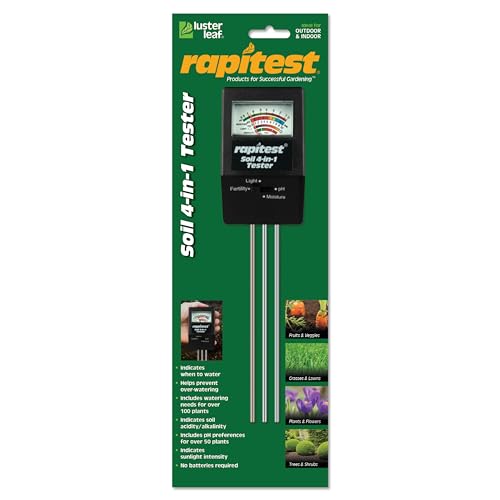
Luster Leaf Rapitest 4-in-1 Soil Tester
Aenncci 2-in-1 Soil Moisture and pH Meter
A Closer Look At Each Pick
Most moisture meters measure hydration, but soil temperature quietly drives seed germination, microbial activity, and compost readiness. The Wirezar probe handles that side of the equation with a five-inch stainless steel stem that sinks deep enough to reach the active core of a backyard compost pile or the root zone of a raised bed.
Unlike the XLUX meters reviewed below, this one focuses on temperature rather than moisture, so it suits gardeners who already understand hydration cues and want a data point on warmth. For most backyard composters, that temperature read is the missing link between a pile that stalls and one that cooks.
Points In Its Favor
- Five-inch stainless stem reaches active compost cores and deep root zones
- Waterproof construction handles wet soil and outdoor conditions without complaint
- Battery-free analog dial reads at a glance, even in dim garden sheds
- Probe length suits raised beds and containers without the unwieldiness of pro-length stems
- Useful companion piece alongside any moisture-focused meter in this lineup
Things To Consider
- Does not measure moisture, so it complements rather than replaces a moisture meter
- Analog dial requires you to interpret temperature values without a digital readout
Who It Suits Best
Composters and raised-bed gardeners tracking soil temperature for seed-starting timing and pile activity benefit most.
Where Another Pick Suits Better
For pure moisture tracking in standard houseplant pots, the XLUX Soil Moisture Meter offers a simpler, purpose-built read.
When you picture a soil moisture meter, the XLUX is usually the mental image that comes to mind. A single probe, an analog dial face, and a color-coded scale running from dry to wet. It strips watering decisions down to one question: where on the dial does the reading sit?
This is the pick most casual indoor gardeners end up reaching for, and compared to the temperature-focused Wirezar above, it zeroes in entirely on moisture. For most houseplants and patio containers, that’s exactly the information you need to stop overwatering.
Where It Helps
- Battery-free analog operation means no power cells to swap mid-season
- Single-probe design works in pots, planters, and small garden beds
- Color-coded dial translates moisture into beginner-friendly zones
- Lightweight build moves easily from indoor shelf to outdoor patio
Points To Note
- Probe length runs shorter than the long-probe XLUX variants, limiting deep-pot reach
- Analog readings give a zone rather than a precise percentage
- Probe should be wiped clean between uses to avoid cross-contaminating readings
Made For
Houseplant owners and casual gardeners who want a fuss-free moisture read without digital complexity.
Consider Something Else When
Tall floor planters and deep nursery pots call for the XLUX Long Probe variant further down the list.
Standard probes read the top few inches of soil, but root balls in tall planters sit much deeper, where surface moisture tells you nothing useful. The XLUX Long Probe variant extends 5.5 inches beyond the regular stem, giving the sensor access to the bottom of larger and deeper flower pots.
Compared to the standard XLUX above, the trade-off is a slightly longer probe that’s a touch harder to maneuver in tight four-inch starter pots. For anyone growing in deep planters, snake plants, or tall floor containers, that extra reach is the difference between a real reading and a guess.
Practical Pluses
- 5.5-inch probe reaches the lower root zone in tall planters
- Same battery-free analog simplicity as the standard XLUX
- Large, easy-to-read dial suits quick spot checks during watering routines
- Single-probe format works in indoor and outdoor settings
Trade Offs
- Longer probe can feel unwieldy in shallow seed-starting trays
- Probe tip should not be forced into compacted soil, which can bend the stem over time
Best Suited To
Plant parents with deep pots, large floor planters, or container trees where shallow probes can’t reach active roots.
Look Elsewhere When
Seed-starting trays and small succulents call for the shorter standard XLUX probe.
Once you start using a moisture meter, you quickly discover why a two-pack makes sense: kitchen window herbs, living room plants, and patio containers all benefit from separate, dedicated probes. Same story with this twin set of XLUX long-probe meters, which doubles the deep-reach capability reviewed above.
For multi-zone plant collections, this bundle sidesteps the hassle of carrying one probe from room to room. Each meter handles its own location, so a quick spot check on a fiddle leaf fig no longer requires trekking to the patio first.
Useful Highlights
- Two long-probe meters cover multiple rooms or garden zones
- Battery-free analog operation matches the rest of the XLUX line
- Large dial readability carries over from the single-pack version
Worth Noting
- Two-probe setup means more storage spots to keep track of
- Same long-probe caveats apply in shallow containers
Who Should Grab It
Collectors with plants scattered across rooms, greenhouses, or patio zones find the two-pack format genuinely practical.
Swap It Out When
Single-plant households only need one meter, in which case the XLUX Long Probe alone is a cleaner fit.
Moisture tells you when to water, but pH tells you whether plants can actually absorb the nutrients waiting in the soil. The LAWNFUL digital meter steps away from the analog world entirely, delivering a numerical pH reading on an LCD screen via a double-needle stainless-steel probe. It’s a different tool for a different question.
Unlike the XLUX meters reviewed above, this one does not measure moisture. It measures soil acidity on a numeric scale, which matters most for vegetable gardeners, blueberry beds, and anyone amending soil with lime or sulfur. Calibration-free operation keeps setup simple, though, so you won’t be fussing with buffer solutions.
Where It Excels
- Digital LCD readout delivers a numeric pH value rather than a colored zone
- Double-needle probe improves sensitivity and corrosion resistance
- Calibration-free setup suits gardeners without lab experience
- Handheld design weighs roughly 160 grams for easy garden carry
Honest Caveats
- Focuses on pH only, so a separate meter is needed for moisture tracking
- Probe requires cleaning between samples to avoid residue skewing later readings
Right Fit For
Vegetable gardeners, lawn renovators, and amendment users who need to track soil acidity numerically.
A Better Fit Elsewhere
Houseplant owners chasing simple watering cues should consider the Luster Leaf 4-in-1 tester reviewed further down.
Most meters in this list require you to walk to the plant and read a dial. The EDGEVEIL flips that script with wireless transmission, sending real-time moisture, temperature, and sunlight readings to a large remote screen you can mount on the fridge or set on a shelf. The plant-facing probe flashes a low-moisture alert on its own, so a quick glance tells you what’s needed.
Compared to the analog XLUX meters above, the trade-off is complexity and cost. For tech-forward indoor gardeners managing a house full of plants, though, the remote readout eliminates a lot of pot-to-pot wandering.
Noteworthy Benefits
- Wireless remote screen reads from across the room
- Tracks moisture, soil temperature, and sunlight exposure in one probe
- On-probe low-moisture alert flashes without checking the remote
- Large display suits users who find small analog dials hard to read
Possible Compromises
- Wireless pairing and power requirements add setup steps over analog meters
- More components mean more storage spots for probe, screen, and any cable
Who Will Love This
Indoor gardeners running a large plant collection who want remote monitoring without walking room to room.
Reach For A Different Pick When
Simple single-pot watering decisions still work fine with the classic XLUX Soil Moisture Meter.
Moisture meters track hydration, but soil biology is the invisible engine under plant health. The Rapitest Microbial Test Kit takes a different approach entirely, using a smartphone-guided app to score microbial activity and recommend amendments like compost, kelp, mycorrhizae, or worm castings based on results.
No probe, no dial, no analog scale. You collect a soil sample, run the app-based protocol, and get actionable guidance rather than a single number. For gardeners wrestling with underperforming beds despite correct moisture, biology is often the missing piece.
Notable Gains
- Smartphone-guided protocol works on iPhone and Android without subscription fees
- Actionable amendment recommendations tailored to your microbial score
- Unlimited tests run through the same app at no extra cost
- Designed, engineered, and assembled in the USA
Small Caveats
- Does not measure moisture or pH directly, so it complements rather than replaces a moisture meter
- Sample collection and app workflow take longer than a quick probe dip
Built With In Mind
Soil enthusiasts and amendment-focused gardeners looking beyond hydration into the biology layer benefit most.
Where A Sibling Pick Shines
For routine watering decisions, the XLUX Long Probe gives faster, simpler reads without the test workflow.
The Luster Leaf Rapitest crams four soil indicators into one probe-style meter. Sunlight exposure, fertility, moisture, and pH all toggle through on a single analog display. Where the moisture-only meters above answer one question, this one answers four before you head back inside.
The trade-off is depth. As a probe-style device, it reads the same surface-level zone that basic moisture meters cover, so it won’t help much with deep-pot root zones. For lawn care, garden beds, and outdoor soil prep, however, the breadth of data is hard to match at this size.
Notable Upsides
- Triple-probe design measures four soil indicators: moisture, pH, fertility, and sunlight
- Battery-free operation keeps setup simple
- Toggle switch moves between readings without swapping tools
- Compact build stores easily in a garden shed or potting bench drawer
Factors To Consider
- Probe-style format reads topsoil rather than deep root zones
- Multiple readings per session means slightly more interpretation per check
Whose Shelf It Belongs On
Outdoor gardeners and lawn-care enthusiasts who want a single tool covering four basic diagnostics.
Not Your Match When
Deep planters and tall pots call for the longer-reach XLUX Long Probe variant.
Single-function meters force a choice: track moisture or track pH, but not both. The Aenncci 2-in-1 sidesteps that with a dual-dial design that puts moisture and pH side by side, so a single probe dip returns two readings at once. For new gardeners learning what their soil needs, that combined data point speeds up the curve.
Compared to the Luster Leaf 4-in-1 reviewed above, this one trades sunlight and fertility data for a simpler two-function focus. If you’re just starting out and don’t yet know what fertility tests tell you, fewer readings per check can actually be a benefit.
Bright Spots
- Dual-dial design shows moisture and pH simultaneously on one probe dip
- Battery-free analog operation keeps things simple for new gardeners
- Large dial face improves readability in low light
- Useful across garden beds, lawns, and indoor pots
A Few Limitations
- Probe length suits topsoil rather than deep root zones
- Dual readings require cleaning between probe dips to keep results consistent
- Fewer indicators than the Luster Leaf 4-in-1 reviewed earlier
Perfect Match For
New gardeners learning the basics of moisture and pH in one easy-to-read tool.
Skip It When
Garden diagnosticians wanting sunlight and fertility data benefit more from the Luster Leaf 4-in-1.
Picking The Right Soil Moisture Meter For Your Garden
Probe depth matters more than most shoppers expect. A standard four-inch probe reads topsoil moisture, which works for herbs and small pots, but tall planters and deep root systems need the longer 5.5-inch variants to reach active roots. Match the probe to your deepest container, not your average one.
Analog versus digital comes down to reading style. Analog dials give a color-coded zone that translates quickly into “water” or “wait,” which suits casual use. Digital meters deliver numeric values that help when you’re tracking changes over time, such as pH drift across a growing season or moisture trends in a problem bed.
Multi-function meters save trips to the shed but trade depth for breadth. A 4-in-1 tester reads topsoil moisture, pH, fertility, and sunlight in one dip, which covers broad garden diagnostics. For deep pots, however, a longer dedicated probe still wins.
Specialty tools fill specific gaps. A microbial test kit answers biology questions that moisture meters ignore, and a soil thermometer tracks compost readiness and seed-starting timing that hydration reads cannot. Build your kit around the question you most need answered first.
Key Considerations Across These Picks
Mistakes Worth Dodging
Buying a short probe for a tall planter is the most common slip. Surface moisture in a deep pot can read moist while the root ball below sits bone-dry, leading to the exact underwatering problem you were trying to solve. Match probe length to your deepest container before anything else.
Another trap is treating multi-function meters as a substitute for purpose-built tools. A 4-in-1 tester is great for garden beds, but for tall planters, a longer dedicated moisture probe gives more useful data. Specialty tools earn their spot by answering questions general meters cannot.
When Paying More Pays Off
Higher-tier models in this category typically add wireless readouts, digital pH accuracy, or microbial analysis rather than basic hydration tracking. The upgrade is worth it for gardeners managing large plant collections where remote monitoring saves real time, or for soil enthusiasts digging into biology beyond simple watering cues.
For single-room houseplant setups, the analog entry-level meters already do the core job well, and spending up mostly buys convenience rather than capability.
Frequently Asked Questions
How accurate are soil moisture meters?
Analog probe-style meters give a reliable moisture zone rather than a precise percentage, and that zone is accurate enough to guide watering in most situations. Digital pH meters tend to read more precisely within their operating range, though both types work best as a guide rather than a lab-grade measurement.
Can you leave a soil moisture meter in the soil all the time?
Most analog probe meters are designed for spot checks rather than permanent installation. Leaving them inserted long-term can corrode the probe and confuse readings, so a quick dip and wipe routine is the safer pattern.
Do soil moisture meters work for all plant types?
They work across most common houseplants, herbs, vegetables, and lawn grasses. Very sandy or very dense clay soils can skew readings, so a quick cross-check with finger-depth feel helps confirm borderline cases.
What’s the difference between a moisture meter and a pH meter?
A moisture meter measures hydration on a wet-to-dry scale. A pH meter measures soil acidity on a numeric scale, telling you whether nutrients are actually available to roots. They answer different questions, and serious gardens often use both.
How deep should a soil moisture meter probe be?
For standard pots under eight inches tall, a four-inch probe reaches the active root zone. For taller planters, floor containers, and small trees, a 5.5-inch or longer probe is the safer choice.
The Takeaway
The right soil moisture meter depends on what your garden actually needs: a simple probe for houseplants, a long-probe variant for tall containers, or a multi-function tester for broader outdoor diagnostics. Match the tool to your deepest container and most pressing question, and the watering guesswork mostly disappears.
