

Bermuda grass thrives on a specific kind of foundation: well-draining, slightly acidic, nutrient-rich soil with steady organic matter. Most homeowners notice thin patches and slow spring green-up long before they realize the underlying problem lives in the dirt. Picking the right soil amendment or top-dressing product sets the stage for denser turf, deeper roots, and a lawn that actually holds up through summer stress. Whether you’re patching bare spots, reworking a tired yard, or building a brand-new Bermuda area from scratch, the ten products below cover the full range of soil needs Bermuda grass asks for.
A Fast Comparison Of The Options

The Andersons Dirt Booster Plus Compost Starter (20 lb.)
The Andersons Humic DG Organic Soil Amendment (40 lb)

Espoma Organic Soil Acidifier Elemental Sulfur (30 lb.)

Wonder Soil Compressed Coco Coir 3-Brick Pack (30 Quarts)

Coast of Maine Cobscook Blend In-Ground Garden Soil (1 cu ft)

The Andersons HumiChar Humic Acid and Biochar (40 lb)
Wonder Soil Organic Potting Soil Coco Coir (12 Quarts)

Wonder Soil Compressed Coco Coir Block (72 Quarts)

Back to the Roots Organic Coir (51 Quart Expanding Soil)
Miracle-Gro Sphagnum Peat Moss (8 qt., 2-Pack)
The Details Behind The Selections
Bermuda grass loves biologically active soil, and The Andersons Dirt Booster Plus feeds exactly that layer below the surface. The 20-pound bag combines microbials, biochar, humic acid, corn distillates, and molasses into one amendment designed to jump-start soil life. For homeowners staring at a lawn that greens up late and struggles through July, this kind of microbial activation often shows up as faster root spread within a few weeks. Spread it across the yard before a rain or watering pass and let the soil biology do the heavy lifting.
Compared to the heavier humic blends on this list, Dirt Booster Plus is more about waking dormant soil than rebuilding structure. It works well as a spring kick-start paired with a standard fertilizer program.
Real-World Strengths
- Blends microbials, biochar, and humic acid in a single application, so you avoid stacking three separate products.
- Targets the biological layer Bermuda grass depends on, which can translate into quicker spring green-up in tired yards.
- Granular format spreads evenly with a standard broadcast spreader, no mixing required.
- 20-pound bag covers a meaningful lawn section without becoming a storage hassle in a small garage.
Things To Consider
- Works best when watered in within 24 hours of application, so timing around rain or irrigation matters.
- Won’t replace a balanced fertilizer program on its own; you’ll still want nitrogen during the active growing season.
Who It Suits Best
Homeowners reviving a tired Bermuda lawn who want to feed the soil biology rather than just push nitrogen into the blades.
Skip It When
You need long-term soil structure rebuilding, where The Andersons HumiChar Organic Soil Amendment will serve you better.
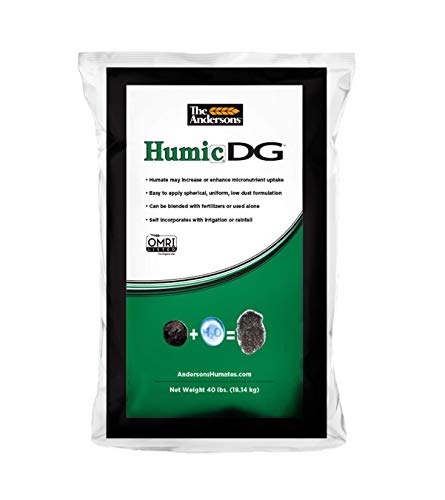
Humic acid is one of the most reliable soil amendments for Bermuda grass, and the Andersons Humic DG packs a notably concentrated 70% humic content into a 40-pound bag that covers up to 40,000 square feet. Humic acid is essentially stabilized organic carbon, and it works by chelating nutrients (binding them into forms grass roots can actually absorb) and by feeding the beneficial microbes that drive turf health. For large Bermuda lawns, that kind of coverage means fewer refills and a single application can move the needle on soil organic matter.
The DG (dispersible granule) format is what separates this from cheaper humic powders: the granules break down quickly when watered, so you get fast uptake without the dusty mess.
Reasons It Performs
- 70% humic content means a smaller application delivers a meaningful carbon boost to depleted sandy soils.
- Dispersible granule technology breaks down rapidly with irrigation, so the amendment reaches roots faster than powder alternatives.
- 40-pound bag covers up to 40,000 square feet, ideal for full-lawn treatments on standard residential lots.
- Improves fertilizer efficiency, which can reduce how much nitrogen you need over a season.
Honest Caveats
- Storage takes some space; the bag is bulky and you’ll want a dry spot to keep it from clumping.
- You won’t see dramatic color change overnight; the real benefit builds over a full growing season.
- Doesn’t address alkaline pH on its own, so pairing with Espoma Organic Soil Acidifier may help in high-pH regions.
The Right Fit
Homeowners with larger Bermuda lawns rebuilding carbon content and chasing stronger root mass across the entire yard.
A Better Fit Elsewhere
For pure pH correction, the Espoma Organic Soil Acidifier is the more targeted tool.
Bermuda grass prefers a slightly acidic pH between about 6.0 and 6.5, and lawns in alkaline regions often struggle no matter how much fertilizer goes down. Espoma’s Organic Soil Acidifier uses pelletized elemental sulfur to gradually lower soil pH, giving roots a friendlier environment to absorb iron and other micronutrients. Elemental sulfur is the safer long-term choice over aluminum sulfate, which can build up toxic aluminum levels with repeated use.
The 30-pound bag is a serious amount of material, and most homeowners won’t need it every season. Treat it as a corrective tool applied once or twice per year based on soil test results rather than a regular lawn-care product.
Practical Advantages
- Pelletized format spreads cleanly through a broadcast spreader without the dust common to powdered sulfur.
- Safer than aluminum sulfate over time, especially in beds that may eventually host other plantings.
- Works gradually, so there’s little risk of shocking soil biology with a sudden pH swing.
- 30-pound bag treats meaningful lawn areas, reducing the need for repeat purchases.
Points To Keep In Mind
- Takes weeks to months to fully shift pH, so don’t expect instant greening after a single application.
- Should only be used after a confirmed soil test, since over-application can push pH too low.
Made For
Homeowners in alkaline-soil regions (much of the Southwest and parts of the Plains) where Bermuda grass can’t access iron and micronutrients efficiently.
Look Elsewhere When
Your pH is already in the right range, in which case the Wonder Soil Compressed Coco Coir 3-Brick Pack offers better seed-starting value.
Coco coir (the fibrous husks of coconut shells, processed into a soil-like medium) is a smart choice for Bermuda patch repairs and seeding because it holds moisture without becoming soggy. Wonder Soil’s 3-brick pack expands to about 30 quarts once water hits it, which is more than enough to refresh several bare spots or blend into a top-dressing mix. The added worm castings and mycorrhizae give new seedlings a nutritional head start.
Storage is where this format shines: three compact bricks fit on a shelf, and you hydrate only what you need. Compared to the larger Wonder Soil 72-quart block later in the list, this is the right size for spot work.
Everyday Advantages
- Compressed format saves significant storage space compared to bagged topsoil or peat.
- Expands to roughly 10 quarts per brick, enough for multiple patch repairs without buying in bulk.
- Pre-loaded with worm castings and mycorrhizae, so seedlings get biological support from day one.
- Lightweight when dry, making it easy to carry around a yard without strain.
Softer Spots
- Requires hydration time before use, so plan ahead rather than expecting instant spread-ready material.
- Coarser texture than peat moss, which may not blend as smoothly into fine top-dressing applications.
Best Suited To
Homeowners patching small Bermuda areas or starting new seed who want a lightweight, peat-free medium.
Not Your Match When
You’re top-dressing an entire established Bermuda lawn, where Coast of Maine Cobscook Blend In-Ground Garden Soil covers more ground per bag.
For an actual in-ground soil you can spread directly onto Bermuda areas, Coast of Maine’s Cobscook Blend brings together sphagnum peat moss, compost, and aged bark. That trio addresses the three things Bermuda grass craves: moisture retention, organic nutrition, and the kind of structure that resists compaction in clay-heavy yards. At one cubic foot per bag, it’s a manageable size for spot top-dressing or building up raised Bermuda sections.
The honest read is that this is a premium-priced blend, so the math works best for targeted use rather than blanketing a half acre. Where it really earns its place is on compacted or sandy patches where Bermuda simply won’t take hold.
Real Benefits
- Three-component blend (peat, compost, aged bark) addresses moisture, nutrition, and structure in one product.
- Works into sandy, compacted, or clay soils without needing separate amendments for each problem.
- Suitable for top-dressing established Bermuda beds to reduce weeds while enriching the surface layer.
- OMRI-listed organic ingredients, fitting for homeowners avoiding synthetic soil treatments.
Practical Considerations
- Premium pricing per cubic foot means larger projects add up quickly in cost.
- Heavier than coir-based options, so transporting multiple bags takes some effort.
Right Fit For
Homeowners rebuilding problem Bermuda areas on compacted or nutrient-poor soil who want an organic, ready-to-spread blend.
Reach For A Different Pick When
You’re seeding a large area on a tight budget, where the Wonder Soil Compressed Coco Coir Block (72 Quarts) offers more volume per dollar.
Biochar is a form of charcoal designed for soil use, and pairing it with humic acid gives this Andersons product a one-two punch for long-term soil rebuilding. Biochar’s highly porous structure holds water and nutrients in the root zone, while humic acid feeds the soil biology that drives nutrient cycling. For Bermuda grass planted in sandy or depleted soils, this combination can meaningfully shift how the lawn performs over multiple seasons.
The DG (dispersible granule) format means low dust at application and rapid breakdown once watered in. It’s OMRI-listed, so it fits organic lawn-care programs.
What It Does Well
- Combines biochar and humic acid in one application, addressing both water retention and biological nutrition.
- Dispersible granule technology breaks down efficiently with irrigation, reaching the root zone quickly.
- OMRI-listed organic certification, suitable for chemical-conscious lawn-care routines.
- Can be blended with other granular fertilizers, simplifying the spreading routine.
Small Caveats
- 40-pound bag is heavy and awkward to handle for a single person.
- Biochar benefits accumulate gradually, so the payoff comes over seasons rather than weeks.
Whose Shelf It Belongs On
Long-term lawn rebuilders who want a one-time structural investment that pays back across multiple growing seasons.
Swap It Out When
You need quick color and growth response, in which case The Andersons Dirt Booster Plus Compost Starter acts faster.
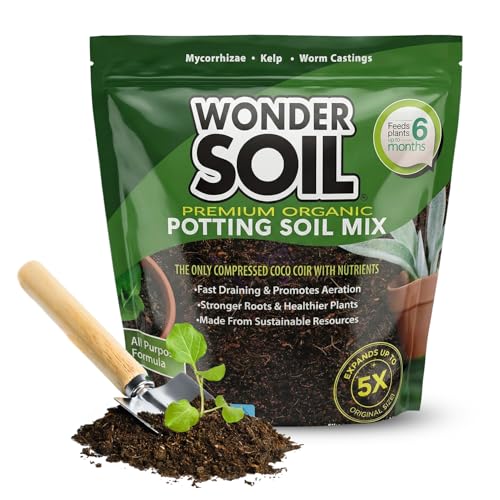
For small Bermuda projects, container growing, or spot seed-starting on a balcony or patio, this 3-pound bag of compressed Wonder Soil expands to 12 quarts of ready-to-use medium. It’s peat-free, pet-safe, and family-safe, which matters for households with curious kids or animals digging around the lawn. The added worm castings, perlite, and mycorrhizae make it more than just plain coir.
It’s the smallest volume option in the Wonder Soil lineup, so it fits where the 30-quart and 72-quart versions don’t make sense.
What Works In Its Favor
- Smallest compressed format, ideal for apartment storage or one-off seeding projects.
- Peat-free and family-safe composition, a plus for households avoiding peat harvesting concerns.
- Includes perlite for aeration and worm castings for biological nutrition in one mix.
- Hydrates quickly compared to denser compressed blocks.
Less Ideal Details
- Limited to 12 quarts of finished medium, so it disappears fast on anything larger than a single patch.
- Container pricing tends to run higher per quart than the larger Wonder Soil blocks.
Who Should Grab It
Small-space gardeners and balcony growers starting Bermuda seeds in containers or repairing modest patches.
Another Choice May Suit
For larger seeding projects, the Wonder Soil Compressed Coco Coir 3-Brick Pack (30 Quarts) gives you more medium for less per-quart cost.
For full-lawn renovations or major Bermuda seeding projects, the 10-pound Wonder Soil block expands to 72 quarts of coir-based medium. That’s enough to amend several hundred square feet of bare ground or blend into a larger top-dressing mix. The same worm castings, mycorrhizae, and kelp found in the smaller Wonder Soil SKUs come along for the ride.
Storage before hydration is the selling point: a 10-pound block takes up far less garage space than 72 quarts of bagged material would.
The Helpful Details
- Expands to 72 quarts, suitable for full-lawn seeding or large patch projects.
- Compressed storage format saves significant space before hydration.
- Pre-amended with worm castings and mycorrhizae for biological support through germination.
- Better per-quart value than the smaller Wonder Soil offerings.
Trade-Offs To Consider
- Hydration takes time and produces a large volume of wet medium that needs to be used promptly.
- Single-block format may be more than casual patch users realistically need.
Built With In Mind
Homeowners undertaking full Bermuda lawn renovations or large overseeding projects who want one bulk purchase to cover the job.
Consider Something Else When
You’re amending existing soil structure rather than seeding, in which case The Andersons HumiChar Humic Acid and Biochar fits the amendment role better.
Back to the Roots keeps the formula simple: 100% organic coconut coir with no added amendments. That makes it a clean, predictable choice for first-time Bermuda seed starters who don’t want to wonder what’s in the medium. The brick expands to about 51 quarts, sitting between the smaller Wonder Soil packs and the 72-quart bulk block.
The tradeoff for the simplicity is that you’re not getting the worm castings or mycorrhizae found in Wonder Soil products. You’ll likely want to add those separately for the best Bermuda seedling results.
Key Advantages
- Pure coir composition, no fillers or surprise additives for first-time users.
- Improves water retention and aeration in starting mixes, both critical for Bermuda seed germination.
- Compact brick format fits on a shelf until needed, no hauling bulky bags.
- 51-quart expanded volume suits medium-sized seeding or patching projects.
Where It May Fall Short
- Lacks the biological amendments other coir products include, so seedlings rely on added nutrition.
- Pure coir dries out faster than peat-based mixes, so watering frequency goes up in summer.
Perfect Match For
First-time Bermuda seed starters who want a clean, predictable medium without extra additives to interpret.
Where A Sibling Pick Shines
For a pre-amended coir blend in a similar size range, Wonder Soil Organic Potting Soil Coco Coir (12 Quarts) brings worm castings and perlite into the mix.
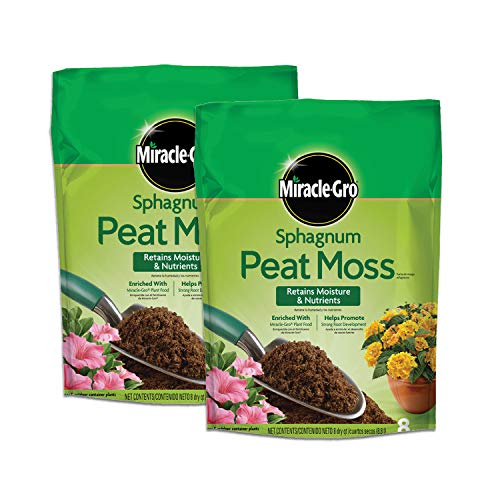
Sphagnum peat moss is the classic soil amendment for moisture retention, and this 2-pack gives 16 quarts total of peat enriched with Miracle-Gro Plant Food. For Bermuda grass lawns struggling through hot summers, mixing peat into sandy soils helps the root zone hold water longer between irrigation cycles. It also lightens heavy clay soils, giving roots easier penetration.
The two-pack format makes sense for homeowners blending their own custom lawn soil mix, since peat typically goes in at a meaningful ratio (often 20 to 30 percent of the total volume).
A Favorable Mix
- Trusted peat moss blend with added plant food for a balanced moisture-and-nutrition package.
- Two-pack format offers enough volume for meaningful soil blending on small to mid-sized lawns.
- Works to lighten heavy clay or improve water retention in sandy Bermuda areas.
- Suitable for indoor and outdoor use, useful for households handling multiple project types.
Potential Compromises
- Peat is acidic, so over-application can shift pH below Bermuda’s preferred range without a soil test.
- Smaller total volume than the bulk amendments above, limiting coverage for larger yards.
Who Will Love This
DIY soil blenders who want a peat-based moisture manager to mix into custom Bermuda lawn blends.
Not Your Match When
You need pure pH correction, where the Espoma Organic Soil Acidifier does the job more precisely.
What Bermuda Grass Actually Needs From Its Soil
Bermuda grass thrives when soil delivers three things at once: drainage, organic nutrition, and the right pH window. Sandy soils drain well but lose nutrients fast, while heavy clay holds moisture but resists root spread. Amendments like humic acid and biochar rebuild the middle ground, improving both water retention and nutrient cycling without suffocating roots.
pH matters more than most homeowners realize. Bermuda grass struggles to absorb iron and other micronutrients when soil pH climbs above 7.0, which is why alkaline-region lawns often look pale despite regular fertilization. A simple soil test reveals the starting point and tells you whether elemental sulfur or a different correction path makes sense.
For seeding versus existing lawns, the priority shifts. New Bermuda seed wants a moisture-retentive, biologically active medium like coco coir blends to germinate quickly. Established lawns benefit more from broadcast amendments like humic acid, biochar, or peat moss that work into the existing soil profile over time.
Real-world use scenarios shape which format fits. A homeowner patching two square feet of damage needs a small compressed brick, not a 40-pound bag. Someone rebuilding a half-acre of tired Bermuda wants the bulk humic coverage, not a single cubic foot of premium blend. Match the product size and amendment type to the actual job rather than buying the biggest bag on principle.
Key Considerations Across These Picks
Mistakes Worth Dodging
The most common slip-up is skipping the soil test. Without knowing your starting pH and organic matter level, you’re guessing on amendments that may not address the real problem. Spending on elemental sulfur when your pH is already in range wastes money and risks pushing soil too acidic. Test first, then pick the product that matches the gap.
Another trap is confusing top-dressing soil with seeding medium. Coir blends work beautifully for starting new Bermuda seed but don’t replace the structural amendments needed for established lawn improvement. Mixing the two roles leads to either wasted product or unmet expectations.
When Paying More Pays Off
Premium blends like Coast of Maine’s Cobscook or OMRI-listed amendments cost more per pound, but the extra goes into better ingredient sourcing and balanced organic composition. The upgrade pays off for homeowners managing smaller problem areas where quality matters more than volume, or for anyone committed to organic lawn care who needs verified inputs. For large uniform lawns, bulk humic amendments typically deliver better value per square foot than premium top-dressing soils.
Frequently Asked Questions
What pH does Bermuda grass prefer?
Bermuda grass grows best in soil with a pH between 6.0 and 6.5, which is slightly acidic. Soils above 7.0 often cause yellowing and slow growth, even with regular fertilization, because the grass can’t absorb iron efficiently at higher pH levels.
Can I just use regular topsoil for Bermuda grass?
Standard topsoil works as a base, but Bermuda grass performs better when the soil contains added organic matter like compost, humic acid, or coir. Pure topsoil alone tends to compact and drain poorly, limiting root development.
How often should I amend Bermuda soil?
Most soil amendments for established Bermuda lawns work on a seasonal or annual cycle. Humic acid applications once or twice per year are typical. Coir and peat-based products are usually added during seeding or top-dressing rather than as routine maintenance.
Is coco coir better than peat moss for Bermuda grass?
Coir and peat serve similar moisture-retention roles but differ in pH impact and sustainability. Coir is pH-neutral and renewable, while peat is acidic and harvested from slower-regenerating sources. For Bermuda grass in alkaline soil, peat can help, but coir offers more flexibility.
Do I need a soil test before choosing an amendment?
A soil test is strongly recommended, especially before applying pH-adjusting products like elemental sulfur. The test identifies your pH, organic matter level, and major nutrient gaps, which prevents wasted spending on amendments that don’t address your lawn’s actual needs.
The Takeaway
The right soil work transforms Bermuda grass from a lawn that merely survives into one that visibly thrives. Start with a soil test to identify whether pH, organic matter, or structure is the real bottleneck, then match the product to that specific gap. For most homeowners reviving tired Bermuda, a humic acid amendment paired with proper pH management delivers the strongest return. The picks above cover each of those jobs at the scale and budget that fit your yard.
