

Growing tomatoes in pots is a small-space superpower, but the bag you pour into the planter decides almost everything that follows. Container beds dry out fast, roots have nowhere to roam, and nutrient reserves get exhausted within weeks. A thoughtful mix (or a smart amendment layered into a basic mix) keeps the root zone airy, moisture-retentive, and steadily fed through the long growing season.
You don’t need a degree in horticulture to get it right. Pick a base that drains well, feeds consistently, and matches the scale of your container garden. The lineup below covers dedicated potting mixes, soil boosters, organic amendments, and a tomato-specific liquid feed, so your patio, balcony, or windowsill setup has the foundation it deserves.
The Leading Options At A Glance

Organic Plant Magic Compressed Soil + Plant Food Bundle

FoxFarm Ocean Forest Potting Soil 1.5 cu ft

Espoma Organic Garden Lime 5 lb (2 Pack)

Compressed Organic Potting Soil Coconut Coir Blend
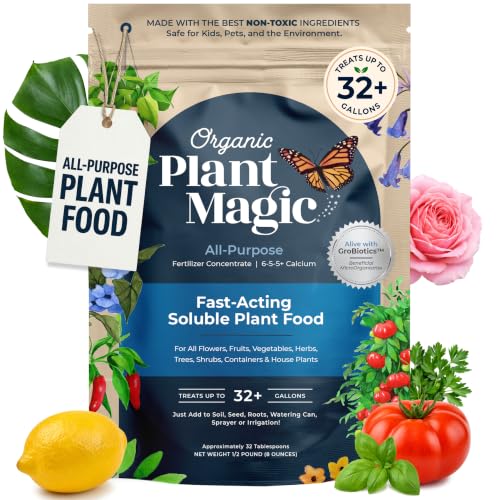
Organic Plant Magic Soluble Plant Food 1/2 lb

Organic Plant Magic Slow Release Granular Fertilizer 4 lb

Organic Plant Magic Soluble + Granular Fertilizer Bundle

Farmer’s Secret Tomato Booster Fertilizer 32 oz
A Deeper Look At The Lineup
If you’re staring at three empty terracotta pots and no clue where to start, this duo takes the guesswork out of the first weekend. The compressed potting soil arrives as a light brick that puffs up to roughly three gallons once water hits it, so a small balcony garden doesn’t require hauling a heavy bag through the building. The companion all-purpose plant food treats a wide footprint and mixes into more than 64 gallons of liquid feed, which gives you plenty of headroom for tomatoes, basil, and anything else you tuck into the same patio corner.
For most first-time container gardeners, this bundle answers the two questions that usually stall the whole project: what’s in the pot and what do I feed it later. You trade the joy of building a custom mix for a clean, almost foolproof path from box to harvest.
A Few Highlights
- Soil brick is light enough to carry in one hand and stores in a closet when not in use
- Expanded volume (3 g) covers several mid-size pots without needing a second bag
- Plant food concentrate stretches across a full season of mixed container use
- No mixing required at the soil stage, just hydrate the brick and pour
- Trace minerals are bundled in, so seedlings get a wider nutrient profile from day one
Trade Offs
- The concentrate has a mild earthy smell while dissolving, which can linger in enclosed rooms
- You’ll still want to refresh or top-dress the soil mid-season in heavy-feeding tomato planters
Who It Suits Best
First-time patio growers who want a turnkey foundation and feeding plan without juggling separate products.
Consider Something Else When
You already have a preferred base mix and only need the feeding side of things, in which case the Organic Plant Magic Fertilizer & Plant Food 1/2 lb is a tighter fit.
FoxFarm’s Ocean Forest has earned a loyal following among tomato growers for one reason: it works on day one. The bag opens to a dark, loamy blend already buffered with earthworm castings, crab meal, and fish meal, so seedlings get a richer start than a neutral peat-based mix would offer. Aeration is built into the texture, which matters in containers where roots can suffocate if the medium compacts.
For a backyard gardener filling a half-dozen grow bags in one afternoon, the 1.5 cu ft volume covers the workload without juggling leftovers. You still want a supplemental feed once the first fruits set, but the baseline fertility holds the plant through its vegetative push without forcing you to mix anything.
Standout Benefits
- Pre-charged organic ingredients support early root development without added synthetics
- Light, fluffy texture resists compaction in tall pots and fabric grow bags
- Ready to use straight from the bag, no amendment required for the first month
- Bulk-friendly volume suits growers filling multiple containers per season
Worth Noting
- Bag weight is substantial, so lugging it upstairs to a rooftop garden takes planning
- Nutrients deplete by mid-season in heavy feeders, so a liquid top-up becomes essential
Quick Facts
Best Suited To
Intermediate growers who want a premium base that needs no recipe work and supports tomatoes from transplant through early fruit set.
Look Elsewhere When
You’re gardening on a fifth-floor balcony with no elevator, in which case the Compressed Organic Potting Soil from Organic Plant Magic saves your back.
Garden lime isn’t a soil on its own, and treating it like one is a mistake many container gardeners make. Espoma’s pelletized dolomitic lime is the tool you reach for when the pH has drifted too low and your tomatoes are paying for it. Acidic soil locks out calcium uptake, which is what causes that flat black patch on the bottom of ripening fruit called blossom-end rot. Lime reopens the door.
The pellet form is easier to scatter evenly across a container surface than powdered lime, which clouds up and clumps in humidity. Each bag covers multiple planter applications, and the dual-pack format means you can amend tomatoes this season and prep hydrangeas next without reordering.
What Stands Out
- Pelletized texture spreads cleanly across pot tops without dust clouds
- Adds calcium to support fruit integrity and reduce blossom-end rot risk
- Suitable for organic gardening protocols and registered input materials
- Two-pack format lasts across multiple seasons for small-scale growers
Points To Keep In Mind
- Over-application can swing pH too high, so a soil test before use pays off
- It’s an amendment, not a growing medium, so it supplements a base mix rather than replacing one
Who Should Grab It
Container growers in regions with naturally acidic soil who’ve already seen blossom-end rot on past crops and want a targeted calcium boost.
Another Choice May Suit
Your mix is brand new and pH-balanced from the bag, so FoxFarm Ocean Forest Potting Soil gives you a ready-to-plant foundation without the extra step.
Coir is the fiber husk left over from coconut processing, and it makes a fantastic light, moisture-retentive base for container tomatoes. This compressed brick ships as a dense puck roughly the size of a coffee table book, then swells to about three gallons once water hits it. You get all the volume of a standard potting soil bag in something you can carry up a narrow stairwell.
The worm castings baked into the formula give seedlings a soft nutrient cushion during the vulnerable first two weeks. For growers short on closet space or stuck without a car, the format removes the single biggest barrier to starting a patio garden.
Key Advantages
- 4x expansion rate turns a small brick into enough medium for several pots
- Coir base resists compaction and keeps roots aerated in tight planters
- Resealable bag keeps unused product dry and ready for next round
- Worm castings feed seedlings through the transplant shock window
Small Caveats
- Coir holds water well, which means over-watering becomes a real risk in non-draining containers
- Once expanded, it dries out faster than peat, so daily checks in summer heat help
Feature Snapshot
Right Fit For
Renters and apartment gardeners who need to stash their soil supplies in a closet between growing seasons and carry everything by hand.
Swap It Out When
You’re filling a dozen grow bags for a serious backyard plot, in which case FoxFarm Ocean Forest Potting Soil delivers more volume per dollar.
A half-pound bag that makes 32 gallons of liquid feed sounds modest until you do the math: a single teaspoon per watering can keeps a small patio of tomatoes, peppers, and herbs going for months. This water-soluble concentrate is the kind of product that quietly disappears into your routine because it dissolves cleanly, doesn’t leave residue in the can, and covers every plant on the porch.
For growers who already own a soil they like but need a steady feed, this jar slots in without ceremony. It dissolves in water and feeds through both leaves and roots, which gives you some flexibility when rain washes nutrients out of the container.
Strengths Worth Knowing
- Half-pound pouch produces 32+ gallons of finished feed, stretching across many applications
- Works on vegetables, herbs, flowers, and houseplants without separate products
- Water-soluble formula means no mess and no measuring spoons beyond a teaspoon
- Organic certification suits growers avoiding synthetic fertilizers
Honest Caveats
- It’s a feed, not a soil, so it pairs with another growing medium rather than replacing one
- Weekly applications are necessary during heavy fruiting, which adds to the chore list
Whose Shelf It Belongs On
Budget-conscious gardeners who already trust their base mix and just need a reliable organic feed to keep plants productive all season.
A Better Fit Elsewhere
You’d rather feed once and forget about it for weeks, in which case the Organic Plant Magic Slow Release Granular Fertilizer handles the schedule for you.
Granular slow-release fertilizer is the set-it-and-forget-it option for tomato growers who don’t want to mix liquid feeds every weekend. You sprinkle a handful into the planting hole at transplant, work another scoop into the top inch of soil mid-season, and let microbial activity break the granules down over time. The release curve follows soil temperature and moisture, so plants pull nutrients when they’re actually growing.
For a gardener juggling tomatoes, peppers, fruit trees, and shrubs in the same backyard, one bag covers the whole inventory. The granules are gentle enough that accidental over-application at the edges of a pot won’t burn foliage the way synthetic feeds sometimes do.
What Earns Its Place
- Sprinkle-and-forget application removes weekly feeding from the chore list
- Organic composition suits vegetable gardens, fruit trees, and ornamentals alike
- Four-pound bag covers multiple containers across one full season
- Slow release curve matches nutrient availability to actual plant demand
Things To Consider
- Granules need watering in to start the release process, so dry pots delay the feeding effect
- Heavy-fruiting tomatoes may need a supplemental liquid feed during peak production
Feature Card
Made For
Growers who want a low-maintenance feeding routine and prefer to amend once or twice per season rather than weekly.
Reach For A Different Pick When
Your tomatoes are heavy producers and you’d rather target a tomato-specific ratio, in which case the Farmer’s Secret Tomato Booster Fertilizer is calibrated for the job.
Pairing a fast-acting soluble feed with a slow-release granular creates a two-tier nutrition plan that mirrors how tomatoes actually eat. The granular handles the steady background work, releasing nutrients as soil warms and microbial activity ramps up. The soluble kicks in within days when plants show signs of deficiency or push into heavy fruiting.
For a serious backyard grower who treats tomatoes like the main event, this bundle covers every phase without forcing separate purchases. Compared to the compressed-soil bundle from the same brand, this one assumes you already have your growing medium sorted and just want a complete feeding toolkit.
Where It Excels
- Two products cover transplant, vegetative growth, and fruiting stages
- Soluble feed revives stressed plants faster than granular alone
- Organic composition avoids synthetic fertilizer burn on sensitive roots
- Single order simplifies full-season feeding planning
Less Ideal Details
- You own two products to store and track, which adds minor shelf clutter
- Beginners may over-apply when they see two feeds and feel pressure to use them together
Perfect Match For
Growers who already have a trusted potting mix and want a complete feeding system that handles both quick fixes and long-term nutrition.
Skip It When
You’re growing only two or three tomato pots and need just one product, in which case the Organic Plant Magic Fertilizer & Plant Food 1/2 lb keeps things simple.
The NPK ratio on a fertilizer tells you how much nitrogen, phosphorus, and potassium it delivers in that order. Farmer’s Secret leans heavily into phosphorus and potassium with a 3:8:7 ratio, which mirrors what tomatoes demand once they shift from leafy growth to fruit production. The addition of humic acid, iron, and calcium addresses the deficiencies that show up most often in container-grown tomatoes, especially blossom-end rot and yellowing leaves.
Two teaspoons per gallon of water makes a 32-ounce bottle stretch across an entire growing season. You apply it weekly throughout the plant’s life cycle, from transplant through the last harvest, which removes the guesswork from feeding schedules.
Everyday Wins
- Tomato-specific ratio targets fruit production rather than leafy growth
- Calcium inclusion helps prevent blossom-end rot on ripening fruit
- Humic acid improves nutrient uptake in depleted container media
- Highly concentrated formula keeps the bottle small and the storage footprint minimal
Practical Considerations
- Weekly applications are non-negotiable for the formula to deliver its full benefit
- It’s a supplement, not a soil, so it still needs a quality base mix underneath
Built With In Mind
Tomato enthusiasts growing heavy feeders like beefsteak or Roma varieties in pots and looking for a fertilizer calibrated specifically for fruiting crops.
Not Your Match When
You grow a mix of vegetables and ornamentals in the same containers, in which case the Organic Plant Magic Soluble Plant Food 1/2 lb is more versatile across plant families.
What Matters Most When Choosing A Container Tomato Mix
Tomatoes in pots live and die by three things: drainage, moisture retention, and steady nutrition. A bag of plain garden soil might look like a bargain, but in a container it compacts, suffocates roots, and turns into a swamp after the second rain. Purpose-built potting mixes use lighter ingredients like peat, coir, and composted bark to keep air pockets open while still holding the water your plants need between drinks.
Drainage comes first because roots sitting in saturated soil develop rot within days. Aeration matters almost as much: tomato roots are surprisingly aggressive, and they need oxygen to fuel the nutrient uptake that drives fruit production. Moisture retention balances both, because a mix that drains too freely forces you to water twice a day in midsummer. A quality blend holds moisture long enough for roots to drink without staying wet long enough to rot.
Nutrient delivery is where amendments and fertilizers earn their keep. Container media has a finite reservoir of nutrition, and tomatoes are heavy feeders that strip those reserves fast. Some mixes ship pre-charged with organic amendments like worm castings or compost, which buys you a few weeks before supplemental feeding kicks in. Other growers prefer to build their own base from a sterile mix and add their own feed on a schedule. Either path works, but the commitment level differs.
pH is the invisible factor that ties it all together. Tomatoes prefer slightly acidic soil in the 6.0 to 6.8 range, and outside that window nutrients become locked out even when present in the mix. If you’re filling containers with old reused soil or compost-heavy blends, a pH test before planting can save a season of struggling plants.
Matching Products To Your Setup
Common Shopping Slip Ups
The biggest mistake is grabbing a bag of “garden soil” or “topsoil” because it’s cheaper per cubic foot. Those products are engineered for in-ground beds, not containers, and they compact into a dense brick inside a pot. Drainage holes become useless and roots suffocate.
Another frequent error is skipping the feeding plan. Even the richest organic mix runs out of steam in a container within four to six weeks, and tomatoes that suddenly stall mid-summer are usually starving rather than sick. Plan a feeding routine before you transplant, not after the first yellow leaves appear.
Where The Extra Money Goes
Premium mixes earn their higher cost through better ingredient sourcing. Aged forest products, real earthworm castings, and properly composted bark feed soil microbiology in ways cheap filler cannot. That biology breaks down organic matter into plant-available nutrients over time, which is why some bags keep producing weeks longer than budget alternatives.
Tomato-specific fertilizers cost more because they’re formulated with micronutrients like calcium, magnesium, and iron that general-purpose feeds leave out. For growers chasing heavier harvests, those trace elements often make the visible difference between a few sad fruits and a productive plant.
