

Growing peonies in containers means fighting one stubborn fact: these plants resent wet feet. Their tuberous roots rot fast in soggy, dense soil, so the mix you choose matters far more than the pot itself. Container culture also drains faster than a ground bed, so the medium has to hold enough moisture without becoming compacted. A few specific blends on the market lean into that balance, and the picks below were chosen with peony-friendly drainage, organic content, and long-term structure in mind. The list mixes general-purpose options with rose-focused blends, since peonies share a lot of root preferences with roses.
An Overview Of The Picks

Miracle-Gro Potting Mix, 16 qt. (2-Pack)

Wonder Soil 30-Quart Compressed Coco Coir 3-Pack
Coast of Maine Roses and Flowers Organic Soil 20-qt (2-Pack)

Miracle-Gro Indoor Potting Mix, 6 qt., 2-Pack

Miracle-Gro Indoor Potting Mix, 6 qt.
Wonder Soil 12-Quart Compressed Coco Coir

Wonder Soil 72-Quart Compressed Coco Coir Block

AVERGO Coconut Coir Potting Soil 3.5 qt

AVERGO Coconut Coir Potting Soil 7 qt

AVERGO Coconut Coir Potting Soil 5 qt
A Deeper Look At The Lineup
Miracle-Gro’s outdoor potting mix is the workhorse entry on the list, and for good reason. It’s a peat-based blend designed for container use, which means lighter texture than ground soil and better drainage for roots that hate sitting in water. Peonies aren’t a primary use case on the bag, but the same traits that make it friendly to annuals and perennials also suit a peony’s dislike of compaction.
For most backyards, the two-pack format gives you enough volume for a single 14- to 16-inch container with leftover for top-dressing. The long feeding window means you can plant a peony tuber in spring and not worry about weekly fertilizer for the first half of the year. If you tend to forget feeding schedules, that buffer is genuinely useful.
A Few Strong Suits
- Long feeding window reduces the need for constant fertilizing during the active growing season
- Two-pack gives roughly 32 quarts total, enough for one large peony container plus a few smaller ones
- Light, peat-forward texture encourages strong root development in confined pots
- Widely available and easy to find at most retailers that stock garden supplies
Points To Keep In Mind
- Peat-based mixes can dry out faster than coir-heavy blends in summer heat
- General-purpose formula isn’t tailored to peony or rose preferences, so amending with compost helps
Right Fit For
Beginner container gardeners who want a familiar, forgiving blend that handles a peony tuber without specialized amendments.
Swap It Out When
Coast of Maine Roses and Flowers suits you more if organic certification matters and you prefer a rose-and-perennial-specific recipe.
Wonder Soil’s compressed coco coir bricks solve a real storage problem: where do you keep a 30-quart bag of soil in a small apartment or shed? These bricks ship dry and lightweight, then expand dramatically once water hits them. Coco coir (a fibrous byproduct of coconut husks) holds moisture well while still letting air reach roots, which lines up nicely with what peonies want.
The bricks arrive loaded with worm castings, mycorrhizae (beneficial fungi that colonize roots and improve nutrient uptake), and kelp, so the expanded medium isn’t pure coir. That gives a peony a richer start than plain coir alone would offer. Depending on your climate, this may be the only organic amendment you need for the first few months.
Standout Benefits
- Compact dry format saves serious shelf room compared to bagged mixes
- Pre-loaded with worm castings, mycorrhizae, and kelp for an enriched start
- Coir base provides moisture retention without compaction
Trade-Offs
- Expansion takes planning, and you’ll need a large tub to hydrate each brick
- Coir alone can be low in calcium and magnesium, so a balanced fertilizer may be needed later
Key Product Details
Best Suited To
Apartment dwellers or gardeners with limited shed space who want a peat-free medium that expands on demand.
Consider Something Else When
The Wonder Soil 72-Quart Block suits you more if you keep a dozen pots and want fewer hydration sessions.
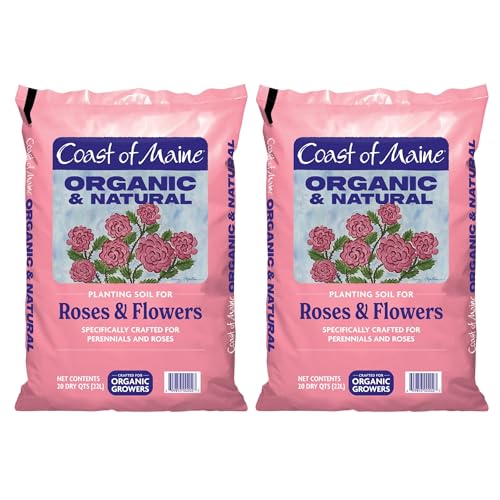
Coast of Maine’s rose-and-flower blend is the most peony-aligned mix on the list. It’s formulated for roses, annuals, and perennials, and peonies share many of the same preferences: rich organic content, balanced drainage, and a light enough texture for tuberous roots to expand. This is the pick to lean toward if you’re growing peonies as a serious project rather than a casual container experiment.
The two-pack gives 40 quarts total, which fits one generous peony container with a comfortable margin. OMRI listing (a third-party certification for products approved for organic gardening) confirms the organic status for gardeners who care about input sourcing. The blend balances moisture retention and drainage, which is exactly the line peonies need.
Reasons It Performs
- Rose-and-perennial formula closely mirrors peony’s preferred root environment
- OMRI-listed organic ingredients for input-conscious gardeners
- Balanced moisture retention and drainage prevent both rot and drought stress
- Works equally well in containers and ground beds, giving flexibility
Honest Caveats
- Premium positioning typically commands a higher price than general-purpose mixes
- Organic blends may break down faster in containers, so refreshing the top layer each year helps
Made For
Organic-focused peony growers who want a rose-aligned formula and don’t mind paying a small premium for ingredient quality.
A Better Fit Elsewhere
Miracle-Gro Potting Mix suits you more if you’d rather keep things simple and budget-conscious without the organic certification.
The indoor variant of Miracle-Gro is built around sphagnum peat moss, coir, and perlite (a lightweight volcanic mineral that keeps soil from compacting). That combination is lighter than the outdoor version and geared toward plants that get less airflow. Peonies do best outdoors, but this blend earns a spot for shaded patio culture or for overwintering young plants in a sheltered spot.
The two-pack gives 12 quarts, which is more limited than the outdoor bag. That’s enough for one mid-size container or a couple of smaller ones. If you’re growing peonies primarily as patio specimens in partial shade, this lightweight formula keeps the pot manageable to move.
Where It Helps
- Lightweight peat-coir-perlite blend is easy to handle in small containers
- Good water retention reduces watering frequency in dry indoor air
- Suits shaded patios where the outdoor mix would stay too damp
Some Limits To Know
- Smaller total volume limits how many containers you can fill from one order
- Indoor formulas sometimes lack the buffering organic content outdoor mixes provide
Whose Shelf It Belongs On
Patio gardeners in shaded courtyards or anyone overwintering peony containers in a cool garage or sunroom.
Not Your Match When
Wonder Soil’s compressed bricks suit you more if you’re filling multiple large outdoor containers and want to save storage space.
Where the previous indoor blend leans general-purpose, this one targets a specific frustration: fungus gnats. The mix is blended without compost or bark, which are the usual culprits that shelter gnat larvae in indoor pots. The coconut coir component also helps the medium re-wet evenly, so you avoid the dry-then-flooded watering cycle that gnats love.
For peonies kept indoors, this gnat resistance matters more than it might seem. Indoor air and softer light mean slower drying, and anything that sits consistently moist attracts gnats. The 6-month feeding window also matches the peony’s active growth phase indoors. You may find this blend runs slightly dry, so monitor moisture closely.
Key Advantages
- No compost or bark reduces fungus gnat habitat in indoor settings
- Coir-based formula re-wets evenly, avoiding dry pockets and overwatering
- Long feeding window matches the peony’s indoor growing rhythm
- Works for climbing, foliage, flowering, and tropical plants alike
Practical Considerations
- Limited to 6 quarts per bag, so larger planters need multiple bags
- Coarser texture may need gentle firming around the peony tuber
Who It Suits Best
Indoor peony growers who’ve battled fungus gnats and want a cleaner-soil blend for a sunroom or bright window.
Reach For A Different Pick When
Miracle-Gro’s outdoor 16-quart mix suits you more for outdoor patio peonies that need a larger fill volume.
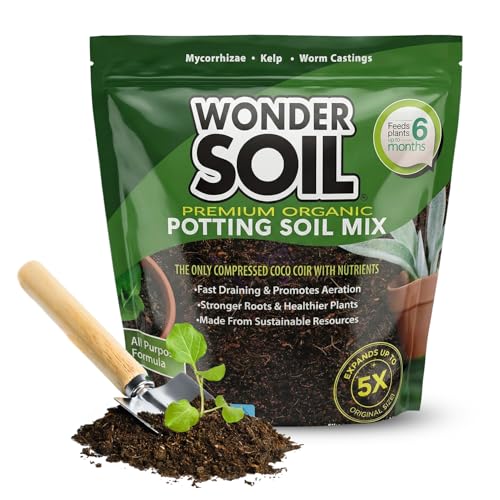
This is the smaller sibling of the 30-quart option reviewed earlier, and it serves a different job. At 12 quarts expanded, the brick is sized for a single peony container or a quick refresh of an established pot. The compressed format ships as a 3-pound bag, which is light enough to carry up stairs or out to a balcony without strain.
Like the larger Wonder Soil products, this version includes perlite (the white volcanic mineral that improves drainage), worm castings, mycorrhizae, and kelp. That amendment list means even a small batch arrives ready to support a peony through its first season. For solo pot jobs, the 12-quart size avoids waste from overbuying.
A Few Highlights
- Compact 3-pound bag fits in a drawer or small shelf before hydration
- Amended with perlite, worm castings, mycorrhizae, and kelp
- Family- and pet-safe formulation with no synthetic additives
- Single-batch size avoids waste on smaller peony projects
Worth Noting
- Smaller volume isn’t ideal if you plan to refresh multiple containers
- Compressed format requires a bucket and water prep before potting
Feature Card
Perfect Match For
Container gardeners re-potting a single peony or starting a new tuber who want a peat-free, amendment-rich medium.
Look Elsewhere When
The AVERGO 7-quart coir block suits you more if you want a lower-cost coir-only option without extra amendments.
This is the bulk version of Wonder Soil, expanding to 72 quarts from a 10-pound block. For anyone running a peony collection across multiple containers, this format collapses a half-dozen bagged-mix purchases into one shipment. The same amendments appear as the smaller bricks: worm castings, mycorrhizae, and kelp round out the coir base.
Peonies are hungry feeders once established, so a larger batch lets you refresh all your pots at once. The block also goes further per dollar when bought at this size. You will need a large tub and some patience for hydration, since a 10-pound block takes time to fully expand.
Practical Advantages
- 72-quart expanded volume handles multiple peony containers in one purchase
- Bulk size typically lowers the per-quart cost for larger collections
- Same enriched amendment profile as smaller Wonder Soil bricks
- Single block reduces packaging waste compared to multiple small bags
Points To Note
- Requires a sizable tub and several minutes for full hydration
- Overkill for gardeners maintaining only one or two peony pots
Built With In Mind
Multi-pot peony growers or landscape-scale gardeners who want to refill several containers in a single session.
Skip It When
Wonder Soil’s 30-quart 3-pack suits you more if you only need a modest amount and want faster hydration sessions.
AVERGO’s smallest disc is essentially a sample size: 3.5 quarts of coir once expanded, sourced from a 7.5-pound compressed brick. That’s enough to fill a small starter pot or top-dress an existing peony container. Coir alone won’t feed a peony long-term, so this works best as a component mixed with compost or a richer blend.
The real appeal here is mess-free prep. You drop the disc in water, watch it expand, and there’s no dust or loose coir to sweep up. For gardeners trialing a coir-based medium before committing to a larger purchase, this is the low-risk way to test how peonies respond. You may find 3.5 quarts runs out faster than expected.
Where It Excels
- Smallest expansion volume suits trial runs or single small pots
- Compressed disc format eliminates loose coir dust during prep
- Improves aeration and moisture balance when blended into heavier mixes
Small Caveats
- Pure coir provides limited nutrition, so amending with compost is recommended
- Small batch means repurchasing often for any multi-pot project
Who Should Grab It
Curious beginners testing coir as a peat-free component before scaling up to a larger purchase.
Where A Sibling Pick Shines
Wonder Soil’s 12-quart brick suits you more if you want a richer, amendment-loaded coir blend for a full-size peony container.
The 7-quart AVERGO block doubles the smaller disc’s volume and serves as a sensible middle ground. A 15-pound compressed brick expands into enough coir for one medium peony container or to refresh an established pot with new structure. The well-draining formula suits peony roots that prefer to dry slightly between waterings.
Coir’s natural pH sits in a range that peonies tolerate well, and the fibrous texture resists compaction over time. For gardeners who already fertilize regularly, plain coir without built-in amendments can actually be a feature, since you control the feeding schedule entirely.
What Earns Its Place
- Mid-size 7-quart volume fits a standard peony container without waste
- Well-draining structure suits peony roots between waterings
- Unamended coir lets you control fertilizing on your own schedule
- Compressed format simplifies transport and storage
Worth Bearing In Mind
- Needs supplementing with compost or balanced fertilizer for long-term nutrition
- Hydration requires a bucket large enough to fit the full expanded mass
Feature Snapshot
The Right Fit
Confident gardeners who already maintain a fertilizing routine and want a clean, peat-free base medium to build on.
Another Choice May Suit
Coast of Maine Roses and Flowers suits you more if you’d prefer a fully amended organic blend with less supplementary work.
The 5-quart AVERGO block lands between the 3.5-quart and 7-quart options, offering flexibility for peony growers with mixed pot sizes. From an 11-pound compressed brick you get enough coir for one smaller container or to top-dress several established peony pots with a fresh layer of structure-improving medium.
Like its siblings, this one hydrates quickly with water and expands into a fibrous, well-aerated mass. For gardeners managing peonies across different pot dimensions, the 5-quart size fits more scenarios than the larger fixed volumes. You may find this is the most versatile size in the AVERGO line for rotating between container sizes.
A Strong Showing
- Mid-tier 5-quart volume adapts to various peony container sizes
- Effortless expansion with water for mess-free preparation
- Pure natural coir without synthetic additives or fertilizers
- Improves aeration when blended into denser potting mixes
Soft Spots
- Pure coir needs supplementing for sustained plant nutrition
- Not enough volume to fill anything larger than a 10-inch pot on its own
Who Will Love This
Gardeners rotating between multiple peony pot sizes who want a flexible coir quantity for top-dressing and small fills.
Where Another Pick Suits Better
Wonder Soil’s 30-quart 3-pack suits you more for a primary fill of a large new peony container with enriched amendments.
Picking A Mix That Suits Container Peonies
Drainage is the first thing to weigh. Peony tubers rot in saturated soil, so any mix you choose needs visible perlite, coarse sand, or expanded aggregate. Coir-heavy blends drain well but hold less calcium than peat-based mixes, so a light amendment with garden lime or crushed eggshells helps long-term root health.
Texture comes next. Peonies send out delicate feeder roots that struggle in compacted soil, so look for mixes with visible fiber, perlite, or bark fragments. Avoid dense, black “garden soil” products sold for ground use: those turn concrete-like in a container within a single season.
Nutrient loading matters more than many gardeners realize. Peonies are heavy feeders during their growing season, and a mix with built-in amendments reduces the urgency of early fertilization. Organic options like the Coast of Maine blend or Wonder Soil bricks arrive with worm castings already mixed in, while pure coir requires you to bring your own fertilizer from day one.
Container Mix Fundamentals Worth Knowing
Common Shopping Slip Ups
The biggest misstep is treating “potting soil” and “garden soil” as interchangeable. Garden soil is designed for in-ground use and compacts badly in containers, choking peony roots. Another trap is choosing a mix based purely on feeding duration without checking drainage: long-feeding blends with poor aeration still kill peonies.
Where The Extra Money Goes
Premium blends cost more because of higher organic content, certified inputs, and better texture balance. For peonies specifically, that premium pays off in root health and bloom quality. Budget mixes work fine for annuals you replace yearly, but a peony in the same pot for five years benefits from a richer, more stable medium.
Frequently Asked Questions
Can peonies really grow in pots long-term?
Peonies can live in containers for many years if the pot is at least 14 inches deep and the mix drains well. Smaller pots restrict root development and increase the risk of rot during wet seasons.
Is coco coir safe to use alone for peonies?
Coco coir works as a base, but peonies need extra calcium and magnesium that pure coir doesn’t supply. Mixing coir with compost or a balanced organic fertilizer covers those gaps.
How often should peony container soil be refreshed?
A light top-dress of fresh mix each spring keeps structure from breaking down. A full re-pot every three to four years prevents the medium from compacting around the tuber.
Do peonies need fertilizer in the first season?
A pre-amended mix like Coast of Maine or Wonder Soil handles the first few months. After that, a low-nitrogen fertilizer in early spring supports strong stems and blooms.
Can I reuse last year’s potting mix for a new peony?
Used mix loses structure and may carry disease spores. Refreshing with new material, or blending the old mix at a 50/50 ratio with fresh, gives better results.
Wrap Up
Container peonies reward gardeners who match the medium to the plant’s preferences, not the other way around. A blend that drains well, holds some organic matter, and resists compaction sets the stage for years of blooms. The picks above cover everything from budget-friendly general mixes to amendment-rich organic blends, so the right choice comes down to how many pots you maintain and how much amending you want to do yourself.
