

Container tomatoes live or die by the root zone. Bagged garden soil from a backyard bed compacts badly in a five-gallon pot, drainage stalls, and roots circle without spreading. A loose, nutrient-rich mix designed for confined roots changes the whole season, especially when fruit set kicks in.
Below are ten products worth your attention this year, from classic peat-and-bark blends to compressed coir bricks and a pH-correcting lime. Each one fits a slightly different setup, a different watering style, and a different appetite for amending.
The Main Contenders

Organic Plant Magic Compressed Soil + Soluble Plant Food Bundle

FoxFarm Ocean Forest Potting Soil 1.5 cu ft

Organic Plant Magic Compressed Organic Potting Soil

Espoma Organic Garden Lime 5 lb (2 Pack)

Vermont Compost Fort Vee Organic Potting Mix 40 qt

Organic Plant Magic Compressed Soil + Granular Fertilizer

Organic Plant Magic Compressed Potting Soil Twin Pack
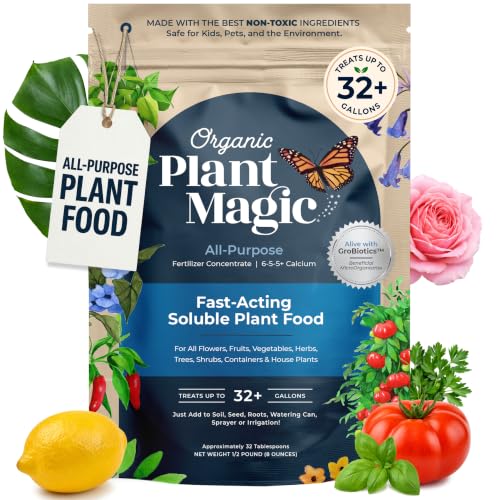
Organic Plant Magic Soluble Plant Food 1/2 lb

Organic Plant Magic Slow Release Granular Fertilizer 4 lb

Organic Plant Magic Soluble + Granular Fertilizer Bundle
A Deeper Look At The Lineup
Trying container tomatoes for the first time usually means hunting for two separate products, a base mix and a feed. This bundle ships both in one box, which removes a step and one trip to the garden center.
The compressed soil expands roughly four times once water hits it, so a compact bag turns into several gallons of fluffy medium. The soluble plant food makes more than 64 gallons of liquid feed and covers up to 2,000 square feet, more than enough for a small patio of pots. For most beginners, that ratio saves a real guessing game during fruit set.
Everyday Wins
- Compressed format stores easily on a balcony shelf until you need it.
- Soil and feed come matched, so pH and nutrient profiles don’t clash.
- Feed dilution works for tomatoes, herbs, and flowers on the same patio.
- Expansion rate means a single bag fills several five-gallon pots.
Worth Noting
- Compressed soil needs thorough soaking before planting, and dry pockets can hide.
- Soluble feed requires remembering a weekly routine.
Who It Suits Best
First-time container growers who want one ordered kit instead of piecing together separate bags and bottles.
Where Another Pick Suits Better
Growers chasing a richer, ready-to-use blend without any mixing step may prefer the FoxFarm Ocean Forest Potting Soil 1.5 cu ft, which goes straight from bag to pot.
FoxFarm’s Ocean Forest has been a container-gardening favorite for years, mainly because it skips the user mixing step. The 1.5 cubic foot bag opens, gets a quick fluff, and accepts transplants the same afternoon.
The blend combines earthworm castings, fish meal, and crab meal, which together feed a heavy-feeding crop like indeterminate tomatoes through the first stretch of fruit set. Drainage stays loose thanks to the sandy texture, which matters most in dark plastic pots that hold heat. Compared to the compressed kit above, this is heavier to ship but ready in minutes.
The Helpful Details
- Light, aerated texture resists compaction even after repeated watering.
- Natural nutrient base reduces the need for early-season fertilizer.
- One bag fills roughly three to four large tomato containers.
Trade Offs
- Heavier and bulkier than compressed alternatives, harder to carry upstairs.
- Nutrients deplete mid-season in heavy-feeding varieties, so supplemental feeding is likely needed.
Feature Snapshot
Best Match For
Growers running three or more large pots who want a bag they can trust straight out of the package.
Consider Something Else When
Anyone working with a single small balcony pot should consider the lighter Organic Plant Magic Compressed Soil + Granular Fertilizer, which stores flat and expands on demand.
Bagged potting mixes are awkward to store once summer ends and the patio shrinks back to a table and two chairs. This compressed format solves that, since a small brick or granule pouch expands into roughly three gallons of mix with a bucket and some water.
The base combines coconut coir and worm castings, which both hold moisture without going soggy. Coir is a fiber from coconut husks that resists the compaction problems plain peat tends to show. Tomato roots push through it easily in a five-gallon pot, and the castings bring a baseline of organic nutrients to the early root zone.
What It Does Well
- Collapsed package fits on a shelf or in a closet between seasons.
- Worm castings deliver a gentle nutrient start without burning young roots.
- Resealable bag keeps unused product viable for next season.
Small Caveats
- Requires a clean bucket and water to hydrate, with full expansion taking ten to fifteen minutes.
- Nutrient load is light, so supplemental feeding is necessary during fruiting.
Whose Garden It Belongs In
Balcony growers with limited storage who want a single bag to produce several gallons of medium on demand.
Swap It Out When
Someone who would rather skip the hydration step and get straight to transplanting should look at the FoxFarm Ocean Forest Potting Soil 1.5 cu ft instead.
Tomatoes dislike acidic soil, and most peat-heavy container mixes trend sour over a season. Espoma’s pelletized dolomitic lime is the corrective side of the equation, raising pH while also feeding calcium and magnesium into the root zone.
Two five-pound bags cover a long stretch of containers, and the pellet format spreads evenly without clumping. Calcium is the specific nutrient that helps prevent blossom end rot on tomatoes, which is the dark sunken patch on the bottom of fruit. For growers in regions where tap water runs soft, this becomes a near-essential amendment rather than a nice-to-have.
Why It Works Well
- Pellet form mixes into the top few inches without producing dust clouds.
- Dolomitic lime adds magnesium alongside calcium, supporting chlorophyll production.
- Approved for organic gardening, a Registered Organic Input Material.
- Two-pack format handles a full season of multiple containers.
Honest Caveats
- Adding too much raises pH past the sweet spot, so a soil test before use is worth the effort.
- Not a standalone growing medium, must be paired with a base mix.
At A Glance
Made For
Tomato growers fighting blossom end rot or gardening in regions with naturally acidic tap water.
A Better Fit Elsewhere
Container gardeners who want a complete, balanced medium in one step should grab the Vermont Compost Fort Vee Organic Potting Mix 40 qt instead.
Vermont Compost built its reputation on commercial-grade mixes, and the Fort Vee blend brings that quality into a backyard-sized two-pack. Each bag delivers 20 quarts of compost-rich medium, which is roughly five gallons of dense, dark mix per bag.
The compost-forward base suits heavy-feeding heirlooms like Brandywine and Cherokee Purple, which demand steady nutrition to set larger fruit. It works equally well in fabric pots, terracotta, or plastic planters. Compared to the compressed Organic Plant Magic Compressed Organic Potting Soil, this is messier out of the bag but more forgiving over a long grow.
Practical Pluses
- Compost base delivers slow-release nutrition over the entire season.
- Chemical-free formulation suits organic gardening goals.
- Works equally well in raised beds and patio planters.
- Two-pack total of 40 quarts covers several large containers.
Less Ideal Details
- Heavier than compressed alternatives, plan on a car trip rather than a bike ride home.
- Strong compost aroma at first, which fades once watered in.
Quick Facts
Best Suited To
Heirloom tomato growers with large containers who want a compost-heavy foundation for steady nutrition.
Where Another Pick Suits Better
Small-space growers who want a compressed, light-to-carry option should pick the Organic Plant Magic Compressed Soil + Granular Fertilizer instead.
Pairing compressed soil with a slow-release granular fertilizer creates a near-invisible routine. The granules feed for months while the soil handles the root environment, freeing you from weekly mixing or measuring.
The compressed soil expands four times its size with water, and the granular feed covers up to 1,000 square feet from a small container. For most balconies with three to five tomato pots, that coverage lasts the season. Compared to the soluble bundle earlier in this list, this swap trades quick liquid feeds for one-time application.
Notable Gains
- Single application replaces weekly feeding chores for months.
- Granular format reduces the risk of over-feeding young plants.
- Compressed soil is light to carry up stairwells and elevators.
Points To Keep In Mind
- Slow-release feed cannot rescue plants in a mid-season nutrient dip.
- Initial soil hydration still requires a bucket and ten to fifteen minutes of patience.
Who Should Grab It
Traveling professionals or busy parents who want tomatoes that largely take care of themselves once planted.
Reach For A Different Pick When
Growers chasing faster mid-season correction should pair the Vermont Compost Fort Vee Organic Potting Mix 40 qt with the Organic Plant Magic Soluble Plant Food 1/2 lb.
The two-bag format here mirrors the single compressed soil listed earlier, but doubles the working volume for households running several pots at once. Both bags stay sealed in storage until needed.
The mix is marketed as kid and pet safe, with worm castings as the primary nutrient carrier. That safety profile appeals to ground-floor patios where dogs brush past pots or where toddlers help with watering. The product still expects supplemental feeding for hungry tomato plants through the fruiting stretch.
Strengths Worth Knowing
- Twin packaging yields roughly six gallons of mix once hydrated.
- Pet and child safety framing reduces worry on busy patios.
- Resealable bags extend shelf life across multiple growing seasons.
Practical Considerations
- Nutrient density still leans light for heavy feeders, so plan on added fertilizer.
- Hydration prep requires a clean bucket and consistent stirring to break up dry pockets.
Spec Overview
Right Fit For
Family patios where tomatoes share space with kids, dogs, and a lot of foot traffic.
Look Elsewhere When
Heavy-feeding heirloom growers should reach for the richer FoxFarm Ocean Forest Potting Soil 1.5 cu ft, which arrives ready to feed.
This is a feeding companion rather than a soil, and that distinction matters. A half-pound bag dilutes into more than 32 gallons of liquid feed, which covers a long season across many containers.
The water-soluble format suits tomatoes, herbs, and ornamentals on the same patio, so one bottle handles several crops. The trade-off is the discipline of a weekly routine, since liquid feed goes in with the watering can. For growers tracking growth closely, that habit pays off in steady fruit set.
The Practical Payoff
- Half-pound bag dilutes into over 32 gallons of feed.
- One formula covers vegetables, flowers, herbs, and house plants.
- No synthetic chemicals, suitable for organic gardening routines.
- Compact size stores easily next to a watering can.
Things To Weigh
- Liquid feeding requires weekly attention through summer heat.
- Pairs with a soil mix, it does not replace one on its own.
Perfect Match For
Multi-container gardeners who already have a base mix and want a versatile feed to rotate across all their crops.
Another Choice May Suit
Growers wanting a low-effort feeding schedule should consider the Organic Plant Magic Slow Release Granular Fertilizer 4 lb, which spreads once and feeds for months.
Granular slow-release fertilizer takes the calendar out of feeding. You sprinkle a handful at planting, work it into the top inch, and the coating releases nutrients in response to soil temperature and moisture.
The four-pound bag covers a generous number of containers across vegetables, fruit trees, shrubs, and house plants. The trade-off is loss of fine control, since the release rate follows weather and watering rather than your judgment. For most home growers, that is a feature, not a flaw, since tomatoes tend to prefer steady, moderate feeding over sudden bursts.
Positive Points
- One application feeds plants across an entire growing season.
- Spreads by hand or with a simple spreader.
- Works across containers, flower beds, and shrubs with one product.
- Truly organic formula suits chemical-free gardening routines.
Where It May Fall Short
- Cannot rescue a mid-season deficiency the way liquid feeds can.
- Release rate depends on soil temperature, which slows in cool spring weather.
Who It Suits Best
Weekend gardeners and vacation-home growers who want a one-time spring application that runs quietly through summer.
Skip It When
Growers managing a tight feeding schedule for cherry tomatoes in peak summer should pick the Organic Plant Magic Soluble Plant Food 1/2 lb instead.
Pairing fast-acting soluble feed with slow-release granules creates a layered feeding strategy. The granules handle the base load; the soluble side fixes mid-season dips or boosts fruit set on the fly.
This is the most comprehensive fertilizer setup in the lineup, though it still requires a separate potting mix to fill the actual containers. For long-season cherry tomato crops, especially in hot climates where nutrients leach fast, the two-format approach covers what either product alone would miss. It is more moving parts than beginners may want.
Where It Delivers
- Fast-acting soluble feed addresses deficiencies within days.
- Slow-release granules maintain baseline nutrition through the season.
- Both products share an organic formulation, no synthetic mixing.
- Versatile across tomatoes, flowers, herbs, and shrubs.
Details To Watch
- Two products means two storage containers and two routines to track.
- Not a soil substitute, so you still need a base mix on hand.
Right Fit For
Experienced container gardeners running long-season cherry or grape tomato crops that demand steady, high nutrition.
Where Another Pick Suits Better
Beginners keeping things simple should grab the Organic Plant Magic Compressed Soil + Soluble Plant Food Bundle, which combines starter mix and feed in one order.
What To Weigh Before Picking A Tomato Mix
Drainage And Aeration Come First
Tomato roots drown in saturated soil faster than they starve in dry soil. A loose, fibrous mix lets water pass through while holding enough moisture between drinks. Coco coir and peat moss are both common base ingredients, with coir being the more sustainable option since it comes from coconut husks rather than mined peat bogs. Either way, the texture should feel crumbly in your hand, never muddy or sticky. In smaller pots, drainage holes plus a loose mix matter more than any fertilizer inside the bag.
Nutrient Density And Feeding Style
Bagged mixes range from nearly inert to compost-rich. A nutrient-light mix gives you more control through the season but demands feeding every week or two. A compost-heavy mix feeds for months but leaves little room for adjustment if a plant struggles. Heavy-feeding varieties like most indeterminate types need more nutrition than compact patio cherries, so match the base mix to the appetite. For most home growers, a mid-weight mix plus supplemental fertilizer hits the sweet spot.
Container Size and Watering Rhythm
Smaller pots dry out fast in summer sun, so a mix that holds a bit more moisture helps if you cannot water daily. Larger pots hold moisture longer but need a fluffier texture to keep air flowing around roots. If your schedule runs on weekends only, lean toward mixes with compost or coir at the base, and consider a slow-release granular feed to bridge the gaps.
Organic Versus Conventional
Organic mixes rely on compost, worm castings, bone meal, and similar inputs. They feed slowly but improve soil biology over time, which matters less in a single-use container than in a backyard bed. Conventional mixes may include synthetic starter fertilizers that green up seedlings quickly. For edible crops where you want to know exactly what is going into the plant, organic certification offers a clear answer.
Common Snags To Sidestep
Pitfalls Shoppers Hit
The biggest mistake is grabbing any bag labeled “garden soil” for a container. Garden soil is meant for in-ground beds and compacts badly in pots, choking roots within weeks. The other classic slip is skipping drainage holes, since even the best mix fails if water pools at the bottom. Last, mixing fertilizer directly into transplant holes can burn young roots, so always blend it into the surrounding medium instead.
What The Higher Tier Buys
Premium mixes earn their keep through better texture and richer organic inputs. The difference shows up most in mid-summer, when a bargain mix has compacted and a quality one still drains freely. Compost-forward blends like Fort Vee feed steadily without weekly fuss, which saves real time over a season. For most container gardeners, the upgrade pays back in less babysitting and a sturdier harvest.
Frequently Asked Questions
Can I use garden soil from my yard in tomato pots?
Garden soil compacts in containers and drains poorly. Use a bagged potting mix specifically blended for container growing, or amend yard soil heavily with compost and coarse material, though this rarely works as well as a dedicated mix.
How often should I water tomatoes in containers?
Watering frequency depends on pot size, weather, and mix. Check the top inch of soil daily during summer, and water deeply until it runs from the drainage holes. Small pots may need water twice a day in heat waves, while larger pots hold moisture longer.
Do tomatoes need fertilizer in containers?
Yes. Container soil has limited nutrient reserves, and tomatoes are heavy feeders during fruiting. Plan on feeding every one to two weeks with liquid fertilizer or using a slow-release granular at planting, depending on your routine.
What pH do container tomatoes prefer?
Tomatoes grow well in slightly acidic soil, around 6.0 to 6.8 on the pH scale. Peat-based mixes trend acidic over time, so a periodic dose of garden lime helps keep pH in the productive range and prevents blossom end rot.
How big should a container be for a tomato plant?
Most tomato varieties need at least a five-gallon pot, with larger indeterminate types preferring ten gallons or more. Smaller patio or dwarf varieties can produce in three- to four-gallon pots, but yield drops quickly below that size.
Final Verdict
Container tomatoes reward growers who match the medium to the pot and the feed to the routine. A compressed mix earns its keep on a small balcony, while a compost-forward blend shines in a large planter on a sunny patio. Pick the combination that fits how often you actually water and feed, and the rest of the season tends to take care of itself.
