

Trees ask more of the ground beneath them than most plants. The right soil mix steadies young saplings through drought, cushions roots from compaction, and feeds a canopy that can outlive the gardener who planted it. The wrong mix washes out, repels water, or starves roots of air, and most folks only notice after the damage is done.
Whether you’re planting a backyard maple, refreshing a raised bed around an established pear tree, or restoring tired soil around a hedge, the picks below cover a wide spread of needs. You’ll find rich worm castings, aerated potting blends, compressed coconut coir blocks, mulch that expands in water, and a charcoal amendment that rescues pots without drainage. Each one earns its place on this list for a specific reason.
The Picks In Brief

Earth Science Earthworm Castings 3 lb Premium Plant Fertilizer

FoxFarm Ocean Forest Potting Soil 1.5 cu ft

PlantBest Coco Mulch Compressed Block 9.1 lb

Mosser Lee ML0810 Horticultural Charcoal 2.25 dry qt

Wonder Soil 30 Quarts Compressed Coco Coir 3-Pack

Worm Bliss 1 Quart Organic Worm Castings
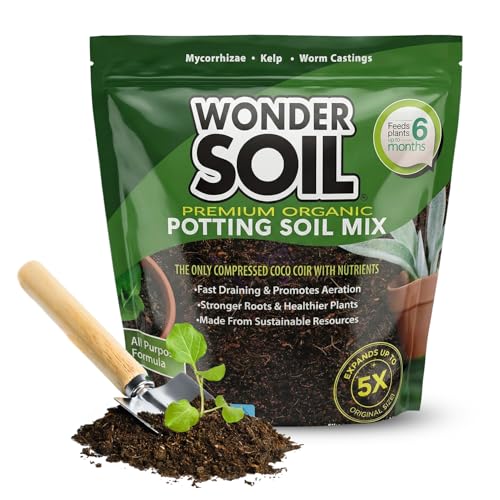
Wonder Soil 12 Quarts Organic Potting Soil

Wonder Soil 72 Quarts Compressed Coco Coir Block

PlantBest Coco Peat Concentrated Peat-Free Potting Mix

PlantBest Coco Mulch Compressed Block 9.1 lb
A Closer Look At Each Pick
Earthworm castings are the polite cousin of fertilizer, and Earth Science’s 3 lb pouch delivers them in a form that mixes into almost anything. You sprinkle them into planting holes, blend them into topsoil, or work them into existing beds to wake up tired dirt. Because they’re an organic amendment rather than a hot synthetic feed, you won’t burn tender young roots, which matters when you’re planting a sapling you just spent good money on.
For most backyard gardeners, this size hits a sweet spot, large enough to amend several young trees or a generous stretch of bed, but light enough to carry one-handed to the back fence. Tree planters working with native soil that drains too fast or compacts too tight will notice the texture loosening within a season. Compared with the FoxFarm blend below, this isn’t a complete growing medium, it’s a booster, so you’ll still want a base mix for containers.
What Helps Most
- Feeds soil microbes rather than forcing quick green-up, building long-term soil health around tree roots
- Safe to use directly on young roots without burning, ideal for new transplants
- Improves water retention in sandy soils, cutting how often you need to drag the hose out
- Versatile across vegetables, ornamentals, and trees from a single bag
Trade Offs
- At 3 lb, the bag is small for anyone amending a whole orchard, and you may need multiple bags
- Castings alone won’t replace a structured potting mix for container trees
Made For
Backyard gardeners refreshing established beds or planting a small number of young trees who want a gentle, organic amendment.
Where Another Pick Suits Better
If you need a complete ready-to-use growing medium rather than a soil booster, FoxFarm Ocean Forest Potting Soil is the stronger container choice.
FoxFarm’s Ocean Forest has earned its reputation among container gardeners for one reason: it works straight out of the bag. The blend is light and aerated, so roots push through it without struggle, and it comes pre-loaded with amendments that would otherwise take a season of composting to replicate. For trees in large patio containers, that head start translates to stronger first-year growth.
The 1.5 cu ft volume suits anyone filling a half-dozen medium pots or one oversized planter for a small ornamental tree. Texture holds moisture without going soggy, which is the balance most tree roots crave. Where Earth Science worm castings above act as a soil booster, this is a complete medium, so the use cases don’t really overlap.
Features That Help
- Ready to plant immediately, no extra mixing or waiting required
- Aerated texture prevents compaction that strangles tree roots in long-term containers
- Pre-amended with organic nutrients that feed young trees through the first critical months
- Available in multi-pack configurations for gardeners filling several large containers
Points To Keep In Mind
- Heavier than compressed coir options, so hauling a bag up stairs takes effort
- Premium blend typically costs more per cubic foot than basic bagged soils
Best Suited To
Container gardeners growing small ornamental or patio trees who want a premium ready-to-use blend without extra amendment work.
Look Elsewhere When
For large outdoor tree-planting projects where weight and storage matter more than pre-loaded amendments, Wonder Soil 72 Quarts Compressed Coco Coir Block is a more practical fit.
The trick with traditional mulch bags is that they take up half the garage before you’ve opened one. PlantBest solves that by compressing its organic coconut mulch into a single 9.1 lb block that expands to roughly 64 quarts once hydrated. Apartment gardeners with shared storage shed space will appreciate not wrestling with bulky plastic sacks.
The expansion process is part of the fun: drop the brick in a wheelbarrow, add water, and watch it fluff up within minutes. The finished mulch works well around tree trunks as a moisture-retaining top layer, and the lighter color than bark gives a fresh, manicured look. Unlike FoxFarm above, this isn’t a soil, it’s a mulch, so you layer it on top rather than mixing it into root zones.
The Good Stuff
- Single compressed block stores in a small space until you’re ready to use it
- Hydrates in minutes, dramatically reducing setup time
- Covers roughly 17.5 sq ft at a useful mulch depth
- Organic coconut fiber resists matting better than some bark mulches
Worth Noting
- You’ll need a container or wheelbarrow big enough to hold the expanded volume
- Coconut mulch breaks down faster than hardwood bark, so refresh intervals may be shorter
Who It Suits Best
Gardeners with limited storage or who need to transport mulch to a remote planting site without a truck.
Skip It When
FoxFarm Ocean Forest Potting Soil makes more sense if you’re filling containers rather than top-dressing around established trees.
Horticultural charcoal lives in a category of its own. Mosser Lee’s version is sourced from fruit-tree hardwood and sold in a 2.25 dry quart pouch that you mix into potting media in small quantities. Its job is absorption: it soaks up excess water and dissolved fertilizer, then releases them slowly as soil dries. For trees grown in containers without drainage, that buffering action can mean the difference between thriving roots and root rot.
Terrarium builders and dish-garden hobbyists reach for this product routinely, but it’s also useful for anyone growing a small tree in a decorative pot with no drainage holes. The 2.25 dry quart volume is modest, yet a little goes a long way since you’re typically blending it at roughly 10 percent of total volume. Tree planters working in normal outdoor soil won’t need this, but for sealed-container scenarios, it’s almost irreplaceable.
Useful Touches
- Sourced from fruit-tree hardwood, a renewable byproduct rather than mined material
- Buffers overwatering in pots without drainage holes, extending tree survival in decorative containers
- Small package size keeps cost low for occasional use
- Acts as a mild soil conditioner that improves overall mix structure
Honest Caveats
- Not a standalone growing medium, only useful when blended into other soils
- Charcoal dust can be messy during mixing; work over newspaper or outdoors
The Right Fit
Terrarium hobbyists and decorative-container gardeners who need a drainage buffer for trees planted in sealed pots.
Reach For A Different Pick When
Earth Science Earthworm Castings is the better amendment if your goal is feeding tree roots in open-ground plantings rather than managing water in sealed pots.
Wonder Soil’s 3-pack lands in that middle ground where most home projects actually live. Three compressed bricks expand to about 30 quarts of ready-to-plant coir, which is enough to refresh a couple of raised beds or backfill several tree-planting holes without breaking the budget. Unlike the larger 72-quart block below, this format is easier to handle for one person.
The coir comes pre-loaded with worm castings and other amendments, so it functions as a growing medium rather than just a soil filler. Coco coir (shredded coconut husk fibers) holds moisture while staying airy, a useful trait for tree roots that need both water and oxygen. For most tree-planting situations, this hits the convenience-versus-volume balance better than either single-brick small bags or the oversized 10-lb block.
Practical Pluses
- Pre-amended with nutrients, reducing the need for separate fertilizer applications early on
- Three smaller bricks are easier to hydrate in stages than one giant block
- Coir structure resists compaction that often plagues tree root zones over time
- Lightweight to ship and store compared with traditional bagged soil
Small Caveats
- You’ll need to add water and let each brick expand before planting
- 30 quarts still runs short for very large landscaping projects
Who Should Grab It
Home gardeners tackling a mid-size tree-planting or bed-refresh project who want a nutrient-loaded medium without hauling multiple heavy bags.
Another Choice May Suit
For projects that demand much larger volumes, the Wonder Soil 72 Quarts Compressed Coco Coir Block covers more ground per brick.
Worm Bliss ships worm castings in a 1-quart container that’s purpose-built for small-scale, frequent feeding rather than one-time bed amendments. If you keep a few patio citrus trees or a fiddle-leaf fig that gets repotted annually, this size matches how you actually use the product. OMRI-listed means it meets the organic materials review standards for certified-organic gardening, useful for anyone avoiding synthetic inputs.
The castings are vegan and manure-free, which matters for gardeners who want pure worm-derived organic matter without any animal-product concerns. A little goes a long way in container situations, so a quart lasts through several applications. For larger orchard or backyard-tree plantings, Earth Science’s bigger pouch above may serve better, but for houseplant-scale trees and frequent top-dressing, this format makes more sense.
Key Advantages
- OMRI-listed for gardeners committed to organic-compliant inputs
- Small container stays fresh between applications and fits on a potting bench
- Vegan and manure-free formulation appeals to plant-only gardeners
- Concentrated enough that a quart handles multiple small trees over a season
A Few Limitations
- Too small for amending multiple large trees or full beds in one pass
- Premium small-format pricing means cost-per-cubic-inch runs higher than bulk bags
Whose Shelf It Belongs On
Indoor tree owners and balcony gardeners who repot or top-dress container trees a few times per year and want organic-compliant worm castings.
Swap It Out When
PlantBest Coco Peat Garden Soil suits you better if your priority is filling containers with a peat-free base medium rather than ongoing fertilization.
The 12-quart Wonder Soil bag is the smallest member of the family, aimed squarely at first-time container gardeners. You drop the 3 lb compressed bag into a tub, add water, and watch it expand to a usable volume without buying amendments separately. Coco coir is peat-free, which keeps the product family-friendly for gardeners avoiding peat-bog-derived materials.
Beginners experimenting with a single patio tree or a few houseplants get the lowest-risk entry point here, since the small volume keeps cost and storage demands low. For one small tree in a 10- to 14-inch pot, 12 quarts fills the bill with a little to spare. The 3-pack above makes more sense for anyone planting multiple containers at once, while this single bag suits a single-pot starter project.
Well-Handled Touches
- Lowest commitment among the Wonder Soil sizes, easy first purchase for newcomers
- Pre-amended with worm castings and perlite for aeration, skipping extra shopping
- Peat-free formulation supports sustainable gardening choices
- Single bag stores on a shelf without dominating a closet
Some Limits To Know
- Runs out quickly if you’re filling more than one medium container
- Coir-based mixes dry out faster than peat, so watering frequency may need adjusting
Perfect Match For
First-time gardeners potting up a single small tree or a handful of houseplants who want a complete, easy-to-use medium.
Not Your Match When
FoxFarm Ocean Forest Potting Soil is the better fit if you want a heavier, moisture-retentive blend rather than a light coir-based mix.
The 10-lb block that expands to 72 quarts is the workhorse of the Wonder Soil line. One brick, properly hydrated, covers a substantial orchard planting or a full raised-bed refresh. For homesteaders or anyone managing multiple young trees at once, the per-quart cost drops meaningfully compared with smaller packs.
You’ll want a wheelbarrow or large tub for the expansion, since 72 quarts of fluffy coir doesn’t fit in a kitchen sink. The pre-loaded amendments feed trees through their establishment period, so you can plant and step back rather than immediately mixing in additional fertilizer. For someone planting a backyard of saplings in a single weekend, this format eliminates the hassle of opening and hydrating a dozen smaller bricks.
A Few Strong Suits
- Single 10-lb block produces a large 72-quart volume, reducing packaging waste
- Best per-quart value among the Wonder Soil sizes for large projects
- Coir structure improves drainage in heavy clay soils for new tree root systems
- Comes pre-amended, simplifying logistics for one-time big plantings
Factors To Consider
- Hydrating this much coir at once demands a sizeable container and water supply
- Heavier than the 3-pack above once expanded, so you’ll be moving wet material
Built With In Mind
Homesteaders and serious tree planters who want maximum volume from a single compressed block for orchard or large-property use.
Where A Sibling Pick Shines
Wonder Soil 30 Quarts Compressed Coco Coir 3-Pack is the better fit when you’d rather stage the expansion across several smaller batches.
PlantBest’s concentrated block is a peat-free alternative to traditional peat-based mixes, appealing to gardeners concerned about the environmental cost of peat-bog harvesting. One 11-lb block expands to roughly 79 quarts or 2.65 cubic feet of usable growing medium, which puts it in the same league as the 72-quart Wonder Soil block above, just with a slightly different fiber source.
The triple-washed, low-salt formulation matters more than it sounds. Coconut coir naturally carries salts that can stress young roots, so a wash-down before packaging protects transplants from chloride burn. For trees going into raised beds or large containers where you want a clean, neutral medium, this delivers reliable performance without the peat-versus-sustainability debate.
Why It Works Well
- Peat-free choice supports gardeners avoiding peat-bog-derived products
- Triple-washed to reduce salts that often bother young tree roots
- Expands to a generous 79-quart volume from a single 11-lb block
- Clean, consistent texture works for both indoor and outdoor container trees
What To Weigh
- Comes without pre-mixed fertilizer, so you’ll add your own amendments for hungry trees
- Single block demands a sizable container for the expansion step
Who Will Love This
Sustainability-minded gardeners who want a peat-free, low-salt coir medium for filling raised beds around trees or large patio containers.
A Better Fit Elsewhere
Earth Science Earthworm Castings is the stronger pick if you’d rather amend existing native soil than fill containers with a soilless medium.
This second PlantBest entry, a 9.1-lb mulch block that expands to 64 quarts, is a sibling to the coco mulch block earlier in the list, and the two share a lot of DNA. Both cover roughly 17.5 square feet, both expand in water within minutes, and both store compactly until you need them. The practical difference comes down to branding and availability rather than any functional split.
For mulching around mature trees, where you want a thick moisture-retaining layer without hauling a heavy bag from the car, this format makes routine maintenance far less of a chore. Layer it two to three inches deep over the root zone, keep it a few inches off the trunk, and refresh once or twice a year. The other PlantBest block above covers similar territory, so choosing between them is more about what fits your cart.
What Makes Sense
- Single block stores easily and travels without a truck or large vehicle
- Expands in minutes for quick weekend mulching sessions
- Covers a useful 17.5 sq ft area, roughly a 4-foot tree’s root zone
- Helps suppress weeds while holding soil moisture around trunks
Possible Compromises
- Coconut fiber breaks down faster than hardwood mulch in some climates
- Limited weed-blocking depth compared with chunkier bark mulches
Right Fit For
Homeowners maintaining established trees who want an easy-to-store mulch option for routine seasonal top-dressing.
Consider Something Else When
Wonder Soil 12 Quarts Organic Potting Soil is the better choice for filling new containers rather than mulching around already-planted trees.
What Matters Most Before Choosing Soils For Trees
Tree roots need three things from any soil or amendment: water that stays available without drowning them, air pockets that prevent rot, and nutrients they can actually access. Texture matters more than brand names, since compacted ground suffocates roots faster than any fertilizer can rescue them. A loamy, crumbly texture that holds moisture while draining freely is the universal target across most tree species.
For container trees, the equation shifts toward lighter, faster-draining mixes like FoxFarm Ocean Forest or the Wonder Soil coir products. In-ground plantings, by contrast, often benefit more from organic amendments like worm castings worked into the existing native soil rather than wholesale replacement. Mulch plays a separate but related role, since it moderates surface temperature and slows evaporation from the root zone.
Match the format to your storage and transport reality. Compressed coir blocks reward gardeners with limited shed space, while traditional bagged soils work fine when a truck and a dry garage are non-issues. Consider how often you’ll actually use the product, since smaller containers of worm castings stay fresher between applications than bulk bags that may sit open for months.
Key Considerations Across These Picks
Common Shopping Slip Ups
Buyers often grab the cheapest bag on the shelf without checking what’s inside. Tree roots punish that decision quickly, since bargain soils frequently contain heavy clay, sticks, or filler that compacts within a season. Another trap is buying a soil when you actually need a mulch, or vice versa. Soils go in planting holes; mulches sit on top to conserve moisture. Mixing those roles leads to waterlogged roots or, conversely, bone-dry surface layers.
When Paying More Pays Off
Premium blends cost more for reasons that show up the second or third season. Better ingredients resist compaction, hold their structure longer, and feed soil life in ways cheap fillers don’t. For long-lived trees that you’ll be tending for decades, a thoughtful initial soil investment pays off across many growing seasons rather than just one.
