

Cutting the cord from the grid sounds simple until you watch a pump strain through a cloudy afternoon or choke mid-cycle. A quality solar water pump earns its place by handling those moments quietly, whether you run a backyard pool, fill a stock tank, or push water uphill to a garden.
This roundup walks through nine pumps with different jobs in mind, from small fountain circulators to serious submersible borehole units. You will find what each one handles well, where it falls short, and which scenario suits it best.
The Choices Worth Comparing

DIFFUL Solar Pool Pump Kit 0.7 HP 66 GPM

DIFFUL AC/DC Solar Pool Pump 1.6 HP 119 GPM

DIFFUL Solar Pond Pump Kit 1.2 HP 88 GPM DC

DIFFUL AC/DC Solar Pool Pump 1.2 HP 88 GPM

Active Aqua Submersible Pump 1000 GPH Magnetic Drive

DIFFUL 3-inch Solar Submersible Pump Kit 1 HP 312 FT Head

FlowFluid 110V Pressure Booster Diaphragm Pump 45 PSI
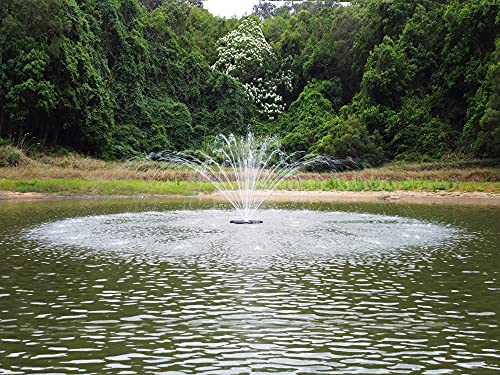
HQUA FS01 Floating Pond Fountain 13000 GPH LED Lights

Biling 7.5W Solar Water Pump 80 GPH Dry-Run Protection
More Details On Our Top Picks
Above-ground pool owners dipping their toes into solar get a soft landing with this DIFFUL kit. The 0.7 HP motor moves up to 66 gallons per minute at lower heads and pushes lift to about 46 feet, which suits modest filtration loops without overworking the panel array.
The included MPPT controller (a smart electronic unit that squeezes the most energy out of the panels at any given moment) has a digital readout and protects against dry-run and overheating, so a forgetful afternoon does not cook the motor. Pair it with a small panel setup and a typical backyard pool stays circulating through the brightest hours.
What It Does Well
- DC-only design keeps wiring simple for first-time solar installers
- Rust-resistant casing holds up to constant outdoor exposure
- IP65 waterproof rating shields the unit from rain and hose spray
- MPPT controller with digital display shows input status at a glance
Points To Note
- No AC fallback, so cloudy stretches can stall circulation
- Lower flow rate means longer filter cycles on larger pools
Key Product Details
Who It Suits Best
First-time solar adopters running small to mid-size above-ground pools in sunny climates.
Look Elsewhere When
Homeowners with larger in-ground pools get more headroom from the DIFFUL 1.6 HP AC/DC model.
The jump to 1.6 HP and roughly 119 GPM turns this DIFFUL into the workhorse of the lineup, which is exactly what larger residential pools and longer filtration runs demand. It bridges the gap between sunny-day-only circulation and full-time duty by switching between solar and AC grid power automatically.
Where the 0.7 HP kit above stalls on cloudy afternoons, this one keeps the water moving because the hybrid controller hands off to grid power without your intervention. For pool owners who hate babysitting chemistry after a stretch of dim weather, that handoff is the headline feature.
Real-World Strengths
- Hybrid AC/DC design prevents downtime during overcast stretches
- 119 GPM peak flow cuts down filter cycle times on bigger pools
- Built-in dry-run and overload protection on the MPPT controller
- Digital display surfaces voltage and mode info at a glance
Trade-Offs
- Higher upfront cost than DC-only models from DIFFUL
- Requires access to AC wiring for backup, which complicates remote installs
Made For
Pool owners in mixed-sun regions who want full-time circulation without a second pump on standby.
Skip It When
Strictly off-grid cabins with no AC wiring benefit more from the DIFFUL 3-inch submersible kit.
Pond keepers get a purpose-built option here rather than a repurposed pool pump. The 1.2 HP output delivers up to 88 GPM and pushes against 63 feet of head, which suits mid-sized water gardens with modest waterfall features or stream returns.
Compared to the pool-focused DIFFUL above, this one assumes a stationary body of water rather than a filter loop, and the MPPT controller still brings the same dry-run and overheat safeguards. For pond owners, the practical benefit is steady aeration that keeps fish healthy and water clearer through the warmer months.
Reasons It Performs
- DC-only setup avoids inverter cost for solar-only pond sites
- 88 GPM flow keeps waterfalls and stream beds lively
- Rust-resistant build handles constant submersion
- Two-year manufacturer warranty backs the hardware
Some Limits To Know
- Draining before winter freeze remains important for longevity
- No hybrid AC backup means cloudy weeks reduce circulation
Feature Snapshot
Best Suited To
Pond hobbyists with mid-size water gardens running dedicated solar panel arrays.
A Better Fit Elsewhere
Pure decoration seekers may prefer the HQUA FS01 floating fountain with built-in lights.
Mid-size pool owners get the hybrid treatment at a more approachable output level than the 1.6 HP DIFFUL earlier in the list. The 1.2 HP motor pushes 88 GPM with 63 feet of head, and the automatic solar-to-AC handoff keeps water moving day and night.
The 72V configuration is tuned for slightly different panel arrangements than the lower-voltage DIFFUL kits, which matters when you already own a compatible array. For households with steady AC access that still want solar savings during peak hours, this middle option threads the needle cleanly.
Good Reasons To Consider
- Hybrid AC/DC switching without manual intervention
- 88 GPM handles standard residential pools comfortably
- Clear MPPT display simplifies troubleshooting
- Dry-run and overload protection built in
Small Caveats
- Needs nearby AC wiring for backup mode
- Higher investment than DC-only equivalents from the same brand
Right Fit For
Mid-size pool owners who want solar-first operation with grid backup during shoulder seasons.
Reach For A Different Pick When
Off-grid pond owners should check the DIFFUL DC pond kit above for a closer match.
Indoor growers get a quiet workhorse in the Active Aqua 1000 GPH. The magnetic drive motor produces far less vibration than direct-drive alternatives, which matters when a pump sits under a grow tent or beside a sleeping area.
The ceramic shaft resists corrosion in both fresh and saltwater setups, so the same unit works for hydroponic reservoirs, large aquariums, or decorative pond features. Pair it with a small solar inverter system if you want off-grid operation, though it is not a dedicated solar pump by design.
Benefits That Matter
- 1000 GPH flow handles large reservoirs and fish tanks
- Ceramic shaft extends service life in wet environments
- Multiple hose fittings adapt to varied plumbing layouts
- Magnetic drive keeps noise and heat output low
Where It May Fall Short
- Not designed as a solar-first pump, so off-grid setups need an inverter
- Lift capacity is modest compared to pool and well pumps above
Feature Card
Whose Shelf It Belongs On
Hydroponic growers and aquarium hobbyists running quiet, indoor circulation systems.
Another Choice May Suit
Outdoor pond owners chasing solar-first operation should consider the Biling 7.5W pump or DIFFUL pond kit.
Deep well and agricultural work demands a pump that climbs, and the DIFFUL 3-inch submersible rises to the challenge. The 312-foot head rating moves water uphill where the pool pumps above would simply stall, and the 1 HP output sustains roughly 16.7 GPM at realistic depths.
Construction choices reinforce that mission. NSK bearings and high-temperature copper windings extend service life, while a PPO impeller shrugs off sandy or silty water. For livestock watering, irrigation, or remote cabins drawing from deep wells, this kit earns its place.
Strengths Worth Knowing
- 312 ft max head handles deep well and hilltop storage
- PPO impeller resists wear from sandy water sources
- NSK bearings and copper windings extend duty cycle
- MPPT controller with dry-run and overheat protection
Practical Considerations
- Flow drops sharply at the upper head range
- Requires a properly sized solar array to reach full head
- 3-inch borehole minimum needed for installation
Who Should Grab It
Farmers, ranchers, and off-grid homeowners pulling water from deep wells or sandy sources.
Swap It Out When
Surface water or shallow pond duties suit the Biling 7.5W solar pump for far simpler installs.
RV owners, cabin dwellers, and small home plumbers get a different tool here. The FlowFluid booster is a 110V diaphragm pump that delivers about 4 GPM at 45 PSI, which is roughly the pressure needed for a shower or kitchen faucet in a compact setup.
Unlike the solar-driven pool and well pumps reviewed earlier, it relies on standard AC power, so it pairs with a small inverter rather than a panel array. For mobile living or off-grid cabins with battery banks, the on-demand switch and self-priming design keep water ready when a tap opens.
Notable Gains
- Self-priming design starts reliably after long downtime
- On-demand switch saves battery capacity between uses
- Built-in filter keeps debris out of the diaphragm
- Compact form factor fits tight under-sink spaces
Less Ideal Details
- Not a true DC solar pump, requires inverter for off-grid use
- Diaphragm cycles wear faster than magnetic-drive pumps over time
Perfect Match For
RV owners and cabin dwellers needing pressurized water on a battery or shore-power system.
Where Another Pick Suits Better
Direct solar operation without an inverter points to the Biling 7.5W or DIFFUL submersible kit.
Decorative pond owners get a centerpiece rather than a utility pump with the HQUA FS01. The 1 HP oil-free motor pushes up to 13,000 GPH through two included spray patterns, and RGB LED lighting with remote control turns the surface into a nighttime feature.
Aeration is the quiet benefit. The high flow keeps pond water circulating for areas up to roughly a quarter acre at 40-inch depth, which reduces algae bloom and supports healthier fish. Just note this unit is 110V AC, so it draws from shore power rather than panels.
Useful Strengths
- Two spray patterns (crown and classic landscape) included
- RGB lighting with remote adds visual interest after dark
- High 13,000 GPH flow aerates large pond areas
- 100-foot cord reaches across wide ponds from shore
Worth Bearing In Mind
- 110V AC design needs a nearby outlet or inverter system
- Requires at least 40 inches of water depth to operate safely
Built With In Mind
Pond owners prioritizing decoration and aeration over solar-first operation.
Not Your Match When
Strictly solar-only pond sites pair better with the DIFFUL solar pond pump kit.
Small-feature owners find their answer in the Biling 7.5W. The compact solar panel drives an 80 GPH output suitable for birdbaths, small fountains, and decorative water containers where serious lift is unnecessary.
Built-in dry-run protection shuts the pump off when water runs low, addressing the most common failure mode in this category. Compared to the deep-well DIFFUL submersible above, the Biling operates on a completely different scale, and that is the point: not every water-moving job needs a workhorse.
Where It Excels
- Dry-run protection prevents burnout when water drops
- Compact panel fits on a patio railing or small yard stake
- Pre-installed filter keeps debris out of the impeller
- Plug-and-play setup requires no wiring experience
Factors To Consider
- 7.5W panel limits use to small decorative features
- Flow rate and lift are unsuitable for pools or ponds
Who Will Love This
Birdbath, small fountain, and patio decor owners wanting a low-effort solar solution.
Consider Something Else When
Real pond or pool circulation duties require the DIFFUL solar pumps earlier in this list.
Matching the Pump to the Job
Picking the right solar water pump comes down to matching lift, flow, and power source to your actual setup. Head (measured in feet) tells you how high the pump can push water, while flow rate (in GPM or GPH) shows how much it moves at a given head. A pump rated for 66 GPM at zero head drops significantly as elevation rises, so realistic numbers come from the midpoint of your expected lift range.
DC-only pumps work best for truly off-grid sites where no AC wiring exists. Hybrid AC/DC models make more sense for homes with grid access that want to cut electricity costs during peak sun. For deep wells and agricultural lifts, look for submersible designs with sturdy bearings and corrosion-resistant impellers.
Pool owners should verify hose diameter and filtration compatibility before committing. Pond keepers benefit from pumps sized for continuous duty rather than peak flow, since circulation runs all day. The smallest solar pumps suit birdbaths and small fountains, but trying to scale them up to pool duty leads to disappointment and burned-out motors.
Key Considerations Across These Picks
Pitfalls Shoppers Hit
Choosing by flow rate alone is the most common mistake. A pump pushing 119 GPM at zero head might deliver far less at the actual lift distance of your installation, so always cross-check the head-flow curve against your site. Oversized panels paired with undersized controllers waste energy, while the opposite mismatch leaves a pump starving for power on cloudy days.
What The Higher Tier Buys
Stepping up to a hybrid AC/DC model buys peace of mind more than raw power. The automatic grid handoff means your pool stays clear even through a week of rain, and the heavier-duty controllers tend to last longer under thermal stress. For most homeowners, that reliability justifies the price difference over a basic DC-only kit.
Frequently Asked Questions
How many solar panels do I need to run a solar water pump?
Panel sizing depends on the pump’s voltage and wattage draw at your expected head. Most DC pool pumps in this list pair with array sizes listed in the manufacturer’s documentation, and oversizing the panel by 20 to 30 percent helps during low-light hours.
Can a solar water pump run on cloudy days?
DC-only pumps slow significantly on cloudy days, while hybrid AC/DC models switch to grid power automatically. Pure off-grid sites may need battery storage or a backup pump for stretches of poor weather.
What does “head” mean for a water pump?
Head is the total vertical distance the pump must push water, measured in feet. It includes both the lift height and the friction losses through pipes and fittings, so real-world head always exceeds simple elevation gain.
Do solar water pumps need a battery?
Most DC solar pumps run directly from panels without batteries, though performance drops when sunlight fades. Adding a battery bank smooths output but increases system cost and complexity.
How long do solar water pumps last?
Quality submersible and pool pumps commonly reach 5 to 10 years with proper winterization and clean water. Sandy or debris-heavy sources shorten lifespan, so pre-filtration helps significantly.
Bottom Line
A solar water pump earns its place when it matches your lift, flow, and power-source reality rather than chasing peak specs. The right choice depends on whether you run a pool, fill a pond, draw from a well, or simply keep a birdbath moving. Match the pump to the job and the rest tends to take care of itself.
