

Off-grid living, remote acreage, and livestock properties all run into the same wall: getting water uphill without a utility hookup. A solar well pump kit answers that quietly, pulling groundwater using nothing but daylight, and the better kits handle shallow troughs and deep drilled wells with equal patience. The ten options below cover the full range, from manual emergency backups to deep-well screw pumps rated for hundreds of feet of lift.
A Closer Look At The Lineup

DIFFUL Solar Pump Kit 360 FT 0.7 HP 48V

DIFFUL Solar Deep Well Pump 185 FT 24V

DIFFUL Solar Well Pump Complete Kit 16 GPM

DIFFUL Solar Submersible Pump 20 GPM 264 FT

DIFFUL Solar Water Transfer Pump 20 GPM DC

YIYIBYUS Solar Deep Well Pump 24V 370W
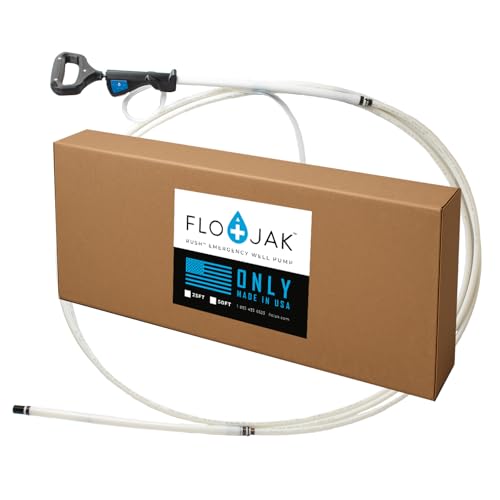
Flojak Emergency Backup Manual Well Pump Kit

ECO-WORTHY 100W Solar Submersible Pump Kit

ECO-WORTHY 200W Solar Well Pump Kit 12V
Josbuynls Solar Deep Well Pump 24V 370W Screw
More On The Choices That Made The List
This DIFFUL kit targets the hard cases: deep drilled wells where a centrifugal pump would simply stall out. A screw rotor (a helical screw that grabs and pushes water up the borehole) paired with a 0.7 HP motor delivers up to 7.5 GPM at a rated head of 360 feet, which is the deepest single-lift rating in this lineup.
The smart MPPT controller (Maximum Power Point Tracking, a circuit that constantly adjusts voltage to harvest the most energy from the solar array) helps the system stretch every available watt from a smaller panel bank, and dry-run plus overheat protection guard against the two most common failure modes in remote installs. Compared with the lower-head DIFFUL units that follow, this one trades away some flow for serious vertical reach.
What Pays Off
- 360-foot head rating handles genuinely deep wells without booster pumps.
- MPPT controller with a readable display helps you tune the array on site.
- Built-in dry-run protection reduces wear when the well drops below the inlet.
- NSK bearings (a premium Japanese bearing brand commonly used in industrial motors) and high-temperature copper windings extend service life in continuous-duty operation.
- DIY plug-and-play wiring keeps the install approachable for a careful homeowner.
Worth Bearing In Mind
- Real-world flow drops sharply as you approach that 360-foot ceiling; expect meaningful performance loss past 250 feet of lift.
- Screw pumps move less water than centrifugal units at low heads, so this is the wrong tool for shallow trough refilling.
- Requires a 48V array, so a 12V battery bank from an RV setup will not work without rewiring.
Built With In Mind
Property owners with deep drilled wells between 200 and 360 feet who need steady daytime flow without grid power or a generator.
Look Elsewhere When
The DIFFUL Solar Deep Well Pump 185 FT 24V (pick 2) suits anyone running on a smaller solar array and a shallower well.
Shallow-to-mid-depth wells are where this compact 24V DIFFUL pump earns its keep. With a screw rotor rated for 185 feet of lift and 5.3 GPM peak flow, it is sized for the typical residential drilled well, not the deepest farm bores.
The lower voltage makes the array wiring less intimidating, and the same MPPT controller design used in the higher-head DIFFUL models keeps energy harvest efficient. You lose the deep-lift headroom of pick 1, but the smaller panel requirement often makes this a friendlier install for first-timers.
Notable Upsides
- 24V operation works with mid-size solar arrays that homesteaders often already own.
- Smart MPPT controller includes dry-run and overheat safeguards.
- IP65 weatherproofing (a rating meaning the unit resists dust and low-pressure water jets) keeps the controller safe in exposed outdoor cabinets.
- Plug-and-play wiring reduces install time on a weekend project.
Possible Compromises
- 5.3 GPM is modest; filling a large stock tank takes patience on a cloudy day.
- Head ceiling drops hard past about 130 feet, so it underperforms in deeper wells.
- 2-year coverage is solid, but screw rotors still need occasional inspection for sand wear.
Best Suited To
Homesteaders with drilled wells under 130 feet and a modest solar array who want straightforward setup.
Reach For A Different Pick When
The DIFFUL Solar Pump Kit 360 FT (pick 1) is the better match for wells pushing past 200 feet of depth.
Where the previous DIFFUL pumps trade flow for lift, this one flips the script: 16 GPM at low head, dropping to a 83-foot maximum rating. That makes it the right call for shallow wells feeding livestock tanks, irrigation manifolds, or large garden setups.
You give up the deep-well reach of pick 1, but you gain the kind of throughput that fills a 500-gallon stock tank in under an hour of strong sun. The same smart MPPT controller and protective circuitry carry over, which keeps the wiring and operation consistent with the rest of the DIFFUL family.
Practical Advantages
- 16 GPM output is well above most solar pumps in this class.
- 83-foot head rating suits shallow drilled and driven wells.
- Dry-run and overheat protection are standard on the controller.
- 2-year warranty offers a reasonable cushion against early failures.
Worth Noting
- Flow falls off quickly past about 50 feet of lift.
- Needs a fairly large panel array to sustain peak GPM at midday.
- Screw rotor is less efficient than a centrifugal pump for shallow, high-volume duty in some installations.
Perfect Match For
Small farms and large gardens where high-volume daytime irrigation matters more than deep-lift capacity.
A Better Fit Elsewhere
The DIFFUL Solar Submersible Pump 20 GPM 264 FT (pick 4) suits anyone who needs both high flow and meaningful vertical lift.
This is the rare solar pump that refuses to choose between flow and lift. A stainless steel impeller drives 20 GPM at a 264-foot head rating, putting it in the same conversation as small gas-powered trash pumps for raw output.
The stainless impeller is built to resist clogging from sand and sediment, which is a quiet durability win in wells that have not been developed to drinking-water clarity. Compared with the 16 GPM DIFFUL kit above, you trade a little flow efficiency at the very top end for a meaningful lift boost.
Everyday Perks
- 20 GPM is enough to fill troughs and run drip irrigation at the same time.
- Stainless steel impeller resists clogging in sandy or iron-rich wells.
- 264-foot head rating covers most rural residential and farm wells.
- MPPT controller with protective shutdown programs comes standard.
Trade-Offs To Consider
- Larger panel bank required to hit peak GPM numbers.
- Submersible install means pulling the pump for any service work.
- Higher current draw makes cable gauge a more serious consideration.
Right Fit For
Mid-depth wells on working farms where heavy sediment and high demand both show up daily.
Consider Something Else When
The DIFFUL Solar Well Pump Complete Kit 16 GPM (pick 3) is a calmer choice for shallow wells with no sediment issues.
Water transfer is the use case this 20 GPM DC pump is built around, with a stainless impeller and a 116-foot head ceiling that splits the difference between the high-flow and deep-lift DIFFUL models earlier in the list.
It shines when you are moving rainwater from cistern to garden, or pushing well water uphill to a header tank. Compared with pick 4, you trade a little peak flow at very low heads for a more general-purpose curve across the full lift range.
Useful Strengths
- 20 GPM handles pond-to-tank and tank-to-garden transfers quickly.
- Stainless impeller stands up to sediment better than plastic rotors.
- MPPT controller maximizes solar harvest throughout the day.
- IP65 rating supports outdoor mounting without a fancy enclosure.
Things To Weigh Up
- 116-foot head ceiling rules out the deepest wells.
- Performance depends heavily on array sizing in partial sun.
- Wiring through long cable runs becomes a real concern at 0.4 HP continuous draw.
Whose Shelf It Belongs On
Anyone moving large volumes of water between cisterns, ponds, or garden headers in moderate sun.
Skip It When
The YIYIBYUS Solar Deep Well Pump (pick 6) is a smarter call if you need polished stainless and a stronger lift rating.
The YIYIBYUS kit brings a polished stainless steel housing to the deep-well category, aimed at users who care about corrosion resistance as much as raw spec sheets. The 24V 370W pure copper motor drives a screw pump to 213 feet of lift at 2 cubic meters per hour.
It runs at a brisk 2850 RPM, which is more than enough to handle farm irrigation duty cycles. The honest read: build quality feels a step up from the plastic-bodied DIFFUL units, but you give up the smart MPPT controller those kits include.
Reasons It Performs
- Stainless steel housing resists cracking and aging in mineral-heavy wells.
- 213-foot head rating covers most residential and small-farm wells.
- 370W pure copper DC motor handles continuous-duty operation.
- Compact size eases installation in narrow boreholes.
Points To Note
- No smart MPPT controller means you give up some efficiency in variable sun.
- Flow rate of 2 cubic meters per hour is moderate for the power class.
- Stainless body adds weight, which complicates hand-pulling the pump for service.
Feature Card
Made For
Farmers and ranchers who want a corrosion-resistant body in mineral-heavy wells and can supply their own controller setup.
Not Your Match When
The DIFFUL Solar Pump Kit 360 FT (pick 1) is the better fit if a built-in MPPT controller matters more than the stainless housing.
This Flojak kit is the odd one out on purpose: a manual backup pump that needs no electricity, no panels, and no batteries. Built in the USA, it slots into a 25-foot well scenario where you want emergency water access during outages or disaster prep.
It pairs well with any of the solar pumps earlier in this list as a redundancy plan, since a single point of failure on a remote property can leave you dry for days. Think of it as a hand-operated insurance policy rather than a primary pump.
The Value In It
- Manual operation removes dependence on any power source at all.
- Compact, portable design fits emergency kits and bug-out bags.
- DIY-friendly setup without specialty tools.
- Made in USA construction supports domestic supply chains.
Some Limits To Know
- 25-foot depth rating is shallow, so deeper wells need a different model.
- Manual pumping for household use is genuinely tiring.
- Not designed as a daily-use primary pump, only emergency backup.
Who Should Grab It
Preparedness-focused homesteaders who want water access during extended grid or weather events.
Swap It Out When
The ECO-WORTHY 200W Solar Well Pump Kit (pick 9) handles daily off-grid pumping for households that do not need a manual option.
ECO-WORTHY built this 100W starter kit for households stepping into solar pumping for the first time. It includes the panel, controller, pump, and a 16-foot connecting cable, removing the parts-shopping that often stalls a first install.
The 100-foot (30-meter) head rating puts it in shallow well territory, so think garden irrigation and small farm tanks rather than deep residential wells. Compared with the larger ECO-WORTHY kit in pick 9, this one trades away output capacity for a friendlier entry price.
The Practical Payoff
- All-in-one bundle removes panel-and-controller sourcing guesswork.
- 100W panel is enough for modest garden and tank duty.
- 12V DC pump runs on common battery banks.
- Compact build fits tight well casings.
A Few Limitations
- 100-foot head ceiling rules out deeper residential wells.
- 100W panel limits flow on cloudy days or during morning and evening hours.
- Flow rate is modest compared with 200W kits in the same category.
Feature Card
Right Fit For
First-time solar pump users with shallow wells or garden irrigation needs who want everything in one box.
Consider Something Else When
The DIFFUL Solar Water Transfer Pump 20 GPM DC (pick 5) is a smarter pick for anyone needing heavier flow.
The step-up ECO-WORTHY bundle brings two 100W panels into the system, paired with a 12V stainless steel pump and an upgraded 20A PWM controller (Pulse Width Modulation, a simpler charge-regulation method that cycles power on and off to maintain stable voltage). With a 230-foot head rating and 3.2 GPM flow, it covers mid-depth wells comfortably.
The 304 stainless pump housing is built for long-term submersion, and the package can also run on a 12V battery bank for cloudy-day storage. Compared with the 100W ECO-WORTHY kit, you trade away simplicity for a meaningful jump in daily water yield.
Everyday Advantages
- 230-foot max head handles mid-depth residential wells.
- Two 100W panels keep pumping output consistent through partly cloudy weather.
- 304 stainless pump body resists corrosion in mineral-heavy wells.
- 20A PWM controller with large LCD simplifies on-site tuning.
- Battery-compatible for flexible storage when the sun gets shy.
Details To Watch
- Multiple-package delivery can arrive on different days, complicating planning.
- 3.2 GPM peak flow is modest for irrigation-heavy households.
- PWM controller is less efficient than MPPT alternatives in variable sun.
Who It Suits Best
Off-grid small homesteads needing a complete kit with battery backup and corrosion-resistant pump hardware.
Skip It When
The DIFFUL Solar Submersible Pump 20 GPM 264 FT (pick 4) suits higher-demand operations willing to supply their own panels.
The Josbuynls screw pump mirrors the YIYIBYUS design on paper: 24V, 370W, 213-foot lift, 2850 RPM, polished stainless housing. It targets the same ranch and farm irrigation use case at a friendlier entry price.
The screw pump rotor handles sediment better than centrifugal impellers, and the pure copper motor shares the same heat-tolerant winding class. You may find the brand-name familiarity is thinner than the larger players in this list, so warranty claims can take extra patience.
Strong Points
- 213-foot head rating reaches mid-depth wells without booster pumps.
- Polished stainless steel housing resists corrosion and aging.
- Pure copper 0.37KW DC motor handles continuous-duty use.
- Screw design tolerates sediment better than centrifugal pumps.
Honest Caveats
- Less established brand can mean slower warranty service.
- No integrated smart controller, so you supply your own MPPT or PWM unit.
- Stainless body adds weight to any future pull-and-service job.
Feature Card
Perfect Match For
Budget-focused ranchers running mid-depth wells who already own or plan to source their own controller.
Look Elsewhere When
The YIYIBYUS Solar Deep Well Pump (pick 6) suits shoppers who prefer a more recognized brand at a similar spec.
What Matters Most Before Choosing Solar Well Pump Kits
Match The Pump To The Well, Not The Other Way Around
The single biggest mistake is buying a pump before knowing the static water level and total well depth. Static water level is the depth at which water naturally sits in the well when no pump is running, and it determines how much vertical lift the pump must generate on every cycle. A pump rated for 360 feet is wasted on a 60-foot well, and a 100-foot pump simply will not move water from a 250-foot well.
For most rural residential wells, measure the static level, then add 30 to 50 feet for drawdown (the drop in water level when the pump is actively running). That number is your real lift requirement, and it should sit comfortably below the pump’s maximum head rating.
Flow Rate Is A Daily Volume Game
GPM (gallons per minute) tells you the peak flow at zero head, but real performance drops as lift rises. A 16 GPM pump at zero head might deliver 9 GPM at 80 feet, which still works out to over 500 gallons per hour of strong sun. Multiply that by average peak sun hours in your region to get a sense of daily yield.
For most small farms and homesteads, 3 to 5 GPM sustained output handles livestock, garden irrigation, and basic household needs without straining the array.
Controller Type Changes Array Sizing
MPPT controllers extract noticeably more energy from a given panel set, especially in cool or variable weather. PWM controllers cost less and work fine on smaller systems, but you typically need 20 to 30 percent more panel wattage to match MPPT output. The ECO-WORTHY kits use PWM; most DIFFUL kits use MPPT.
Match Voltage To Your Existing Battery Bank
12V pumps slot into common RV and off-grid battery banks without rewiring. 24V pumps need either series-wired panels or a 24V battery bank. 48V pumps (like pick 1) demand higher-voltage arrays and are best for dedicated solar setups without battery storage.
Pitfalls Worth Dodging And Where The Extra Money Goes
Where Shoppers Go Wrong
Underestimating lift is the classic trap. Sellers often advertise peak GPM at zero head, which makes a 5 GPM pump sound like a firehose until you realize it delivers 2 GPM at 100 feet. Pull the well log (a document from the well driller showing depth, casing size, and water levels) before ordering. Ignoring cable gauge is the second common miss: long cable runs on higher-voltage pumps need thicker wire to avoid voltage drop, and undersized cable silently robs the pump of power.
When Paying More Pays Off
Stainless steel housings cost more than plastic, but they survive mineral-heavy water and rough handling during install for years longer. MPPT controllers carry a premium over PWM, but they pay you back in extra daily water on partial-cloud days. Higher head ratings usually mean heavier, more robust motors with bigger bearings, which translates to longer service intervals. The upgrade math is simple: if your well or climate is harsh, the premium tier earns its keep fast. If your site is gentle and shallow, the basic tier is plenty.
