

When the first hard freeze is on the seven-day forecast, the last thing anyone wants is a cracked copper manifold behind the garage or a split plastic valve under the back porch. Sprinkler blowout adapters turn a messy seasonal chore into a controlled, repeatable job: hook an air compressor to the irrigation line, push the lines clear, and walk away knowing nothing frozen is left behind to expand. The same kit also doubles for RVs and campers at the storage yard, which is why you’ll see overlap in this roundup. Below are ten options that cover the common configurations: short hose or rigid plug, lead-free brass for potable lines, and specialty fittings for backflow preventers.
The Essentials At A Glance

Frienda RV Winterizing Adapter with Quick Connect Air Hose Kit

WINAMOO Lead-Free Brass 17″ RV Winterizing Kit with Shut Off Valve

Minimprover Lead-Free Brass 16.9″ Sprinkler Winterizing Adapter
BUTTIKU RV Winterizing Kit and Sprinkler Blowout Adapter

Vibrant Yard Co. Solid Lead-Free Brass Blow Out Adapter

YELUN RV Winterize Blowout Adapter with Quick Connect and Valve

Vibrant Yard Company Air Compressor to Hose Blow Out Adapter 13″

Kbrotech RV Winterizing Kit with Shut Off Valve
Vibrant Yard Company Schrader to Garden Hose Adapter
Hromee Winterize Plug NPT Fittings Kit for Backflow Preventers
A Closer Look At Each Pick
The Frienda kit is the entry point most people reach for first, and it makes sense for anyone working in awkward spots. A 12-inch hose with a 3/8-inch inner diameter bends where rigid plugs can’t, so you can snake it behind a water heater or into a low-clearance valve box without yanking on the plumbing. The copper-sleeved ends and -40°F to 150°F operating range cover everything from deep-winter Northern work to sun-baked summer hookups in the Southwest.
That flexibility is what sets it apart from the WINAMOO pick later in the list, which trades some pliability for a sturdier brass build. You get a shut-off valve inline, male and female garden hose ends, and a maximum operating pressure of 300 PSI. For most homeowners the spec sheet is more than enough headroom for a portable compressor. For very long irrigation runs with stubborn sediment, you may find a slightly longer hose easier to work with.
Points In Its Favor
- Flexible 12-inch hose slips into tight valve boxes and behind hose bibs
- Wide -40°F to 150°F working range handles almost any climate
- Inline shut-off valve gives precise control when clearing lines
- Male and female garden hose threading covers both RV and sprinkler hookups
- 300 PSI ceiling provides plenty of margin over typical compressor output
Things To Consider
- Material specs focus on the hose; the fittings themselves are less robust than all-brass alternatives
- 12-inch reach may fall short when the compressor sits far from the hookup point
- Owners commonly report needing to double-check thread tape to avoid slow leaks at the hose-to-fitting joint
Who It Suits Best
First-time winterizers in cold climates with standard residential irrigation systems.
Where Another Pick Suits Better
Owners who winterize RVs every fall should look at the WINAMOO Lead-Free Brass 17″ RV Winterizing Kit, since its lead-free brass body is safer for potable RV lines.
The WINAMOO kit earns its spot by pairing a 17-inch rubber hose with solid lead-free brass fittings, certified to contain less than 0.25% lead. That combination matters for RV owners who care about what’s touching the freshwater tank and the lines that feed the kitchen sink and shower. The extra five inches over the Frienda adapter is a quiet upgrade, giving you room to stand upright while working at a wall-mounted city water inlet.
Compared to the Frienda entry, this one trades the budget price for peace of mind around drinking water. The 3/8-inch inner hose is identical in size, but the rubber construction has stronger cold- and heat-resistance properties. You also get the same 1/4-inch industrial quick-connect on the air side, so any standard compressor hose clicks right in.
Everyday Perks
- Lead-free brass under 0.25% lead content suits potable RV water systems
- 17-inch hose reach helps when the compressor sits a few feet from the hookup
- Premium rubber hose handles heat, cold, and corrosion over many seasons
- Inline shut-off valve lets you throttle airflow without walking to the compressor
- Standard 1/4″ quick-connect works with shop compressors across North America
Worth Noting
- Heavier brass body adds a bit of bulk in a small storage compartment
- Premium materials push the price noticeably above basic plastic-fitting kits
- Brass threads can gall if over-tightened, so hand-snug plus a quarter turn is plenty
Made For
Full-time RVers and weekend campers winterizing a freshwater system with a real air compressor.
Consider Something Else When
Anyone working in sub-freezing shop conditions with a tight budget should reach for the YELUN RV Winterize Blowout Adapter instead, which costs less while still offering a valve.
Where the WINAMOO kit focuses on length, the Minimprover adapter focuses on temperature extremes. Its EPDM rubber hose (a dense synthetic rubber rated for harsher conditions than standard rubber) is rated from -22°F up to 250°F, which covers almost every climate anyone is actually hooking up a compressor in. The 300 PSI maximum matches the rest of the field, but the heat ceiling stands above most residential kits.
It uses the same lead-free brass under 0.25% lead, so it slots in cleanly next to the WINAMOO for anyone who wants safer materials on a potable line. The hose itself runs about 12 inches, which is shorter than the WINAMOO but matches the Frienda. Threading is standard 3/4-inch garden hose on one end and a 1/4-inch industrial quick-connect on the other, so compatibility with common compressors is built in.
Practical Pluses
- EPDM rubber hose handles extreme cold snaps down to -22°F without stiffening
- 250°F upper temperature limit beats most residential blowout adapters
- Lead-free brass under 0.25% lead for safer freshwater hookups
- Compatible with standard garden hose threading across North America
- Flexible hose reduces stress on rigid copper fittings in older homes
Trade Offs
- Specs for hose length are approximate rather than precise
- Heavier brass body adds weight if you carry the kit in a small toolbox
- Documentation on flow rate is thinner than premium competitors
Best Suited To
Homeowners in northern climates who blow out lines once a year and want a kit that survives the garage over many winters.
Look Elsewhere When
Anyone wanting a longer hose for tall service bays should look at the Vibrant Yard Company 13″ Long adapter, which trades temperature range for a tidier profile.
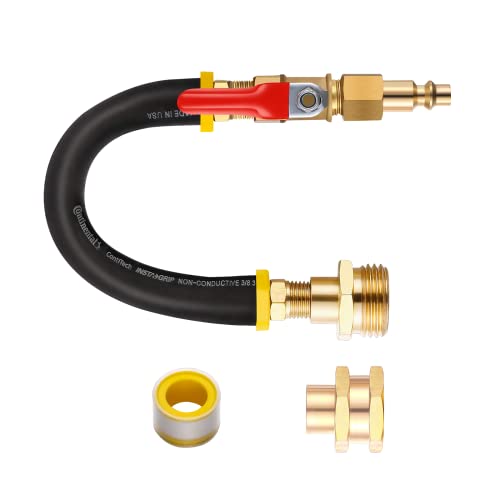
The BUTTIKU kit is built around versatility, with both 3/4-inch male and female garden hose ends on the same assembly. That double-ended design means one adapter covers an RV city water inlet (male thread) and a sprinkler manifold (female thread) without swapping parts. It’s the kind of “leave it in the truck” tool that earns its space over a season of mixed jobs.
Compared to the Vibrant Yard Co. rigid plug earlier in the field, this is a flexible-hose design with a shut-off valve inline. The flexibility matters when the hookup point sits a few feet from where you want to stand, and the valve lets you cut air without sprinting back to the compressor regulator. Spec sheets focus on the dual-thread convenience rather than headline temperature ratings.
The Good Stuff
- Male and female garden hose ends on one assembly cover more hookups
- Inline shut-off valve improves control during blowout
- Flexible hose reaches awkward service bays and under-sink manifolds
- Standard air compressor quick-connect fits most shop compressors
Points To Keep In Mind
- Manufacturer specs lean toward application descriptions rather than detailed temperature and pressure figures
- Dual-ended design is slightly bulkier than single-purpose rigid plugs
- Storage in a small RV bay may require coiling the hose to keep it tidy
Who Will Love This
Mobile techs and homeowners who winterize both an RV and a yard sprinkler system from the same compressor.
Skip It When
Anyone focused purely on yard irrigation without RV use can save space with the Vibrant Yard Co. Solid Lead-Free Brass Blow Out Adapter, which skips the hose altogether.
The Vibrant Yard Co. plug is the simplest thing on this list, by design. A solid lead-free brass body with a 3/4-inch garden hose thread on one side and a 1/4-inch industrial quick-connect on the other. No hose, no valve, no extra parts to misplace. For a quick yard blowout where the hose bib sits one step from the compressor, that’s all you need.
It also leans into safety: lead-free brass means it’s appropriate for any hose that touches a potable outdoor faucet or sillcock. Compared to the BUTTIKU kit, the trade-off is reach. A rigid plug requires you to bring the compressor close, or extend the air line instead. In tight valve boxes you may find a flexible-hose option easier to angle.
What Pays Off
- Solid lead-free brass construction won’t crack in a cold garage
- 3/4″ NH garden hose thread fits standard outdoor faucets in the US and Canada
- 1/4″ industrial quick-connect matches shop compressor fittings
- Compact form slips into a junk drawer between uses
A Few Limitations
- No flexible hose, so the compressor must sit near the hookup point
- No inline shut-off valve to throttle airflow from the adapter
- Rigid body can be tough to fit inside cramped backflow preventer boxes
The Right Fit
Homeowners with a small yard and a compressor parked next to the hose bib on fall weekends.
Swap It Out When
Anyone blowing out a backflow preventer with female NPT ports should pick up the Hromee Winterize Plug NPT Fittings Kit, which is sized specifically for those threaded test cocks.
The YELUN adapter is the no-fuss brass option for boat and trailer owners. It combines a 1/4-inch quick-connect plug, a 3/4-inch garden hose thread, and an inline shut-off valve in one solid brass body. The brass resists corrosion in damp marine storage, which matters when the kit lives in a dock box or a bilge compartment for months.
It covers the same use cases as the Frienda entry but trades a flexible hose for a more compact rigid build. That works well for marine applications where space is tight and the air compressor is already onboard. Compared to the WINAMOO pick above, you give up the lead-free designation, so this isn’t the right choice for systems feeding a freshwater tank.
Practical Advantages
- Brass construction withstands humid marine environments without corroding
- Inline valve for precise airflow control without returning to the compressor
- Standard 1/4″ quick-connect fits common shop and portable compressors
- Compact rigid body fits a small dock box or trailer storage bin
Some Limits To Know
- Brass composition is not specified as lead-free, so avoid on potable freshwater systems
- No flexible section means tight hookups in cramped engine rooms can be tricky
- Temperature and pressure ratings are not published in the product documentation
Perfect Match For
Boat owners winterizing non-potable water lines, washdown pumps, and trailer plumbing at the storage yard.
Reach For A Different Pick When
Anyone winterizing an RV freshwater system should reach for the WINAMOO Lead-Free Brass 17″ RV Winterizing Kit to keep drinking-water lines safer.
The 13-inch Vibrant Yard Company adapter is the travel-ready sibling of the larger kits, with a male-to-male fitting that lets you chain it between an air line and a garden hose thread. It runs shorter than the Frienda, but the male-to-male configuration makes it useful when you already have a hose and want to drop an air compressor into the middle of the run.
The build is lead-free, which keeps it appropriate for outdoor potable faucets. Its flexibility helps in cramped under-sink access panels where a rigid plug would force you to remove the whole assembly to seat it. If your compressor lives in the truck and you only carry one adapter at a time, this is a tidy compromise between reach and bulk.
Notable Upsides
- Lead-free brass construction suits outdoor hose bibs and sillcocks
- 13-inch length balances reach with compact storage in a truck bin
- Flexible hose reduces stress on old gate valves during hookup
- Standard 1/4″ industrial quick-connect fits shop compressors
Possible Compromises
- Male-to-male fitting requires a hose on the other end to feed a faucet
- No inline shut-off valve, so throttling happens back at the regulator
- Shorter length may require repositioning the compressor for tight hookups
Built With In Mind
Mobility-first users who want one adapter that lives in a service truck year-round.
Another Choice May Suit
Anyone needing both hookup flexibility and a shut-off valve should look at the BUTTIKU RV Winterizing Kit and Sprinkler Blowout Adapter instead.
The Kbrotech kit lands in the middle of the field with the same male and female garden hose ends as the BUTTIKU, plus an inline shut-off valve. The double-ended design and flexible hose section make it a versatile daily-driver pick for shops that handle a mix of RVs, campers, and residential sprinkler blowouts over the course of a fall.
It doesn’t publish headline temperature or pressure ratings, so the WINAMOO and Minimprover kits above still lead for extreme-cold owners. For typical Zone 5 through Zone 8 winterizing on a Saturday morning, the Kbrotech has everything most homeowners actually need. The build quality skews toward value-tier, which matches the price point.
The Helpful Details
- Male and female garden hose ends cover both RV and sprinkler hookups
- Inline valve for hands-on airflow control during the blowout
- Flexible hose section eases installation behind hose bibs and inlet fittings
- Standard air compressor quick-connect fits common shop fittings
Where It Is Less Suited
- No published temperature or pressure ratings to plan around
- Materials skew toward cost-effective brass blends rather than premium alloys
- Bulkier than the rigid Vibrant Yard Co. plug for one-handed jobs
Whose Shelf It Belongs On
Shops and homeowners who want a single kit for a variety of fall and spring winterization jobs.
Where A Sibling Pick Shines
Owners in the deep freeze should reach for the Minimprover Lead-Free Brass 16.9″ Sprinkler Winterizing Adapter for documented cold tolerance.
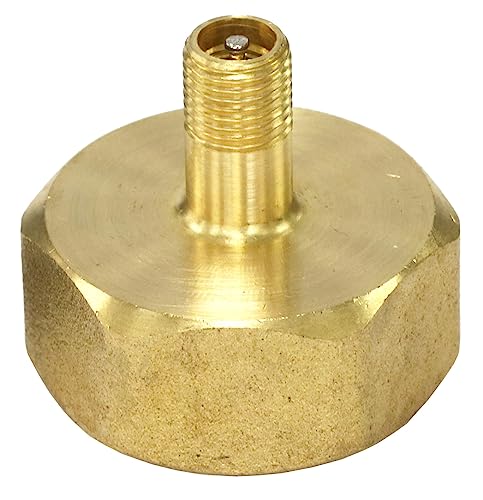
This Vibrant Yard Company adapter solves a specific problem: you own a portable tire inflator with a Schrader chuck (the same push-on fitting used on car tire valves) and not a full air compressor. The adapter turns that inflator into a low-volume blowout tool by mating the Schrader end to a standard female garden hose thread. From there, you hook up to a hose bib, sillcock, or hose spigot for a slow but steady clear-out.
It’s not the right tool for a 6-zone irrigation system with long lateral runs, where a real compressor delivers the volume needed to push water past every sprinkler head. For a single hose bib, an RV inlet, or a small yard with a couple of zones, the Schrader adapter is a clever workaround. Compared to the rest of the field, it trades raw airflow for portability.
Everyday Advantages
- Uses a portable tire inflator so no shop compressor is required
- Schrader chuck is identical to those on car and truck tires
- Standard female garden hose thread fits common outdoor faucets
- Compact form factor stows in a glove box or RV cabinet
Things To Weigh
- Tire inflators deliver less volume than a compressor, so long irrigation runs drain slowly
- Not designed for high-pressure systems beyond household air supply
- Relies on a continuous Schrader seal, which owners commonly report needing periodic checks
Who Should Grab It
Condo owners, renters, and RV travelers without access to a full-size air compressor.
Not Your Match When
Anyone winterizing a multi-zone residential system should look at the WINAMOO Lead-Free Brass 17″ RV Winterizing Kit, which is built for higher airflow from a real compressor.
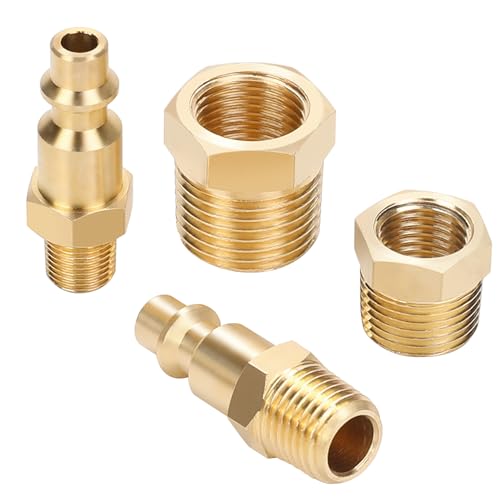
The Hromee kit isn’t a hose at all. It’s a set of NPT (National Pipe Thread, the tapered thread standard used on iron and brass pipe fittings) plugs and adapters sized for backflow preventers and pressure vacuum breakers, which are the brass assemblies between your irrigation system and the domestic water supply. Blowing out a system at the backflow preventer requires sealing the test cocks, and that’s where these plugs earn their keep.
The kit includes 1/8″ and 1/4″ NPT male plugs, plus 1/2″ male to 3/8″ female and 3/8″ male to 1/4″ female adapters. That covers female NPT ports, which most modern backflow preventers use. Owners with older male SAE 45° flare fittings will need a different solution, since this kit is not designed for those. Compared to the rest of the roundup, it’s the most specialized pick on the list.
What Stands Out
- Multiple NPT plug sizes handle common backflow preventer test cocks
- Industrial-style adapters sized for permanent irrigation installations
- Compact kit fits in a small parts drawer in the garage
- Steel plug construction resists thread damage during repeated seasonal use
Factors To Consider
- Will not fit male SAE 45° flare fittings, so verify your backflow preventer first
- Not a complete blowout solution by itself, since it focuses on test-cock sealing
- Requires basic familiarity with NPT thread sizes to pick the right plug
Right Fit For
Irrigation pros and experienced homeowners who blow out systems at the backflow preventer rather than at a hose bib.
Skip It When
Anyone new to winterizing should start with the Vibrant Yard Co. Solid Lead-Free Brass Blow Out Adapter, which connects directly to a hose bib without any thread-sizing guesswork.
Factors To Consider When Choosing Sprinkler Blowout Adapters
Match The Adapter To Your Hookup Point
Start by identifying where you’ll connect. Outdoor hose bibs and sillcocks take a standard 3/4-inch garden hose thread, which every adapter in this roundup covers. RV city water inlets also use that thread, which is why the same kits cover both jobs. Backflow preventers use NPT ports, which is the niche the Hromee kit fills.
Lead-Free Matters For Potable Lines
Brass contains trace lead, and the “lead-free” designation means under 0.25% lead content by weight. For any line that feeds a kitchen sink, shower, or freshwater tank, that designation is worth the modest price premium. The WINAMOO and Minimprover kits both publish the under-0.25% spec; the YELUN entry does not, which matters for marine washdown pumps but not for drinking-water hookups.
Flexible Hose Versus Rigid Plug
A flexible hose (12 to 17 inches) reaches into tight valve boxes, behind water heaters, and around awkward service bays. A rigid plug stays small and tidy, but it forces the compressor to sit near the hookup point. Homeowners with a stationary compressor usually prefer a flexible hose; renters and mobile techs often prefer a rigid plug for the form factor.
Pressure, Temperature, And Air Compressor Size
Most adapters in this category rate for 300 PSI, which exceeds typical home compressor output of 100 to 150 PSI. Temperature ratings matter in cold garages. The Minimprover kit documents a -22°F floor, which gives extra margin if your kit lives in an unheated shed over the winter.
Key Considerations Across These Picks
Mistakes Worth Dodging
The most common error is buying a non-lead-free adapter for a freshwater line, then realizing too late that trace lead doesn’t belong anywhere near a kitchen faucet. Another slip is grabbing an adapter without checking the thread type on the backflow preventer, only to discover at the hose bib that the kit doesn’t fit. Measure twice and verify the kit’s NPT versus garden hose thread before you commit.
When Paying More Pays Off
The jump from a budget flexible-hose kit to a lead-free brass model with documented temperature and pressure ratings is the kind of upgrade that compounds over seasons. Premium picks like the WINAMOO and Minimprover kits survive storage in an uninsulated garage, resist corrosion at the dock, and handle repeated seasonal hookups without thread fatigue. For a once-a-year job, the cost difference is small against the cost of replacing a cracked manifold.
Frequently Asked Questions
What PSI should a sprinkler blowout adapter handle?
Most adapters in this category are rated for 300 PSI, well above the 100 to 150 PSI output of typical home air compressors. Always stay below the published maximum and below your compressor’s regulator setting.
Can the same adapter work on an RV and a sprinkler system?
Yes. Both systems use a 3/4-inch garden hose thread on the water side. Dual-ended kits like the BUTTIKU and Kbrotech simplify the swap between RV male threads and sprinkler female threads.
Is lead-free brass necessary for outdoor blowouts?
For potable outdoor faucets, hose bibs, and RV freshwater lines, lead-free brass (under 0.25% lead) is the safer choice. For non-potable systems like washdown pumps or irrigation laterals, standard brass is acceptable.
Do I need a flexible hose or a rigid plug?
A flexible hose reaches into tight valve boxes and behind plumbing. A rigid plug is more compact and easier to store, but it requires the compressor to sit near the hookup. Pick based on where your compressor lives during blowout season.
How do I blow out a backflow preventer?
Close the shutoff valves on either side of the preventer, then use NPT-sized plugs like those in the Hromee kit to seal the test cocks. Blow air through the system port until water stops flowing from the open valves on the house side.
Wrap Up
Choosing the right sprinkler blowout adapter comes down to your hookup point, your climate, and whether the line carries drinking water. Match the thread type, decide on flexible hose versus rigid plug, and choose lead-free brass when the line feeds a faucet. With those decisions made, any of the ten picks above will keep your pipes and RV lines safe through another hard freeze.
