

Pulling water from a well, pond, or storage tank and pushing it through a sprinkler line is unforgiving work, and undersized or mismatched pumps show their flaws fast. You’re trying to keep a lawn green, a garden productive, or a yard drainable without tripping breakers or burning out a motor. This list walks through ten sprinkler and irrigation pumps built for different yard sizes, water sources, and budgets, so you can match the hardware to the actual job instead of guessing.
The Leading Options At A Glance
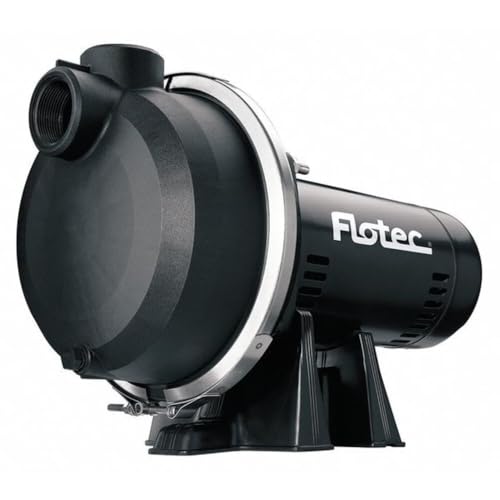
Flotec 1-1/2 HP Thermoplastic Sprinkler Pump

Goldlife N3 Pond Fountain Aerator Nozzle Kit

Aquastrong 1.6 HP Stainless Steel Garden Pump

Aquastrong 1.6 HP Automatic Booster Jet Pump

Sta-Rite DS3HF 1.5 HP Centrifugal Pump

SHANGDA 1 HP Garden Water Transfer Pump

SHANGDA 1.6 HP 1800 GPH Garden Pump

Red Lion RL-SPRK200-BR 2 HP Pump

Einhell GC-WW 6538 Domestic Water Unit
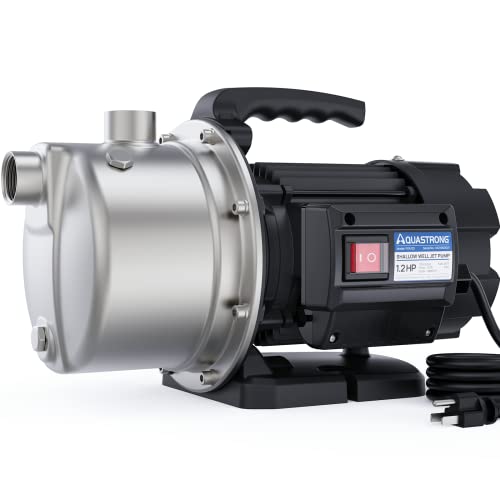
Aquastrong 1.2 HP Stainless Steel Pump
Meet The Standout Selections
The Flotec 1-1/2 HP opens this list because it’s the kind of pump designed for a full residential sprinkler manifold rather than a single hose bib. Its self-priming design helps when water levels in the well or cistern shift between seasons, and the fiberglass-reinforced thermoplastic shell keeps weight down without sacrificing corrosion resistance.
For homeowners running multi-zone irrigation on a half-acre or more, the dual-voltage motor is genuinely useful: you can wire it for 115V off a standard household circuit or 230V through a dedicated line for steadier draw under load. Maximum water temperature sits at 140°F, so it handles warm-water draw-down from a stock tank or shallow well without complaint.
What Makes Sense
- Capable of operating up to 30 sprinkler heads simultaneously, which suits mid-to-large yard layouts
- Self-priming design reduces the manual priming routine at the start of each watering season
- Dual 115/230V motor voltage lets you match wiring to your existing electrical panel
- Fiberglass-reinforced thermoplastic housing resists corrosion in damp pump-house environments
Things To Consider
- Thermoplastic body, while corrosion-resistant, can be less impact-tolerant than the cast-iron alternatives further down this list
- Running 30 heads assumes ideal layout and pressure; real-world losses from fittings and elevation may lower that count
Key Product Details
Right Fit For
Homeowners with multi-zone residential sprinkler systems drawing from a well or cistern who want one pump that can carry a moderate head count without overstressing the household circuit.
Where Another Pick Suits Better
For pond-side decorative aeration rather than lawn watering, the Goldlife N3 Pond Fountain Aerator Nozzle Kit is the more focused tool.
This pick isn’t a pump at all, and that’s deliberate. The Goldlife N3 nozzle kit swaps onto an existing Goldlife fountain pump and turns a backyard pond into something more decorative than a wet hole. The ABS spray head in matte black is built to be seen, not hidden.
Where it earns its place on a sprinkler-focused list is its 4-in-1 water flow mode design. You can change spray patterns without buying extra fittings, and the aeration side of those patterns keeps pond water from going stagnant in summer. For a gardener who already runs a pond pump and wants to upgrade the look, this is the missing piece.
Features That Help
- Four-in-one nozzle design offers switchable flow patterns for visual variety across the pond surface
- Black ABS construction stands up to UV and continuous water contact without fading
- Acts as a replacement or upgrade part for Goldlife fountain aerators, extending the life of equipment you already own
Points To Note
- Requires a compatible Goldlife fountain pump; it isn’t a standalone pump solution for lawn sprinklers
- Aeration modes help small ponds but won’t meaningfully oxygenate anything deeper than a few feet
Whose Shelf It Belongs On
Pond owners with an existing Goldlife fountain aerator who want to refresh the visual and aeration performance without buying a new pump.
Skip It When
Anyone without an existing Goldlife aerator or whose goal is lawn irrigation rather than decorative water flow; the Flotec 1-1/2 HP covers that ground.
If you’ve ever dragged a corroded pump out of a garden shed at the start of spring, the stainless steel housing on this Aquastrong model is the detail that matters most. Unlike the painted cast-iron workhorses, it shrugs off damp storage without the rust-flake ritual. The 1.6 HP motor also puts it comfortably above entry-level output.
Pulling 1320 GPH at 5 feet of head is solid for a single-zone residential setup, and the iron carrying handle makes it practical to move between the garden, the pool cover, and the rain barrel. Compared to the heavier Flotec at position one, this one trades permanent installation for portability.
Well-Handled Touches
- Stainless steel housing resists corrosion during off-season storage in sheds and garages
- 1.6 HP motor delivers a strong 1320 GPH flow at modest head heights for everyday lawn watering
- Portable form factor with an iron carry handle for moving between tasks
- Suitable for clean-water transfer, pool draining, and lawn irrigation with one unit
Honest Caveats
- Manual operation: there’s no automatic pressure switch, so it runs whenever it’s plugged in
- Not designed for continuous-duty sprinkler manifolds with many zones firing simultaneously
Who It Suits Best
Homeowners with a modest lawn or garden who want a portable pump for spot-watering, draining, and seasonal irrigation from a shallow well or rain barrel.
Reach For A Different Pick When
You want a set-and-forget automatic sprinkler feed; the Aquastrong 1.6 HP Automatic Booster Jet Pump handles that role with its pressure switch.
Take the previous Aquastrong, add a pressure switch and a small pressure tank, and you get this automatic booster jet pump. The result is a system that mimics household water pressure: turn on a sprinkler zone, the pump kicks in, and it shuts itself off when the zone closes.
Stainless steel construction again keeps corrosion in check, and the 1.6 HP motor pushes 1340 GPH at 5 feet of head with a 164-foot max head ceiling. For a yard with an existing irrigation controller, this is the closest thing to “install it and forget it” in this lineup.
Strengths Worth Knowing
- Integrated pressure switch allows automatic start-stop based on demand from sprinkler valves
- Stainless steel housing matches the durability profile of the manual Aquastrong model
- Up to 1340 GPH flow supports small-to-medium residential sprinkler zones
- Strong 26-foot suction lift lets you pull from a shallow well, cistern, or buried tank
Trade Offs
- Pressure tank adds bulk and weight compared to the manual version
- Initial setup of the pressure switch range typically benefits from a basic electrical check
Core Details
Best Suited To
DIYers wiring a multi-zone sprinkler system who want automatic on/off behavior without investing in a full municipal-grade booster station.
Look Elsewhere When
Heavy-duty commercial irrigation demands call for the Sta-Rite DS3HF 1.5 HP Centrifugal Pump or the Red Lion RL-SPRK200-BR instead.
The Sta-Rite DS3HF sits in a different weight class than the portable pumps above it. This is a Pro Storm series cast-iron unit aimed at permanent installation, and its single-body-fill priming to 25-foot lifts in under five minutes is the kind of spec that saves a Saturday morning.
For larger residential lots, sports-turf-style lawns, or light commercial jobs, the cast-iron casing offers the impact and heat tolerance that thermoplastic and stainless steel sometimes lack. It’s also designed to meet UL778 and CSA safety standards, which matters where local codes actually require certification.
What Pays Off
- Single-body-fill priming to 25-foot lifts saves time compared to two-piece priming routines
- Cast-iron casing handles heat dissipation and physical abuse better than lighter materials
- UL778 and CSA compliance satisfies stricter code requirements in some municipalities
- Drop-in replacement profile for older Sta-Rite DS2H sprinkler pumps
Worth Noting
- Heavier than stainless or thermoplastic units; plan on a solid mounting base
- Installation and wiring typically call for an electrician, adding to project cost
Perfect Match For
Contractors and serious DIYers installing a permanent sprinkler pump for a large lawn who need code-listed hardware and don’t mind the extra weight.
Not Your Match When
Quick, seasonal watering from a rain barrel; the SHANGDA 1 HP Garden Water Transfer Pump is a more proportionate tool for that scale of work.
Where most picks on this list chase higher GPH or smarter controls, this SHANGDA entry stays modest on purpose. A 1 HP motor pushing 920 GPH at a 147-foot max lift is plenty for a small yard, a single sprinkler zone, or moving water between rain barrels.
The waterproof on/off switch is the practical detail that gets overlooked: a sealed switch near the motor housing avoids the accidental-startup problem that plagues cheaper pumps sitting in damp corners. For someone buying a first irrigation pump, the simplicity is the feature.
Advantages To Know
- Waterproof on/off switch design reduces the chance of accidental starts in wet conditions
- 147-foot max lift supports modest elevation changes around a sloped yard
- Compact 1 HP form factor fits on a workbench or small pump pad
- Simple operation with no pressure switch to adjust on day one
Smaller Limitations
- 920 GPH flow won’t keep up with multi-zone simultaneous sprinkler use
- Lower horsepower means longer fill times for larger pools or ponds
At A Glance
Right Fit For
First-time pump owners with a small yard or garden who want a low-fuss unit for spot-watering and water transfer rather than whole-lawn irrigation.
Swap It Out When
The yard grows or zones multiply; the SHANGDA 1.6 HP 1800 GPH Garden Pump offers the same brand DNA with notably more output.
Step up from the entry-level SHANGDA and the headline number nearly doubles: 1800 GPH at a 164-foot lift ceiling. The hollow handle design is a small but smart touch that makes carrying the pump between work sites less of a knuckle-buster.
Where this pump earns its keep is mid-sized lawn irrigation where the previous SHANGDA 1 HP would run out of breath. The adapter kit broadens compatibility with common garden hose and irrigation fittings, which removes one of the most common friction points during install.
A Favorable Mix
- 1800 GPH flow handles broader irrigation zones without dropping pressure at the heads
- 164-foot max head covers sloped properties and elevated sprinkler manifolds
- Hollow handle design makes transport easier than solid-grip competitors
- Adapter bundle reduces extra trips to the hardware store on install day
Less-Strong Areas
- Apple-green color may clash with discreet pump-house installations
- 1.6 HP draw benefits from a dedicated 15-amp circuit on older home wiring
Who Will Love This
Homeowners with a mid-sized yard running multiple sprinklers or a soaker-hose layout who want more flow than a 1 HP entry unit can deliver.
Consider Something Else When
You need automatic start-stop behavior with a pressure tank; the Aquastrong 1.6 HP Automatic Booster Jet Pump covers that scenario.
The Red Lion RL-SPRK200-BR is the most ambitious residential sprinkler pump on this list, and it shows in the spec sheet: 2 HP, 76 GPM, 230V. The cast-iron casing and brass impeller are aimed at homeowners running demanding irrigation systems, including weir feeders and multi-zone setups that would starve a smaller motor.
It primes easily to 25 feet after the initial fill, and once primed it doesn’t need re-priming between cycles. The 230V requirement means a dedicated electrical line, which is something to plan for before purchase.
Notable Gains
- 2 HP output and 76 GPM flow support expansive residential or light-commercial sprinkler networks
- Brass impeller resists wear better than plastic alternatives in sandy or mineral-heavy water
- Cast-iron casing provides durability and noise dampening over the long haul
- Initial-prime-only design saves effort across recurring watering cycles
Trade-Offs To Consider
- 230V wiring requires professional electrical work if your pump house is wired for 115V
- Cast-iron weight makes one-person installation awkward without equipment
Built With In Mind
Property owners with extensive irrigation, including weir feeders, large lawns, or hobby-farm setups who want long-term durability and don’t mind a 230V install.
Another Choice May Suit
For smaller residential jobs on a standard 115V circuit, the Aquastrong 1.6 HP Stainless Steel Garden Pump is simpler to integrate.
The Einhell GC-WW 6538 reads almost like a household appliance, which is exactly the point. It combines a 650 W pump, an integrated pressure switch, a pressure gauge, and a 20-liter tank into one cabinet-style unit. The benefit is that it doesn’t kick on every time a tap opens, which reduces wear and noise.
Where it crosses into sprinkler territory is its 3,800 liters-per-hour capacity and 3.6 bar pressure ceiling. That’s enough output for garden irrigation and household supply from a cistern, well, or rain reservoir, though it isn’t built for high-head sprinkler manifolds on big lots.
The Value In It
- All-in-one design bundles pump, switch, gauge, and 20 L pressure tank in one housing
- Quiet operation thanks to the buffered startup cycle that the pressure tank enables
- 3,800 L/h flow rate covers most residential garden and household demand
- Pressure gauge on the front simplifies troubleshooting without disassembly
Things To Weigh Up
- 20 L tank is compact; heavy simultaneous demand may still cause short cycling
- Best suited to clear water only; murky or sandy sources will shorten seal life
Made For
Homeowners who want one unit to handle garden irrigation plus indoor tap supply from a cistern or well, without managing separate components.
A Better Fit Elsewhere
For dedicated high-volume lawn sprinkling on large acreage, the Red Lion RL-SPRK200-BR has the head pressure this Einhell unit lacks.
The 1.2 HP Aquastrong closes out the list by trimming the 1.6 HP model down to a friendlier output. 1210 GPH at 5 feet of head and a 26-foot suction lift cover the basics for a small lawn, garden bed watering, or water transfer without overpaying for capacity you won’t use.
Stainless steel housing and an iron carry handle keep the durability and portability story consistent with its larger Aquastrong sibling. For owners who need a lighter electrical draw on a standard household circuit, this version makes more sense than its bigger brother.
Real-World Strengths
- 1210 GPH output covers single-zone lawn and garden watering without strain
- 147-foot max head suits moderately sloped properties
- Stainless steel body resists corrosion during off-season storage
- 1.2 HP draw runs comfortably on standard 115V household circuits
Potential Sticking Points
- Lower horsepower means longer run times for draining pools or large ponds
- No automatic pressure switch, so it requires manual on/off supervision
Quick Facts
Perfect Match For
Homeowners with modest watering needs on a standard 115V circuit who want a corrosion-resistant stainless pump without the extra cost of a 1.6 HP motor.
Not Your Match When
You’re running multiple sprinkler zones at once; the SHANGDA 1.6 HP 1800 GPH Garden Pump or the Aquastrong 1.6 HP Booster Jet Pump handle that load better.
What Matters Most Before Choosing Sprinkler Pumps
Flow Rate Versus Pressure
Flow rate, measured in gallons per hour, tells you how much water moves through the system; pressure, expressed in PSI or feet of head, tells you how forcefully it reaches the sprinkler head. A pump optimized for flow but light on pressure will water a flat lawn but struggle uphill. A high-pressure unit with low flow may push water to the farthest head but with weak coverage.
For a typical residential lawn with pop-up spray heads, look for at least 40–60 PSI at the head and a flow rate matching the total GPM requirement of the zones. Larger rotor heads or drip manifolds shift that balance further toward pressure.
Water Source And Suction Lift
The depth of your water source sets the practical limit on which pumps will work for you. “Suction lift” describes how far the pump can pull water upward from a well, cistern, or pond before efficiency drops off. The pumps above this line vary from 25 to 26 feet of suction lift, which is enough for shallow wells and most rain cisterns.
Deeper wells typically demand a submersible pump instead of the surface-mount designs covered here. Checking your static water level before sizing a pump avoids the frustration of buying hardware that can’t actually pull from your source.
Power Supply And Wiring
Voltage matters more than people expect. A 115V pump plugs into a standard outdoor outlet, which simplifies installation. A 230V pump, like the Red Lion RL-SPRK200-BR, requires a dedicated circuit and often professional wiring, but draws less current for the same output. If your electrical panel is already full, a 230V dedicated line may actually be easier to add than another 115V breaker.
Automatic Versus Manual Operation
Manual pumps are cheaper and simpler. Automatic pumps with a pressure switch and tank respond to demand, mimicking household water pressure and saving wear. If you’re connecting to a multi-zone irrigation controller with solenoid valves, an automatic pump is far more convenient. For spot-watering with a hose, manual operation is perfectly fine.
Where Shoppers Go Wrong
The most common mistake is sizing a pump by horsepower alone. Two 1.5 HP pumps can deliver very different real-world flow and pressure depending on impeller design, casing efficiency, and internal plumbing. Always cross-reference GPH and max head against your sprinkler layout, not just the motor number.
Another trap is overlooking suction-side fittings. Undersized inlet piping, leaking connections, or a kinked hose can rob a pump of performance long before its rated output. A pump rated for 1300 GPH may deliver 800 GPH at the sprinkler head if the suction plumbing isn’t right.
Key Considerations Across These Picks
What The Higher Tier Buys
Higher-tier pumps in this category cost more for cast-iron housings, brass impellers, and code-listed safety certifications rather than extra horsepower alone. The Red Lion and Sta-Rite picks at positions five and eight carry UL and CSA certifications that matter where local codes require listed equipment.
Premium materials also handle heat and abrasion better over years of continuous seasonal duty. A thermoplastic pump stored outdoors through freezing winters may show stress cracks long before a cast-iron equivalent does.
Why Top Tier Costs More
Premium sprinkler pumps bundle features that basic units leave out: brass impellers resist sand and mineral wear, larger pressure tanks reduce short cycling, and integrated gauges simplify maintenance checks. The upgrade often pays off in longevity rather than daily output.
For seasonal gardeners with light watering needs, the additional cost rarely justifies itself. For permanent residential irrigation on a larger property, the durability and certification story is harder to replace with a budget unit.
Frequently Asked Questions
What Size Sprinkler Pump Do I Need For A Half-Acre Lawn?
Match pump flow to the total GPM demand of your sprinkler zones when running simultaneously. For a half-acre with three to four zones, look for pumps rated around 800–1500 GPH at the working pressure your heads require.
Can I Use A Sprinkler Pump To Drain A Pool Or Pond?
Yes, most portable sprinkler pumps on this list can handle clean-water transfer tasks like pool draining. Just match the pump’s flow rate to the volume of water you need to move and keep an eye on the suction lift from the water surface to the pump.
What’s The Difference Between A Jet Pump And A Centrifugal Pump?
A centrifugal pump uses an impeller to move water outward and is typically limited to shallow suction lifts. A jet pump adds a jet assembly to boost suction capability, allowing it to pull water from deeper sources. Both can drive sprinkler systems, but jet pumps tend to handle lower water tables better.
Do Sprinkler Pumps Need A Pressure Tank?
A pressure tank isn’t required for basic sprinkler use, but it dramatically improves automatic systems. It reduces short cycling, smooths pressure fluctuations, and extends motor life by preventing rapid on-off cycles during low-demand moments.
How Often Should A Sprinkler Pump Be Serviced?
Annual maintenance is a sensible baseline: check seals, inspect electrical connections, clear debris from intake screens, and drain the pump before freezing weather if it’s stored outdoors. Pumps running continuously during peak watering season benefit from a mid-season check too.
Bottom Line
The right sprinkler pump depends on water source, lawn size, and how much hands-on management you want. Stainless-steel portables like the Aquastrong models cover most residential lawns, while cast-iron workhorses like the Sta-Rite and Red Lion earn their place on larger or code-sensitive installations. Match the hardware to the yard, and the rest of the watering season takes care of itself.
