

A patchy yard usually points to one thing: water reaching some spots and missing others. The right sprinkler fixes that fast, but choosing between pop-up rotors, oscillating units, and gentle bubblers can feel like alphabet soup. This guide breaks down nine dependable sprinklers for lawns across budgets, yard sizes, and watering styles, so you can stop guessing and start watering smarter.
A Side-By-Side Look

Toro 53888 570 MPR+ Nozzle Sprinkler (90-Degree)
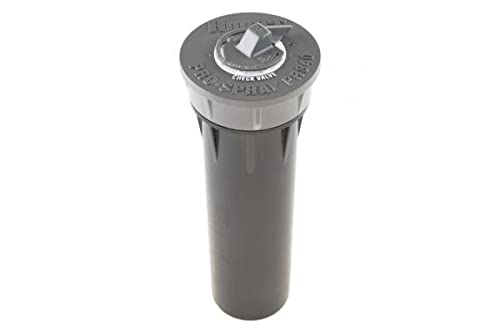
Hunter PRS40 4 in. Pop-Up Sprinkler Head Body

K Rain ProPlus Gear Drive Rotor Sprinkler 4-Pack

Hourleey Bubbler Sprinkler Heads (2 Pack)

Hunter PGP-adj Rotor Sprinkler Heads (6 Pack)
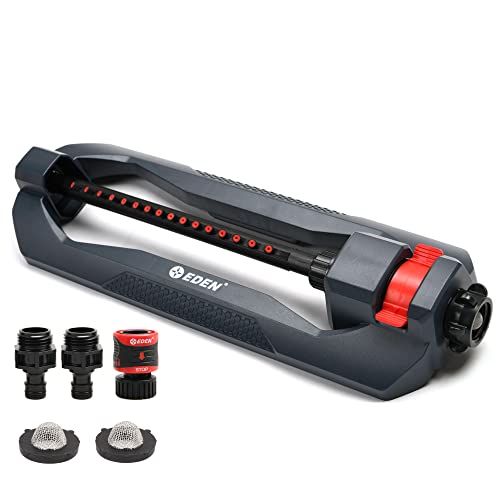
Eden 96213 Weighted Oscillating Sprinkler

Eden 94110 Heavy-Duty Metal Oscillating Sprinkler
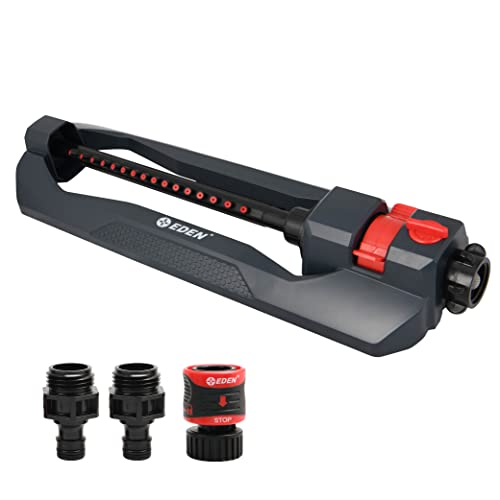
Eden 94105 Weighted Oscillating Sprinkler
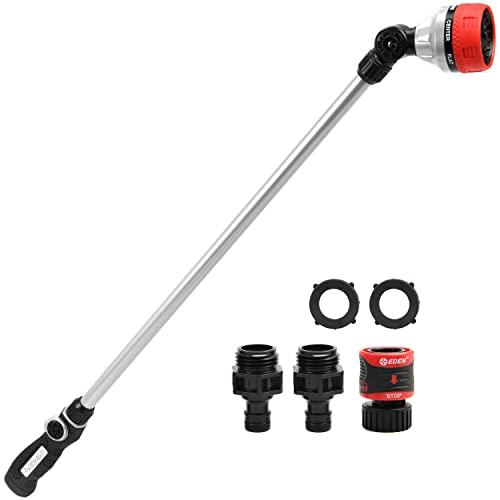
Eden 96618 Metal Thumb-Control Watering Wand
More Details On Our Top Picks
Replacing just a worn nozzle on an existing Toro 570 body is far cheaper than buying a whole new spray head, and that’s exactly where this little piece earns its keep. The 90-degree arc covers a corner quadrant of lawn without wasting water on the driveway or sidewalk, which matters in tight side-yard layouts.
Matched precipitation rate (MPR) is the technical term for nozzles that deliver water at the same rate across different patterns and distances. In plain English, that means a 90-degree nozzle and a 180-degree nozzle in the same zone will put down roughly the same depth of water, so nothing ends up overwatered or parched. The 10-foot throw suits small lawn strips and patchwork zones around patios.
What Works In Its Favor
- Snap-in replacement for Toro 570 shrub bodies and spray heads
- Pressure-compensating design reduces wasteful misting at higher PSI
- Matched precipitation rate keeps adjacent zones evenly watered
- Tight 10-foot radius fits small side yards and corner strips
Things To Consider
- Only fits Toro 570-series bodies, not Rain Bird or Hunter cans
- 10-foot throw is short for open lawn areas
Right Fit For
Homeowners already running Toro 570-series spray heads who need a quick replacement nozzle.
Look Elsewhere When
Long-throw coverage matters more than corner precision, in which case the K Rain ProPlus rotor handles open spaces better.
This is the body, not the nozzle, so it’s the skeleton a complete Hunter spray zone gets built on. A factory-set 40 PSI regulator sits inside the stem, which means even when your supply pressure spikes, the head delivers consistent flow. The built-in check valve stops low-head drainage on sloped yards, so you don’t lose a pool of water every time a zone shuts off.
Compared to the Toro nozzle above, this is a much bigger commitment: you’re rebuilding a zone rather than swapping one part. For someone installing or upgrading a multi-zone in-ground system, the PRS40 is a sturdy anchor point. The 4-inch pop-up clears most low ground cover, though tall fescue may need a taller body for full retraction.
The Helpful Details
- Factory-set 40 PSI regulator keeps pressure consistent zone-wide
- Check valve prevents low-head drainage on slopes up to several feet of elevation change
- Standard 4-inch pop-up height clears most turfgrass
- Compatible with a wide range of Hunter nozzle inserts
Points To Note
- Requires a separate nozzle purchase to function
- Not a DIY-friendly swap for casual gardeners
- 4-inch pop-up can sit too low in tall turf
Feature Snapshot
Built With In Mind
Homeowners and light commercial installers designing or upgrading a multi-zone in-ground irrigation system.
Reach For A Different Pick When
All you need is a hose-end sprinkler with no digging involved, in which case the Eden 96213 oscillating model is a simpler choice.
Where spray heads throw a misty 10 feet and call it done, gear drive rotors push water 22 to 50 feet in a single slow, even stream. That makes the ProPlus the right tool for open backyards, wide side lawns, and any zone too big for spray nozzles. The 4-1/2-inch pop-up clears tall St. Augustine or Bermuda grass without leaving exposed stems.
The reclaimed water identifier (a purple marker on reclaimed-water-compatible units) signals this rotor is rated for non-potable supply lines, useful in drought-prone areas with purple-pipe systems. It drops directly into Rain Bird 1800 cans, so anyone with an existing Rain Bird spray zone can swap to gear drive rotor coverage without re-trenching. The 4-pack value helps when you’re tackling a full yard at once.
Noteworthy Benefits
- 22 to 50-foot throw covers large lawns from fewer heads
- Gear drive mechanism produces slow rotation that resists wind drift
- Drop-in fit for Rain Bird 1800-series cans
- Adjustable 40 to 360-degree arc suits partial or full-circle zones
Trade Offs
- Gear drive internals can clog if supply water carries heavy sediment
- Requires a filter or screen on the supply line for long-term reliability
- Higher PSI demand than fixed spray heads
Quick Facts
Whose Shelf It Belongs On
Homeowners with big open lawns, especially anyone already invested in Rain Bird 1800-series cans.
Swap It Out When
The yard is narrow and tight, where the Hunter PGP-adj rotor offers finer arc control on a smaller stage.
Bubblers sit in a different category than the rest of this list, and they earn their spot for a reason. Instead of spraying, they flood a small area with a low, gentle stream that soaks in rather than bouncing off leaves. That makes them ideal for flower beds, vegetable gardens, and the soil directly beneath shrubs where runoff is a concern.
Aluminum alloy construction resists corrosion in consistently moist environments, and an interior nylon mesh breaks the flow into a softer pattern while filtering debris. Pair two of these in a small raised bed and you have an inexpensive micro-irrigation zone without running drip line. They thread onto standard hose fittings, so no special manifold required.
Points In Its Favor
- Gentle bubbling action prevents soil compaction in delicate beds
- Aluminum body resists corrosion over multiple seasons
- Nylon mesh diffuser filters debris and softens output
- Standard hose threading for tool-free setup
Honest Caveats
- Not designed for turfgrass coverage, only small planted areas
- Flow rate can vary noticeably with supply pressure swings
Best Suited To
Garden owners watering flower beds, vegetable patches, and new plantings where a spray head would be too harsh.
A Better Fit Elsewhere
You need broad lawn watering rather than targeted bed soaking, where the Eden 96213 oscillating sprinkler covers turf more efficiently.
The PGP is a legend in the rotor world, and the adj (adjustable) version makes it friendlier for homeowners who want precise arc control without pulling out a special tool. A 6-pack lets you outfit an entire zone in one purchase, and Hunter includes nozzle trees so you can tune the flow rate per head.
Where the K Rain ProPlus above offers long throw in 40 to 360-degree steps, the PGP-adj gives finer arc adjustment that clicks into place at the head itself. The included adjustment tool slots into the top of the rotor, letting you dial in coverage without digging. Owners commonly report the rubber cover holding up well to foot traffic and mower decks.
What Pays Off
- Tool-free arc adjustment at the rotor head
- Replacement nozzle trees included for tuning flow per zone
- Proven gear drive mechanism used in commercial installations
- 6-pack value covers multi-zone projects
Potential Compromises
- Nozzles not always pre-installed, requires a few minutes of setup
- Rotor bodies need adequate supply pressure to reach full distance
Key Features
Made For
DIYers and homeowners upgrading an existing rotor zone who want pro-grade heads with simple arc tuning.
Consider Something Else When
The yard is small and pop-up spray heads are enough, where the Hunter PRS40 body is a better match.
Hose-end sprinklers are where most casual homeowners start, and Eden’s weighted oscillating model is a sensible all-rounder. Sixteen precision nozzles laid across the spray bar deliver a rectangular pattern up to 3,600 square feet, which covers most small-to-medium backyards in a single placement.
The weighted base keeps the unit from creeping when water pressure pulses through the line, a small detail that matters on sloped or uneven lawns. Stainless steel filters behind each nozzle reduce the clogging that cheaper sprinklers suffer from well water. Sliding range tabs let you dial in exactly the width and length you want, so you don’t soak the driveway.
Key Advantages
- Adjustable range tabs control width and length without moving the unit
- Weighted base prevents tipping and walking on uneven turf
- Stainless steel nozzle filters extend service life
- Turbo drive motor delivers smooth oscillation cycle
Worth Bearing In Mind
- Coverage depends on household water pressure at full capacity
- Plastic spray bar can crack if stepped on or run over
Who It Suits Best
Homeowners with rectangular lawns between 1,500 and 3,600 square feet who want a hose-end setup with zero installation.
Skip It When
The lawn is irregularly shaped or mostly narrow strips, where a rotor zone like the Hunter PGP-adj package handles odd shapes better.
Plastic sprinklers crack after a season or two of sun exposure. Eden’s 94110 swaps the plastic body for metal, which holds up to UV, accidental drops, and the occasional lawnmower incident. Eighteen precision nozzles spread coverage up to 3,315 square feet, slightly tighter than the 96213 above but with finer droplet control.
The quick-connect bundle means you can swap between watering tools without unscrewing fittings each time, a small convenience that adds up over a summer. Owners commonly report the heavier body staying put even on slightly sloped ground, without the creeping some lighter oscillating units suffer from.
A Strong Showing
- Metal body construction for multi-season durability
- Eighteen precision nozzles offer smoother droplet distribution
- Quick connect compatibility with standard hose systems
- Range tabs dial in width and length separately
Points To Keep In Mind
- Heavier weight makes repositioning slightly less convenient
- Slightly smaller maximum coverage area than the 96213
Details At A Glance
Perfect Match For
Homeowners tired of replacing plastic sprinklers every couple of seasons who want one tool to last.
Not Your Match When
Maximum coverage area is the priority, in which case the Eden 96213 reaches a wider footprint.
This is Eden’s take on the same general footprint as the 96213, with a slightly different feature mix. Sixteen nozzles spread across the bar cover up to 3,600 square feet, and a built-in flow control dial lets you reduce output for delicate new seed or ramp it up for mature turf.
Flow control matters more than people expect, especially during drought restrictions when municipal rules cap run time. Dialing down the output keeps you within limits without changing your watering schedule. The weighted base keeps the unit planted firmly on the lawn, and quick-connect fittings line up with the rest of Eden’s ecosystem.
Features That Help
- Built-in flow control dial for variable output
- 16 precision nozzles handle up to 3,600 square feet
- Weighted base keeps the unit anchored during operation
- Quick connect compatibility with standard hose fittings
Some Limits To Know
- Plastic spray bar shares the same UV-aging risk as other plastic units
- Range tabs can be stiff out of the box
Who Should Grab It
Homeowners on a budget who still want flow control and wide rectangular coverage for a medium yard.
Another Choice May Suit
Long-term metal durability matters more than flow control, where the Eden 94110 metal-body unit lasts longer.
A watering wand is technically a different tool than a sprinkler, but it rounds out a complete yard-watering kit. The 33-inch reach lets you water hanging baskets and the back of deep flower beds without climbing a ladder or kneeling on wet soil. Seven spray patterns cover everything from a gentle mist for seedlings to a jet stream for washing off patio furniture.
Thumb-control flow is the standout feature, letting you adjust output with one hand while the other holds a planter steady. The metal construction handles daily use far better than plastic wands that crack at the threads after a season. The 180-degree adjustable head pivots to hit the underside of hanging baskets at the right angle.
Everyday Perks
- Seven spray patterns from mist to jet stream
- Thumb-controlled flow adjustment for one-handed use
- 33-inch reach eliminates ladder work for hanging baskets
- Metal body outlasts plastic wand alternatives
Practical Considerations
- Hand watering is slower than any sprinkler on this list
- 33-inch length can feel unwieldy in tight storage closets
The Right Fit
Gardeners with hanging baskets, raised beds, and container plants who need targeted hand watering alongside any sprinkler.
Where A Sibling Pick Shines
Large lawn coverage is the main goal, where the K Rain ProPlus rotor handles turf areas a wand never could.
What Matters Most Before Choosing Sprinklers For Lawns
Coverage Shape vs. Lawn Shape
Rectangular lawns pair naturally with oscillating sprinklers like the Eden 96213, because the spray bar produces a rectangular footprint. Odd-shaped yards with curves and peninsulas waste water from rectangular coverage, so adjustable-arc rotors like the Hunter PGP-adj handle the geometry better. Square yards under 1,500 square feet can often get away with a single fixed spray head like the Toro 570 MPR+ nozzle.
Throw Distance and Pressure
Small spray heads throw 8 to 15 feet, while gear drive rotors push water 22 to 50 feet. Higher throw distances demand more supply pressure and higher flow rates, so a rotor zone may need a larger water meter or pressure booster to reach rated distance. For most homes with municipal water in the 40 to 60 PSI range, spray heads and short-throw rotors perform reliably.
Hose-End vs. In-Ground Systems
Hose-end sprinklers require zero installation, just a hose and a flat lawn spot. In-ground systems with pop-up rotors or spray heads need trenching, manifold plumbing, and a controller. For a single zone under 4,000 square feet, hose-end still wins on simplicity. Anything larger, multi-zone, or with sloped terrain benefits from in-ground, where the Hunter PRS40 body becomes the backbone.
Material and Climate Considerations
Plastic spray bars and bodies hold up fine in mild climates with limited sun exposure, but they fade and crack faster in full-sun yards or coastal salt air. Metal bodies like the Eden 94110 cost a bit more but resist UV and impact over multiple seasons. In reclaimed-water districts, look for the purple indicator on rotors like the K Rain ProPlus that confirms non-potable compatibility.
Key Considerations Across These Picks
Pitfalls Shoppers Hit
A common mistake is buying the highest-throw rotor available and expecting it to cover a tiny lawn. Overspray onto driveways and sidewalks wastes water and may violate local watering rules. Match the throw distance to your actual lawn size, and use a rotor like the K Rain ProPlus only when the lawn is genuinely large enough to need that reach.
Another trap is mixing unmatched precipitation heads in a single zone. A 90-degree Toro nozzle and a 180-degree nozzle from the same MPR+ line will water evenly together, but pairing them with a non-matched rotor creates dry and soggy patches. Stay within one precipitation family per zone.
Where The Extra Money Goes
Premium-tier sprinklers like the Hunter PGP-adj and Hunter PRS40 spend the extra dollars on pressure regulation, check valves, and gear drive internals that resist wear over many seasons. Budget oscillating units work fine for casual use, but they fail faster in full sun and under heavy seasonal use. The upgrade makes sense for anyone planning to water the same yard for five-plus seasons, where replacement costs add up.
Frequently Asked Questions
How do I know what spray distance my lawn needs?
Measure the longest straight edge of your lawn, then pick a sprinkler whose throw distance covers that run without overspraying hard surfaces. For most small yards, 10 to 15 feet is enough; open lawns benefit from 25 to 50-foot rotors.
Are metal sprinklers worth the extra cost?
Metal bodies resist UV cracking and impact damage far longer than plastic, so they pay off in yards with full sun, kids, or pets. Plastic works fine for shaded spots with light seasonal use.
Can I mix different sprinkler brands in one zone?
You can, but matched precipitation rate (MPR) only holds within the same brand and family. Mixing brands without checking flow rates typically results in uneven watering and dry patches.
Do pop-up sprinklers need professional installation?
Pop-up rotors and spray heads require trenching, supply line work, and a valve manifold, so most homeowners hire a contractor for full in-ground systems. Hose-end oscillating sprinklers need no installation at all.
How often should I replace sprinkler nozzles?
Most nozzles last several seasons before mineral buildup affects spray pattern. Cleaning with a small brush or vinegar soak restores flow, and replacement nozzles cost little when performance finally drops.
Bottom Line
The right sprinkler depends on yard size, shape, and how hands-on you want to be. Hose-end oscillators cover most small rectangular lawns, while in-ground rotors like the K Rain ProPlus and Hunter PGP-adj handle larger or more complex layouts. Match the tool to the yard, and watering becomes one less thing to worry about all season.
