

Low municipal pressure, well-fed lake pumps, and aging irrigation systems share one stubborn problem: a sprinkler that needs 50+ PSI to deliver a clean pattern just dribbles, fogs, or refuses to pop up at all. The right sprinkler head makes the most of weak flow, throwing a workable arc without the misty cloud that signals wasted water. Your lawn shape, zone pressure, and whether you want a permanent install or a hose-end option should shape the choice more than brand loyalty. The lineup below covers rotors, sprays, impact heads, and hose-end sprinklers chosen specifically for situations where pressure is the limiting factor.
The Essentials At A Glance
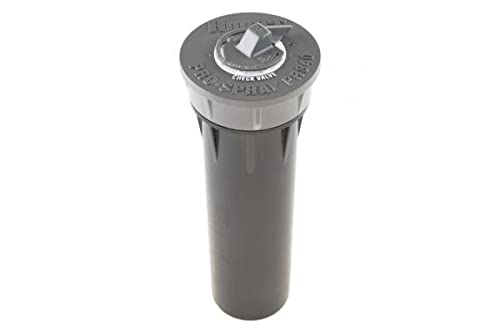
Hunter PRS40 4 in. Pop-Up Sprinkler Head Body

Orbit 54534 2″ Professional Half-Pattern Pop-Up Sprinkler

Rain Bird 1804AP4 Professional Pop-Up Sprinkler

Hunter PGP-ADJ 3/4″ Rotor Lawn Sprinkler Head
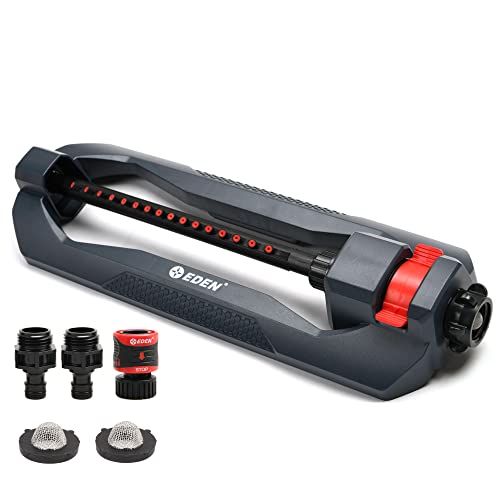
Eden 96213 Weighted Essential Oscillating Sprinkler

Eden 94110 Heavy-Duty Metal Oscillating Sprinkler

RK-30 3/4″ Brass Impact Sprinkler
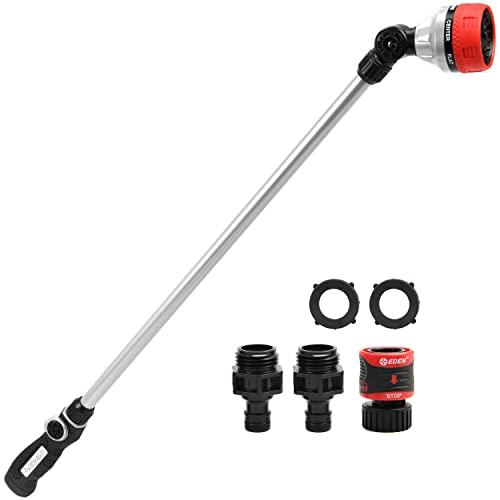
Eden 96618 Metal Thumb-Control 7-Pattern Watering Wand

QVS 004113 Naan Irrigator Sprinkler

Heavy Duty Pulsating Impact Lawn Sprinkler 360°
A Deeper Look At The Lineup
Pressure regulation is the central trick here. The body caps outgoing pressure at 40 PSI, which means even if your zone delivers a wobbly 25 to 55 PSI, the nozzle downstream sees a steady target. A built-in check valve stops low-head drainage, so the head doesn’t weep from a sloped yard after the zone shuts off. You still need to pair this body with a separately sold nozzle matched to the throw you want.
Installers working on residential and light commercial systems lean toward the 4-inch riser because it clears most turf and lower ground cover without leaving an exposed stub. For homeowners retrofitting a single zone that’s been misting on the high end, this body often pays for itself in mist reduction. Anyone re-using existing spray nozzles will find this a drop-in for the standard Hunter body footprint.
Key Advantages
- Factory-set 40 PSI regulator evens out supply swings
- Integrated check valve prevents low-head drainage on slopes
- 4-inch pop-up clears tall fescue and ground cover cleanly
- Works as a body-only swap for any compatible spray nozzle
- Trusted on residential and light commercial installations
Things To Consider
- Nozzle sold separately, so budget for the matching spray head
- Professional install benefits from a dig-and-lay plan rather than a retrofit tinker
Feature Snapshot
Who It Suits Best
Homeowners on mixed-pressure municipal supply who want one body to fix over-misting on a single zone without redesigning the whole system.
Where Another Pick Suits Better
Shoppers who want a complete head in one purchase get a simpler path with the Rain Bird 1804AP4, which ships with the nozzle already included.
Half-pattern heads solve a problem full-circle sprays can’t: a narrow lawn strip against a house, fence, or driveway. This Orbit model throws a clean 180-degree arc with the same wiper-seal retraction that the brand uses across its professional line. The 2-inch riser pops up just enough to clear short turf without making a tall spike above established grass.
For DIYers mapping out a layout with multiple odd shapes, half-pattern heads let you aim each arc precisely. Compared with the Hunter PRS40 reviewed above, this one ships as a complete head rather than a body, so it’s a friendlier pick when you want to add heads one at a time. Owners commonly report that the riser stays smooth over multiple seasons when debris is kept off the wiper seal.
A Few Strong Suits
- Half-pattern arc is ideal for strips, edges, and narrow beds
- Over-molded wiper seal supports smooth pop-up and retraction
- 2-inch riser stays low-profile above short turf
- Ships as a complete head, no extra nozzle purchase
- Pack of two lets you stage a small expansion
Worth Noting
- Half-pattern geometry needs planning to avoid arc overlap gaps
- Lower pop-up may struggle in overgrown or weedy turf without routine mowing
Made For
Homeowners edging narrow side-yard strips or border beds who want a complete head without buying a separate nozzle.
Consider Something Else When
Large open lawn areas benefit more from the long-throw pattern of the Hunter PGP-ADJ rotor covered below.
The 1804 series is the commercial-grade workhorse most pros grab by default. With an adjustable arc from 0 to 360 degrees, you can dial the same head from a tight corner pattern to full circle without swapping parts. A stainless-steel retraction spring resists corrosion in mineral-heavy or treated water, which matters when you’re not sure what’s flowing through the lines.
For low-pressure installs, the short 3 to 4 foot throw range actually helps. Heads running on weaker supply tend to mist and lose distance first, so picking a nozzle rated for a tight footprint keeps the pattern coherent. Compared with the Hunter PRS40 above, this head is sold complete with the nozzle, so it’s a faster install if you’re patching a couple of bad spots in an existing zone.
Why It Works Well
- Adjustable arc covers full or partial patterns from one head
- Stainless-steel spring resists corrosion in varied water sources
- Compact 3 to 4 foot throw fits tight landscape pockets
- 4-inch pop-up handles mixed turf heights
- Trusted spec on light commercial projects
Points To Keep In Mind
- Short throw means more heads per zone, raising layout and trench work
- Restricted sale areas in several states, so verify local eligibility before ordering
Best Suited To
Property owners with odd-shaped beds and borders who need one head type that handles any arc without stocking multiple nozzles.
Skip It When
Wide-open turf reads better with the Hunter PGP-ADJ rotor, which throws 22 to 52 feet per head.
Rotors belong in any open-lawn zone wider than about 15 feet, and the PGP-ADJ is the rotor most installers reach for. Gear-driven internals produce a slow, steady stream rather than the misty spray you get from pop-ups under marginal pressure. The arc adjusts from 40 to 360 degrees via a flat-blade screwdriver, with throw distance controlled by a separate brake screw.
For low-pressure setups, the trade-off is real. The PGP-ADJ performs best at the higher end of typical residential pressure and may shorten throw or skip rotation if supply falls below 30 PSI. The honest read is that this is the right head once pressure is adequate, and a frustrating head if it isn’t. Compared with the Rain Bird 1804AP4 above, you trade short-throw flexibility for big-area efficiency.
What Works In Its Favor
- Gear-driven rotor produces steady, wind-resistant streams
- Arc adjusts from 40 to 360 degrees on one head
- 22 to 52 foot throw covers big zones with fewer heads
- 4-inch pop-up clears tall turf cleanly
- Long-running reputation for replaceable internals instead of full swaps
Trade-Offs To Consider
- Needs solid pressure to maintain full throw and rotation
- Larger exposed surface can collect lawn debris on the riser seal
Quick Facts
Whose Shelf It Belongs On
Homeowners with a large, open turf zone served by a supply that can deliver at least 30 PSI at the head.
Look Elsewhere When
Tight strip layouts and low-supply zones are simpler with the Orbit 54534 half-pattern pop-up reviewed above.
Oscillating sprinklers earn their place in rectangular lawns, and Eden’s 96213 covers up to roughly 3,600 square feet. Sixteen precision nozzles lay down a fan-shaped curtain that hits a wide area without flooding the middle. Sliding range tabs on the bar let you narrow the throw to a strip alongside a path or patio when you don’t want to soak the driveway.
For low-pressure homes on municipal supply, the weighted base is the practical win. The sprinkler stays put when the water kicks sideways as the bar reverses direction. Owners commonly report that running the unit on full-open tap with a fresh hose gives the cleanest pattern, while a partly closed tap produces more fog than coverage. Compared with the heavier metal 94110 reviewed next, this one trades longevity for a friendlier carry weight.
What Helps Most
- Up to 3,600 sq ft of rectangular coverage from 16 nozzles
- Weighted base resists tipping at direction changes
- Range tabs let you strip-water narrow zones
- Quick-connect fittings match standard hose hardware
Honest Caveats
- Pattern fogs and shrinks on restricted tap flow
- Plastic bar body tends to degrade under sustained sun exposure over many seasons
The Right Fit
Renters and homeowners without a built-in irrigation system who want reliable rectangular coverage from a garden hose.
Swap It Out When
Long-term outdoor storage and rougher handling call for the heavier-duty Eden 94110 metal-body model below.
Same oscillating playbook as the 96213, but the body and base step up to metal for season after season of outdoor use. Eighteen nozzles cover roughly 3,315 square feet, slightly less area than the lighter sibling, in exchange for a sturdier build. The turbo-drive motor keeps the bar cycling smoothly even when one or two nozzles clog with debris.
For low-pressure users, this head behaves like its lighter cousin: keep the tap wide open for the cleanest pattern, and the range tabs do the rest. The metal base also keeps the unit from creeping on sloped lawns where a lighter sprinkler would walk. Compared with the Eden 96213 above, the trade is a few dollars more for a body that survives rougher storage and rougher pets.
Where It Helps
- Metal body and base handle rough outdoor storage
- 18 precision nozzles spread a consistent rectangular pattern
- Range tabs fine-tune throw width for narrow beds
- Turbo-drive motor keeps the bar cycling on uneven pressure
A Few Limitations
- Coverage footprint is smaller than the lighter 96213
- Heavier carry weight is less friendly for one-handed moves around the yard
Perfect Match For
Homeowners who leave a sprinkler out across multiple seasons and want one that takes sun, hose yanks, and curious pets.
Reach For A Different Pick When
Lighter carry and slightly larger rectangular area point back to the Eden 96213 reviewed above.
Impact sprinklers carry a reputation for toughness, and this brass-bodied model leans into it. The bronze finish takes rough weather and accidental drops without cracking, and the spring arm delivers the familiar tap-tap-tap rotation that handles mineral-rich water without sticking. Two nozzle sizes come in the box, letting you tune between heavier droplets and a finer spread.
For low-pressure setups, the catch is honest: impact heads like this one really do want at least 30 PSI to throw cleanly. Below that, the arm may hesitate and the spray pattern breaks up. Where it shines is permanent or semi-permanent installs on a hose bib or manifold, where you want one sprinkler to cover a wide patch and never need replacing. Compared with the plastic Meekamar below, you trade portability for service life.
Where It Delivers
- Brass body holds up to weather and rough handling
- Spring arm keeps cycling through mineral-heavy water
- Two nozzle sizes let you tune droplet weight
- Full-circle pattern suits open ground without obstacles
- Standard 3/4 in. NPT male inlet fits common fittings
Factors To Consider
- Needs adequate pressure for clean rotation
- Full-circle design offers no built-in arc adjustment
- Heavier body makes repositioning between runs less convenient
Who Will Love This
Gardeners and small-acreage owners setting up a semi-permanent impact head on a hose-fed manifold or tripod.
A Better Fit Elsewhere
Shoppers who want arc adjustability and lighter handling will prefer the Meekamar impact sprinkler reviewed below.
Watering wands sit in a different category than the rest of this list, but they earn a slot for low-pressure gardeners who want precision rather than coverage. The 33-inch reach gets above hanging baskets without a stepladder, and a 180-degree adjustable head tilts the spray where you want it. Seven patterns cover everything from a jet for cleaning pots to a gentle shower for seedlings.
On low-pressure supply, a wand behaves more gracefully than a wide-coverage sprinkler. You’re standing right at the plant, so the limited throw is actually a feature. The thumb control on the handle is the practical win: instant shut-off when you move between pots saves water and prevents accidental flooding. Compared with the Eden 96213 oscillating sprinkler reviewed earlier, this is the right tool for hand-watering detail, not for blanket coverage.
Well-Handled Touches
- 33-inch reach clears hanging baskets and tall planters
- Seven patterns handle watering and light cleanup
- Thumb control on the handle enables instant shut-off
- 180-degree head adjustment angles the spray to the target
Where It May Fall Short
- Not a coverage tool; small area per pass
- Long wand feels front-heavy during extended hand-watering sessions
Built With In Mind
Gardeners with hanging baskets, raised beds, or potted plants who want targeted watering without dragging a hose and a step stool.
Consider Something Else When
Anyone needing wide-area coverage will do better with one of the Eden oscillating sprinklers reviewed above.
The Naan Irrigator throws a soft, rain-like curtain that’s gentle enough for new seed and tender flower beds. The 30-foot diameter round pattern covers a moderate area without the misting you get from spray nozzles on weak pressure. Bright yellow coloring makes it easy to find in tall grass at the end of the season.
For low-pressure setups, this style of impact-free sprinkler is one of the better-behaved options. The flow path stays open enough to keep moving on marginal supply, and the gentle pattern reduces the runoff you get from heavier droplet impact heads. Compared with the Eden oscillating models reviewed earlier, you trade rectangular coverage for a softer round footprint that suits planting beds more than turf.
Benefits That Matter
- Soft rain-pattern spray suits new seed and flowers
- Approximately 30-foot round coverage handles modest beds
- Quiet operation compared with impact-style heads
- Bright yellow body is easy to spot in tall grass
Small Caveats
- Round pattern wastes water at square or rectangular bed edges
- Limited throw radius needs multiple units for larger zones
Right Fit For
Gardeners with circular or rounded planting beds, especially new seed or transplants that need a gentle touch.
Swap It Out When
Rectangular lawn areas call for the wider footprint of an oscillating sprinkler like the Eden 96213 covered above.
This pulsating impact sprinkler is a hose-end take on the impact-head format. A brass nozzle upgrade over earlier versions keeps the spray pattern cleaner, and the weighted zinc alloy base prevents the creeping you sometimes see on lighter impact heads. Up to about 4,500 square feet of coverage lands it in the same wide-area league as rotors, with simpler setup.
For low-pressure homeowners, the trade is real but workable. Pulsating impact heads generally cycle on weaker pressure than rotors, though very low supply still produces a slower sweep. Owners commonly report the wide coverage working well on open lawn areas without obstacles. Compared with the brass RK-30 reviewed earlier, this one is friendlier to reposition mid-mow and easier on the wallet, in exchange for less premium materials.
The Value In It
- Up to 4,500 sq ft of coverage from a hose-end impact head
- Brass nozzle upgrade resists wear and keeps pattern clean
- Weighted zinc alloy base prevents tipping under pressure surges
- Adjustable rotation handles full or partial arcs
Things To Weigh
- Cycle slows noticeably on very weak supply
- Plastic internal gears may wear sooner than all-brass alternatives
Who Should Grab It
Homeowners with large open lawn areas on hose-end supply who want wide impact-style coverage without permanent install.
Look Elsewhere When
Permanent-zone irrigation is a better fit for the Hunter PGP-ADJ rotor covered above.
Picking The Right Sprinkler For Your Pressure And Yard
Know Your Real Pressure Before You Buy
The single biggest mistake is buying for the spec sheet’s “maximum” throw instead of the throw your pressure actually delivers. Static pressure, measured at a hose bib with nothing running, tells you what the supply can hold under zero flow. Dynamic pressure, the same reading with a sprinkler running, is the number that governs pattern quality. A pressure-regulated body like the Hunter PRS40 helps on the install side, while a hose-end user simply runs the tap fully open for the cleanest pattern from oscillating or impact units. Verifying your dynamic pressure with a simple gauge before choosing rotor versus spray saves a lot of mid-summer frustration.
Match The Pattern To The Shape You Water
Rectangular lawns pair naturally with oscillating sprinklers, where the sliding range tabs act as built-in geometry tools. Round or curved beds favor the rain-like pattern of a Naan Irrigator-style head. Odd-shaped turf with corners and pockets benefits from adjustable-arc pop-ups or rotors. Wide-open zones with adequate pressure reward a rotor’s long throw, while strip lawns along fences and driveways call for half-pattern heads.
Plan For Maintenance And Seasonal Storage
Pop-up bodies last longer when the surrounding turf gets mowed short, since tall grass packs debris into the riser seal. Hose-end oscillating sprinklers benefit from being drained and stored under cover before freezing weather, even when branded as heavy-duty. Impact heads with brass bodies survive neglect better than plastic-geared units, which is worth weighing if the sprinkler lives outside year-round.
Permanent Install Versus Hose-End Convenience
Permanent in-ground systems buy you automation, zoning, and clean aesthetics, but they also buy a dependence on consistent supply pressure. Hose-end sprinklers trade automation for portability, letting you move the head to follow the dog’s path or a new planting bed. Your commitment to the layout, the size of your turf, and your tolerance for visible hardware should drive that choice more than the brand on the box.
Key Considerations Across These Picks
Common Buying Slip Ups
Chasing maximum throw distance is the classic mistake. A head rated for 50 feet on 60 PSI throws 25 feet on 30 PSI, and the dropped stream turns into a misty cloud that drifts in the wind. Another trap is mixing head types on the same zone: a rotor and a spray head in one run will fight each other for pressure and produce patchy coverage. Verify your dynamic pressure, then size every head on the zone to roughly the same throw range.
Where The Extra Money Goes
Premium-tier sprinkler heads usually spend the upgrade on corrosion-resistant internals, factory pressure regulation, and replaceable nozzles or seals. A Hunter PRS40 or a brass-body impact head costs more up front but lets you swap a small part years later instead of replacing the whole unit. For low-pressure installations specifically, pressure regulation on the body is the upgrade that pays back fastest, because it steadies the pattern whether your supply sags or surges during the day.
Frequently Asked Questions
What PSI Is Considered Low For Sprinklers?
Residential sprinklers typically run best between 30 and 50 PSI, so anything consistently below 30 PSI qualifies as low pressure. Below 25 PSI, most rotors struggle to complete their rotation and many spray heads start misting heavily.
Can Low Pressure Damage A Sprinkler Head?
Low pressure itself rarely damages a head, but the symptoms it causes can. Heads that fail to pop up fully collect debris on the seal, and rotors that hesitate on each cycle wear their internal gears faster than units cycling smoothly.
Are Oscillating Sprinklers Better Than Impact Heads For Low Pressure?
Neither is universally better. Oscillating units tolerate lower pressure gracefully and lay down a wide rectangular pattern, while impact heads handle mineral-heavy water and wind better but want at least 30 PSI to cycle properly.
Do I Need A Pressure Regulator For My Sprinkler?
A regulator is most useful on permanent install zones where supply varies during the day. For hose-end sprinklers, simply running the tap fully open is the simplest equivalent and costs nothing.
What Is The Best Sprinkler Type For A Small Lawn On Low Pressure?
Small rectangular lawns do well with a basic oscillating sprinkler, while small irregular shapes benefit from adjustable-arc pop-ups. Either way, keeping the tap fully open and choosing a head with a short-to-medium rated throw gives the cleanest pattern on weak supply.
Closing Remarks
The right sprinkler for low pressure is the one matched to your actual dynamic pressure, your yard’s geometry, and your tolerance for setup work. Permanent zones deserve pressure-regulated bodies or rotors, while hose-end lawns usually fare best with oscillating or impact units sized conservatively for the supply on hand. Measure your pressure first, then pick the head whose pattern fits the shape you water.
