

Growing sprouts at home turns a few tablespoons of seed into a fridge full of crisp, nutrient-dense greens without a garden plot, grow lights, or a yard. The kits below range from a single jar for the curious to four-jar rotation systems for committed sprouting households, and they all share one job: making the daily rinse-and-drain routine almost effortless.
The Shortlist At A Glance

Elementi Sprouting Lids for Wide Mouth Mason Jars (Set of 4)

Malastar Seed Sprouting Jar Kit, 2 Quart Jars with 316 Lids

Kikerike Seed Sprouting Jar Kit with 4 Wide Mouth Mason Jars

ALCEDIA Premium 30 oz Wide Mouth Sprouting Jar with 316 Lid
Malastar Complete Sprouting Jar Kit, 2 Wide Mouth Jars

Kikerike Seed Sprouting Jar Kit with 2 Wide Mouth Mason Jars
Haswe Sprouting Jar Kit, 2 Wide Mouth Quart Jars with 316 Lids

Kikerike Seed Sprouting Jar Kit with 1 Wide Mouth Mason Jar
The Strengths Of Each Pick
Elementi keeps things simple by selling four mesh lids that thread onto jars you already own. If your pantry has a stack of wide-mouth Mason jars from canning season, this skips the extra glassware entirely. The 316 stainless steel mesh (a marine-grade alloy that resists corrosion better than common 304) handles daily rinses without pitting, and the sage green finish adds a subtle counter accent.
For apartment dwellers who want to test the sprouting habit without buying dedicated equipment, the math is friendly: drop a tablespoon of alfalfa or mung into a jar, screw on the lid, rinse twice a day, and watch a salad’s worth of greens appear in roughly five days. Compared to the multi-jar kits below, this assumes you already have jars on hand.
Everyday Wins
- Uses jars you likely already own, cutting down on extra glassware
- 316 stainless steel mesh resists rust under constant water exposure
- Four lids cover simultaneous batches of different seed types
- Lids screw on and off quickly for the twice-daily rinse routine
- Sage green color reads as decor rather than lab equipment
Things To Consider
- Glass jars are not included, so first-timers may need to source them separately
- Mesh openings suit small seeds like alfalfa and broccoli, but very large beans may slip through
Feature Snapshot
Best Suited To
Home cooks who already own a set of wide-mouth Mason jars and want a low-commitment entry into sprouting.
Skip It When
You would rather skip the extra step of sourcing jars and want a true all-in-one kit, in which case the Malastar Seed Sprouting Jar Kit delivers jars and lids together.
The Malastar two-jar setup pairs a quart-sized jar with four 316 lids, two blackout sleeves, a drip tray, and a stand. A blackout sleeve is a fabric cover that blocks light, letting you grow longer, paler bean sprouts the way commercial growers prefer. For someone who wants a real rotation, the second jar means you can have one batch finishing while the next soaks.
Compared with the Elementi lids above, this is a complete starter: glass, screen, drainage, and stand all arrive together. For most kitchens, that single-box approach saves a separate trip for trays or risers.
Strong Points
- Two jars let you stagger harvests so sprouts are always ready to eat
- 316 stainless mesh holds up to daily rinsing without corrosion concerns
- Blackout sleeves let you grow leafy sprouts and bean sprouts side by side
- Drip tray and stand keep the counter tidy during the angled drain step
Worth Noting
- Seeds are not included, so a separate seed purchase is required to start
- Quart-sized jars take more counter space than a single compact jar setup
Who It Suits Best
Salad lovers and home cooks who want a steady, rotating supply of fresh sprouts without buying separate accessories.
Look Elsewhere When
Counter space is at a premium and you only need a single jar, in which case the Kikerike single-jar kit keeps the footprint minimal.
Kikerike’s four-jar kit covers the kitchen-counter sprouter who treats this as a real food source rather than a weekend experiment. Four jars means broccoli in one, alfalfa in another, mung in a third, and a fourth waiting for the next seed packet you pick up. Each jar gets its own mesh lid, blackout sleeve, stainless steel stand, and drip tray.
The honest read is that four jars is more than most beginners need on day one, but households that rotate smoothies, salads, and stir-fry toppings will use the capacity. Compare that to the Elementi lids above, which assume you already own jars, and the gap shows: this one ships everything pre-paired.
Good Reasons To Consider
- Four jars make simultaneous multi-seed rotations genuinely possible
- Matching stands and drip trays keep each jar draining independently
- Blackout sleeves let you run light-loving and dark-loving crops side by side
Honest Caveats
- More pieces to wash, dry, and store between batches
- Counter real estate grows quickly when four jars are mid-rotation
- Seeds are not included, so you will need to source those separately
Key Specs
Right Fit For
Veggie-forward households that want broccoli, alfalfa, and bean sprouts on hand at the same time without sharing jars.
A Better Fit Elsewhere
You only want a low-volume starter, in which case the Kikerike single-jar kit (reviewed below) trims the setup without losing the brand’s blackout sleeve feature.
ALCEDIA sells the largest jar in this roundup at 30 ounces, noticeably roomier than a standard 24-ounce Mason jar. The single-jar, single-lid format leans toward someone who wants one pretty setup on a kitchen window ledge rather than a stack of jars in a pantry. It arrives with its own stand and tray, plus a 316 stainless steel screen.
For decor-minded apartment dwellers, the form factor reads more like a terrarium than a science experiment. That said, anyone wanting rotation will feel constrained by the single jar, and the Malastar two-jar kit offers more flexibility for the same general footprint.
What Works In Its Favor
- 30 oz capacity handles bigger batches of mung or lentil sprouts
- Wide-mouth design makes scooping out finished sprouts less fiddly
- 316 stainless screen pairs with the roomy jar without crowding the mesh
- Stand and tray turn the unit into a self-contained counter piece
Trade Offs
- Single-jar design limits rotation; you finish one batch before starting the next
- Heavier glass takes more care on the dish rack than a smaller jar
Whose Shelf It Belongs On
Sprouters who want a single statement piece on a sunny counter and prefer form as much as function.
Reach For A Different Pick When
You actually want to grow multiple varieties at once, in which case the Kikerike four-jar kit handles simultaneous batches with the same screen material.
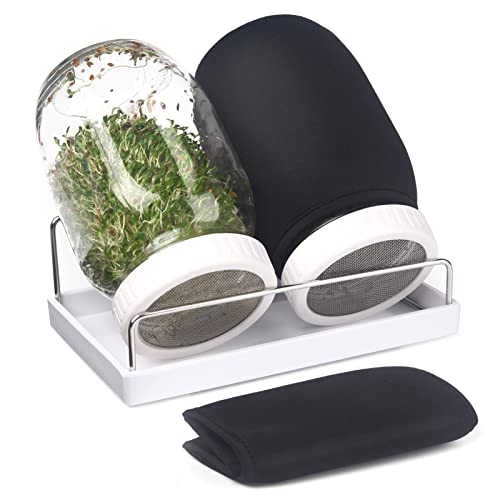
The second Malastar kit on this list cuts back to a tighter footprint: two jars, two 316 lids, two blackout sleeves, one shared stand, and one shared tray. The shared stand is the headline difference from the kit above, making this a tidier option for smaller counters where two stands would feel cluttered.
For first-time sprouters, this is the easiest mental model: one stand, two jars, two sleeves, two seeds. Anyone who feels overwhelmed by the four-jar Kikerike setup will appreciate the pared-back counts. Where it differs from the ALCEDIA single-jar option is real rotation capacity at the cost of some counter polish.
Points In Its Favor
- Two jars give genuine rotation without the bulk of four
- 316 stainless lids match the brand’s better-known kit for material quality
- Blackout sleeves included for darker-growing bean sprouts
- Single shared stand keeps the counter footprint tidy
Points To Keep In Mind
- Seeds are not bundled, so a starter seed pack is a separate purchase
- Shared stand means both jars drain into the same tray, which catches more water than two individual trays
At A Glance
Made For
First-time sprouters who want a balanced kit, not too much gear, not too little capacity.
Where Another Pick Suits Better
You actually want to grow three or four varieties at once, in which case the Kikerike four-jar kit gives you that headroom.
The two-jar Kikerike kit sits between the brand’s single-jar and four-jar configurations. You get two glass jars, two mesh sprouting lids, two blackout sleeves, one shared stand, and one drip tray. The trade-off versus the four-jar option is less variety; versus the single jar, it’s actual rotation.
For couples or small households, two jars is the sweet spot. You can stagger a leafy green like alfalfa in one jar and a bean sprout in the other, and they’ll reach harvest on different days so you’re never without fresh greens. That’s the workflow the single-jar kits can’t match.
The Upside
- Two jars give a workable rotation for one or two people
- Blackout sleeves support leafy and bean sprout varieties at once
- Shared stand keeps the setup compact on a small counter
- Drip tray catches the angled drain without soaking the counter
Worth Bearing In Mind
- Seeds are not bundled, so first harvest depends on a separate seed purchase
- Shared stand means jars are tied to one draining spot rather than moved individually
Who Will Love This
Couples and small households who want two jars going at once without the four-jar commitment.
Not Your Match When
You live alone and want a minimum-fuss setup, in which case the Kikerike single-jar kit below keeps the gear list shorter.
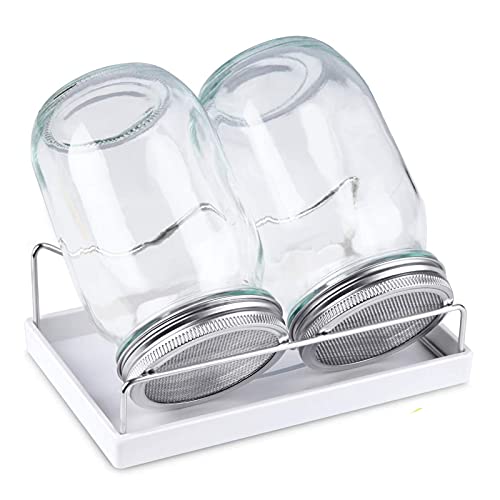
Haswe’s kit uses two 32-ounce wide-mouth Mason jars with 316 stainless steel lids, plus a stainless steel stand (304 grade) and drip tray. The 304 stainless in the stand is the slightly more common food-grade alloy; you may find it shows water spots more readily than 316, but for a stationary stand it is a sturdy pick.
What sets this kit apart is the heavier-gauge feel owners commonly describe: the mesh holds its shape under daily twisting, and the rim threads stay smooth through months of use. For households that plan to sprout year-round, that durability is worth noticing.
The Practical Payoff
- Two quart jars give a meaningful batch size per harvest
- 316 stainless mesh is the same alloy used in the other premium lids on this list
- Stainless steel stand supports both jars without flexing
- Drip tray collects runoff during the angled drain step
Smaller Compromises
- Stand is 304 stainless, which owners commonly report shows water spots more than 316
- Seeds are not included, so you need to source broccoli, alfalfa, or mung separately
Feature Card
Perfect Match For
Frequent sprouters who run their jars year-round and want hardware that takes daily handling.
Swap It Out When
You also want blackout sleeves for darker-growing bean sprouts, in which case the Malastar two-jar kit ships with two sleeves included.
The single-jar Kikerike kit is the lowest-footprint option in this roundup: one glass jar, one mesh lid, one blackout sleeve, one stand, one drip tray. Dorm rooms, studio apartments, and first-time sprouters benefit most from this kind of minimal gear list.
The trade-off shows up in rotation, or rather the absence of it. You’ll finish a jar before starting another, so a steady daily supply of sprouts requires planning. For someone testing whether they like the sprouting habit, that’s a fair price for a small counter footprint.
The Value In It
- One jar takes up about as much space as a coffee mug on the counter
- Blackout sleeve still lets you grow leafy or bean sprouts, just not at the same time
- Mesh lid and stand match the brand’s larger kits for material consistency
A Few Limitations
- Single jar means no rotation; one batch finishes before the next begins
- Seeds are not bundled with the kit
- Drip tray is small, so aim the jar carefully during the drain step
Built With In Mind
Apartment dwellers, dorm residents, and curious first-timers who want the lowest commitment to test the habit.
Reach For A Different Pick When
You know you want continuous harvests, in which case the Malastar two-jar kit provides real rotation in a similarly tidy footprint.
What Matters Most Before Choosing Sprouting Kits
Match Jar Count To Your Eating Habits
The single biggest decision is how many jars you actually need. A solo sprouter who adds a handful of alfalfa to a daily sandwich is fine with one jar. Couples rotating between broccoli and mung want two. Households running smoothies, salads, and stir-fry toppings benefit from four jars in rotation. Counting jars against how many days a week you’ll actually eat sprouts keeps you from buying gear that sits idle.
Decide Whether You Need Blackout Sleeves
Blackout sleeves are fabric covers that wrap around the jar to block sunlight. Leafy sprouts like alfalfa and broccoli tolerate or prefer indirect light, but mung beans and many other legumes grow longer, paler, and sweeter in near-darkness. If you only plan to grow leafy varieties, sleeves are optional. If bean sprouts are on your list, a kit that ships with two sleeves saves an extra purchase.
Material Matters More Than Finish
Most lids on this list use 316 stainless steel mesh, a marine-grade alloy that resists corrosion better than the more common 304 stainless used for kitchen equipment. 316 matters more than the finish color because the mesh stays in contact with water twice a day, every day, for the life of the kit. A rust spot on a cheaper lid can migrate into your sprouts, so the alloy choice is one worth checking.
Consider Tray And Stand Stability
A jar full of soaked seeds and water weighs more than it looks. The kit’s stand and tray are what keep the angled drain step from tipping a jar onto the counter. Wider bases and heavier-gauge metal stands handle the weight better, and a drip tray that actually fits the jar footprint avoids the daily puddle on the counter.
Shopping Traps And Upgrade Payoffs
Mistakes Worth Dodging
The most common slip is buying a kit with no blackout sleeves when you actually want to grow mung or lentil sprouts, then discovering the beans grow bitter under kitchen light. A second trap is choosing a kit with a shared stand when you really wanted two independent stands for flexibility. Finally, watch for mesh openings: very small seeds like alfalfa pass through wide-weave screens, so a finer mesh matters for some varieties.
When Paying More Pays Off
A higher-tier kit usually buys three things: more jars for true rotation, blackout sleeves for darker-growing varieties, and 316 stainless mesh that holds up to years of daily rinsing. For a sprouter who commits to the habit long-term, those upgrades replace the cycle of replacing rusted or flimsy lids. For a casual user, a single-jar kit covers the basics without the premium cost.
