

A vegetable garden throws a lot at the soil beneath it: pounding rain, midday heat, weeds that never sleep, and slugs that appreciate a cool damp home. Mulching is the quietest upgrade you can make, and straw is the most traditional workhorse among the natural options. The right blanket holds moisture, softens soil temperature swings, and blocks the light that weed seeds need to sprout, all while breaking down into organic matter by season’s end. This roundup gathers eight practical picks suited to different plot sizes, planting styles, and storage situations. Whether you manage a few raised beds or a sprawling homestead row, the goal is to match the mulch to the way you actually garden.
The Picks In Brief

Rio Hamza Trading Houseplant Mulch (8 Quarts)

EZ Straw Seeding Mulch with Tack 1 cu. ft.

Rubberific Premium Shredded Rubber Mulch 1.5 cu. ft.

AGEGOMIC Biodegradable Weed Barrier 4 x 100 Ft
AGEGOMIC Biodegradable Weed Barrier 4 x 50 Ft

AGEGOMIC Biodegradable Weed Barrier 3 x 50 Ft
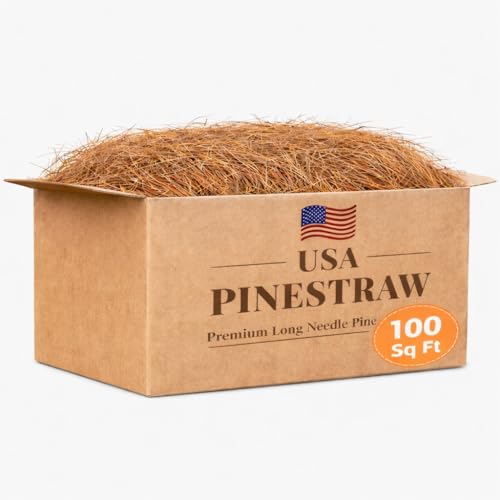
USA Pinestraw Long Needle Pine Straw Mulch 100 Sqft

EZ Straw Seeding Mulch with Tack 2 Pack
Why These Options Stand Out
This is a small-volume bark chip mulch sized for the kind of garden that fits on a windowsill or a back step. The 8-quart bag covers a handful of pots, making it a tidy starter for anyone transitioning a few herbs or patio tomatoes to mulched containers rather than open ground.
Compared with the long straw bales below, this pick is not built to blanket a 4×8 raised bed. It earns its place by giving potted vegetable clusters a finished, moisture-holding surface without forcing you to wrestle a full bale. Home cooks growing basil, parsley, and compact peppers on a sunny porch will appreciate the scale.
The Case For It
- Compact 8-quart volume suits apartment-scale container gardens without waste.
- Bark chips outlast lighter fibers, so top-dressing intervals stretch out.
- Creates a tidy visual finish for edible arrangements on patios and balconies.
- Easy to pour straight from the bag, no flakes of straw drifting across the kitchen.
Points To Note
- Coverage is limited; you will need multiple bags for anything larger than a small herb cluster.
- Bark breaks down slower than straw, so it contributes less organic matter back to the soil in a single season.
Right Fit For
Apartment growers and patio gardeners maintaining a handful of edible containers who want a clean, decorative mulch rather than bulk straw coverage.
Look Elsewhere When
Anyone tending a full raised bed will find the USA Pinestraw Long Needle Pine Straw Mulch a more generous, ground-ready option for traditional vegetable rows.
The EZ Straw bale is processed straw with a built-in bonding agent, technically called a tackifier, that helps the fibers knit together once spread. That single feature solves the biggest headache with loose straw: it migrating off the bed the first time a storm rolls through.
At roughly 250 square feet per bale, this is the right size for someone seeding or transplanting a single raised bed or a small in-ground plot. Compared with the Rio Hamza bark mulch above, this is a working agricultural cover rather than a decorative top dress, and it suits the seeding phase of a vegetable garden especially well.
Reasons It Performs
- Tackifier keeps the straw mat in place through wind and rain, reducing reapplication chores.
- Single 1 cu. ft. bale is approachable for first-time mulchers who don’t want a pallet on the driveway.
- UV-protected bag handles outdoor storage between seasons without quick degradation.
- Processed straw lays flatter than raw bales, so light interception against weed seeds is more consistent.
Small Caveats
- A single bale only covers about 250 square feet, so larger plots will outrun it quickly.
- Bonding can clump if overwatered during initial spread, requiring a quick rake to even out.
- Color fades as the straw weathers, which matters if presentation is part of your goal.
Key Attributes
Best Suited To
First-time vegetable gardeners seeding a single bed who want a tidy, wind-resistant straw mat without committing to a multi-bale order.
Not Your Match When
Homesteaders managing several beds at once will get better value from the EZ Straw 2 Pack, which doubles coverage without doubling the handling overhead per bale.
Rubberific’s shredded rubber is an unconventional entry in a vegetable garden list, but its staying power has real appeal for garden edges, footpaths, and the perimeter zones around a plot. The shredded profile mimics the look of natural wood mulch while resisting the decomposition cycle that forces you to refresh bark or straw every year.
This is the only non-organic mulch in the roundup, so it does not feed the soil as it ages. Treat it as a hard-working border material rather than a row cover. For pathways between beds or a permanent ring around a vegetable patch where you want long-lasting color, it earns its slot without the yearly top-up most straw picks demand.
Why It Works Well
- Holds color and texture across multiple growing seasons, sparing repeat purchases.
- Resists wash-out on sloped or heavily watered areas where lighter mulches drift.
- Available in larger volume sizes for big landscaping projects.
Honest Caveats
- Does not break down into soil-building organic matter the way straw does.
- Heavier than straw, so spreading it across a wide row is more labor-intensive.
- Not the right surface for direct seeding or close root-zone contact.
Who Should Grab It
Vegetable gardeners building durable pathways or perimeter borders who want a set-and-forget mulch that does not require seasonal replacement.
Skip It When
Anyone focused on enriching the soil inside the bed should pair rubber perimeter mulch with a straw product like the AGEGOMIC Biodegradable Weed Barrier 4 x 100 Ft for the actual planting zone.
This is a heavy-duty kraft paper mulch, meaning a thick natural-fiber sheet designed to be laid over soil and eventually tilled in. At 4 feet by 100 feet, the roll is sized for serious vegetable rows rather than patio containers. It blocks light to suppress weeds while still allowing the bed to breathe and break down at season’s end.
Compared with the loose straw bales above, paper mulch behaves more like a weed fabric that disappears into the soil. For gardeners laying out long rows of tomatoes, squash, or brassicas who want a clean walking aisle and minimal weeding, this is a strong fit. It also pairs well with drip irrigation laid directly underneath.
p>Wait, that stray “p” is mine. Cleaning up.Real Benefits
- Long 100-foot run covers an entire plot without piecing rolls together.
- Kraft paper breaks down into the soil, adding cellulose and organic matter over time.
- Creates a clean, dry surface for harvesting in muddy shoulder seasons.
- Lays flat quickly once moistened, so wind resistance kicks in fast.
Things To Consider
- Needs to be weighed down or buried at edges to prevent wind lift before it dampens.
- Single-season lifespan; plan on replacing or tilling under annually.
- Less effective on perennial weed root systems than on annual weed seeds.
Quick Facts
Made For
Garden managers running long, parallel vegetable rows who want a paper mulch that installs once per season and disappears into the bed by fall.
Reach For A Different Pick When
Smaller raised beds under 50 square feet will struggle to use a 100-foot roll efficiently; the AGEGOMIC 4 x 50 Ft is a better fit there.
Same heavy-duty kraft paper construction as the longer 4×100 roll, but trimmed to 50 feet for gardeners whose plots do not need that much material. The 4-foot width still matches a standard raised bed, so you can cover most bed tops without trimming or joining pieces.
This is the sweet spot for a backyard vegetable patch with two to four raised beds. You can split a roll between beds, store the remainder for spring, and avoid the waste that comes with over-ordering. Compared with the loose straw options earlier, this paper mulch wins on tidiness and weed suppression in tight rows.
Noteworthy Benefits
- Right-sized roll avoids the leftover storage problem of longer rolls.
- Unbleached kraft paper is fully biodegradable, so end-of-season disposal is simple.
- Wide enough to cover a standard raised bed in one pass.
Potential Drawbacks
- Single 50-foot run covers roughly two to three beds at most.
- Paper can tear if walked on repeatedly before it dampens and settles.
- Less insulating than loose straw for overwintered garlic or perennial beds.
Perfect Match For
Hobby gardeners managing a small fleet of raised beds who want paper mulch sized to the plot, not to a commercial row-crop operation.
Swap It Out When
Larger multi-bed homestead setups will run out of a 50-foot roll quickly and should step up to the AGEGOMIC 4 x 100 Ft instead.
This narrower 3-foot roll solves the awkward leftover problem that comes with wider paper mulch. If your beds run 3 feet across, you can lay this strip end-to-end without trimming waste off the side. It is the same unbleached kraft paper recipe as its wider siblings.
For tight row plantings like carrots, beets, or salad greens, the narrower width also makes it easier to expose planting slots without cutting oversized pieces. Compared with the loose EZ Straw options above, this paper works more like a weed-suppressing blanket than an insulating fluff layer.
What Works In Its Favor
- 3-foot width lines up with many narrow raised bed dimensions.
- Fully biodegradable kraft paper integrates into the soil by season’s end.
- Smaller roll is easier to store in a shed without taking up shelving.
Where It May Fall Short
- Will not span a 4-foot-wide bed without overlap or a seam.
- Same single-season lifespan as the wider AGEGOMIC rolls.
- Less useful for pathway coverage where wider rolls save time.
Built With In Mind
Vegetable gardeners running narrow raised beds or intensively planted rows who want a paper mulch that fits the bed width without trimming.
A Better Fit Elsewhere
Anyone with wider beds should choose the AGEGOMIC 4 x 50 Ft for fewer seams and faster coverage.
Pine straw is the long-needle mulch that forms a natural mat across the ground, locking itself together far better than chopped straw. This USA Pinestraw set covers about 100 square feet and arrives harvested domestically. For vegetable gardeners in the Southeast and similar regions, pine straw is a traditional workhorse.
The longer needles shed water cleanly and resist compaction, which keeps moisture reaching the soil rather than running off. Compared with the EZ Straw bales above, this material interlocks without a tackifier, so there is no chemical bonding agent to wash into the bed. Acid-loving vegetables like blueberries and potatoes tolerate the slight soil pH drift well.
What Stands Out
- Long needles knit together into a stable mat without any tackifier.
- Covers about 100 square feet per set, sized for a small to mid-size vegetable patch.
- Domestic sourcing supports shorter supply chains and consistent quality.
- Sheds rain rather than absorbing it, so the soil below stays workable.
Worth Bearing In Mind
- Light acidity makes it less ideal for vegetables that prefer neutral soil.
- Coverage assumes a 2 to 3 inch layer; thinner spreads expose weed breakthroughs.
- Longer needles can drift in strong winds before settling.
Essential Details
Whose Shelf It Belongs On
Vegetable gardeners in regions where pine straw is traditional, particularly those growing acid-tolerant crops like blueberries, potatoes, or tomatoes.
Where A Sibling Pick Shines
Growers wanting neutral pH straw coverage for mixed vegetable beds should pair this with an EZ Straw bale rather than relying on pine straw alone.
The 2-pack version of the EZ Straw tack-bonded bale doubles coverage to roughly 500 square feet across two bales. For a multi-bed vegetable garden or a long single row, this is the more efficient way to buy without changing how you handle each individual bale.
Each bale still ships in its own UV-protected bag, so storage between uses is the same as the single-bale option. Compared with the smaller bark mulch in pick 1, this straw package is built for serious ground coverage rather than container finishing. If you maintain more than one bed, the 2-pack tends to make more sense than reordering singles.
Practical Advantages
- Two bales cover approximately 500 sq. ft., suiting multi-bed layouts.
- Tackifier holds straw through storms, reducing post-rain raking.
- Individual UV-protected bags keep unused straw workable across seasons.
- Processed straw spreads flatter than raw bales for more even coverage.
A Few Limitations
- Two bales require shed or garage space for the unused portion.
- Bonding can clump during heavy initial watering if spread too thick.
- Color fades over the season, which may bother visually focused gardeners.
Feature Snapshot
Who Will Love This
Vegetable gardeners managing two or more beds who want tack-bonded straw without reordering single bales mid-season.
Another Choice May Suit
First-timers with a single small bed should start with the single EZ Straw bale to avoid storing an unopened second bale through winter.
Picking The Right Mulch For Your Vegetable Plot
Match Coverage To Bed Size
A useful starting point is the actual square footage you need to cover, measured at the surface of the bed, not the depth of mulch you plan to spread. A 4×8 raised bed is 32 square feet; a 4×50 row is 200. Working from that number, loose straw bales typically cover around 250 square feet at a 2-inch layer, while paper mulch rolls describe their footprint by length and width. Under-buying forces a second delivery and uneven coverage, while over-buying eats shed space.
Decide Between Loose Mulch And Sheet Mulch
Loose straw and pine straw knit together naturally and improve soil texture as they break down. Sheet mulches like kraft paper suppress weeds aggressively but disappear into the bed by season’s end, requiring replacement each year. For plots where you till at season’s close, paper mulch saves cleanup time. For permanent perennial beds, loose straw is the more soil-building choice.
Think About Wind And Water Exposure
Straw without a tackifier drifts in exposed beds, which forces reapplication after every storm. Tack-bonded straw and long-needle pine straw solve this without additives. If your vegetable plot sits in an open field or on a slope, that stability matters more than it does in a sheltered courtyard garden, where plain straw performs adequately.
Consider pH And Crop Sensitivity
Pine straw is naturally acidic, which suits blueberries and potatoes but can bother lime-loving crops like brassicas if used thickly year after year. Wheat straw and kraft paper mulch sit closer to neutral. Soil testing every couple of seasons keeps any pH drift in check and guides how much of any single mulch type to rotate through.
Smart Considerations Across These Picks
Pitfalls Shoppers Hit
The most common slip is buying loose straw without checking for a tackifier, then watching it migrate off the bed the first windy week. Another mistake is treating pine straw like a neutral mulch and stacking it thickly around vegetables that prefer alkaline soil, which slowly shifts the bed pH. Finally, ordering a 100-foot paper roll for two small raised beds leaves you with stored material that may degrade before next season.
When Paying More Pays Off
Higher-tier mulches in this category earn their keep through longevity and labor savings. Tack-bonded straw costs more per bale but cuts reapplication time. Heavy-duty kraft paper is denser and resists tearing during installation, which matters in larger plots where a flimsy sheet means walking back to fix gaps. For multi-bed gardens, the upgrade pays back in fewer mid-season interventions and cleaner harvests through muddy weather.
Frequently Asked Questions
How thick should straw mulch be in a vegetable garden?
A 2 to 3 inch layer is the practical target for loose straw, while pine straw can be spread slightly thicker because the needles knit together. Thinner layers invite weed breakthroughs and dry out faster under direct sun.
Can I till straw mulch into the soil at season’s end?
Yes, both wheat straw and pine straw break down into organic matter when tilled under, though pine straw takes longer because of its waxy coating. Kraft paper mulch tills in cleanly since it is designed to decompose in the soil.
Does pine straw make vegetable soil too acidic?
Used at normal 2 to 3 inch depths and refreshed annually, pine straw has only a modest effect on pH. Sensitive crops like blueberries actually benefit, while brassicas may want a light lime application every couple of years to balance the trend.
How long does kraft paper mulch last in a vegetable bed?
Most heavy-duty kraft paper mulches hold up through a single growing season, then begin breaking down into the soil once moisture and microbial activity ramp up. Expect to remove or till in remnants by fall cleanup.
Is tackifier safe around edible crops?
The biodegradable tackifier in tack-bonded straw products is formulated to wash away gradually as the straw breaks down, and it is marketed for use over seed and food crops. For absolute peace of mind, you can wait until seedlings are well established before spreading tackified straw around them.
The Takeaway
Straw mulches earn their place in the vegetable garden by doing three quiet jobs at once: holding soil moisture steady, evening out temperature swings, and crowding out weed seeds before they sprout. The right pick depends on whether you need loose coverage for a single bed, tack-bonded straw for a windy plot, kraft paper for tidy rows, or pine straw for acid-tolerant crops. Match the material to your bed size, your region’s wind and rain, and the crops you actually grow, and the rest of the season takes care of itself.
