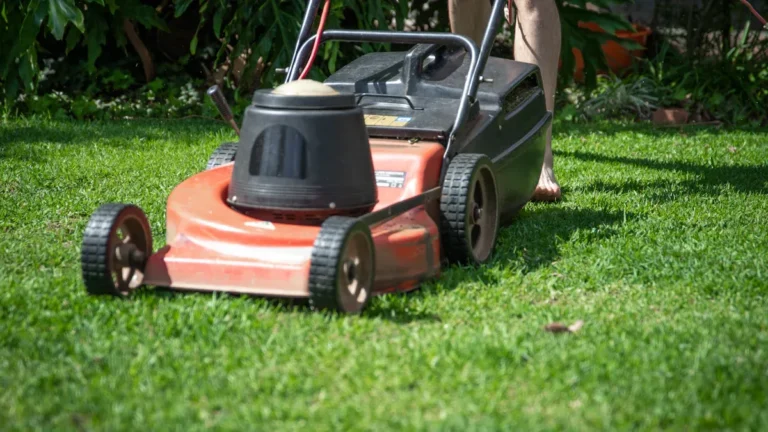
Summer pushes turf hard. Long sunny afternoons, dry patches under the kid’s play set, and the dog-path trail near the fence all show up as yellowing right when you want a lawn you can actually use. The right fertilizer at the right time can keep cool-season grasses alive through August and help warm-season lawns thicken up before fall. Below are ten widely available options covering organic liquids, granular all-purpose blends, high-nitrogen urea, and a few fall-leaning picks for those prepping early.
The Picks In Brief

Neptune’s Harvest Fish & Seaweed Liquid Fertilizer 2-3-1 (36oz)

Neptune’s Harvest Fish Fertilizer 2-4-1 (5 Gallon Pail)
Jonathan Green Winter Survival Fall Lawn Food (15,000 Sq Ft)
Supply Solutions 16-16-16 Complete Lawn & Garden Granular Fertilizer (50lbs)

Supply Solutions 10-10-10 Granular Fertilizer with Micronutrients (50 lbs)

Supply Solutions Urea 46-0-0 Nitrogen Fertilizer (40 lbs)

Miracle-Gro LiquaFeed All Purpose Fertilizer Refills (4 Pack)
GreenView Fairway Formula Fall Lawn Fertilizer (22.5 lb)

Sunday Lawn Kickstart Liquid Lawn Fertilizer (2 Pack + Sprayer)

Jonathan Green Veri-Green Nitrogen Lawn Fertilizer (15,000 Sq Ft)
Taking A Closer Look At The Options
Neptune’s Harvest Fish & Seaweed Liquid Fertilizer is built around a 75/25 split of fish hydrolysate and seaweed, two organic inputs that complement each other: fish delivers a slow-release protein feed while seaweed adds trace minerals and natural growth hormones. The N-P-K ratio of 2-3-1, where N is nitrogen, P is phosphorus, and K is potassium, leans slightly toward phosphorus, which suits lawns building root mass as much as it suits flowering beds and young trees.
The 36-ounce bottle mixes into a hose-end sprayer or watering can and covers modest yards comfortably. Gardeners tending tomatoes, roses, and a tired patch of fescue in the same weekend tend to appreciate the flexibility. It’s not the cheapest per ounce in this list, but for anyone who wants one product for the whole property, the convenience is real.
Real Benefits
- Dual-source organic feeding: the fish-and-seaweed mix covers nitrogen, micronutrients, and natural bio-stimulants in one pass.
- Mild 2-3-1 ratio that won’t burn tender growth during hot stretches.
- Works across lawns, vegetables, flowers, and indoor plants from the same bottle.
- Cold-process fish hydrolysate keeps more amino acids intact than heat-processed alternatives.
- Small 36-oz size is manageable for apartment patios and herb beds alike.
Trade Offs To Consider
- The smell during mixing is noticeable; plan to apply when neighbors aren’t hosting a barbecue.
- Bottle volume runs out fast on properties over a quarter acre.
- Slower visible green-up than synthetic urea blends like Supply Solutions Urea 46-0-0.
Quick Facts
Best Suited To
Organic-leaning gardeners who want a single bottle to feed a lawn, a vegetable patch, and a few flower beds during the same weekend.
Reach For A Different Pick When
Properties over half an acre run through a 36-oz bottle too quickly; the Neptune’s Harvest Fish Fertilizer 2-4-1 in a 5-gallon pail scales better for larger lots.
Step up to a 5-gallon pail and the math changes: at roughly one ounce per gallon of water, this fish hydrolysate concentrate covers serious acreage. The 2-4-1 N-P-K profile carries more phosphorus than the smaller Fish & Seaweed blend, which suits gardeners pushing root development on new sod or transplant beds. The source is North Atlantic-caught fish, processed cold to keep enzymes and amino acids alive.
You apply it as a soil drench or foliar feed, meaning sprayed directly onto the leaves where the plant absorbs it. That dual option helps when soil is compacted or root activity has slowed in midsummer. Storage is the real consideration: a 5-gallon pail wants a shed corner, not a garage apartment closet.
Points In Its Favor
- Concentrated formula at one ounce per gallon keeps per-application cost manageable across big yards.
- Cold-process hydrolysate preserves vitamins and growth hormones that heat-treated fish meals lose.
- Higher phosphorus share supports root recovery on stressed or newly seeded lawns.
- Functions as a foliar feed or soil drench depending on the situation.
Honest Caveats
- A full 5-gallon pail is heavy and awkward to handle without a hand truck.
- Strong odor at mixing lingers for a few hours, especially in still summer air.
- Overkill for anyone with under 5,000 square feet of lawn to feed.
Whose Shelf It Belongs On
Homesteaders and large-lot gardeners running multiple applications through the season who want a single bulk container instead of constant refills.
Look Elsewhere When
Smaller city lots get more mileage from Neptune’s Harvest Fish & Seaweed Liquid Fertilizer 2-3-1, the 36-oz sibling that won’t sit half-used in the garage.
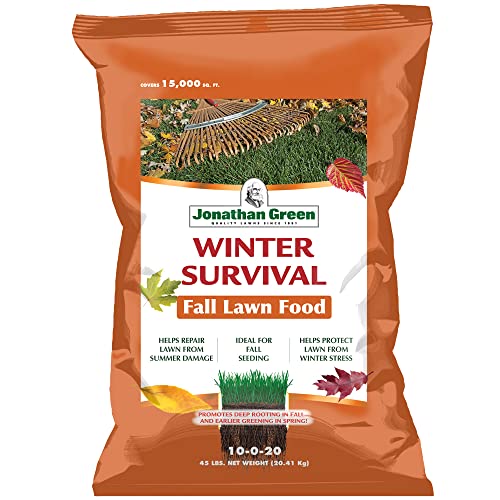
Jonathan Green Winter Survival sits at the other end of the calendar from the liquid fish blends. Its 10-0-20 analysis is heavy on potassium, the nutrient that hardens grass against cold and disease, and skips phosphorus entirely, which keeps it compliant in regions that restrict phosphorus lawn products. Slow-release nitrogen extends green color well into late fall without a flush of tender growth that winter cold can scorch.
Coverage runs up to 15,000 square feet, which fits most suburban lots on a single pass with a broadcast spreader. It’s a fall specialist, not a summer product, so timing matters more than brand recognition here.
What Works In Its Favor
- High potassium count conditions grass for cold tolerance and root carbohydrate storage.
- Slow-release nitrogen avoids the late-season growth surge that invites winter damage.
- Phosphorus-free formula works in municipalities that ban P on established lawns.
- Covers up to 15,000 square feet from one bag for most residential lots.
Points To Keep In Mind
- Wrong tool for midsummer feeding; potassium dominance can read as dull color during peak heat.
- Best applied September through November depending on zone, so storage through summer is common.
Perfect Match For
Cool-season lawn owners in the Northeast and Midwest prepping fescue or bluegrass for a hard winter.
Skip It When
Warm-season Bermuda or St. Augustine lawns that need a balanced summer feed benefit more from Supply Solutions 16-16-16 Complete Lawn & Garden Granular Fertilizer.
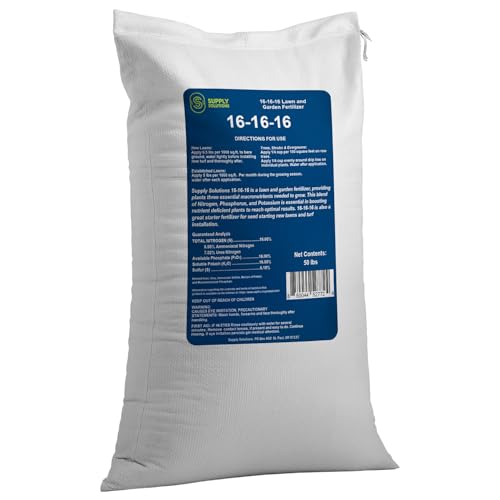
Triple-16 is the workhorse ratio of the granular world: 16% nitrogen, 16% phosphorus, 16% potassium. Supply Solutions packages it in a 50-pound bag aimed at homeowners who want one product for the lawn, the vegetable rows, and the berry patch without juggling separate feeds. The equal-parts profile makes over-application easier to avoid than a heavy nitrogen blend would.
Granular fertilizer spreads cleanly with a rotary broadcaster and breaks down with watering or rainfall. For gardeners in the middle of transitioning a new property, where soil tests haven’t yet identified specific deficiencies, a balanced 16-16-16 reduces the guesswork. You may find that established lawns in phosphorus-restricted counties need to look elsewhere.
Well-Handled Touches
- Equal N-P-K ratio treats lawns, vegetables, and flowering shrubs from one bag.
- 50-pound size covers roughly 10,000 square feet per application at typical spreader settings.
- Granular format plays nicely with standard broadcast or drop spreaders.
- Solid choice for new lawns where the soil profile is still a question mark.
Worth Bearing In Mind
- Phosphorus content can run afoul of local lawn fertilizer ordinances.
- No micronutrient package, so deficient soils still need a separate iron or manganese feed.
- Granular format needs watering in within 24 hours to activate.
Right Fit For
New homeowners and first-time gardeners who want one dependable bag for the whole property while they learn their soil.
Swap It Out When
Soils already rich in phosphorus benefit from Supply Solutions 10-10-10 Granular Fertilizer with Micronutrients, which adds trace elements without piling on more P.
Where the 16-16-16 sibling goes heavy, this 10-10-10 stays measured. Supply Solutions pairs the equal-parts N-P-K with a micronutrient cocktail of boron, manganese, copper, iron, and zinc, the trace minerals that quietly fix yellowing, weak stems, and slow recovery on tired soil. The 10% strength makes over-application a smaller risk for newer gardeners.
The granules are low-dust and uniform, which means they spread evenly without clumping in the hopper. For lawns that look generally fine but lack vibrance, the iron component alone often justifies the swap from a plain N-P-K bag.
A Favorable Mix
- Built-in micronutrient blend addresses common iron and manganese deficiencies in one pass.
- Moderate 10% strength reduces burn risk on sensitive turfgrass.
- Low-dust granules flow through rotary spreaders without bridging.
- Works across lawn, garden, and orchard applications.
A Few Limitations
- Application rate of 10 to 40 pounds per acre requires soil testing for precision.
- Not a quick green-up product; benefits show over a full growing season.
Feature Snapshot
Built With In Mind
Suburban homeowners with established lawns who want one granular product that handles turf and garden beds without overdoing any single nutrient.
A Better Fit Elsewhere
Someone chasing a fast visual green-up will prefer Jonathan Green Veri-Green Nitrogen Lawn Fertilizer, which front-loads nitrogen and iron for quicker color response.
Urea at 46-0-0 is the strongest nitrogen concentration available to home gardeners, meaning you get one pound of actual nitrogen from roughly two pounds of product. Supply Solutions packs it into a 40-pound bag with no phosphorus or potassium in the mix. That single-nutrient focus is the point: targeted green-up without adding anything the soil doesn’t need.
Used carefully, urea pushes deep color in established turf within a week. The catch is concentration. Apply too heavily and you can scorch the lawn, especially during a heat wave, so a calibrated spreader and a measured approach matter more here than with the balanced blends earlier in this list.
Key Advantages
- Highest nitrogen concentration per pound of any standard lawn fertilizer.
- Zero phosphorus and potassium for soils already carrying those nutrients.
- Visible green-up response within 7 to 10 days under adequate moisture.
- Cost-efficient per pound of actual nitrogen delivered.
Where It Is Less Suited
- High burn potential on hot days; mid-summer applications need extra caution and irrigation.
- Single-nutrient formula won’t address phosphorus or potassium shortfalls.
- Easy to over-apply without a calibrated spreader, depending on your setup.
Made For
Experienced lawn caretakers with calibrated spreaders chasing a targeted color boost on nitrogen-hungry turfgrass.
Not Your Match When
Newer gardeners benefit from the forgiveness of Supply Solutions 16-16-16 Complete Lawn & Garden Granular Fertilizer, which spreads risk across three nutrients.
Miracle-Gro’s LiquaFeed system trades precision for pure convenience. The four-pack of refill bottles screws into a dedicated hose-end feeder (sold separately), and the concentrate auto-mixes with water as you spray. No measuring, no buckets, no spreader calibration. For homeowners who treat fertilizing like watering, that’s the whole pitch.
Each refill covers roughly 400 square feet of lawn or garden bed, so the four-pack handles a small yard or a season of scattered feedings. The all-purpose formula suits mixed plantings where one product has to do double duty between turf and ornamentals.
What Stands Out
- No-mix hose-end application removes measuring and clean-up.
- Four-pack format spreads cost across multiple feedings through the season.
- Compatible with all standard garden hoses and watering routines.
- Beginner-friendly format for anyone intimidated by spreaders.
Where Shoppers Go Wrong
- Requires the LiquaFeed feeder, sold separately, which adds to the total spend.
- Less control over exact application rate than drop or broadcast spreaders.
- Refill bottles add plastic waste compared to bulk granular options.
Who Should Grab It
First-time homeowners and renters who want a set-up-the-hose-and-spray routine without buying spreader equipment.
Consider Something Else When
Larger properties get more value per square foot from Supply Solutions 10-10-10 Granular Fertilizer with Micronutrients, which covers more ground with less packaging waste.
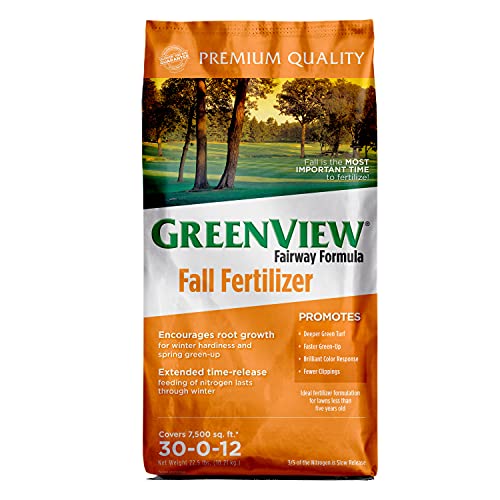
GreenView’s Fairway Formula blends quick-release and slow-release nitrogen in one granule, which gives lawns a fast color pickup without the crash-and-burn cycle of pure urea. The 22.5-pound bag fits smaller broadcast spreaders comfortably and covers typical suburban lawns in a single pass.
Marketed as a fall fertilizer, it works as well in late summer when cool-season grasses need rebuilding after July stress. The proprietary nitrogen blend is the reason fairways at golf courses stay green through heavy play, and the same logic applies at home scale.
Useful Touches
- Dual-release nitrogen provides both quick color and longer feeding.
- Smaller 22.5 lb bag is easier to handle than 50 lb alternatives.
- Steady, even greening without the surge-and-crash of straight urea.
- Effective for both fall prep and late-summer cool-season recovery.
Less Ideal Details
- Phosphorus and potassium content is light, so it’s not a stand-alone soil builder.
- Coverage is more limited than the larger Jonathan Green Winter Survival bag.
Who Will Love This
Cool-season lawn owners who want one product that handles both late-summer recovery and fall prep on small to mid-size yards.
Where A Sibling Pick Shines
Homeowners prepping for a hard winter with deeper potassium needs may prefer Jonathan Green Winter Survival Fall Lawn Food for its higher K analysis.
Sunday’s Kickstart ships as a two-pack of liquid concentrate plus a hose-end sprayer, a fully self-contained kit. The 22-0-2 analysis delivers high nitrogen with a small potassium finish, paired with iron for fast color pickup. The brand pitches it specifically for heat-stress recovery on cool-season lawns, which fits the July-through-August problem perfectly.
Liquid fertilizers absorb through both roots and blades, so recovery shows within days rather than weeks. The included sprayer means there’s no extra equipment to buy before the first application.
Real-World Strengths
- All-in-one kit includes sprayer; no extra equipment required.
- Liquid format absorbs quickly through leaves and roots for fast visible response.
- Iron component supports deep green color without excessive top growth.
- Two-pack format supports a season of recovery feedings.
Practical Considerations
- Concentrate refills only available through Sunday’s subscription ecosystem.
- Smaller coverage area per bottle than granular options on big yards.
The Right Fit
Homeowners with heat-stressed cool-season lawns who want a quick-turnaround liquid fix without buying extra sprayer hardware.
Where Another Pick Suits Better
Larger properties where refill concentrate costs add up benefit more from Neptune’s Harvest Fish Fertilizer 2-4-1 in the 5-gallon pail.
Veri-Green closes the roundup with a slow-burn nitrogen play. The 29-0-3 analysis is heavy on nitrogen, light on potassium, and skips phosphorus entirely, paired with iron for the deep color that defines the Jonathan Green brand. Slow-release technology keeps the feeding consistent for up to three months, depending on weather and watering.
Coverage tops out around 15,000 square feet, comparable to the Winter Survival sibling earlier in this list. The drought-tolerance claim hinges on the iron and the gradual release, which build denser turf without the tender growth flush that scorches under restricted watering.
What Pays Off
- Slow-release nitrogen feeds for up to three months per application.
- Iron-enriched formula delivers deep color without high phosphorus.
- Large 15,000 sq ft coverage fits most suburban lots in one bag.
- Better drought tolerance through denser, more resilient turf.
Some Limits To Know
- Color response is slower than the quick-release GreenView Fairway Formula.
- Phosphorus-free profile may need supplementation for new lawns.
Who It Suits Best
Homeowners with established lawns who want one application to carry color through most of the summer with minimal reapplication.
A Better Fit Elsewhere
Gardeners maintaining vegetable beds alongside turf get more flexibility from Supply Solutions 16-16-16 Complete Lawn & Garden Granular Fertilizer.
Matching Your Lawn To The Right Feed
Choosing between these ten products comes down to three questions. What type of grass do you have, what is the season you’re feeding for, and how much time do you want to spend on application? Cool-season grasses like fescue and bluegrass live in the northern third of the country and struggle through July and August; warm-season grasses like Bermuda and Zoysia live in the South and hit their stride in the heat. The fertilizer that helps one can stress the other.
Grass Type Sets The Direction
Cool-season lawns want nitrogen for blade growth in spring and fall, and lighter feeding through summer heat. Warm-season lawns want steady nitrogen through the growing season and a winter prep push in late fall. Jonathan Green Winter Survival targets the fall prep window for cool-season turf, while Sunday Lawn Kickstart handles the summer stress recovery on the same grass type.
Format Drives The Routine
Liquids like Neptune’s Harvest and Sunday absorb fast but require more frequent application and mixing. Granulars like the Supply Solutions line and Jonathan Green Veri-Green spread once and feed for weeks. Hose-end systems like Miracle-Gro LiquaFeed trade precision for the easiest possible routine. Pick the format that matches how often you actually want to walk the lawn.
Coverage Should Match The Property
A 36-oz bottle covers a small yard but vanishes on half an acre. A 50-pound bag of granular might be overkill on a townhouse lawn. Before picking, measure your turf area and divide by the coverage listed on each product to figure out how many applications or bags a season actually costs you.
Key Considerations Across These Picks
Common Shopping Slip Ups
The most common fertilizer mistake is picking up the highest nitrogen number on the shelf and assuming more is better. Pure 46-0-0 urea burns turf in summer heat without addressing phosphorus or potassium needs. Another trap: ignoring local fertilizer ordinances. Many counties restrict phosphorus on established lawns, which rules out the 16-16-16 blends without warning. Soil testing solves both problems for under twenty dollars and saves wasted applications.
What The Higher Tier Buys
Premium lawn fertilizers earn their position through slow-release coatings, micronutrient packages, and balanced N-P-K profiles that feed consistently over weeks rather than days. Jonathan Green Veri-Green’s three-month release window and Supply Solutions 10-10-10’s micronutrient blend both justify higher per-bag cost through fewer applications and better long-term turf density. For a small yard, the premium upgrade rarely pays back; for anything over 5,000 square feet, it usually does.
Frequently Asked Questions
When Should I Apply Summer Lawn Fertilizer?
Cool-season grasses benefit most from light feeding in late spring and again in early fall, avoiding the hottest weeks of July and August. Warm-season grasses take their main feeding in early summer once the grass is fully green and actively growing. Soil temperature matters more than the calendar.
Can I Use The Same Fertilizer On My Lawn And Garden Beds?
Balanced blends like Supply Solutions 10-10-10 and Neptune’s Harvest Fish & Seaweed work across both. High-nitrogen options like 46-0-0 urea are better reserved for turf only, since vegetables and flowering plants need more phosphorus and potassium for fruit and bloom production.
How Long Does Granular Fertilizer Take To Work?
Most granular products start releasing nutrients within a week of watering or rainfall and continue feeding for six to twelve weeks depending on the coating technology. Slow-release formulas like Jonathan Green Veri-Green stretch that window toward three months.
Is Liquid Fertilizer Better Than Granular?
Liquid absorbs faster through both roots and leaves, showing visible response in days. Granular feeds longer per application and requires less frequent reapplication. Liquids suit quick recovery from stress; granulars suit routine maintenance schedules.
Do I Need To Water After Fertilizing?
Granular fertilizer needs watering or rainfall within 24 hours to activate and reach the root zone. Liquid applications through hose-end sprayers typically carry enough water on their own, though a follow-up soak helps move nutrients into the soil profile.
Closing Remarks
The best summer lawn fertilizer for your yard depends on grass type, square footage, and how often you want to be outside with a spreader. Liquid fish blends reward organic-leaning gardeners willing to tolerate the smell; balanced granulars cover most properties with one bag; and high-nitrogen options push fast color for those chasing immediate results. Whatever you choose, a soil test and a calibrated spreader protect more lawns than any premium product ever will.